The biggest threat to MLB in Salt Lake City has nothing to do with Utah
Jul 17, 2026, 12:43 PM
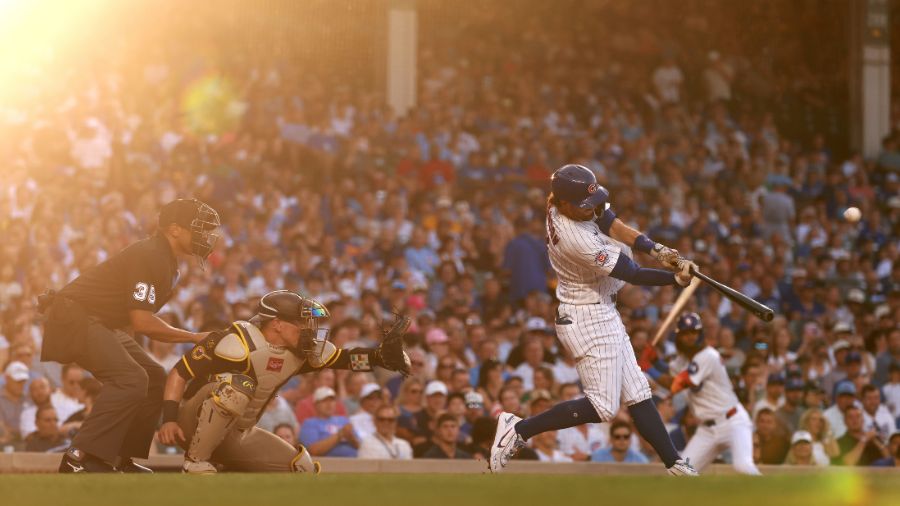
An impending MLB lockout could have massive ramifications for Salt Lake City's push to be the next site of MLB expansion. (Photo by Geoff Stellfox/Getty Images)
(Photo by Geoff Stellfox/Getty Images)

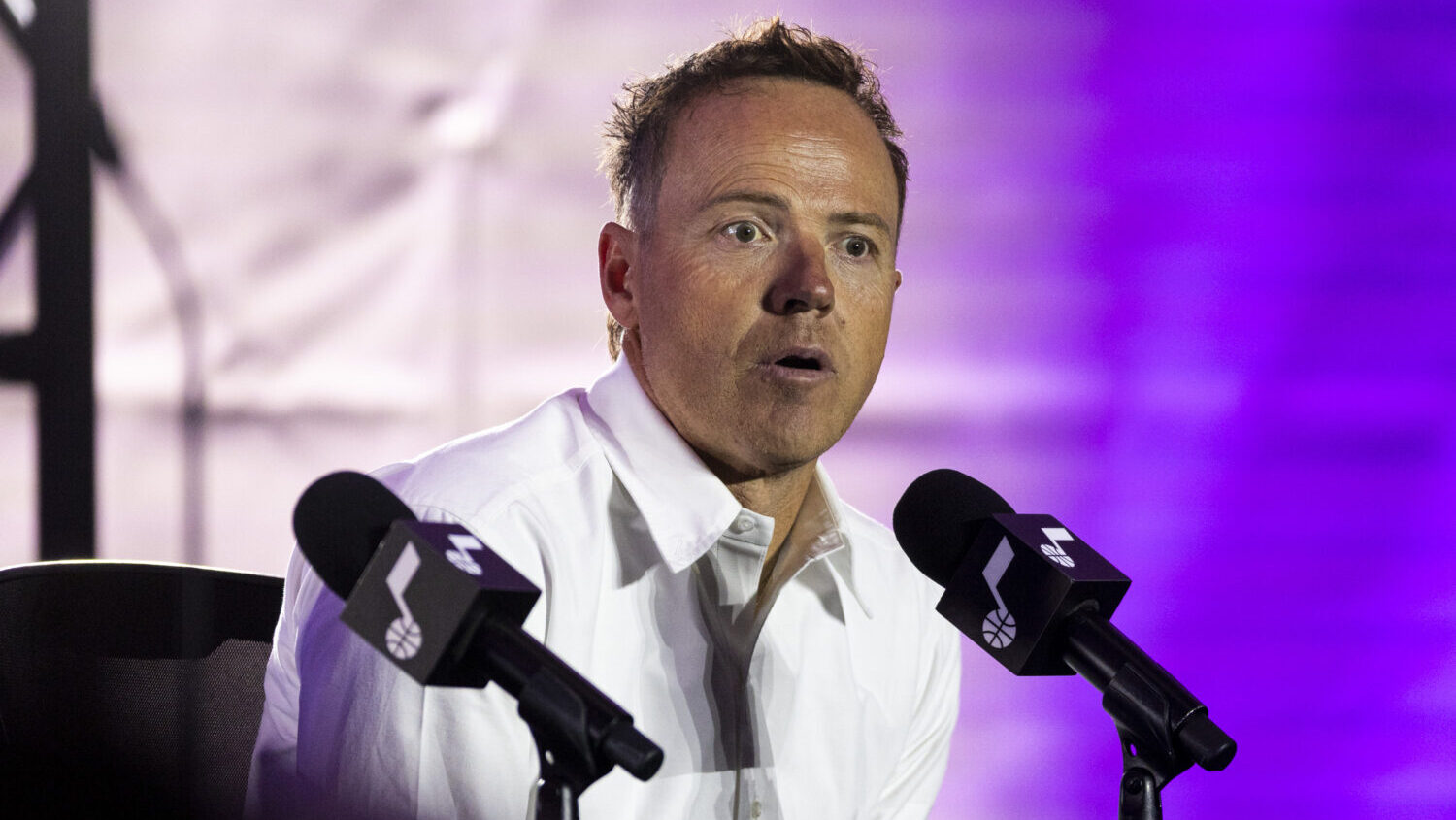
SALT LAKE CITY – Big League Utah has done nearly everything right.
The coalition, led by Miller Sports + Entertainment, has lined up a $1.8 billion stadium plan, secured a $900 million commitment of public funding, and positioned Salt Lake City as what national columnist Bob Nightengale recently called a “heavy favorite” for one of two planned MLB expansion franchises.
But none of that may matter if Major League Baseball can’t get out of its own way.
RELATED: Salt Lake is ‘clear frontrunner’ in MLB expansion process
Lockout or not, MLB showing their optimism in labor negotiations that the 2027 season will start on time by announcing that Opening Day will be on March 25, the earliest in MLB history, with the regular season concluding Sept. 26.
— Bob Nightengale (@BNightengale) July 16, 2026
Salt Lake City’s path to a franchise runs directly through a labor negotiation that could blow it up. The current collective bargaining agreement expires Dec. 1, and owners are expected to immediately lock out the players — halting all transactions, workouts and roster moves league-wide.
At the core of the dispute is a salary cap owners have demanded and players have rejected since 1994.
A deal struck before spring training would preserve the sport’s momentum and keep commissioner Rob Manfred’s stated goal of expanding to 32 teams by 2029 on track. A prolonged stoppage that cancels regular-season games would do the opposite — eroding fan support, stalling revenue growth, and giving ownership every reason to shelve expansion indefinitely.
For Big League Utah and the Miller family, the stakes of someone else’s negotiation could not be higher.
It’s nothing new for a sport that has struggled to find labor peace.
The last CBA, signed in 2022, required a 99-day lockout before the two sides reached a deal. That work stoppage — which began Dec. 2, 2021, and didn’t end until March 10 — delayed the start of spring training and pushed back opening day by a week, meaning no regular-season games were lost.
This time could be different.
What a prolonged lockout means for expansion
The sport took years to recover from the 1994 players’ strike that caused the cancellation of the World Series — the first time the Fall Classic wasn’t played since 1904 — and wiped out 948 games across the 1994 and 1995 seasons.
Cal Ripken Jr.’s pursuit of Lou Gehrig’s Iron Man record in 1995 brought some fans back. But it wasn’t until the 1998 home run chase featuring Ken Griffey Jr., Sammy Sosa, and Mark McGwire that the game truly bounced back.
Baseball has undergone a renaissance recently, seeing a spike in attendance and television viewership — welcome changes for a notoriously regional game.
Biggest surges: Rays (+70.9%), White Sox (+36.5%), Blue Jays (+31.5%), Mariners (+23%).
Dodgers remain the attendance leader at 50,544/game. Royals saw the steepest drop, -16.8%.
MORE:… pic.twitter.com/5cuI6zVUpB
— Sports Business Journal (@SBJ) July 13, 2026
If a lockout happens?
Probably no big deal. Recent history shows deadlines have a way of pushing both sides to negotiate in earnest, so long as the natural deadline of a March 24, 2027, Opening Day brings both sides to their senses.
If they can’t reach an agreement and regular-season games are missed, the consequences could be devastating.
In the mid-1990s, fans didn’t have the internet in their pockets and an endless array of distractions competing for their attention. Today, a prolonged absence would give casual fans every reason to look elsewhere — and never come back.
In a scenario where owners hold a hard line on a salary cap, and players staunchly refuse to accept one, baseball risks squandering the goodwill it has earned from diehards and casual fans alike.
Lost games could cost the sport enough fan support that expansion talks are shelved before they ever truly begin.
That would be a nightmare scenario for Big League Utah, which is positioned to make Salt Lake City a prime candidate for one of two future expansion teams.
Commissioner Rob Manfred has said he wants to expand to 32 teams — one in the East and one in the West — before he retires in 2029.
Salt Lake City and Nashville are widely regarded as the frontrunners, with Portland, Sacramento, Charlotte, and Raleigh also in the mix.
A lockout that cancels games wouldn’t just hurt the sport’s momentum — it could push Manfred’s expansion timeline past his tenure entirely.
RELATED STORIES



What MLB owners want in a new CBA
In short: cost control.
Along with a salary cap, owners want to limit contract lengths, overhaul the domestic draft, and create an international draft to eliminate the current international free-agent system.
The proposal also redefines the revenue split between owners and players, guarantees substantial minimum-salary increases for younger players, and reduces the service time required for players to reach free agency.
Salary cap
MLB remains the only major North American professional league without a salary cap. The last time owners proposed a hard cap, players walked off the field, fueling the 1994 strike.
Despite that dark history, MLB’s 30 owners have proposed a hard salary cap with fixed limits at both ends: $245.3 million at the top and a floor of $171.2 million, forcing every franchise to allocate its finances differently.
Owners believe a hard cap would address competitive balance, allowing small-market teams to better compete against large-market clubs with higher payrolls.
Based on current payrolls, 12 teams would be forced to increase spending, and eight would be forced to reduce it.
Owners also want to restructure contracts.
Free-agent deals would be limited to five years, with a six-year maximum for players re-signing with their current teams under a “cornerstone player provision.” Deferred contracts, like the one signed by Los Angeles Dodgers star Shohei Ohtani, would be eliminated.
Domestic draft
The proposal calls for further reducing the MLB draft. Until 2019, the draft lasted 40 rounds. The 2021 CBA cut it to 20.
The latest proposal would reduce it to 12 rounds and eliminate the competitive balance picks included in the current agreement.
High school athletes would no longer be eligible. Players would need to be 20 years old by Sept. 1 of their draft year and at least two years removed from high school graduation, beginning with the 2028 draft.
International draft
Currently, there is no draft for players outside the U.S., Canada, and Puerto Rico. Those athletes are eligible to sign as international free agents if they are 17 by Sept. 1 of the year they sign.
The owners’ proposal would institute an international draft with an allotted bonus pool, similar to the domestic draft process. The stated goal is transparency in a system that has been decidedly murky and an end to the informal agreements that have plagued the sport.
What the MLBPA wants in a new CBA
The players’ union has shown zero interest in a salary cap. Beyond that line in the sand, the MLBPA’s proposal focuses on amateur player protections, increased roster spots, and higher compensation at every level.
At the heart of the MLBPA’s proposal: boosting the minimum salary, expanding service-time opportunities, and seeking a ban on individual player prop betting to combat harassment.
Service time and roster rules
The union is seeking several changes that would benefit both prospects and veterans:
— Increase roster sizes from 26 to 28 for the first 15 days of the season.
— Allow clubs to place injured players on the 60-day injured list at the November tender deadline, opening 40-man roster spots three months earlier than the current model.
— Limit the number of minor league options from five per season to three.
— Provide salary protections for pitchers affected by roster manipulation.
— Accelerate Rule 5 draft eligibility. Currently, players who signed at 18 or younger must be protected on the 40-man roster within five years; players who signed at 19 or older must be protected within four years.
— Increase the current luxury-tax threshold.
— Create an earlier path to free agency.
None of those proposals directly mention expansion. That’s precisely the point.
What happens at the bargaining table between now and March will shape the future of the sport for a generation. For 30 owners and hundreds of players, it’s about money, control, and the terms of employment.
For Salt Lake City, it’s about something simpler: whether the chance they’ve spent years building toward will still exist when the dust settles.
Follow Major League Baseball With KSL Sports
Brian Preece is a sports.ksl.com insider covering Locals in MLB and the Salt Lake Bees. Follow Brian’s Bees and Beehive baseball here. Find Brian on X, Instagram, and BlueSky at @bpreece24.
Find KSL Sports coverage of Locals in MLB here.