US U-19s turn to Utah as CONCACAF championship nears
Jul 21, 2026, 9:27 AM
Screenshot

SANDY — The final stop before Mexico wasn’t chosen by accident.
As the United States under-19 men’s national team prepares for the CONCACAF Under-20 Championship, U.S. Soccer brought its squad to Utah for a brief pre-tournament camp, using Real Salt Lake’s America First training ground to simulate the altitude and conditions awaiting it south of the border.
“The altitude, obviously,” head coach Gonzalo Segares said. “As we go into Mexico, we wanted to make sure we could replicate a little bit of that.”
The 12-team tournament begins July 24 in Mexico and will determine four of CONCACAF’s representatives at the 2027 FIFA Under-20 World Cup in Azerbaijan and Uzbekistan.
The United States opens against Haiti on July 25, faces El Salvador three days later and concludes group play against Cuba on July 31. All three matches will be played at Estadio Cuauhtémoc in Puebla and broadcast on FS2.
The top two teams in each of the three groups, along with the two best third-place finishers, advance to the quarterfinals. The four quarterfinal winners qualify for both the U-20 World Cup and the 2027 Pan American Games in Lima, Peru.
The tournament champion also earns a place at the 2028 Summer Olympics. Because the United States has already qualified automatically as the Olympic host, the berth would pass to the runner-up should the Americans win the title.
Before any of that can happen, Segares has to turn players from clubs across the United States and Europe into a cohesive team despite having only a few opportunities each year to work together.
“We have about four to five camps a year,” Segares said. “Trying to get everybody on the same page requires work.”
That work begins well before players reach his age group.
“It’s about the process,” Segares said. “It starts at the U-15 level. By the time they come to the U-20s or U-23s, there’s already a better understanding of what we want to do.”
Real Salt Lake opened its facilities for the week and supplied several academy players to round out training sessions, including 2025 MLS NEXT All-Star Rylan Hashimoto and goalkeeper Konstantinos Kyriazis, whose standout performances helped lead the RSL Academy to the MLS NEXT Cup and Generation Adidas Cup U-16 championships last season.
Former RSL midfielder and current Monarchs assistant coach Jordan Allen watched training alongside RSL sporting director Kurt Schmid as another familiar face returned to the club’s training grounds.
Only this time, he wasn’t chasing a ball along the sidelines.
Back where the dream began
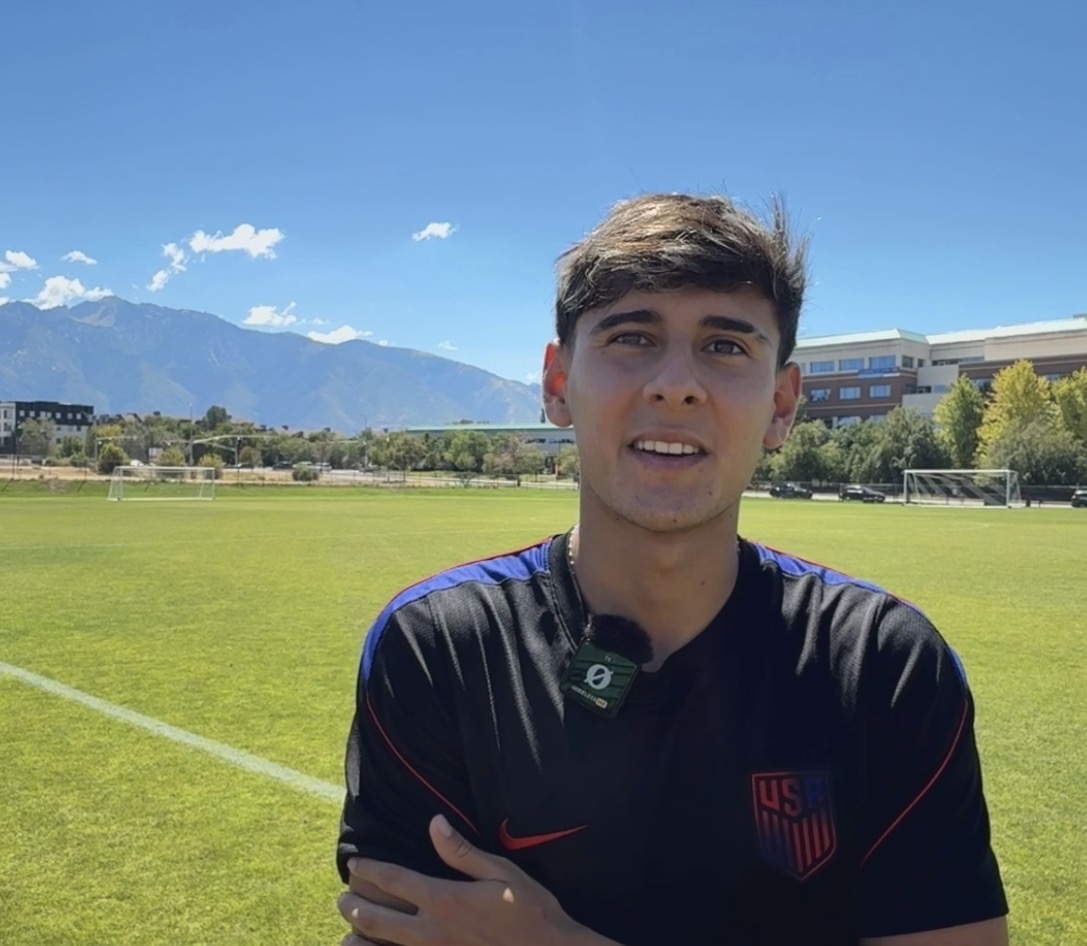
Santiago “Santi” Morales spent much of his childhood at Real Salt Lake’s training facility while his father, club legend Javier Morales, starred for the first team.
Now wearing the United States crest, the Inter Miami player found himself back on the same fields where he once watched professionals train.
“Our first day of training here, I sent a video to my dad,” Morales said, “because I always remember the days I had off from school or the weekends. I would always come here and watch them train.
“It’s kind of crazy because it was 10 years of our life. Utah is really special to us, and being back here training now with the U.S. kit is something special.”
Morales said his dream of becoming a professional began to crystallize around age 10 or 11.
“We all start playing because it’s fun, and I still play because of that,” he said. “But once you start getting older and you see you’re doing well, you always try to shoot for the stars and believe you can make it.”
Morales’ understanding of the position has evolved as he has moved through the Inter Miami system and U.S. youth national teams.
“I’m an attacking midfielder,” Morales said. “I like to create goal chances, score goals and get assists. But over these past few years, I also realized that being physical and running back and defending is also important because it helps the team.”
It is a description that would sound familiar around an RSL organization where defensive work rate is treated as non-negotiable, no matter where a player lines up.
Morales is part of a 21-player U.S. roster representing 13 MLS clubs, two USL Championship teams, three European clubs and one college program. The limited time together means the Americans cannot rely solely on tactics or familiarity when difficult moments arrive.
Togetherness. Intensity. Communication.
For Segares, the foundation comes before formations.
“I think for us, and I go back to our anchors, we have our performance anchors,” Segares said. “We talk a lot about togetherness. Whether we’re defending or attacking, we want to make sure we’re working together as a unit, that we have each other’s backs, that we do it with intensity, and that we’re communicating.
“Those are our starting points before tactics or style of play. That’s where we want to start with how the team is going to look, and that’s what carries us into our performances.”
Only after establishing those principles does Segares turn to tactics.
“After that comes how we want to defend or what shape we want to play in,” he said. “But our starting point is always togetherness, intensity and communication. That’s where we start when we talk about identity and what we want people to see from our teams.”
Those anchors, Segares believes, will be tested in Mexico.
“A lot of what we’ve talked about with the boys this week is that going into CONCACAF qualifiers is a unique experience,” he said. “It’s a grind. It’s about suffering. We have a target on our backs, and we’ve got to make sure we match everyone else in how badly we want it.
“At the end of the day, it’s going to come down to stepping on the field, competing and wanting it more than the other team. We know the conditions in CONCACAF, and we know the opponents.”
The United States knows that reality well.
The Americans reached the championship match in the previous edition of the tournament in 2024, only for host Mexico to score a stoppage-time equalizer and claim the title in extra time.
This group will head to Mexico with the same World Cup qualification expectations, but Morales believes the standard for American youth national teams should extend beyond merely reaching the next competition.
“I think we can win,” Morales said. “We’re in it to win. I think the U.S. has to start thinking about winning every tournament that we go to.”
Now comes the test
That mentality will be tested in Mexico, but Segares believes the foundation has already been laid in Utah.
“RSL has been great in helping us out with the facility and helping us out with our players as well,” Segares said. “We’re really thankful to them.”
For Morales, the camp allowed his past and present to briefly overlap.
He remembered watching from the sidelines while his father and his RSL teammates trained. Now, the younger Morales is the professional, preparing for his own opportunity on an international stage.
The surroundings may have been familiar, but the stakes are unlike anything he experienced running around those fields as a child.
The United States will enter Mexico needing to navigate three group matches and win a quarterfinal to secure its place at the Under-20 World Cup. From there, a regional championship and Olympic qualification will remain available.
Segares believes his players understand what awaits them.
Asked what gives him confidence entering the tournament, he did not hesitate to identify what makes this group special.
“The mentality,” he said.
“We haven’t really had to push them. They bring that intensity themselves. They’ve become really close as a team, and it just shows us they’re ready to face whatever we’re going to see over there.”