From outsider to Utahn: The story behind Real Salt Lake’s new, 3rd kit
Aug 13, 2026, 9:00 AM
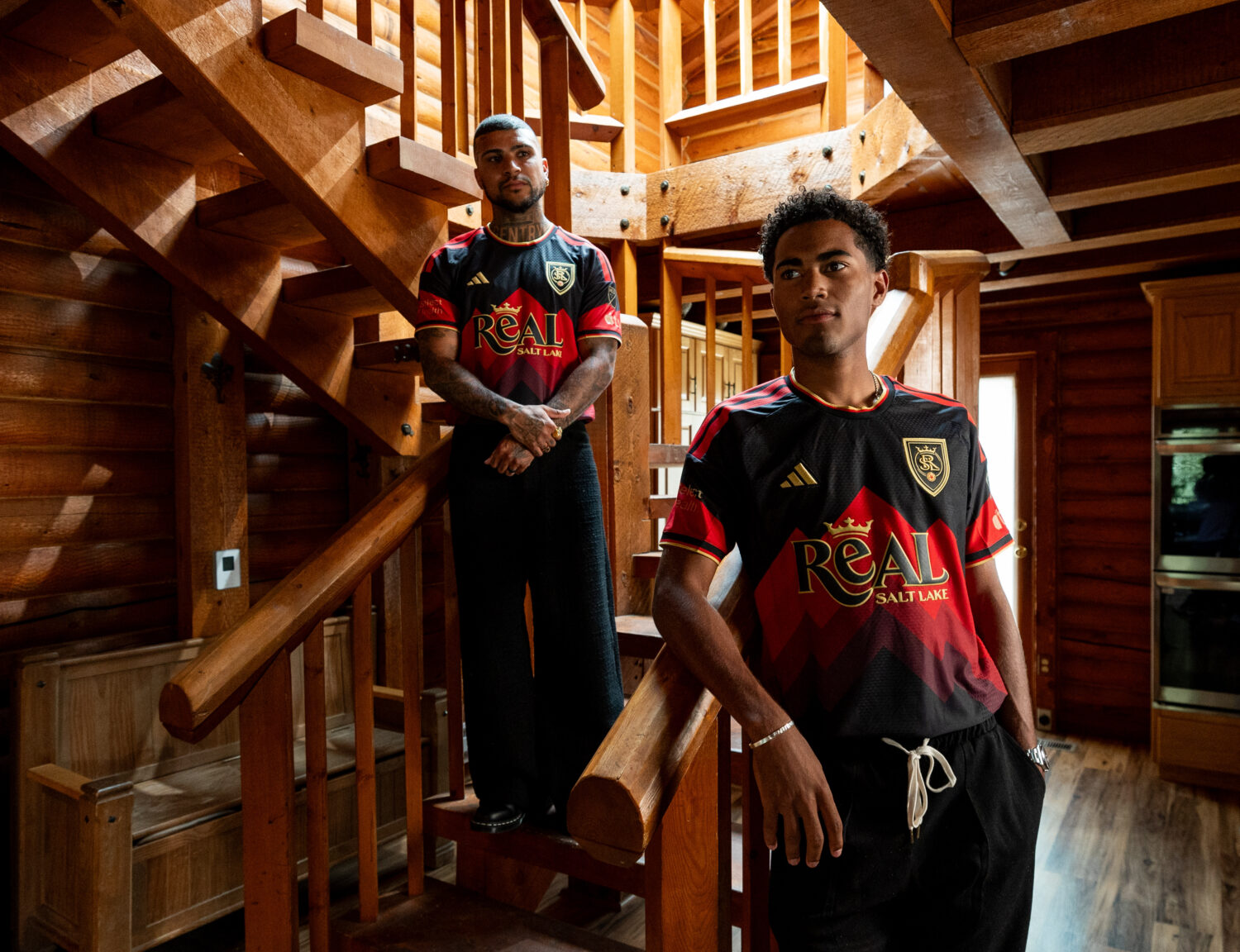
Real Salt Lake released its Black Diamond kit on Aug. 13, 2026.

SANDY — When Tyler Gibbons arrived in Utah in 2012, he didn’t know anybody.
He wasn’t coming to design soccer jerseys. He wasn’t even coming to work for Real Salt Lake.
Gibbons came to work in television, running the sports department at ABC4 and eventually creating Real Sports Live, working with Brian Dunseth, Bill Riley and others on the program. When the station’s television contract with RSL ended after the 2014 season, the club offered him a job.
He had a reason to leave Utah. Instead, he decided to give the club, and the state, a chance.
He decided to stay.
Then, somewhere along the way, Utah stopped being the place Gibbons worked and became home.
“I came here not knowing a single soul,” Gibbons said. “I have a family (here). I have a home. I have dogs. I have just everything that somebody in my position, growing up as a kid, would ever want.”
Asked what makes Utah feel like home, Gibbons paused.
“The people make it home.”
More than a decade later, Gibbons is vice president of Real Salt Lake marketing and vice president of game presentation and broadcast for Miller Sports and Entertainment. He’s also become one of the people responsible for determining what RSL looks like.
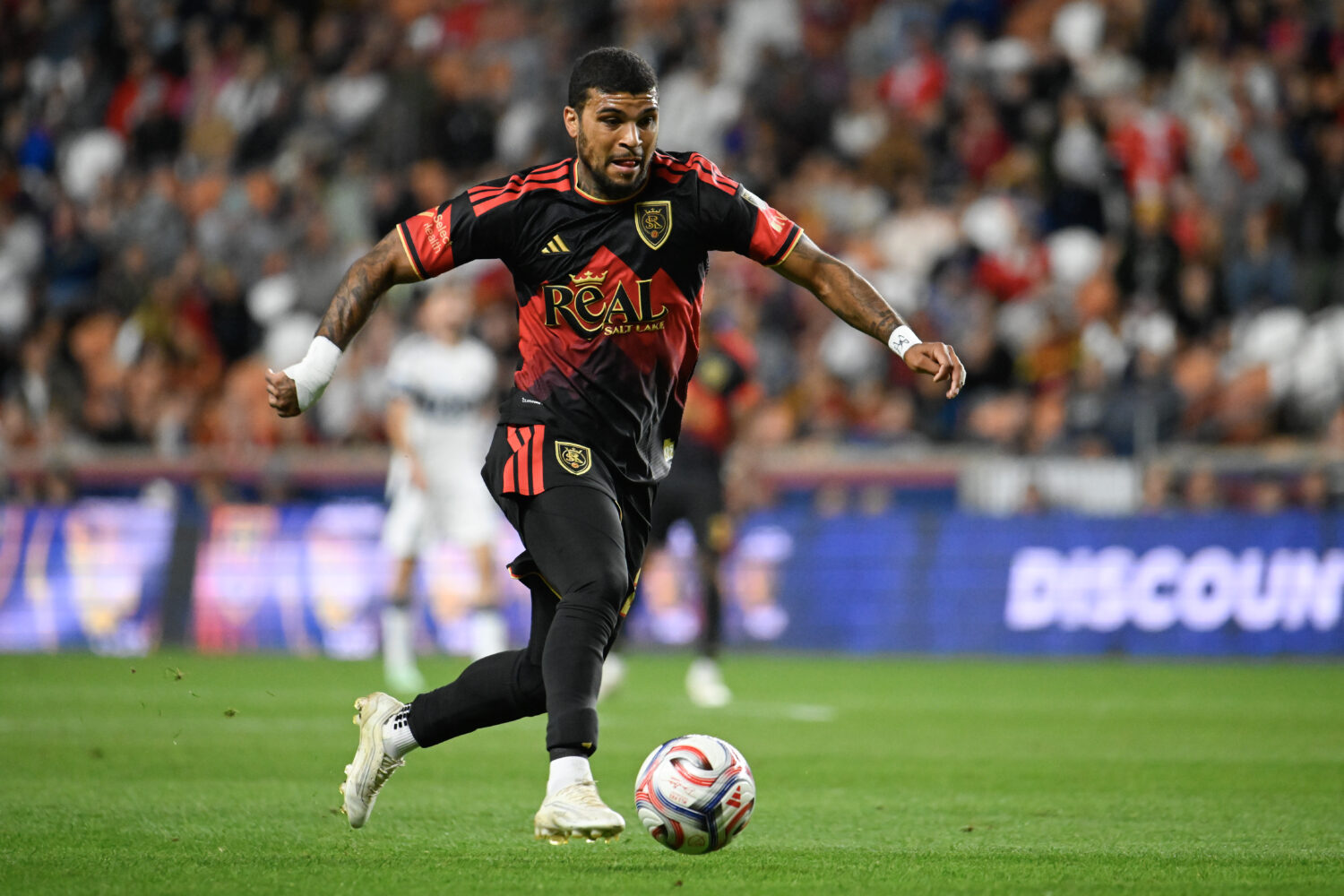
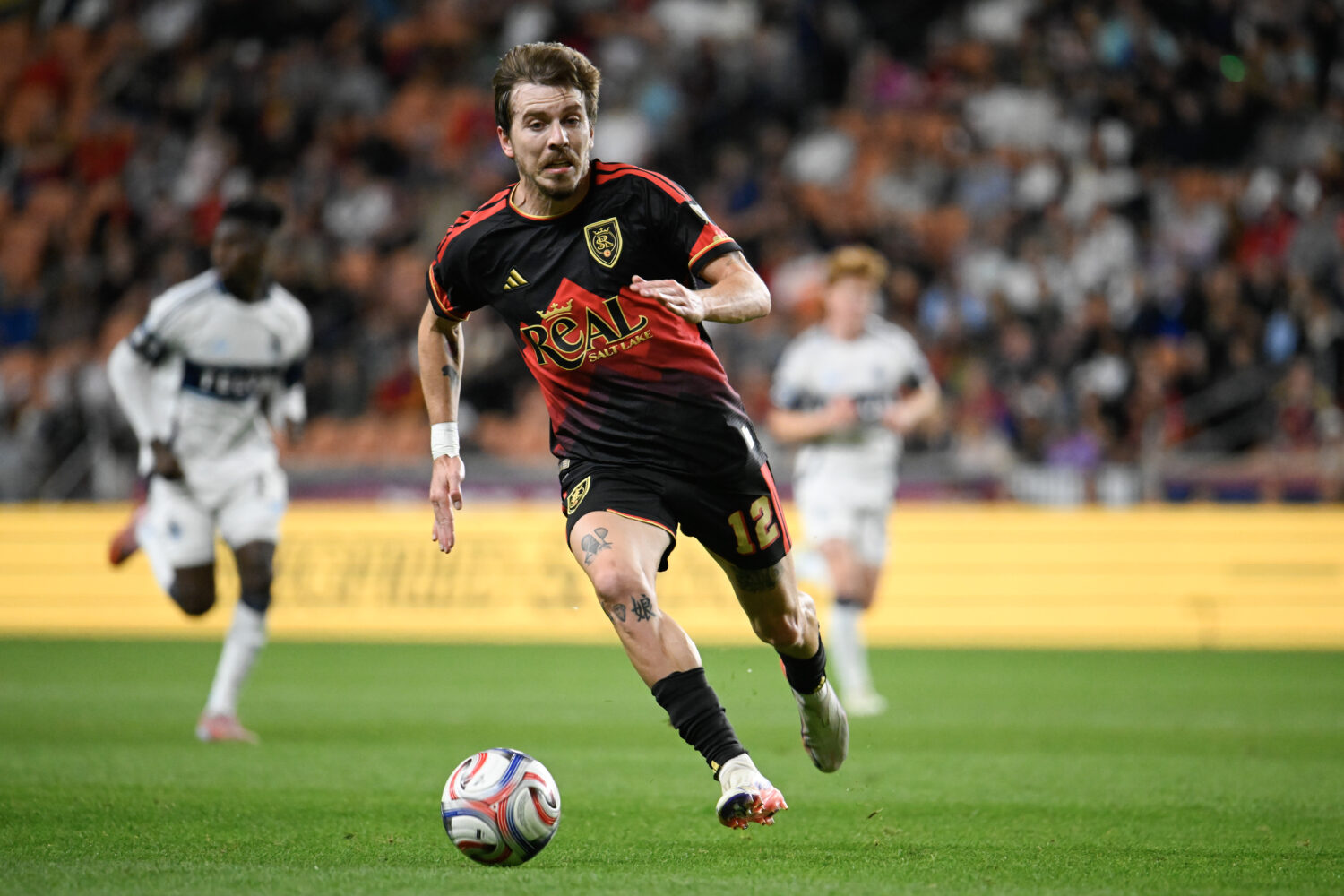
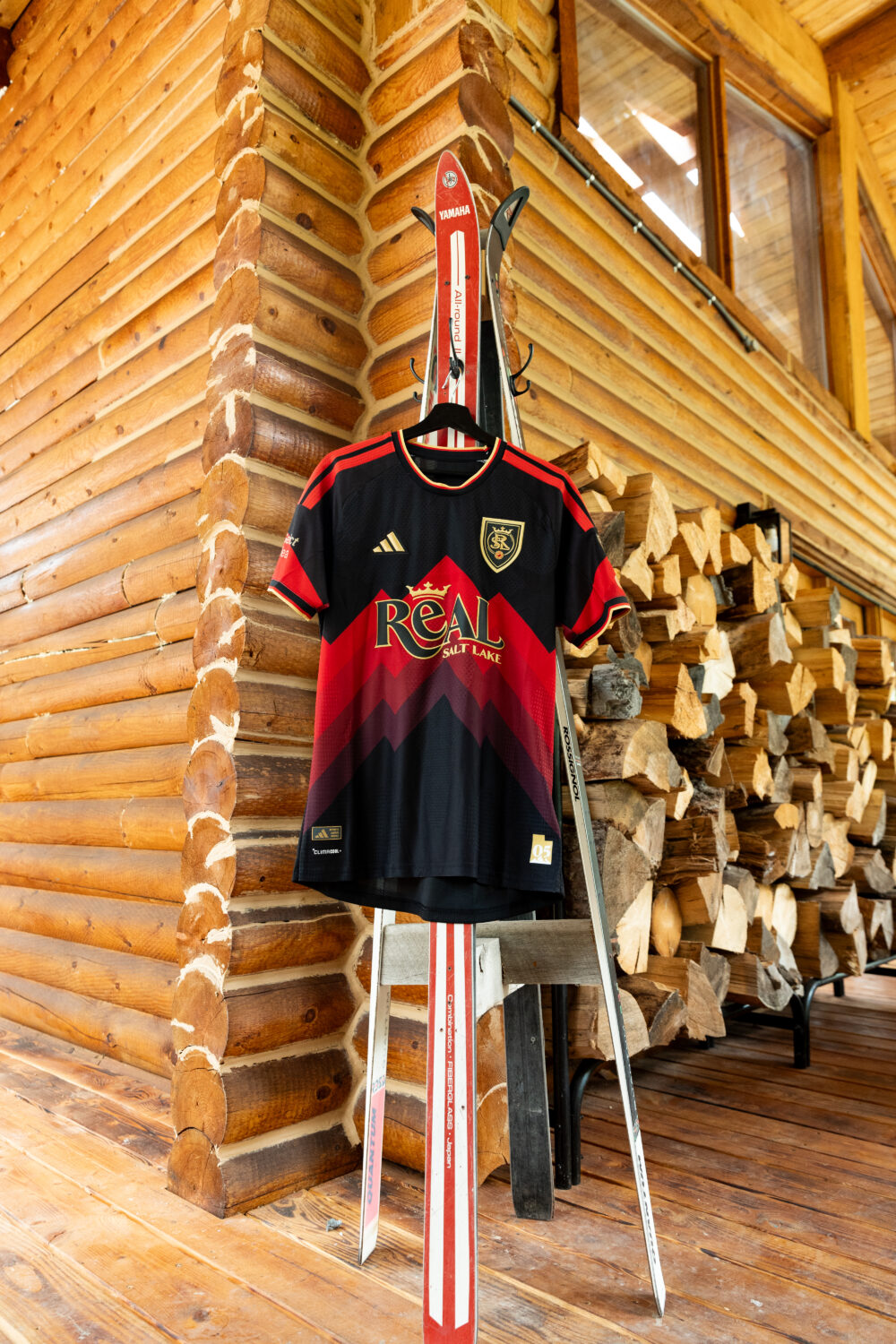
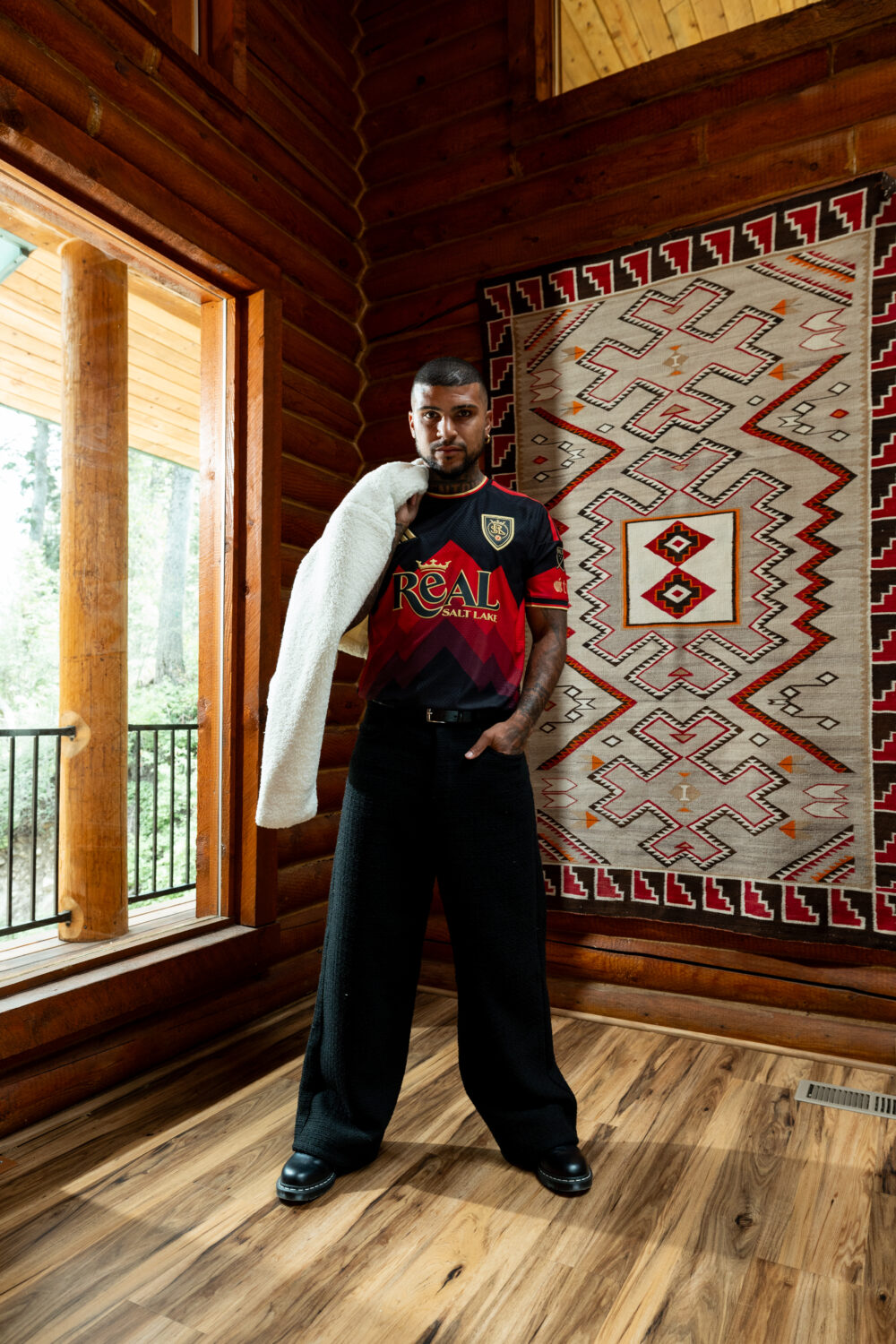
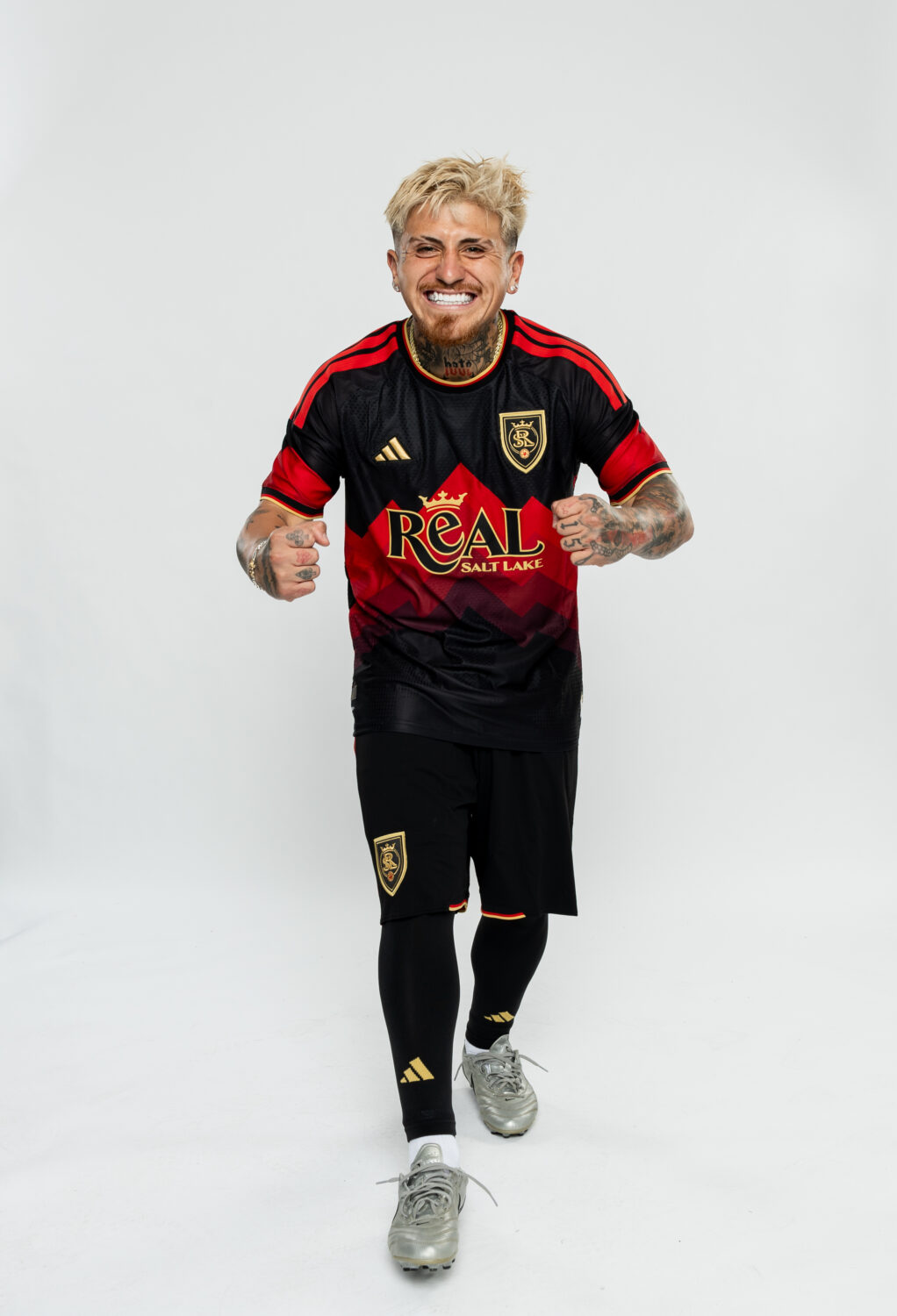
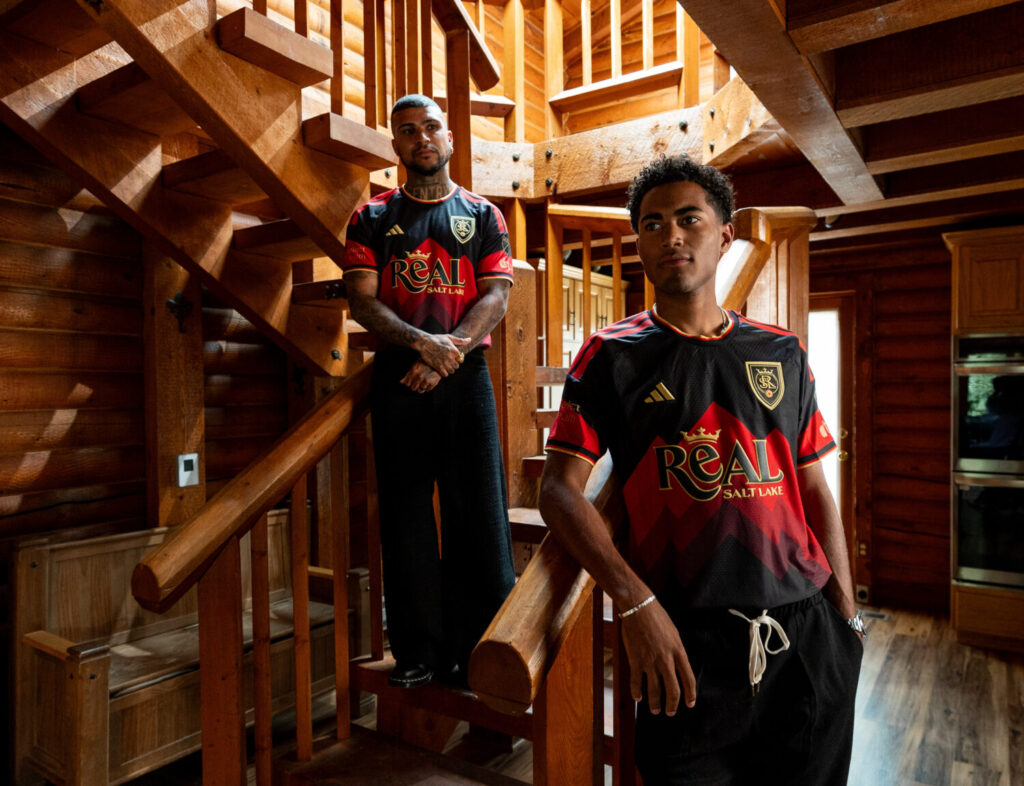
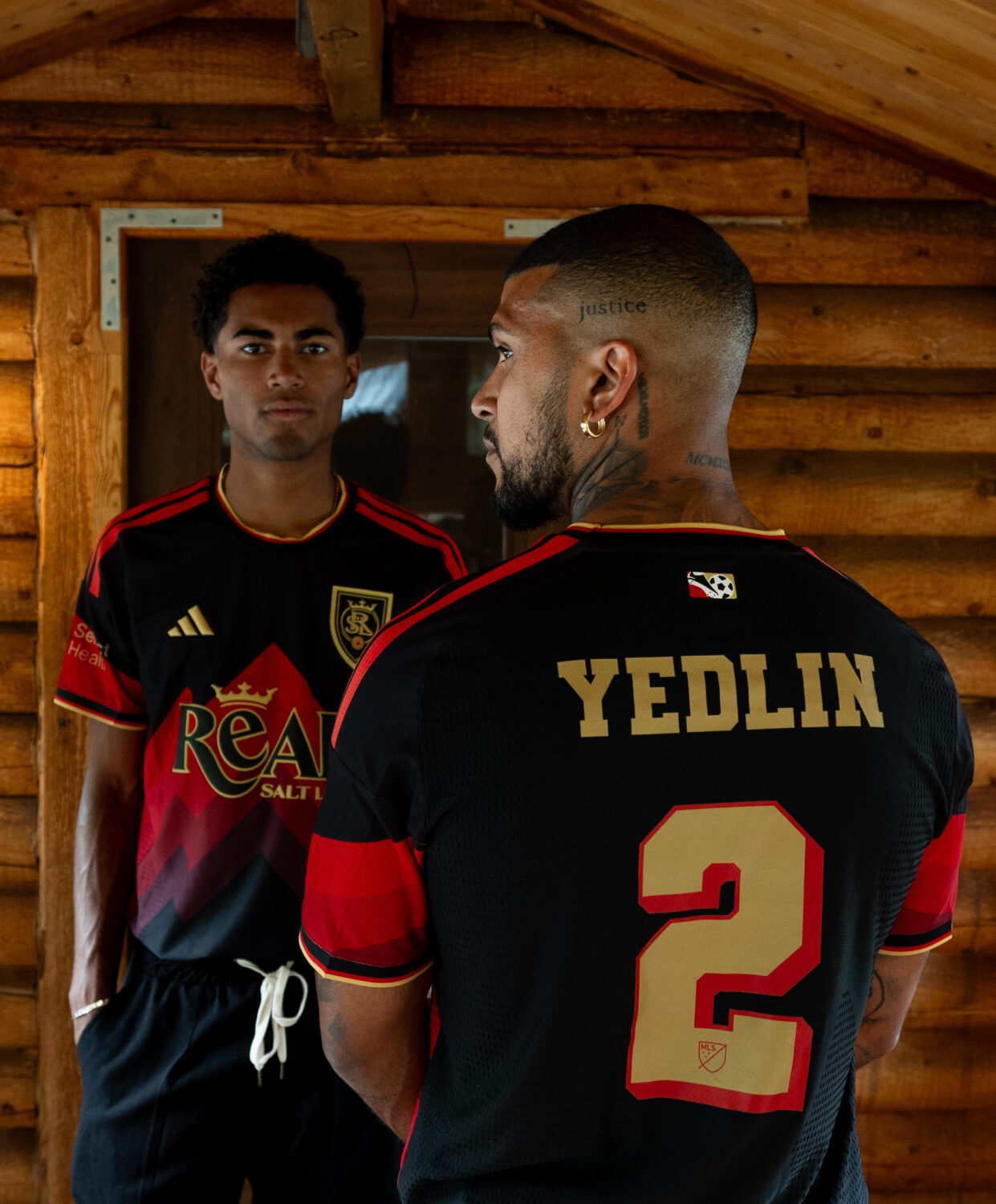
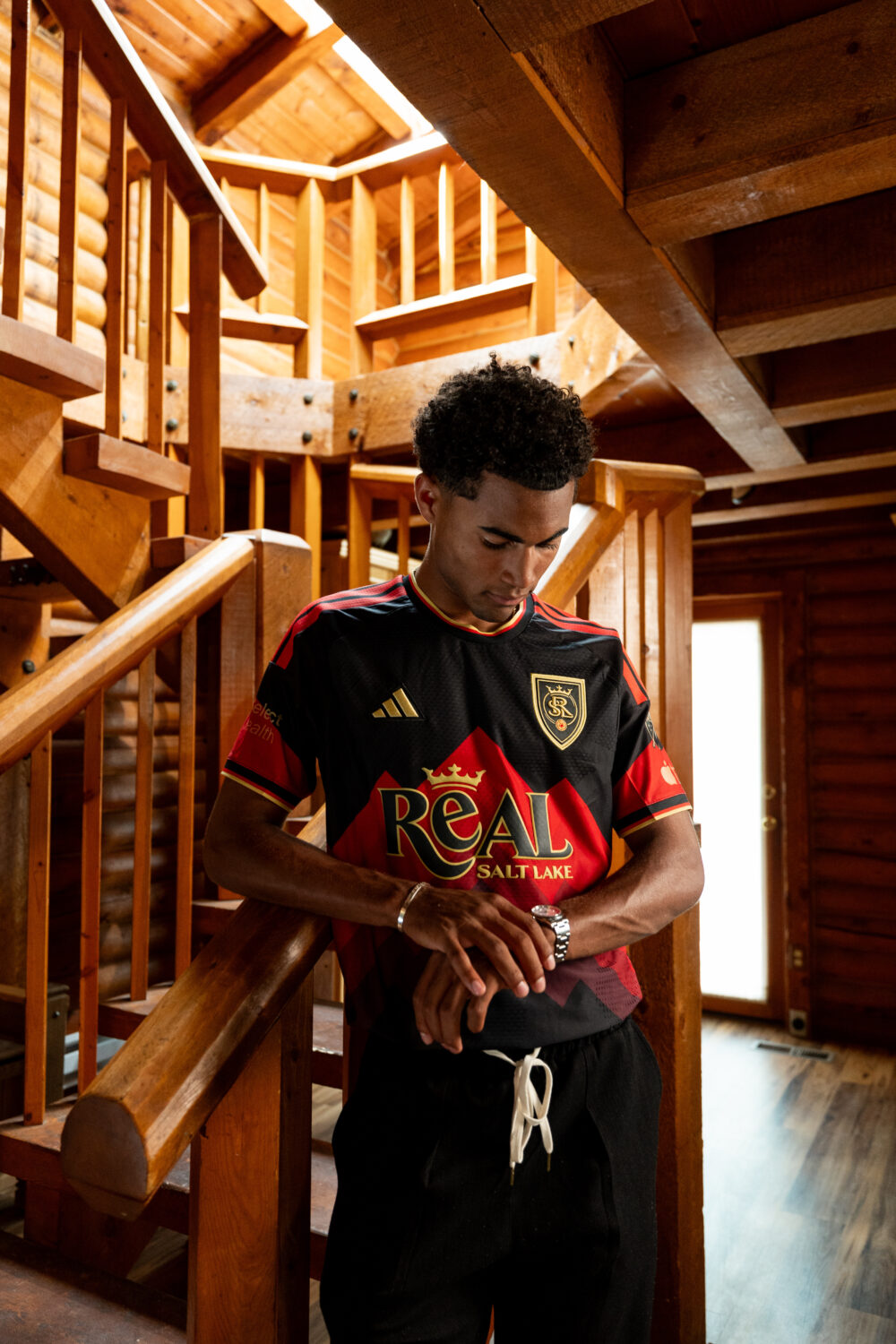
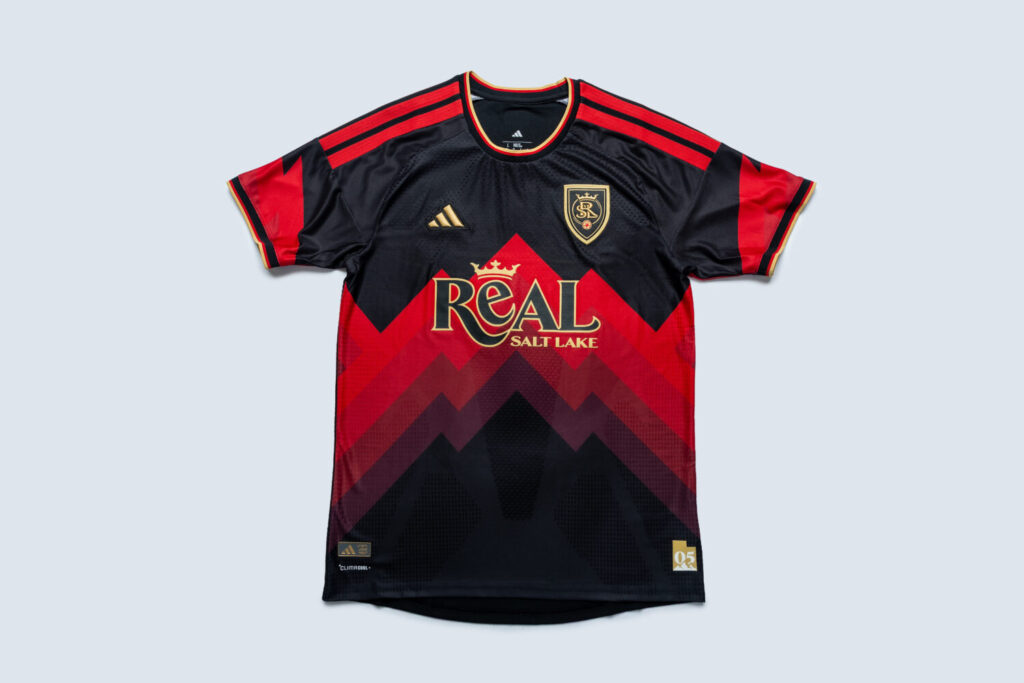
On Thursday morning, the club unveiled the latest result: the Black Diamond kit, a black, red and gold third kit from adidas’ Archive Collection, built around an oversized mountain pattern and an old-school Real Salt Lake wordmark. RSL will debut the jersey on Saturday night at home against Minnesota United in a match the club envisions as a “blackout.”
The story of the jersey began years ago with Gibbons deciding to design specifically for the people who live here.
‘Let’s just give it a go’
Gibbons essentially built RSL’s creative department from scratch.
“We didn’t have a team photographer, we didn’t have team videographers,” Gibbons said. “I was a social media manager, and basically my background was video production, so I just started making stuff, and it’s grown ever since then.”
By 2020, however, neither Gibbons nor the club knew exactly what came next.
RSL was between ownership groups. Employees had been furloughed. No one knew if new owners might eventually arrive and simply clean house, or even relocate the team.
So when the latest adidas design deck arrived, Gibbons and his creative team made a decision.
“Man, let’s just give it a go, and let’s do things the way that we think they should be done,” Gibbons remembers saying. “We’ve been here long enough. We know what the Utah community means to this club. Let’s start tying things together in the way that we think is the right direction.”
The first result was the Beehive kit.
It was also, in Gibbons’ mind, an audition.
“I’m not gonna lie to you, it’s also a proving ground for me to kinda keep the job,” he said. “Because I thought if you make a splash and do something different, that people would take notice.”
That’s where a former Utah Royals midfielder entered the story.
‘Trust these guys’
Mandy Laddish came to Utah as part of the Royals’ inaugural roster in 2018 after winning two NWSL championships with FC Kansas City. She spent two seasons with the Royals before retiring from professional soccer.
Laddish later joined adidas, where she became Gibbons’ representative as RSL began trying to establish a new working relationship with the apparel company.
The club wanted something different.
Adidas wasn’t convinced.
Laddish already knew the club, and she knew Utah.
“They were skeptical at first,” Gibbons said. “But Mandy was a huge advocate for us, and just said, ‘Trust these guys, they know this market.’”
Adidas rolled the dice.
The Beehive kit broke RSL sales records.
For Gibbons, it was proof of concept.
The jerseys needed to feel like Utah.
The Beehive was followed by Peak Utah, Switchback and Grid City, each drawing on some element of the place RSL calls home. Grid City eventually became the club’s best-selling jersey and earned RSL an Emmy for its promotional campaign.
Gibbons now regularly flies to adidas headquarters for daylong design sessions.
“It’s worth it because that’s the type of care and dedication that we take,” he said, “and it matters to us when it comes to these jerseys because it matters to our fans.
“It matters to our state how we’re represented.”
A five-year wish list
Earlier this year, while supporters were waiting to see RSL’s 2026 primary, Gibbons was already working on 2028.
Asked then what he would do if adidas handed him a completely blank slate, Gibbons didn’t hesitate.
“I would scrap it and look at what makes Utah Utah, and then I would start there,” he said.
He was equally clear about his intended audience.
“I’m making kits for people that call the state of Utah home and that are RSL fans.”
The third kit grew out of a vision Gibbons had been building for five years.
But there was a problem with one idea Gibbons had always wanted to explore.
Black.
For competition purposes, RSL needs contrasting light and dark uniforms. Its traditional claret-and-cobalt primary already occupies the dark side of that equation.
“The only way for us to ever go black would be to get rid of that primary red and blue, true calling colors of Real Salt Lake,” Gibbons said.
That wasn’t happening.
Then adidas expanded its Archive Collection, giving select MLS clubs an opportunity to produce a third jersey.
RSL learned in January 2024 that its turn was coming.
And adidas asked Gibbons a question he’d been waiting years to hear.
“What would you do for a third kit?”
“I knew instantly that it was gonna be a black kit,” Gibbons said.
An idea worth sacrificing
The Archive Collection is built in part around MLS nostalgia, but RSL didn’t begin play until 2005. There was no stash of wild 1990s uniforms to resurrect.
“You look at our history, well, we didn’t really have anything fun or unique,” Gibbons said. “No (Kansas City) Wizards, or anything with the Tampa Bay Mutiny, or any of those big, bold 1990s designs. They weren’t ours.”
So Gibbons went looking for a different kind of nostalgia.
If RSL didn’t have a deep enough archive to draw from, Utah did.
The result was the Black Diamond kit, drawing on vintage ski aesthetics and Utah’s mountain culture.
The mountain pattern that dominates the new jersey had originally been earmarked, in a somewhat different form, for a future primary kit.
Using it now meant giving that future design up.
“What I had to sacrifice was a jersey down the line with the design pattern that would’ve been,” Gibbons said. “But to me, it was worth it for an opportunity to come up with this black kit.”
The jersey uses black as its canvas, with gold accents and a throwback Real Salt Lake wordmark across the chest. Layered red peaks evoke the vintage ski aesthetic that inspired the design.
“We wanted it to represent Utah through and through, and the first thing you think of when you come to this beautiful state is those mountains,” Gibbons said. “And so we wanted to do something big, something bold, something prominent, something elegant.”
Months before anybody outside the club had seen the finished product, Gibbons made an unusually confident prediction.
“I honestly think the best RSL kit will be released in the summer,” he told the Royal Riot Podcast in February, “and I don’t think it’s anywhere close.”
RELATED STORIES



A love letter to an adopted home
The Beehive kit drew from Utah symbolism. Peak Utah juxtaposed downtown Salt Lake City with the Wasatch Front. Switchback again played with the mountains. Grid City turned the street system laid out across the Salt Lake Valley into a jersey.
The Black Diamond kit doesn’t require anyone to search for the Utah reference.
“This kind of big, bold mountain design for me is like what smacks you in the face when you land in Salt Lake City,” Gibbons said.
Fresh off a week in Charlotte, North Carolina, the difference was on his mind.
“There’s skies and there’s hills, but there’s not this beautiful majestic kind of mountain front that you get everywhere,” he said. “And so for me, I wanted to make something that kinda smacks you in the face in an elegant, beautiful way.”
Fourteen years after arriving in a state where he didn’t know a soul, Gibbons now designs jerseys intended specifically for the people who call it home.
Perhaps that’s easier to understand knowing the person doing the designing had to become one himself first.
Utah gave Gibbons a career and friends. Then a home and a family.
Now, one jersey at a time, he’s trying to give something back.
“Utah’s not a secret for the people that have been here,” Gibbons said. “We’ve known for a long time how beautiful and amazing Utah is, and now everybody else is just catching up to it.”