False hope, setbacks and uncertainty: Emeka Eneli’s long road back
Sep 18, 2026, 6:25 PM
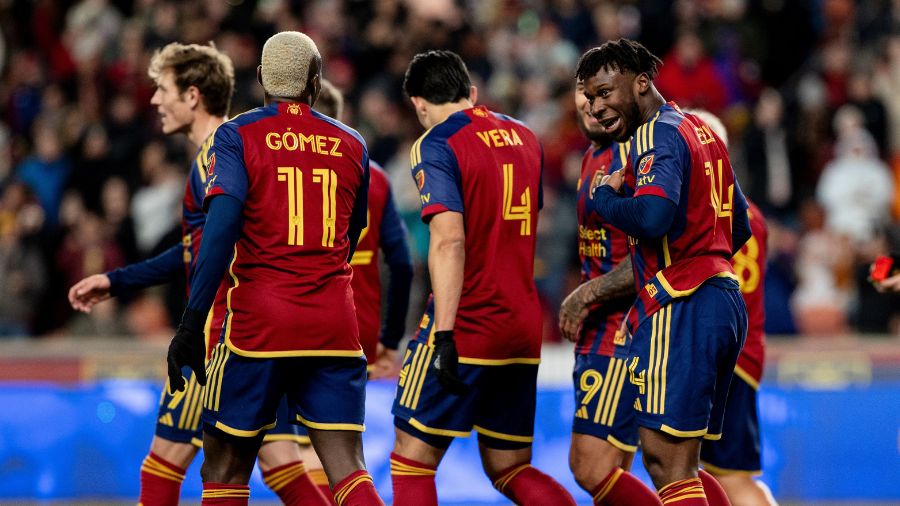
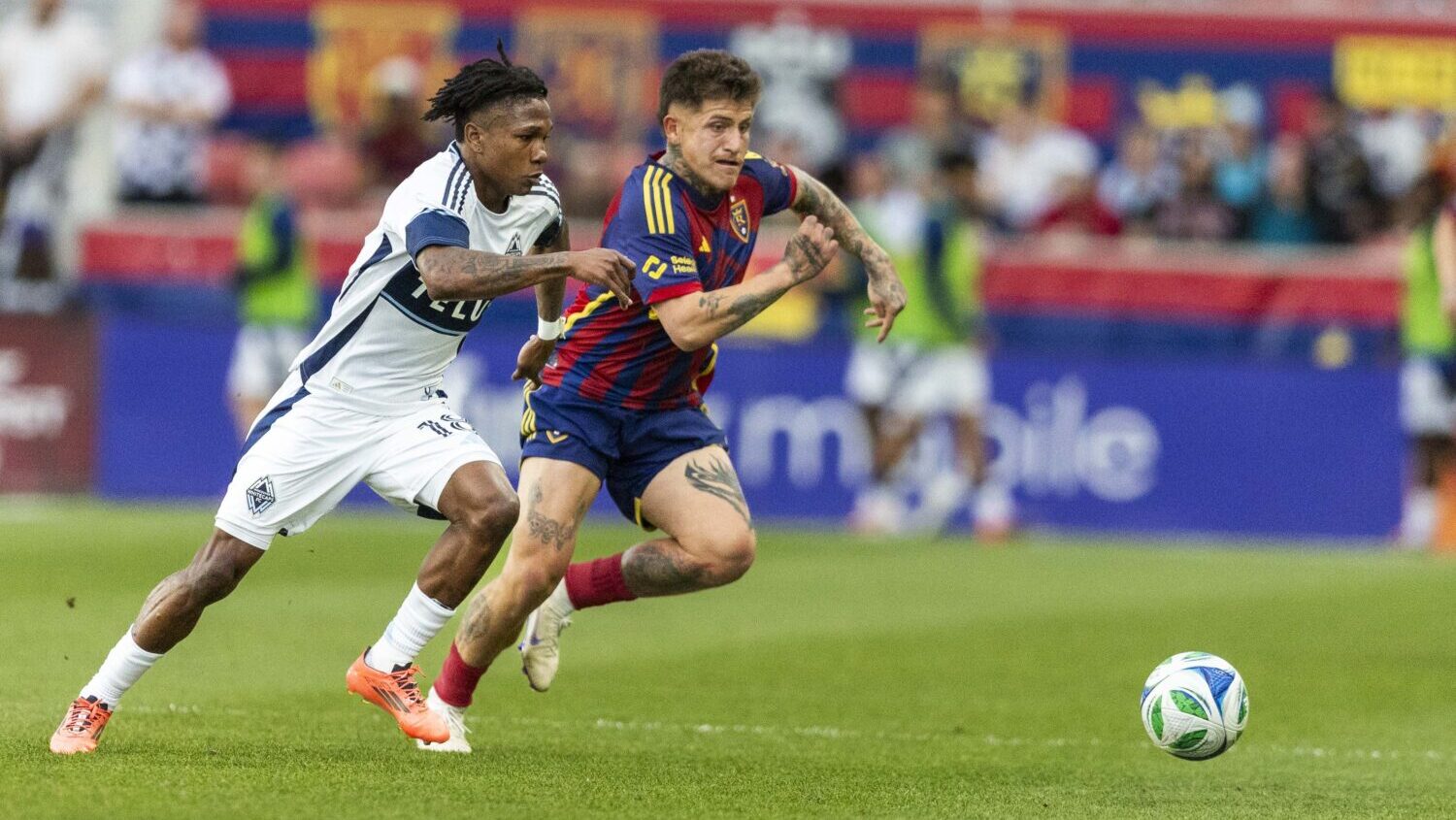
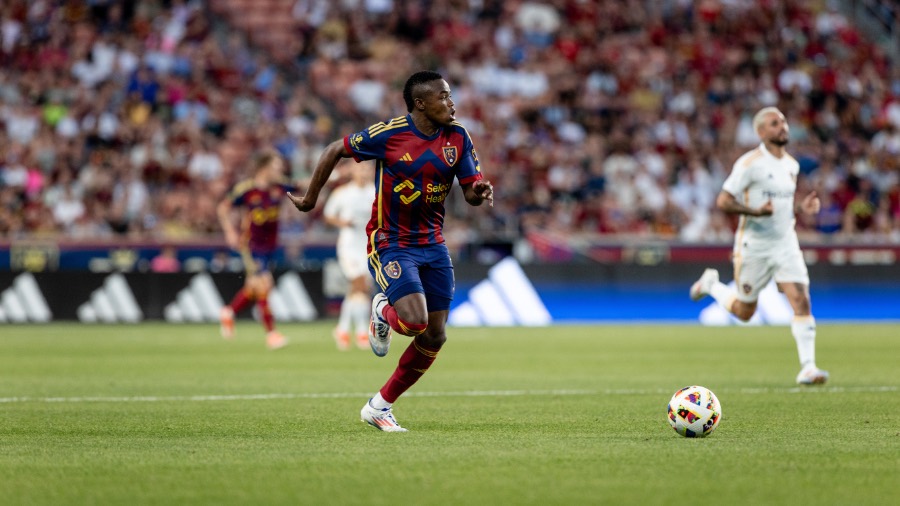
Real Salt Lake teammates celebrate the first goal of Emeka Eneli's first MLS goal at America First Field in Sandy, Utah, on Saturday, March 9.

HERRIMAN — After nearly a week in the hospital, Emeka Eneli was waiting to hear whether he could finally go home.
Months earlier, he had been waiting for a knee injection to work.
Then another one.
Then cortisone injections. Hydrodissections. Each new treatment was supposed to be the one that got him back on the field.
Finally, he had surgery. Eight weeks, he was told, and he should be back.
Instead, his knee repeatedly swelled to the size of a softball. After doctors tried to drain it for a fourth time and found the fluid inside had become thick and gel-like, tests revealed an infection from his arthroscopic surgery.
The next morning, Eneli was back in an operating room.
Now, after a second surgery to wash out the infected knee, he had spent five or six nights in the hospital.
Going home would mean a PICC line in his upper arm and a month of intravenous antibiotics.
Soccer had to wait.
“I kind of had this false hope every couple weeks that, ‘Oh, it’s almost done. It’s almost done. It’s almost done,’” Eneli said. “I don’t know if the false hope made it a better injury or a worse injury.”
The uncertainty had become the defining feature of an injury that eventually consumed most of Eneli’s 2026 season.
From the national team to an uncertain offseason
In January 2025, Eneli earned his first U.S. Men’s National Team call-up after establishing himself as one of Major League Soccer’s most dependable midfielders.
He made his international debut against Venezuela on Jan. 18 and earned his first start four days later against Costa Rica in Orlando.
By that second match, Eneli’s new teammates were beginning to learn something RSL’s defenders already knew: they could give him the ball under pressure.
“I talked to Miles right before the game, and we worked a little bit about him driving and just bouncing it off me,” Eneli said after the Costa Rica match. “I said, ‘I’m always gonna be there, like no matter what. You can always give it to me.’”
Eneli helped the U.S. escape pressure in midfield and showed another part of his game, driving forward into the attack. Late in the second half, he won the ball back and found Caden Clark for his first international assist in a 3-0 U.S. victory.
Afterward, Eneli was already talking about what he needed to improve to earn another call-up.
“Getting the ball into our 10s, playing into our wingers. Driving with the ball a little bit more,” he said. “I think I didn’t do a lot today, but I think it’s one of the best parts of my game.”
He returned to Salt Lake and played the 2025 season.
By the end of it, another national-team camp wasn’t the immediate concern.
His knee was.
‘It felt like something else’
There wasn’t a tackle or a pop.
Eneli had dealt with patellar tendinitis before and managed it with rehabilitation while continuing to play. When RSL’s season ended, he and the medical staff decided the extended offseason offered an opportunity to address it.
He received a platelet-rich plasma injection shortly after the season, stayed in Salt Lake to rehab and eventually began jogging.
The pain returned.
A second PRP injection followed in December. Eneli was still expecting to be ready for the season.
But when he tried running again, the pain was different.
“It didn’t really feel like tendon pain,” Eneli said. “It felt like something else.”
An ultrasound during preseason showed that the tendon had actually improved. Attention turned instead to irritation in the fat pad behind his kneecap.
Two cortisone injections didn’t solve it. Neither did two hydrodissections, procedures in which fluid is injected to separate scarred or adhered tissue.
By the end of March, Eneli opted for arthroscopic surgery to trim a portion of the fat pad.
The surgeon found part of the fat pad tethered inside the knee and released it.
The procedure appeared successful.
The recovery timeline was eight weeks.
Then the swelling started.
‘It was only contained in the joint’
By the fourth attempted drainage, something was clearly wrong.
Tests showed the knee was infected, and Eneli underwent another surgery the following morning to wash it out.
His rehabilitation calendar no longer mattered.
“The big thing with infections is that they’re worried that it can spread to any part in your knee joint,” Eneli said.
Fortunately, it hadn’t.
“I think about Kyle Busch,” Eneli said. “He just got sepsis and it spread to his bloodstream, and he died just like that.”
NASCAR champion Kyle Busch had died at 41 just days earlier after severe pneumonia progressed to sepsis, a life-threatening reaction to infection that can rapidly damage organs and tissue.
“Obviously bummed about the whole injury and things like that, but I’m just glad that they kind of got it taken care of,” Eneli said. “They acted really quickly, so it wasn’t able to spread anywhere else. Didn’t affect my knee, my leg and, obviously, the rest of my body.”
After the washout, his surgeon delivered the news Eneli needed to hear.
“‘It was only contained in the joint. It didn’t spread to any of the other structures. Your structures look perfect,’” Eneli recalled his surgeon telling him.
Eneli said the doctor told him that in 20 years of performing knee scopes, he had never had one become infected.
After being discharged from the hospital, Eneli spent roughly a month administering intravenous antibiotics through a PICC line.
A nurse visited weekly to draw blood and change the dressing. Showering required covering the line. Exercise was limited. Because he lived alone, Eneli needed an extension on the line so he could administer the medication himself.
He even traveled with it and his antibiotics to Chicago for his brother’s graduation.
Only after the PICC line came out in June could his normal rehabilitation truly begin.
The hardest part wasn’t physical
By Eneli’s calculation, the infection added roughly 15 weeks to his absence.
“When you have a big injury, like an ACL, Achilles, MCL, you kind of know, ‘Oh, I’m gonna be out for six months. I’m gonna be out for seven months,’” Eneli said. “Mine was kind of weird to navigate.”
There was always another treatment that might be the last one.
Eventually, Eneli stopped dwelling on when he might return.
“The more I focused on it and the more you focus on the time you’ve missed and the things that went wrong, I think just the worse mindset you can kind of get in,” he said.
The isolation was another lesson.
Before this, Eneli’s longest injury absence had been a high ankle sprain in college. Now he spent months stuck inside while his teammates went outside to train.
“When I was injured, I wasn’t able to go outside and watch training,” Eneli said. “You’re stuck inside the whole entire time. You don’t really have windows to see out. It gets really long. It gets really long.”
His mother came to Utah for the second surgery. Teammates and family helped him through what Eneli calls, without hesitation, the darkest period of his career.
It also changed how he sees teammates going through injuries of their own.
“You tell them, ‘Oh, I hope you feel better,’ but you don’t really know what they’ve actually experienced,” Eneli said. “But I’ve actually experienced it now.”
Now he asks about more than the injury.
“How are you doing mentally? How’s life going?” Eneli said. “Because the injury’s one thing physically, but I think the hardest part of an injury isn’t the physical aspect. It’s the mental aspect, being away from the game for so long.”
RELATED STORIES

Back to soccer
Eneli began running again in late July and returned to the field in August.
There have been no training setbacks.
After roughly three weeks of full training, he describes his knee as basically normal and estimates himself at 90 to 95%.
The rest, he believes, requires something rehabilitation can’t provide.
Minutes.
“I think once I get two, three matches under me,” Eneli said, “I’m feeling really, really fit and really good.”
The original target for Eneli’s return was Saturday against Vancouver, but as his recovery progressed, there was hope he might return even sooner.
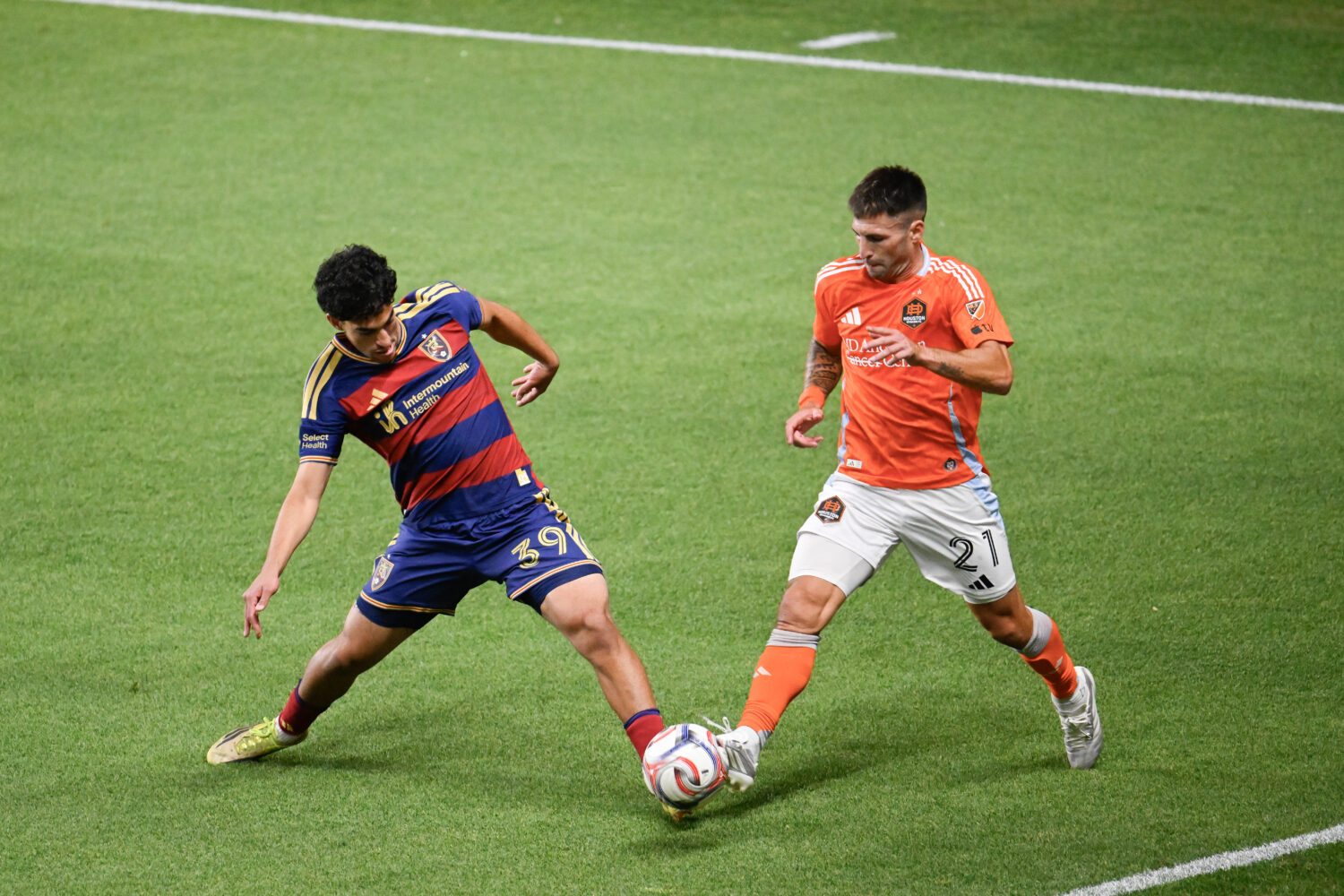
Eneli said the staff considered giving him 10 to 15 minutes in Houston on Sept. 9, then increasing his workload against New York City FC three days later.
Houston proved too soon.
Eneli made the bench against New York and was cleared for approximately 10 minutes, but the game and substitutions unfolded without him entering.
Now the original target has arrived.
Eneli finished last season dealing with a nagging knee injury. Nearly a year later, it’s behind him.
Now, after months in which the next question was another injection, another procedure, another drainage or another week of rehabilitation, Eneli is left with one final question.
When does the coach put him into the game?
For the first time in a long time, that’s a soccer question.