Jazz Mailbag: How does Ace Bailey stack up with past rookies?
Mar 31, 2026, 4:20 PM | Updated: 4:29 pm

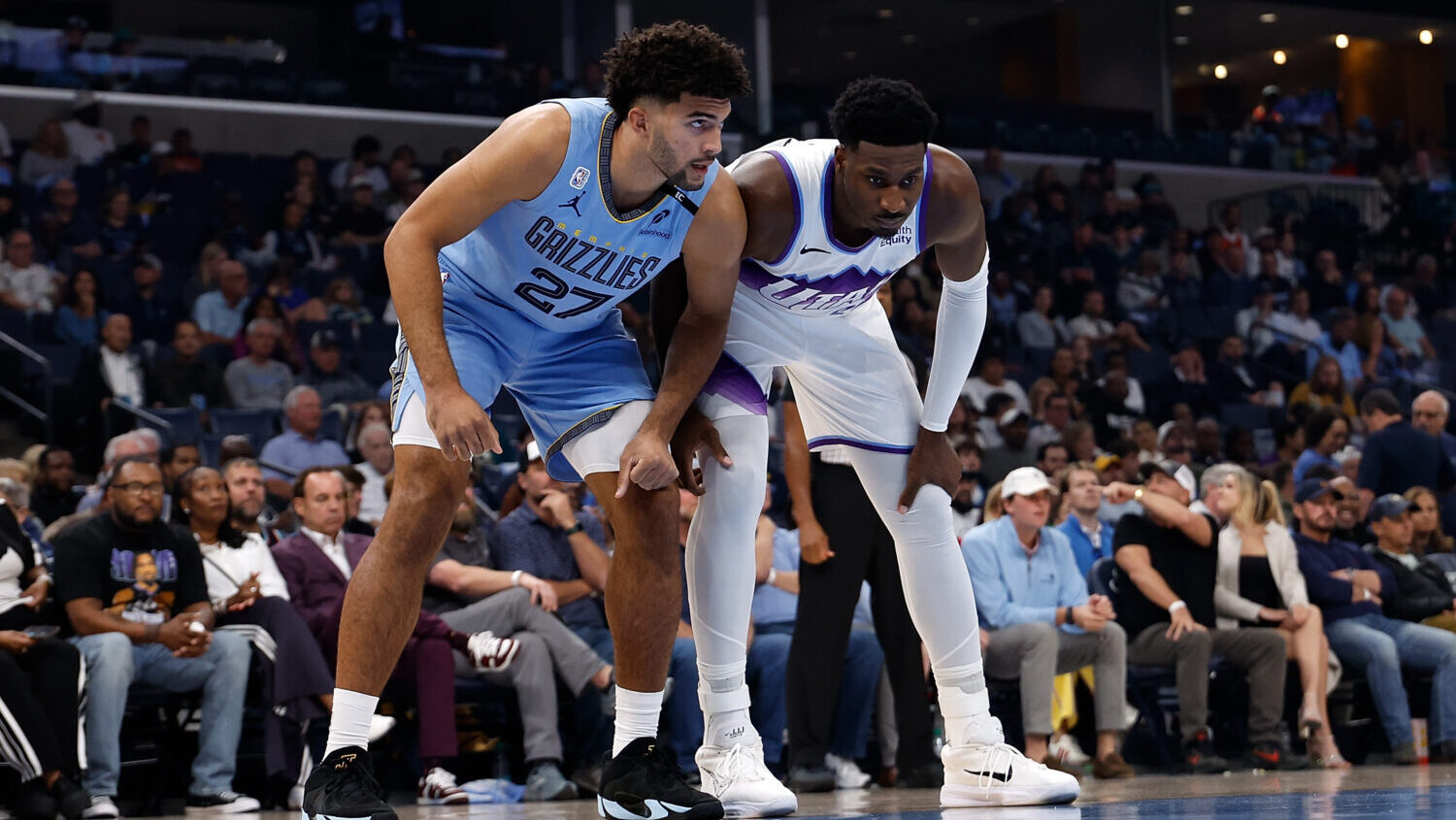
SALT LAKE CITY – Welcome to the Utah Jazz Mailbag! This week, we look at how Ace Bailey’s rookie season stacks up against former Jazz players’ first years in the NBA.
Each week, we will send out a prompt on X and BlueSky asking for the questions you have about the Jazz.
Then, we’ll respond to as many as we can in that week’s Jazz mailbag in the Jazz Notes podcast.
Jazz Mailbag: Where does Ace Bailley’s season rank among Jazz players?
Which players in Utah Jazz history do you think have had the best rookie years? Where does Ace Bailey’s season rank on that list?
— Jesse (@The99thProblem) March 30, 2026
Question: Which players in Utah Jazz history do you think have had the best rookie years? Where does Ace Bailey’s season rank on that list?
Answer: When discussing the best rookie seasons in Jazz history, two campaigns stand above the rest.
The most notable debut belongs to Darrell Griffith, who remains the only Jazz player to win Rookie of the Year, earning the award in 1981.
Drafted second overall in 1980, Griffith averaged 20.6 points, 3.6 rebounds, and 2.4 assists while shooting 46 percent from the field and leading the Jazz to a 28-54 record.
The second — and, in my opinion, the best — rookie season in Jazz history belongs to Donovan Mitchell.
Despite finishing behind Ben Simmons in the Rookie of the Year voting, Mitchell averaged 20.5 points, 3.7 rebounds, and 3.7 assists while shooting 43 percent from the field and 34 percent from 3-point range. He led the 48-34 Jazz in scoring and helped them upset the Oklahoma City Thunder in the first round of the playoffs.
Donovan Mitchell rookie season pic.twitter.com/oCpg0YY5xH
— Brett Usher (@UsherNBA) May 26, 2025
At the time, Mitchell was the first player since Carmelo Anthony to lead a playoff-bound team in scoring for an entire season. He also joined Larry Bird, Wilt Chamberlain, David Robinson, and Kareem Abdul-Jabbar as the only rookies to lead a 48-win team in scoring.
So how does Bailey stack up?
Context matters when evaluating Bailey’s play, especially when comparing him to Griffith and Mitchell.
The Jazz drafted Griffith just months after waiving “Pistol” Pete Maravich, the former face of the franchise and the team’s second-leading scorer behind Adrian Dantley.
That move left a major vacancy, and Griffith immediately received the green light to shoot whenever he stepped on the floor.
The same proved true for Mitchell, whom the Jazz drafted days before Gordon Hayward left for Boston in free agency, leaving a massive offensive void for the rookie guard to fill.
𝐃𝐑𝐀𝐅𝐓 𝐇𝐈𝐒𝐓𝐎𝐑𝐘 📚
In the 1980 NBA Draft, with the second overall pick, the Utah Jazz selected Darrell Griffith 🗣️
Darrell went on to be Rookie of the Year and was awarded All-Rookie team for the 1980-81 season 🖤#TakeNote pic.twitter.com/ZYbLDBz5Uz
— Utah Jazz (@utahjazz) June 20, 2024
While neither task was easy, both Griffith and Mitchell received exceptionally long leashes to pile up scoring numbers.
Bailey has not enjoyed that same freedom, despite his reputation as a scorer coming out of college.
Griffith averaged 19.1 field-goal attempts per game as a rookie, while Mitchell averaged 17.2. By comparison, Bailey is averaging 12.0 attempts per game in his first season.
Another factor is what the Jazz asked of each player early in their careers.
After drafting Griffith, the franchise needed a star to pair with Dantley and gave the Louisville product free rein offensively.
Mitchell likewise joined a team suddenly without its star but constructed in a way that emphasized his strengths while masking his weaknesses.
Bailey, though not a poor fit, joined the Jazz during an unusual phase of the team’s evolution.
Ace Bailey is quickly becoming must see TV pic.twitter.com/1KRdHnGkoY
— Eric Spyropoulos (@EricSpyroNBA) March 26, 2026
His rookie season coincided with a breakout year from Keyonte George, who increased his scoring average from 16.8 points per game as a sophomore to 23.6 points in his third season.
It also aligned with Lauri Markkanen’s return to form, as he rebounded from 19.0 points per game in 2024-25 to 26.7 in 2025-26.
As a result, the Jazz did not need Bailey to shoulder a heavy offensive burden, even if he was capable of doing so.
View this post on Instagram
Jazz Mailbag: What are the best and worst moments of the 2025-26 season?
Perhaps most important, though, is the developmental path the Jazz set for Bailey from the start.
While the wing showed clear scoring ability during his lone season at Rutgers, the Jazz focused on expanding his game rather than simply spotlighting his offense.
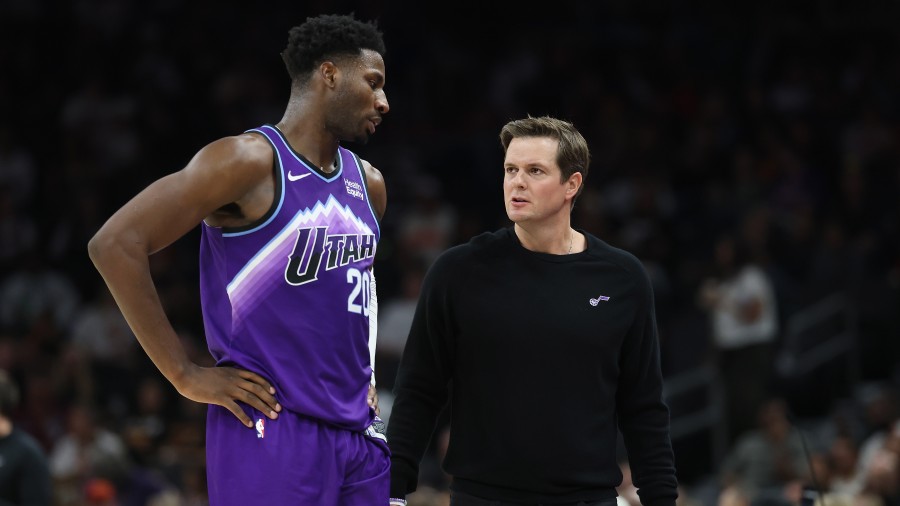
“We want to help Ace get through this season and help him be a way better player by the end than he started,” Jazz coach Will Hardy said of the team’s plan. “I’m still not pro Ace just bombing away to try to get stats and clicks on the internet.”
Ace Bailey has 12 blocks in his last 4 games. pic.twitter.com/lyhdzRGnn1
— Ben Anderson (@BensHoops) March 29, 2026
That approach has pushed Bailey into a larger role as a defender and playmaker rather than a pure scoring option.
Even in a less specialized role, Bailey has scored effectively, particularly when given greater opportunity.
In the 22 games in which he has attempted at least 15 shots, the rookie is averaging 20.3 points per game, on pace with both Griffith and Mitchell when given similar offensive responsibility.
Ultimately, Bailey’s rookie season will not rank among the greatest in Jazz history, especially alongside the standout campaigns from two high-flying Louisville guards. Still, he has done more than enough to justify his status as a top-five pick.
Want to ask questions in next week’s Jazz mailbag? Follow us at @benshoops.
Are you on Instagram? Let’s connect, give us a follow @kslsports.
Ben Anderson is the Utah Jazz insider for KSL Sports and the co-host of Jake and Ben from 10-12p with Jake Scott on 97.5 The KSL Sports Zone. Find Ben on Twitter at @BensHoops, on Instagram @BensHoops, or on BlueSky.