The one thing that could make or break the Utah Jazz next season
Sep 7, 2026, 5:20 PM
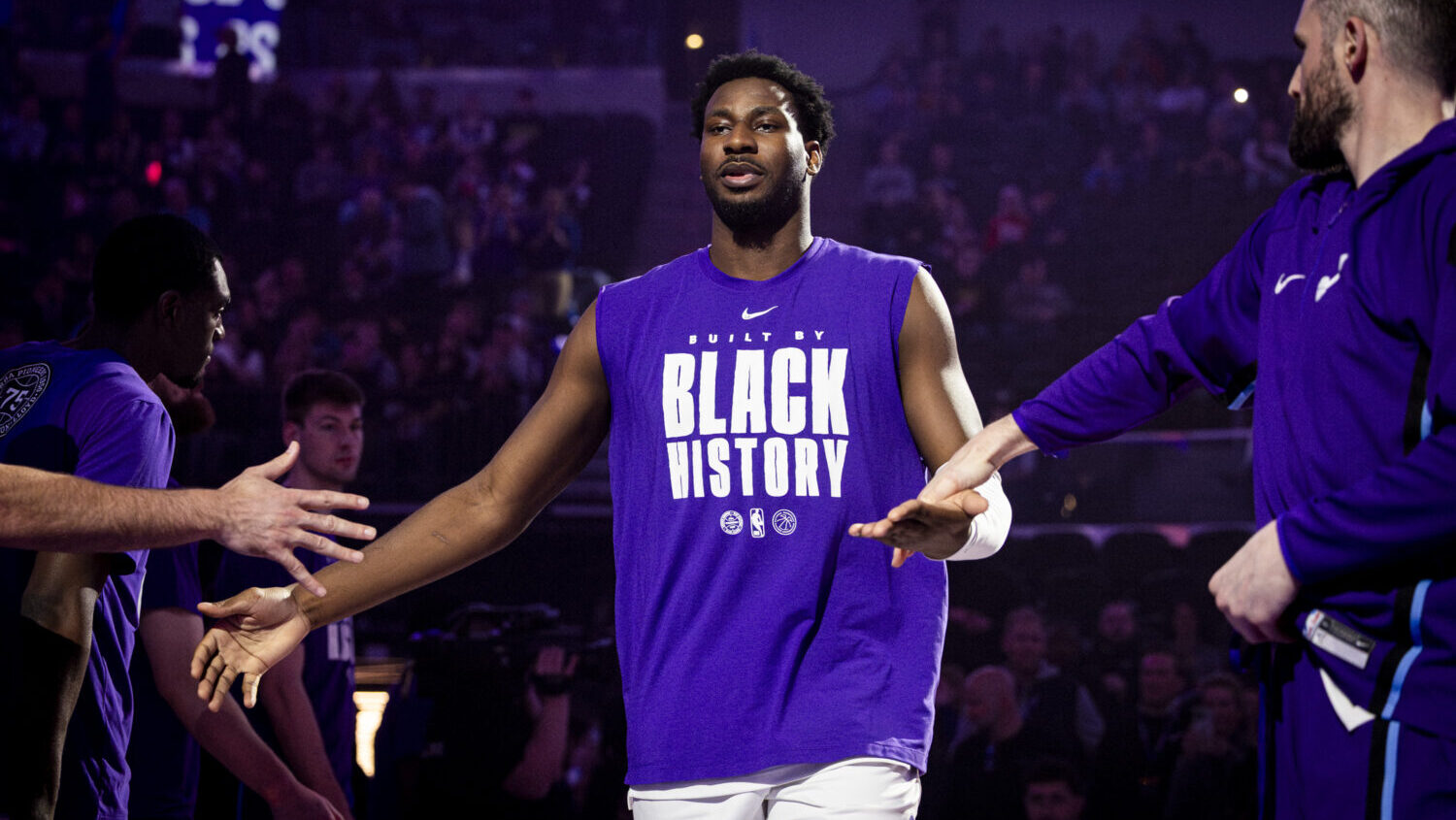
Utah Jazz forward Jaren Jackson Jr. slaps hands with his teammates as his name is announced with the rest of the Jazz’s starting lineup before an NBA game against the Sacramento Kings held at the Delta Center in Salt Lake City on Wednesday, Feb. 11, 2026. (Photo courtesy of Isaac Hale, Deseret News)
(Photo courtesy of Isaac Hale, Deseret News)

SALT LAKE CITY — The Utah Jazz have their sights set on the playoffs for the 2026-27 NBA season, but one glaring problem stands between them and the postseason.
Utah has been a bottom-two defensive team in each of the last three seasons. That won’t fly if the goal is to be playing basketball in late April.
Fixing the defense has been a major focus for the Jazz throughout the offseason. Before the 2026 NBA Draft, president of basketball operations Austin Ainge was candid about the work that needed to be done.
We sure hope that we can make a big jump there. That was definitely a big consideration when bringing in Jaren (Jackson Jr.), who is a former Defensive Player of the Year and a guy who can cover up a lot of weaknesses of other players and can play multiple positions.
But, we also know that one player can’t do it all. We need improvement throughout the roster. Defense is also something we’re considering strongly in the draft and in free agency. I think there are a lot of ways we need to address it: internal improvement, external improvement and more size and talent on the floor. It will be a big emphasis all summer.
What do you see as the best-case scenario for the Utah Jazz’s defensive ranking next season? What about offense?
Can they be top-15 in both? Maybe top-10 offense and top-20 defense? pic.twitter.com/46oDlv0nIu
— Chandler Holt (@CHoltSports) September 7, 2026
Recent History Of Defensive Improvements
Over the last five years, several teams have exited a rebuild and made massive defensive strides in just one season.
In 2021-22, two teams did it. The Cleveland Cavaliers improved from 22-50 to 44-38 and jumped from 25th to fifth in defensive rating. The Minnesota Timberwolves went from 23-49 to 46-36 while climbing from 28th to 13th defensively.
More recently, the 2023-24 Houston Rockets improved from 22-60 to 41-41 and jumped from 29th to 10th defensively. One year later, the Detroit Pistons went from 14-68 to 44-38 while climbing from 25th to 10th.
These dramatic turnarounds are not simply the result of development, though. In just about every example, the teams added defensive personnel, changed coaches, or overhauled their schemes.
What Will The Utah Jazz Defense Look Like?
Although losing Walker Kessler doesn’t help, Utah will get its first full season of Jaren Jackson Jr. and has strengthened its perimeter defense with the offseason acquisitions of Josh Okogie and Josh Green.
There is no question that we will see the best defensive product that Utah has rolled out in the last four years. But how good can it be?
If Jackson can return to his DPOY-level and other players on the roster play at or near their defensive ceilings, a jump into the top half of the league is possible. More realistically, finishing between 15th and 20th would represent a significant step forward.
Barring a setback, a top-10 offense is absolutely a possibility. In 808 non-low-leverage minutes with Keyonte George and Lauri Markkanen sharing the floor last season, the Jazz scored 119.8 points per 100 possessions, according to Databallr. Applied over a full season, that mark would have tied for sixth among NBA offenses.
If Utah can pair a near-average defense with a top-10 offense, it would join a surprisingly successful group of recent teams.
Since the 2019-20 season, 14 teams have finished with a top-10 offense and a defense ranked between 15th and 20th. Those teams won 60 percent of their games, and 11 of the 14 earned a top-six seed in their conference.
Of note, five of the 14 had top-5 offenses, and seven of the 14 had exactly the 15th- or 16th-ranked defense.
— Chandler Holt (@CHoltSports) September 7, 2026
The alternative is far less encouraging. Only three teams since the 2019-20 season had a bottom-five defense and made the playoffs. None of the three advanced past the first round.
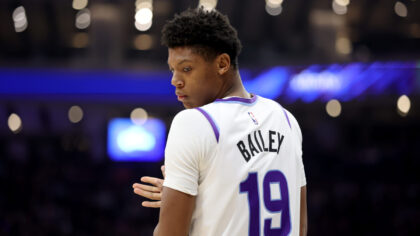
Utah does not need Jackson to single-handedly create an elite defense. It does, however, need him to anchor a competent one while George, Bailey, Markkanen, Peterson, and the rest of the rotation provide enough resistance around him.
As Ainge acknowledged before the draft, one player cannot do it all.
If Utah’s defense approaches league average, recent history suggests its offense could carry it comfortably into the postseason. If it doesn’t, history suggests even their increased talent may not be enough.