Despite Valiant Big 12 Tournament Effort, Utah Comes Up Short Against Cincinnati
Mar 10, 2026, 3:22 PM | Updated: 5:59 pm

Mar 10, 2026; Kansas City, MO, USA; Cincinnati Bearcats forward Baba Miller (18) shoots against Utah Utes guard Don McHenry (3) and forward Keanu Dawes (8) during the first half at T-Mobile Center. Mandatory Credit: William Purnell-Imagn Images
(8)

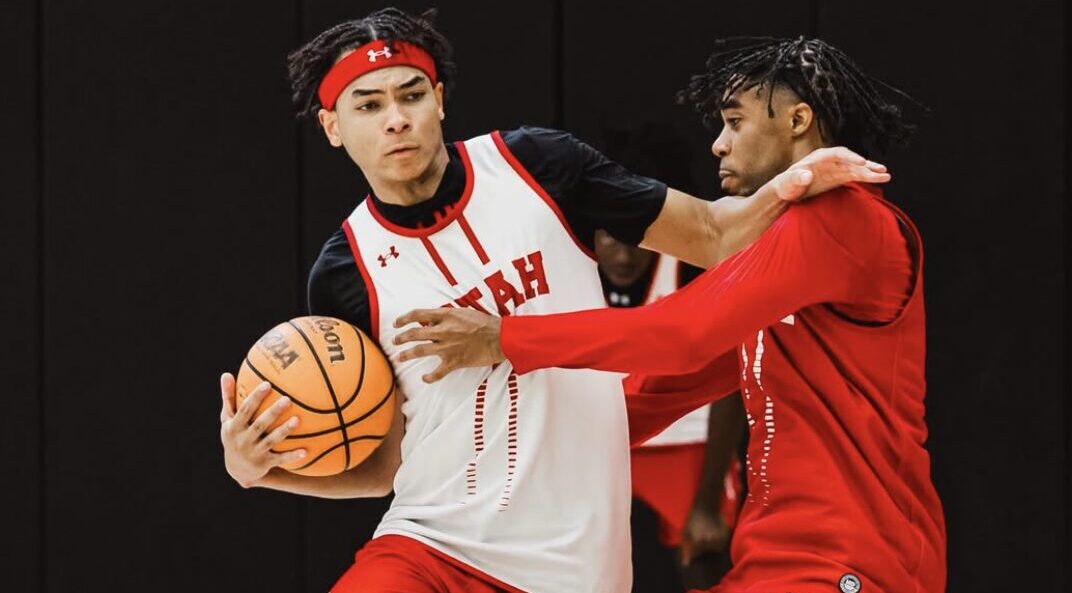
KANSAS CITY — Utah’s season ended the same way much of it unfolded: promising start, uneven in-between, resilient late, but ultimately just short. The No. 16 seed Utes rallied from a double-digit deficit in the second half but could not complete the comeback, falling 73-66 to No. 9 seed Cincinnati in the opening round of the Big 12 Tournament at T-Mobile Center.
For a Utah team already eliminated from postseason contention, the afternoon carried the unmistakable feel of a final chapter — one last push from a group that had spent the winter battling through a difficult season.
“We had some lows, but we fought and came back,” Jensen said afterward. “I’m proud of them.”
The Utes struggled mightily early, shooting just 19 percent in the first half before finding rhythm in the second. Down double digits late, Utah surged behind guard Terrence Brown and trimmed the deficit to single digits in the closing minutes.
The rally fell short, but Jensen credited his players for refusing to let the game — or the season — end quietly.
“We simplified it,” Jensen said of the second-half adjustments. “Guys were aggressive… trying to score off our defense in transition.”
The margin for error, however, remained razor-thin.
“A few mistakes,” Jensen said. “We gave up two rebounds off free throws and a couple timely turnovers. The margin for error is so small.”
A brutal end to the first half
Utah opened the game with energy and briefly built a 15–9 lead midway through the first half behind early baskets from Terrence Brown, Seydou Traore, and James Okonkwo.
But once the offense cooled, it cooled dramatically.
The Utes missed 25 of their first 31 shots and finished the half shooting just 6-for-31 (19%) from the field and 1-for-8 from three, allowing Cincinnati to seize control late.
A flurry of Bearcat baskets in the final two minutes — including a dunk from Baba Miller and a jumper from Moustapha Thiam — capped a 9–0 run that sent Cincinnati into halftime with a 29–20 lead.
Despite the offensive drought, Utah had actually controlled the game for long stretches early. The Utes led for nearly 15 minutes of game time, but the late half collapse flipped the momentum heading into the break.
Cincinnati’s controlled second half, Utah fought back
Whatever rhythm Utah lacked in the first half arrived immediately after halftime.
The Utes shot a blistering 64 percent from the field in the second half (14-for-22) and knocked down 4 of 8 threes, playing with a level of pace and confidence that had been absent earlier.
Traore led the charge, scoring 10 of his 12 points after halftime, while Brown took over as the game tightened.
After Cincinnati pushed the margin to 15 points (48–33) midway through the half, Utah refused to fade.
Brown began carving up the Bearcats’ defense with mid-range jumpers and drives, Traore connected from deep, and Keanu Dawes added a key three during the surge.
With 4:35 remaining, Brown buried another jumper to pull Utah within 63–58, a late rally that trimmed the deficit to just five points.
From there, Utah continued to fight, even trimming the lead to four in the final minutes. However, as Cincinnati maintained the cushion and never allowed it to become a one-possession type of game.
Leaders for Utah
Brown finished with 22 points and six assists, attacking downhill and living at the free-throw line, where he went 8-of-9.
Dawes each added 15 points and grabbed eight rebounds. Seydou Traore finished with 12 points and five rebounds.
Utah ultimately shot 37.7 percent from the field but was efficient at the line, hitting 13 of 14 free throws (92.9%).
Cincinnati countered with balanced scoring.
Jalen Celestine finished the game with 19 points and Moustapha Thiam scored 14 points, while Miller posted 11 points and 12 rebounds for a double-double.
The Bearcats’ advantage on the glass and second-chance opportunities — 14 second-chance points compared to Utah’s seven — proved decisive in a game decided by five.
The season’s final tone
In many ways, Tuesday’s game mirrored Utah’s season. There were stretches where the offense stalled and the margin grew too large — and stretches where the Utes played connected, confident basketball that showed the team they hoped to become.
But the hole was simply too deep. Utah battled until the final possession, outscoring Cincinnati 38–34 in the second half, yet the late push only narrowed the gap rather than flipping the result,
When the final horn sounded, the scoreboard read Cincinnati 73, Utah 66.
And with it came the quiet realization that the season had reached its end.
The bigger picture for Utah & Alex Jensen
Tuesday’s loss in Kansas City didn’t just end Utah’s tournament run — it closed the book on a season that served as a crash course in what it takes to compete at the highest level of college basketball.
For first-year head coach Alex Jensen, his staff, and a roster largely new to the Big 12 grind, the year exposed hard truths. Utah showed flashes of cohesion and competitiveness throughout the season, but too often those moments came between long stretches where the offense stalled, defensive assignments slipped, and games drifted away.
The pattern appeared again Tuesday. Utah shot just 19 percent in the first half before finding its rhythm later, a microcosm of a season where the Utes often played their best basketball only after digging themselves into difficult positions.
Those lessons now carry forward into the most important phase of the rebuild.
With the season over, the focus immediately shifts to roster construction — and the reality that meaningful changes are likely necessary. The Big 12’s physicality, depth, and pace demand a specific type of roster: shooting on the perimeter, size and rebounding in the frontcourt, and guards capable of handling relentless defensive pressure.
The offseason and the opening of the transfer portal will shape the next step.
Jensen and his staff now move into evaluation mode — determining which pieces form the foundation moving forward and where upgrades are needed to elevate the program. The goal isn’t just improvement, but clarity: building a roster that fits the style, competitiveness, and consistency required to win in the conference.
The Bottom Line
Utah didn’t go quietly. After a rough first half that could have turned into a blowout, the Utes showed resilience — shooting lights-out in the second half and cutting a 15-point deficit to four late.
But the early offensive struggles and Cincinnati’s second-chance scoring ultimately proved too much to overcome. The comeback effort was strong and the team battled to the end. The fight was there. It just came a little too late.