Instant takeaways: Utah basketball rallies from 17 down to escape Long Beach State, 66–63
Nov 2, 2026, 9:37 PM

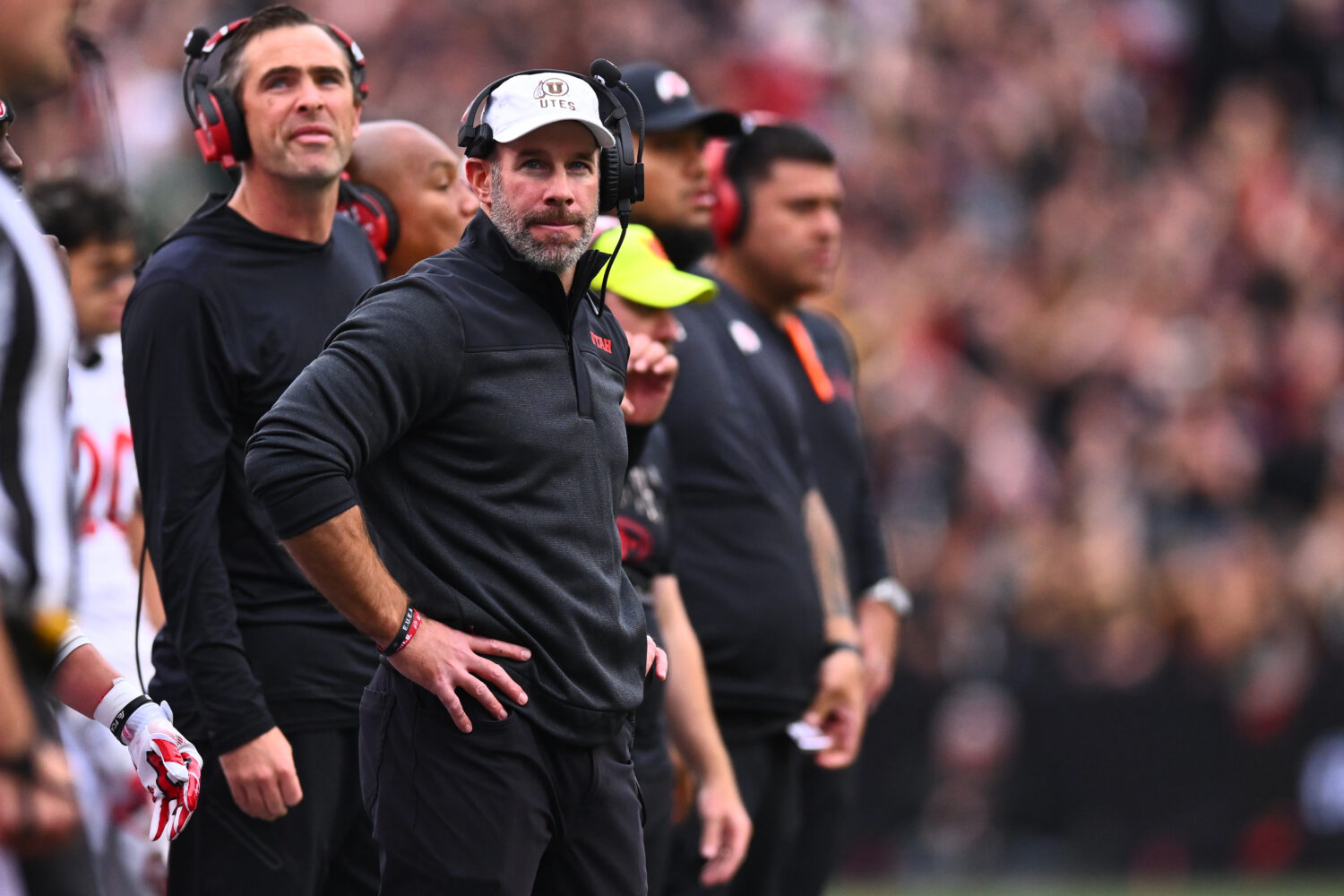
Jan 31, 2026; Salt Lake City, Utah, USA; Utah Utes head coach Alex Jensen reacts after a play against the Oklahoma State Cowboys during the second half at Jon M. Huntsman Center. Mandatory Credit: Rob Gray-Imagn Images

SALT LAKE CITY — Utah opened its season with a comeback it can appreciate and a performance that needs considerable work.
The Runnin’ Utes erased a 17-point second-half deficit to beat Long Beach State 66–63 on Monday at the Jon M. Huntsman Center. Trey Campbell scored 20 points as Utah recovered from a careless opening half and found enough defensive consistency to turn the game.
Alex Jensen’s team deserves credit for responding. It also made this considerably harder than necessary.
Here are five takeaways from Utah’s season-opening win.
Utah basketball made this way difficult
Utah’s first-half problems went beyond missed shots. The Utes were loose with the ball, inconsistent defensively and too often playing with less urgency than Long Beach State.
Ten turnovers produced 18 Long Beach State points before halftime, sending Utah into the break trailing 40–28 despite shooting 50%. The deficit reached 17 early in the second half.
Long Beach State deserves credit for applying pressure. Utah supplied plenty of assistance.
The response showed the Utes could play considerably better. The concern is why they needed such a large deficit to get there. A team establishing its identity cannot make concentration and effort things it grows into during games.
TJ Burch sparked the consecutive stops that changed the game
Utah’s offense kept a comeback possible. Its second-half defense made one happen, with TJ Burch bringing pressure and urgency.
Burch finished with Utah’s best plus-minus, reflecting the team’s productive stretches with him on the floor. His impact went beyond scoring, helping disrupt Long Beach State’s rhythm.
After allowing 40 first-half points, Utah held Long Beach State to 23 after the break. A scoreless stretch of more than four minutes helped the Utes pull even at 56 with 7:44 remaining.
Those stops created opportunities to attack before Long Beach State could establish its defense. Utah’s offensive production finally translated into a shrinking deficit.
Long Beach State scored just seven points after reaching 56. Burch helped fuel the sustained resistance that made the recovery possible — and set the standard Utah needed earlier.
Trey Campbell gave Utah someone to trust
Campbell was Utah’s most dependable offensive player on a night that badly needed one.
He scored 11 points on 4-of-5 shooting before halftime, including both of Utah’s first-half 3-pointers. When the Utes struggled to maintain rhythm, Campbell supplied efficient offense without needing a large volume of shots.
He continued influencing the game as Utah rallied, reaching 20 points, eight assists and four steals entering the final minute.
His ability to create for teammates and turn defensive activity into opportunities helped stabilize Utah. The Utes needed someone who could settle possessions and make productive decisions.
One game won’t establish the backcourt’s ceiling, but it showed how important Campbell can be to its floor.
Utah’s interior advantages helped rescue the opener, but finishing needs work
The Utes found a more reliable path by attacking the basket and controlling the glass. They still left too many opportunities unfinished around the rim.
Entering the final minute, Utah held a 40–18 advantage in paint points and a 38–26 rebounding edge. Missed close-range chances kept those advantages from producing more separation.
Jackson Holcombe scored 14 points and contributed rebounding and rim protection, while Malek Gomma collected 11 rebounds before the final minute. Their work helped Utah secure stops and generate offense inside, although the Utes finished just 14-of-23 on layups.
With Utah shooting 2-of-10 from three before halftime, those opportunities carried additional weight. Getting to the basket was the right approach. Finishing consistently would have made the comeback considerably less difficult.
Turnovers and free throws nearly spoiled the response
Even after erasing the deficit, Utah struggled to create breathing room.
The Utes entered the final minute with 15 turnovers and a 9-of-17 showing at the free-throw line. Those empty possessions kept Long Beach State within reach despite Utah’s improved defense and interior advantages.
Ball security improved after halftime, helping the offense function more consistently. Missed foul shots complicated the finish and left Utah protecting a narrow lead.
The Utes earned credit for recovering and opening with a win. They also left Jensen with a straightforward teaching point: the defensive urgency that fueled the comeback needs to be present from the opening tip.