Utah Football: First Bye Week Report Card
Oct 3, 2025, 4:13 PM

SALT LAKE CITY—As Utah football enjoys its first bye week, the Utes have a moment to pause, evaluate, and make adjustments for the next phase of the schedule.
In reality, this is the opportunity for the program to rest and recoup after the first five games of the season. Utah’s October slate is arguably the toughest stretch of it’s 2025 schedule.
After five games, the Utes have shown flashes of dominance, stretches of frustrating play, and a few areas that require refinement as they prepare for tougher tests.
This report card grades each unit, highlights standout performers, and identifies opportunities for improvement.
REPORT:Big 12 Football Predictions: Our Insiders Predict Week Six Matchups
Quarterback Report Card: A-
Devon Dampier has been Utah’s offensive anchor through the first five games. He has thrown for 1,027 passing yards, 11 touchdowns, and 3 interceptions, while adding 2 rushing touchdowns and 258 yards on the ground.
𝗕𝘆 𝗮𝗶𝗿 𝗼𝗿 𝗯𝘆 𝗹𝗮𝗻𝗱, SPID4🕸️ has proven he can do it all‼️@Devonddampier is 1 of just 7 QBs in the FBS with 1,000+ passing yards and 250+ rushing yards this season.#GoUtes pic.twitter.com/W9Cc8Eem5T
— Utah Football (@Utah_Football) October 2, 2025
His leadership on and off the field has provided stability and confidence to the offense. After a disappointing performance against Texas Tech, Dampier didn’t fold or waiver, he owned his performance and bounced back the next week with a solid outing against West Virginia.
While his efficiency as a pocket passer has been among the best in college football, converting on explosive opportunities more consistently is the next step for the him and the passing game.
There remain questions around his ability to execute against high-level defenses. But with Arizona State and BYU coming up, he’ll have opportunities address them.
Running Back Report Card: B-
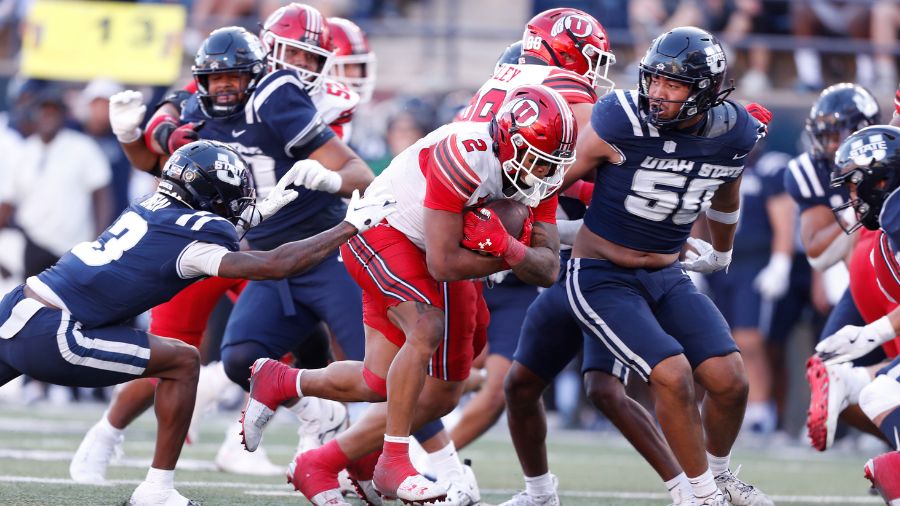
To start, the Utes lead the conference in rushing with 1,213 yards and 13 touchdowns.
Wayshawn Parker leads the unit with 280 rushing yards and 3 touchdowns on just 42 carries, while adding 91 yards and 2 touchdowns on 6 receptions as well.
He’s displayed some promising big play ability, which could be significant for the offense moving forward.
NaQuari Rogers has been a steady battering ram as he’s tallied 250 yards and 4 touchdowns on 59 carries. He’s consistently able to pick up 3, 4, 5 yards at a time, while flashing big play ability here and there.
RELATED:Utah Football’s Emerging Identity Through Five Games
There have been ball security issues within the first five games. That is an absolute must fix for this group moving forward.
Another area Utah’s running backs can improve is more about maximizing potential. The Utes lead the conference in broken or missed tackle rate at 27.9%, yet average only 2.4 yards after contact per carry, the second-lowest in the Big 12.
The running backs need to convert missed tackles into real yardage consistently. Improving vision, leverage, and breaking through contact could turn the ground game into a dominant weapon.
𝐋𝐞𝐚𝐝𝐢𝐧𝐠 𝐭𝐡𝐞 @Big12Conference 𝐢𝐧 𝐲𝐚𝐫𝐝𝐬 𝐠𝐚𝐢𝐧𝐞𝐝 𝐨𝐧 𝐭𝐡𝐞 𝐠𝐫𝐨𝐮𝐧𝐝!pic.twitter.com/2jRdKyZv54
— Utah Football (@Utah_Football) September 30, 2025
Wide Receivers Report Card: B-
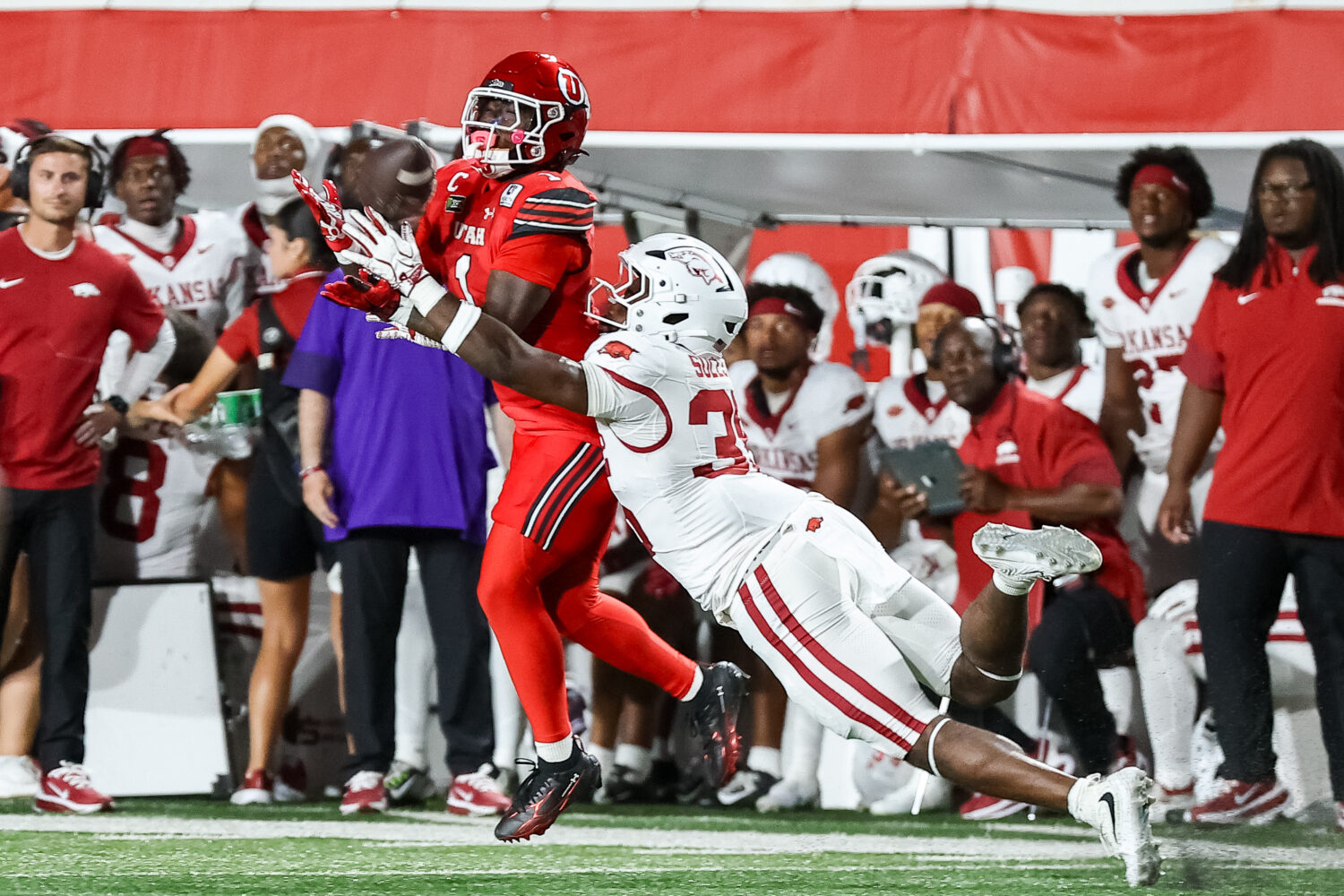
Ryan Davis leads the team with 348 receiving yards, providing a reliable target in critical situations. He also showed a bit more downfield ability against West Virginia, which could be significant for the passing attack.
The receiving corps has been consistent, but a true game-breaking playmaker has yet to emerge.
Tobias Merriweather has been unable to convert targets into much production just yet. However, his on-target catch rate of 85.7% suggests he’s capable, it’s just that chemistry is a work in progress.
While dependable, the receivers will need to produce more explosive plays and help stretch defenses as Utah continues into Big 12 play. Their ability to create big-yardage plays is crucial to sustaining drives and complementing both the passing and rushing attack.
Utah will need others to emerge around Davis, which could be the x-factor for the offense the rest of the way.
Tight Ends Report Card: A-
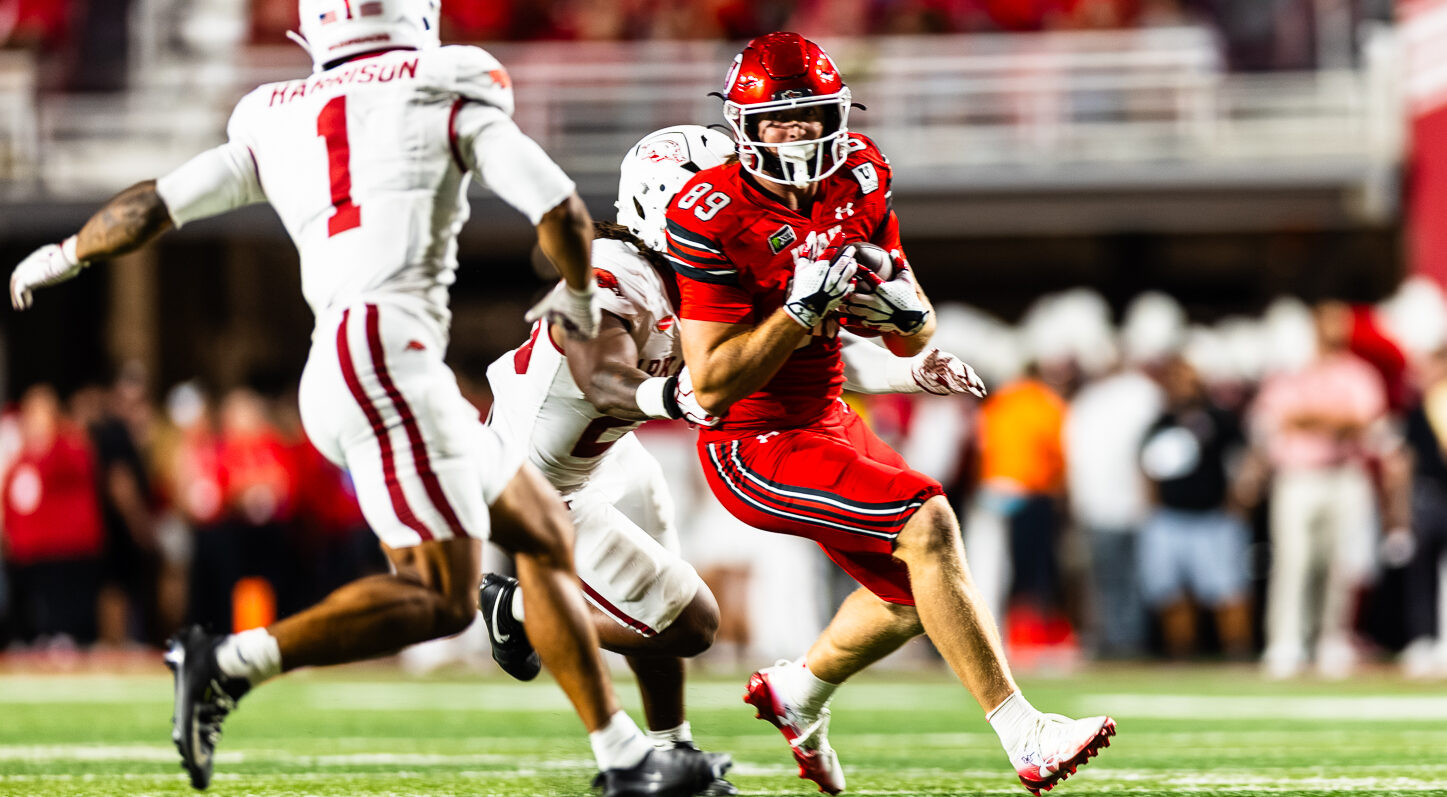
Utah’s tight ends have been among the most versatile and productive units. Dallan Bentley is one of the top tight ends in the Big 12 with 22 receptions for 246 yards and 3 touchdowns.
Replacing Hunter Andrews ability and production will be tough but this has been a position that Jason Beck has been able to generate production out.
RELATED: Utah Athletics Announces 2025 Hall of Fame Class
Offensive Line Report Card: B+
The offensive line has powered a lot of Utah’s success this season.
Advanced metrics like EPA show Utah’s line is credited with the most points earned in the nation, not just in the conference. Through five games Utah’s offensive is credited with 99.06 points earned. The gap between No. 1 Utah and No. 2 Auburn (84.38 points earned) mirrors the gap between Auburn and No. 16 Ole Miss.
EPA/Points Earned: The total of a player’s/group’s EPA responsibility while blocking using the Total Points system that distributes credit among all players on the field for a given play. Totals are scaled up to map to the average points scored or allowed on a team level, with the player’s snap count determining how much to adjust. For blockers, this includes accounting for blown blocks, yards before contact on running plays, and performance given the defenders in the box.
Utah achieve 96% red zone scoring efficiency—24 of 25 trips resulting in scores, including 21 touchdowns (11 rushing, 10 passing). Their reliability in high-pressure situations has been essential to Utah’s offensive balance.
All of that speaks highly of the offensive line, but the outing against Texas Tech lowers the grade just a bit.
Defensive Line Report Card: A
The defensive line has been Utah’s most dominant defensive unit. John Henry Daley leads the nation with 6.5 sacks, while the front seven has been consistently disruptive.
𝐍𝐚𝐭𝐢𝐨𝐧𝐚𝐥 𝐒𝐚𝐜𝐤 𝐋𝐞𝐚𝐝𝐞𝐫 & 𝐜𝐮𝐫𝐫𝐞𝐧𝐭 𝐥𝐞𝐚𝐝𝐞𝐫 𝐢𝐧 𝐭𝐡𝐞 𝐫𝐚𝐜𝐞 𝐟𝐨𝐫 𝐌𝐚𝐲𝐨𝐫 𝐨𝐟 𝐒𝐚𝐜𝐤 𝐋𝐚𝐤𝐞 𝐂𝐢𝐭𝐲❗️🙌
JOHN HENRY DALEY | @JohnHenryDaley1 #GoUtes | @AdvancedWindowP pic.twitter.com/8HWMhQGpxs
— Utah Football (@Utah_Football) October 1, 2025
Utah ranks No. 13 nationally in pressure rate at 41.1%, and No. 26 in run stuffs at 23.3%, showing the ability to generate quarterback disruption while remaining solid against the run.
The interior defensive line has been hampered by injuries, and returning to full health could improve run-stopping efficiency and further enhance the pass rush.
RELATED: Utah Basketball Building New Identity Under Alex Jensen
Linebackers Report Card: B+
The linebacker corps has been a stabilizing force for Utah’s defense, led by Lander Barton, who consistently demonstrates versatility in run defense and pass coverage.
Barton’s seemingly returned to pre-injury form and is playing with a lot of confidence. He’s been the leader Utah needs in the middle of the field.
Johnathan Hall has also emerged as a promising contributor, showing instincts and athleticism that complement Barton’s leadership.
Hall has made several key tackles in open space and has demonstrated a knack for reading plays quickly, giving the linebacking unit more flexibility and depth as the season progresses.
Utah has depth here with Levani Damuni and Trey Reynolds providing quality snaps at times as well.
Cornerbacks Report Card: B-
.@SnowdenSmith rightfully earned his way onto the 𝗪𝗲𝗲𝗸 𝟱 @PFF_College 𝗙𝗼𝗼𝘁𝗯𝗮𝗹𝗹 𝗧𝗲𝗮𝗺 𝗼𝗳 𝘁𝗵𝗲 𝗪𝗲𝗲𝗸‼️
🔴 3 Total Tackles
🔴 2 Pass Break-Ups#GoUtes https://t.co/drLytb2lsh pic.twitter.com/zftPulKH11— Utah Football (@Utah_Football) September 29, 2025
Utah’s cornerbacks have had an uneven start to the season. But as of the West Virginia contest, seem to be trending positively with their play.
Smith Snowden’s play will be vital to the unit’s success over the next few weeks. He finally showcased the playmaking ability in coverage last week and seems to be settling into his role. Scooby Davis had a slow start but seems to have come on of late, as he’s now only allowing 43% of targets for receptions.
However, the group as a whole has struggled at times with technique lapses, overcommitting on routes, and miscommunication, allowing occasional explosive plays from opposing receivers.
The bye week is an opportunity to focus on fundamentals: proper footwork, eye discipline, positioning, and a lot of film study for upcoming opponents.
With the Big 12 featuring multiple high-powered passing offenses, the corners will need to tighten up coverage and improve hand-eye discipline in contested catches.
Safeties Report Card: C-
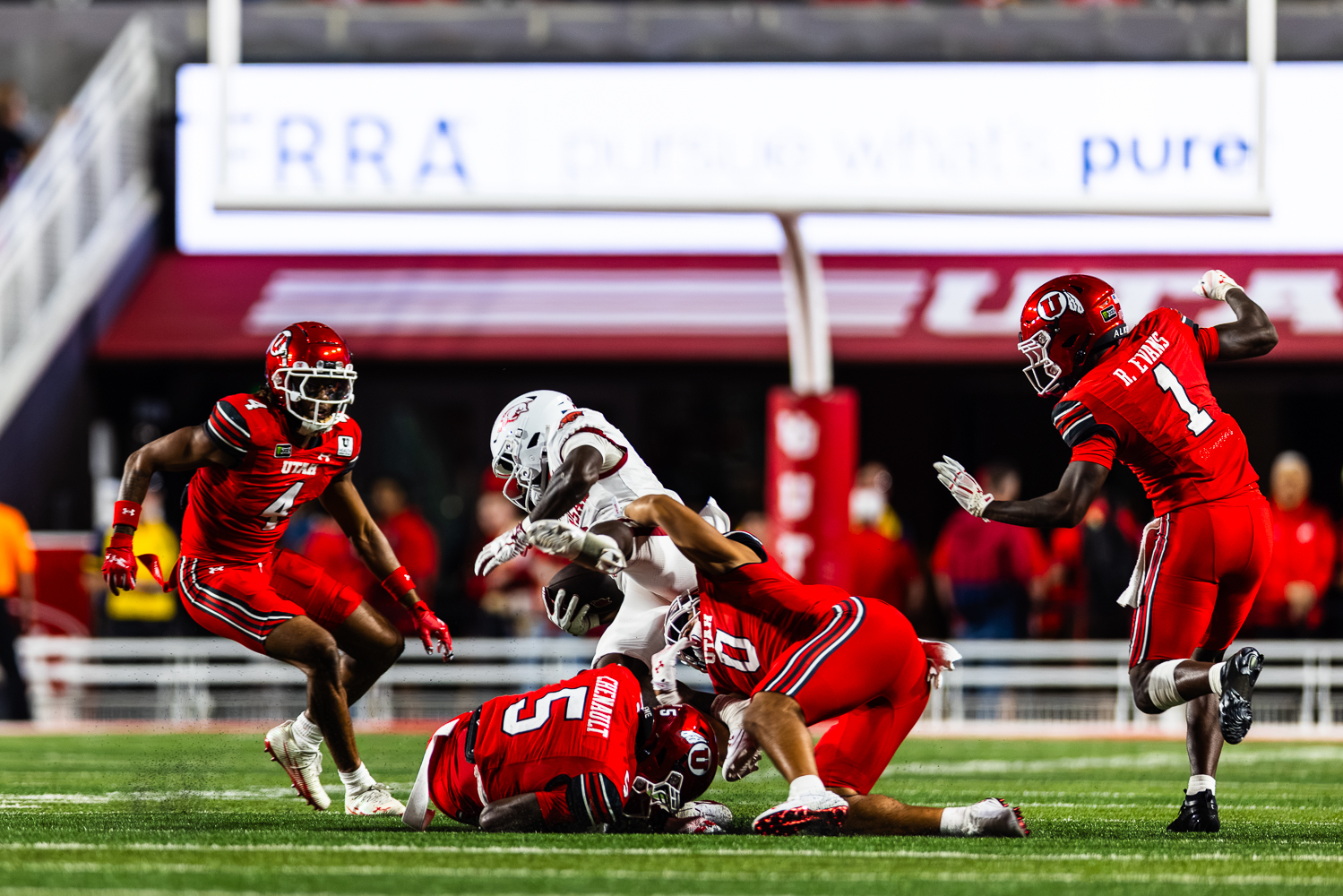
The safety group has been Utah’s most challenged position through five games. Utah has now lost Rabbit Evans’ and Nate Ritchie to season-ending injury.
That has forced less experienced players into critical roles, testing depth and preparation. However, regardless of the injuries, the safeties have struggled at times with tackling in space, reading run-pass options, and covering tight ends or slot receivers in man or zone coverage.
Despite these struggles, there have been flashes of good play. The unit’s development during the bye week will be crucial; techniques like angle pursuit, tackling fundamentals, and pre-snap recognition.
The single most important thing for this group to work on moving forward is tackling. Lower the missed tackle right over the next few games and this group’s grade will improve.
Special Teams Report Card: B+
Dillon Curtis has been solid with 5-of-8 field goals, and 24-of-25 extra points. He’s also been able to consistnelty boot kickoffs through the end zone for touchbacks. Utah’s return game remains inconsistent. Strengthening the kicking game and coverage units during the bye week could help improve field position and overall efficiency.
With time to rest, refine technique, and address weaknesses, Utah is well-positioned to enter the second phase of the 2025 season with momentum, ready to challenge the Big 12’s best teams.