Utah unveils 15-man leadership council for 2026 season
Mar 20, 2026, 5:47 PM

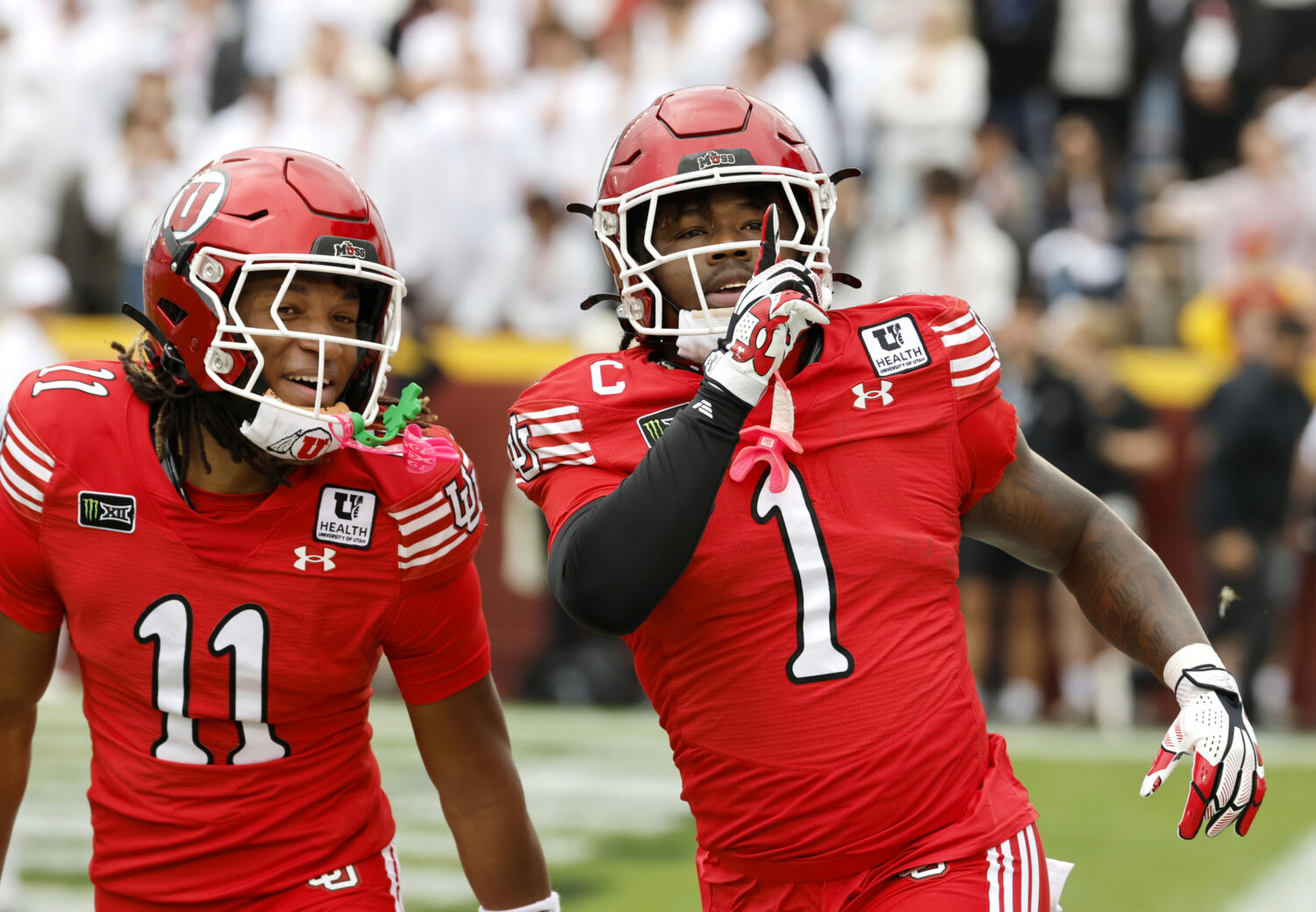
The Utah Utes warmup before an NCAA football game between the University of Utah Utes and the Texas Tech University Red Raiders held at Rice-Eccles Stadium in Salt Lake City on Saturday, Sept. 20, 2025. (Photo courtesy of Tess Crowley, Deseret News)
(Photo courtesy of Tess Crowley, Deseret News)

SALT LAKE CITY — Leadership, in Morgan Scalley’s Utah program, isn’t handed out. It’s earned, reinforced, and—most importantly—distributed.
On Friday, Utah football officially unveiled its 2026 leadership council, a 15-player group that offers a clear window into how the Utes are structuring their locker room heading into a pivotal season.
The council includes Devon Dampier, Byrd Ficklin, Wayshawn Parker, Braden Pegan, Zereoue Williams, Alex Harrison, Lance Holtzclaw, Ethan Day, Karson Kaufusi, Johnathan Hall, Trey Reynolds, Nate Ritchie, Rabbit Evans, Jackson Bennee, and Logan Castor.
𝙇𝙚𝙖𝙙𝙞𝙣𝙜 𝙩𝙝𝙚 𝙝𝙪𝙣𝙩.
Announcing our 𝟐𝟎𝟐𝟔 𝐋𝐞𝐚𝐝𝐞𝐫𝐬𝐡𝐢𝐩 𝐂𝐨𝐮𝐧𝐜𝐢𝐥: 🧵
🔴 @TreyReynoldsQC
🔴 @nateritchie3
🔴 @lancefrmdabean #GoUtes | #RSNB pic.twitter.com/CpNmlnZ6tH— Utah Football (@Utah_Football) March 20, 2026
Built around the quarterback room
This starts where modern college football always starts: quarterback. Dampier and Ficklin anchoring the leadership group represents maybe their most important accomplishment in their roster construction this offseason.
Dampier, coming off a 2025 season where he accounted for over 3,300 total yards and 34 touchdowns, has already proven he can carry the offense on Saturdays. Now, he’s being tasked with carrying the voice of the team the other six days of the week.
Ficklin’s inclusion matters just as much. Utah isn’t treating him like a backup—they’re treating him like part of the present and the future. That aligns with what Scalley has emphasized publicly: your best players need to be your best leaders.
Balance across the roster — and the trenches
This isn’t a skill-position-heavy leadership group. It’s built the Utah way—through the lines and the middle of the defense.
You see it immediately with names like:
-
Zereoue Williams and Alex Harrison (offensive line)
-
Karson Kaufusi (defensive tackle), Lance Holtzclaw and Ethan Day (defensive ends)
Utah’s identity, even as it evolves offensively, still runs through physicality. If your O-line and front seven don’t set the tone, nothing else matters. This council reflects that truth.
For as much as Scalley has talked about the importance of quarterback play and embracing more of the passing game, he’s maintained the vital nature of physicality in the trenches.
Veteran presence in the secondary
On the back end, Utah has a trio of leaders in the safety room, which is a reflection of the experience they possess, as well as them being a strength of the defense.
-
Nate Ritchie
-
Rabbit Evans
-
Jackson Bennee
That group serves as the core of continuity in the secondary, in what has quietly been one of the program’s most consistent position rooms. Safeties, especially in Utah’s defensive system, are extensions of the coaching staff. They handle communication, adjustments, and alignment checks. Putting multiple defensive backs on the council reinforces how critical that role is.
A locker room that reflects continuity and integration
There’s another layer here that matters just as much: who stayed.
Utah retained an important portion of its core from an 11-win team, including Dampier, Ficklin, and Parker—three of the most important offensive pieces. On defense, Hall, Reynolds, and Bennee played big roles last season as well, while Ritchie and Evans were slated to but suffered injuries that cut their season short.
View this post on Instagram
In today’s transfer portal era, it’s becoming more common to see an influx of leadership, which is represented in Pegan and Day on the council.
This leadership council is less about replacing voices and more about elevating the ones that already existed. That continuity gives Utah a real advantage heading into 2026, especially under a first-year head coach.
The Bottom Line
Utah named their leaders and defined what leadership looks like in 2026. It starts with Dampier and Ficklin to set the tone, but it hits on all the keynotes for this year’s squad.
More than anything, this group reflects a roster built in the modern an era. There are key returners, up-and-comers, and completely new faces in the program.
As Scalley put it on day one of spring ball, this group will be key to cultivating the culture on a daily basis.