Assessing Potential Impact Of Utah Football’s Spring Transfer Portal Additions
May 12, 2025, 11:20 AM | Updated: 11:42 am

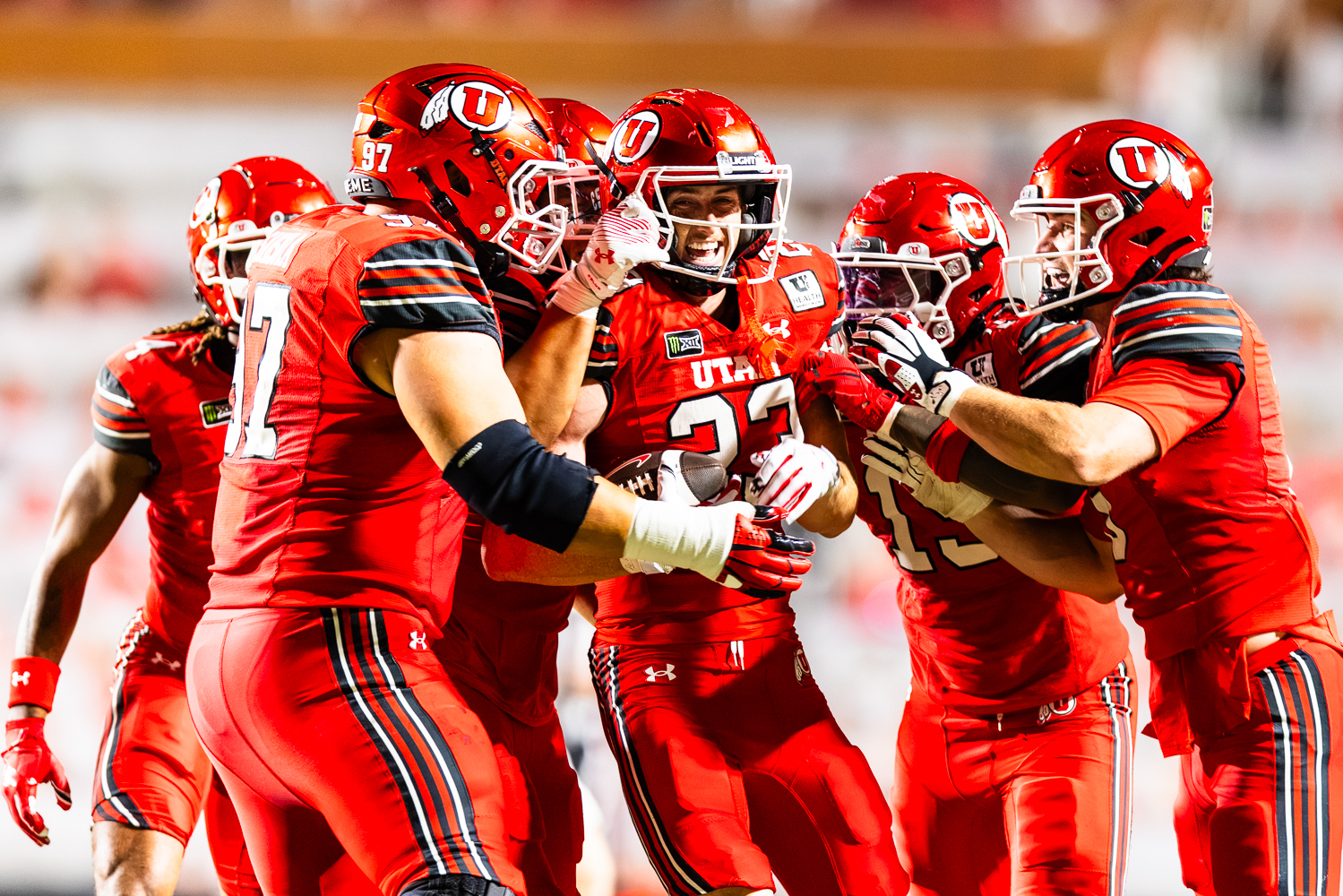
SALT LAKE CITY, UT- SEPTEMBER 10: Players and coaches celebrate a touchdown behind head coach Kyle Whittingham of the Utah Utes during the second half of their game against the Southern Utah Thunderbirds September 10, 2022 at Rice-Eccles Stadium in Salt Lake City, Utah. (Photo by Chris Gardner/Getty Images)
(Photo by Chris Gardner/Getty Images)

SALT LAKE CITY—Utah football’s 2025 spring transfer portal class is marked by strategic acquisitions to bolster depth and address positional needs, a few of which have the potential to make an impact this fall.
Kyle Whittingham’s program held onto the key pieces of its 2025 projection. Although a couple of departures occurred, Utah did well to minimize the losses.
Below is a brief evaluation of each addition and their projected impact for the upcoming season.
Utah football added exciting potential in JC Hart
Hart’s transfer from Auburn introduces another SEC-talent infusion to the Utes’ secondary. While his playing time was limited on The Plains, Hart’s athletic profile—highlighted by length and speed—aligns well with Utah’s defensive scheme. With the secondary undergoing some turnover, Hart should be able to come in and compete for a role in the rotation.
How quickly he adapts to the defensive scheme and level of play Sharrieff Shah demands will determine how much playing time he sees this season. Regardless, this is a tremendous addition to bolster depth this season and add a potential future starter.
Projection: Solidifies the depth at outside corner, with potential to earn reps this season; his athleticism positions him well to make an impact if technique and consistency follow.
RELATED: Cam Rising’s Most Memorable Performances As Utah Football’s Starting Quarterback
Jaylen Moson brings valuable experience to the cornerback room
Coming from the FCS ranks, Moson was a standout at Furman, showcasing strong ball skills and a natural feel for coverage. The leap to the FBS will undoubtedly be an adjustment, but given his production and Utah’s recent turnover at cornerback, Moson should emerge as a reliable depth option. His ability to contribute on special teams may also bolster his standing on the roster.
Projection: Moson is a fantastic addition to the cornerback room, given game experience and accolades from the FCS level. Utah added another player that strengthens the depth of the secondary this season, while giving Shah another potential starter down the road.
Utah added a downfield threat in receiver Larry Simmons
Simmons is 6-foot-1, 190 pounds, and can play outside and in the slot this season. He has versatility to play outside or in the slot, but he helps Utah’s downfield passing attack.
This past season, he totaled 27 receptions for 421 yards and one touchdown. He was targeted pretty evenly between the short (18 targets), intermediate (17), and deep (17) parts of the passing game. Though not to the same extent as Merriweather, Simmons’ production in the intermediate and deep also addresses Utah’s desire to bolster the vertical passing game.
RELATED: Utah Football’s 2026 NFL Draft Top Prospects
Projection: Simmons has the potential to come in and earn a starting role, perhaps WR2 or even WR1 opportunities. At the very least, he should constantly be in the rotation. He helps on the perimeter, which is where Utah needed help.
Dilan Battle is another promising freshman DT for Utah
He was a highly sought-after defensive tackle this past cycle. He committed to LSU over other programs, including Arkansas, TCU, and Cal. Though he doesn’t have playing experience, his 6-foot-2, 313-pound frame is what Utah needed in the room.
Battle’s transfer from LSU provides Utah with a promising addition to the defensive line, an area of need. Given his time with the LSU program over the last few months, Battle has been working in a very competitive program. So, although he’s just a true freshman, Battle has the size and the promising ability to play immediately.
Projection: Battle must quickly learn the playbook, but his instant impact potential is there. Utah has not been shy about playing young defensive linemen if they prove capable, and Battle seems capable of being a rotational piece this season.
Utah takes a swing on Tobias Merriweather’s elite potential
Merriweather arrives in Salt Lake City with a tantalizing blend of size at 6-foot-5 and athletic potential. A former four-star recruit, his stints at Notre Dame and Cal were hindered by injuries and limited opportunities. Nevertheless, his physical attributes, particularly as a vertical threat, make him an intriguing addition to a Utah receiving corps that has lacked ability on the perimeter.
With career totals of 24 receptions for 430 yards and four touchdowns, as well as an average depth of target of 16.8 yards on 49 career targets, Merriweather adds an element to the vertical passing game that Utah wanted to address this portal window.
To fully realize his potential, Merriweather will need to improve the consistency in his play. The flashes of his potential are exciting, but Utah needs Merriweather to be a constant presence this season.
Projection: Merriweather projects as the WR1 starter with substantial upside. Utah needed to take a swing on a receiver with big potential and that is Merriweather. So, though he hasn’t put it all together just yet, Utah brought him in for that very reason.
Bryce Duke is a solid addition with potential to exceed expectations
His experience in varied offensive systems could prove beneficial in adapting to Utah’s physical running style. Duke’s journey from Virginia Tech to Old Dominion and now Utah reflects a player searching for stability and opportunity. At 6 feet, 210 pounds, Duke has the athleticism and skill to be an all-around contributor.
Projection: On the surface, Duke looks like an addition to solidify the running back depth. Duke has the potential to exceed expectations in terms of his role and production.
Final Assessment of Utah football’s spring portal recruiting
Utah’s approach to the spring portal window reflects a commitment to strengthening positional groups that lacked depth or lost key contributors. While none of these transfers arrive with a guarantee of stardom, this group’s collective potential is evident. If even a few can transition smoothly and exceed expectations, they could become pivotal contributors to Utah’s 2025 campaign.
Success will ultimately hinge on the coaching staff’s ability to develop these athletes and integrate them into the existing system, fostering individual growth and cohesive team play. This group’s ability to rise to the occasion could play a defining role in Utah’s pursuit of Big 12 contention.