Takeaways From Utah’s Loss To Oklahoma State
Jan 31, 2026, 8:51 PM | Updated: Feb 2, 2026, 12:13 pm

SALT LAKE CITY—Utah competed, the crowd showed up, and for long stretches the game felt there for the taking. The Huntsman Center had juice, the Utes generated stops, and momentum swung often enough to believe a breakthrough was coming.
Instead, Oklahoma State steadily stacked key moments — extra possessions, cleaner execution, and timely shot-making — to pull away late for an 81–69 win.
Tonight’s game wasn’t about talent gaps or strategy, but about effort, teamwork, and the challenge of sustaining both deep into the second half.
Here are five takeaways from Utah’s loss to Oklahoma State:
Alex Jensen’s postgame message cut deeper than the box score
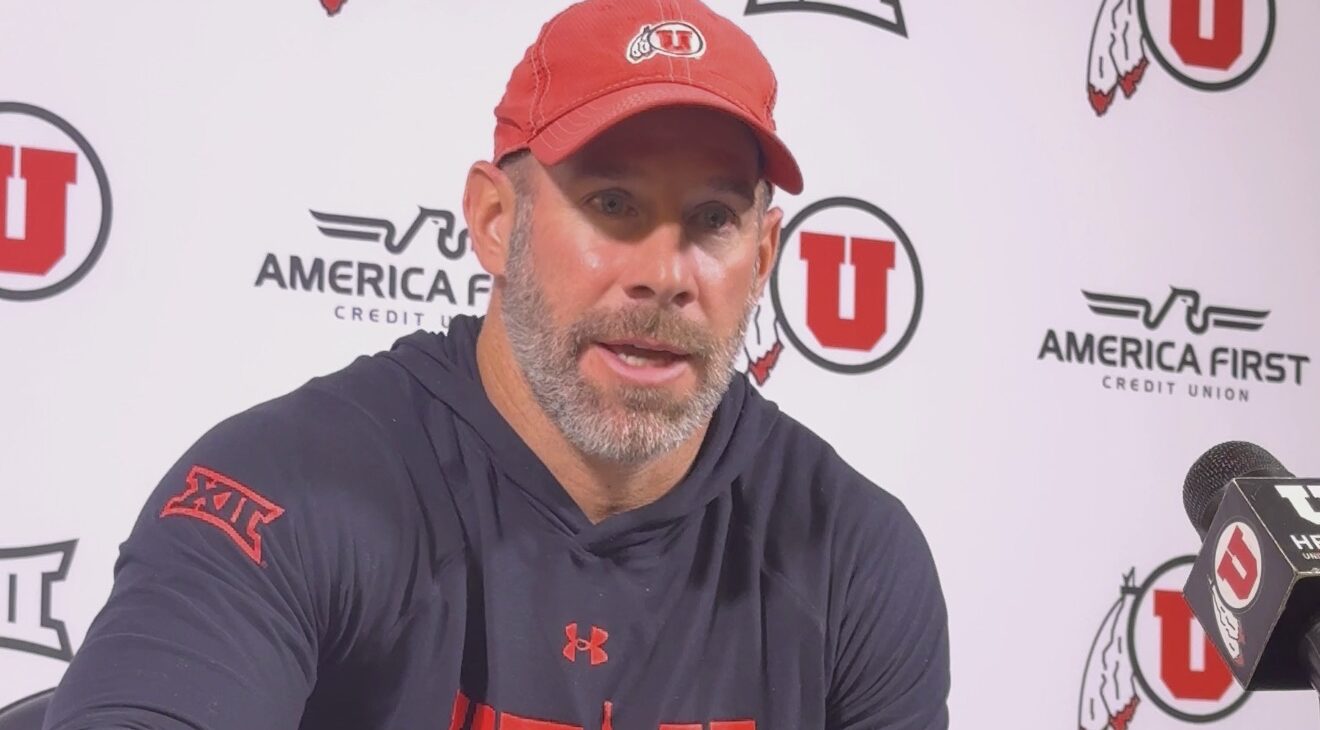
Alex Jensen didn’t mince words afterward, calling the performance “very selfish” and pointing to issues that went far beyond missed shots or late-game execution.
“Too many guys were in their own world… thinking about just scoring and we didn’t pass. And then, obviously, that hurts our defense.”
The numbers back him up. Utah finished with just 11 assists on 24 made baskets, a clear indicator that possessions too often stalled into isolation and late-clock problem-solving rather than advantage creation. When the ball stopped moving, so did Utah’s defensive connectivity — rotations were late, communication was inconsistent, and Oklahoma State repeatedly capitalized on breakdowns.
But Jensen’s critique wasn’t just about shot selection. He made it clear that selfishness shows up in quieter ways too: not talking on defense, not being ready to shoot, not being engaged unless the ball finds you. Those habits compound, and over 40 minutes they turn a competitive game into one that slowly slips away.
The most important part of Jensen’s message came with accountability. “Coaches don’t win games, players win games,” he said — a reminder that systems and game plans only matter if five players are committed to executing them together.
Utah might lose games this season, but Jensen drew a hard line on how they’re allowed to lose. Disconnected basketball isn’t part of the rebuild.
“That was far from a University of Utah team that’s been here for decades. We might lose, but we’re not gonna lose that way.”
Utah played with effort and urgency — until it didn’t late in the game
For much of the night, Utah’s effort was real — and visible. The Utes had defensive hustle plays, chased down loose balls, rotated with purpose, and fed directly off an engaged Huntsman Center crowd. Blocks at the rim, transition opportunities off deflections, and short bursts of defensive pressure kept Utah within striking distance and gave the building life.
But that effort didn’t continue over the final five minutes. The hustle that was obvious early, disappeared late. Perhaps that’s an indication of the lack of depth Utah has on the roster right now, but this team failed to finish strong.
Oklahoma State consistently won the small battles that compound over 40 minutes. The Cowboys finished +8 on the glass (43–34), doubled Utah in second-chance points (12–6), and scored 42 points in the paint. Those extra possessions mattered even more late, when Utah’s urgency faded. In the second half alone, OSU grabbed eight offensive rebounds — often after initial solid defense — turning stops into breakdowns.
That’s where the difference showed. Utah had the energy early and the crowd behind it, but lacked the gas in the tank to finish possessions — box-outs, communication, securing the ball — as the game approached the final moments.
The crowd showed up — and mattered
If there was a clear positive beyond the box score, it was the environment. Utah drew 7,293 fans, with over 7,000 filling the lower bowl alone. The crowd stayed engaged, rose during defensive stands, and tried to will the Utes back late despite the slipping margin. Jensen acknowledged it postgame:
“The crowd was great tonight, unbelievable crowd,” Alex Jensen said.
For a program still building continuity, that kind of buy-in matters. The foundation — energy, belief, and support — was there. The next step is giving that crowd a connected, detail-clean product to rally behind.
Utah fans showed up in a big way for this squad and that has to continue the rest of the season.
Anthony Roy was the difference-maker
Roy controlled the game whenever Utah threatened to flip it. He finished with a game-high 26 points on 8-of-15 shooting, including 5-of-8 from three, and scored at all three levels.
The Utes never fully solved him in space, and nearly every Utah run was met with a Roy jumper, drive, or trip to the line. When execution tightened late, Oklahoma State had the best shot-maker on the floor.
Utah gave up a few easy ones but most of Roy’s makes were contested. Still, Utah needed to do more to make Roy uncomfortable on the floor. He was able to step into way too many rhythm catch and shoot jumpers.
Free throws and shot selection told the story late
As the game tightened in the second half, Utah simply didn’t convert enough of the opportunities it created. The Utes shot just 37% after halftime and went 1-of-9 from three, with several of those misses coming on clean looks that could have shifted momentum. Instead of stretching the floor, Utah repeatedly found itself grinding through late-clock possessions.
The free-throw line offered chances to stop the bleeding — and Utah didn’t capitalize. Finishing 16-of-24 overall, the Utes left eight points at the stripe, with multiple one-for-two trips coming in the final 10 minutes. In a game that hovered within two or three possessions for most of the half, those empty trips loomed large.
Oklahoma State, by contrast, stayed efficient and composed. The Cowboys shot 50% in the second half, avoided wasted possessions, and punished Utah whenever the defense bent. The efficiency gap told the story: OSU posted 1.28 points per possession after halftime, while Utah managed just 0.91. When execution became the separator, Oklahoma State delivered — and Utah didn’t.