Alex Jensen Wants Consistency as Utah Prepares For Arizona State
Feb 3, 2026, 4:59 PM | Updated: Feb 4, 2026, 6:44 pm

SALT LAKE CITY — With the Utes sitting 9–12 overall and 1–7 in conference play and ASU holding an 11–11 record with a 2–7 league mark, this isn’t a marquee matchup. Forget hype and rankings, this one boils down to simply who wants it more.
While these two coach are on the opposite ends of the spectrum with their tenures, both teams will be fighting for a valuable conference win to avoid the cellar dweller status.
Come watch @UtahMBB take on the Arizona State Sun Devils this Wednesday at the Jon M. Huntsman Center @ 7PM for $10‼️
🎟️: https://t.co/NsaYH1jC5m pic.twitter.com/uZM7huiTtd
— Utah Athletics (@utahathletics) February 3, 2026
Utah’s consistency conundrum according to Alex Jensen
Utah enters its February stretch with its identity still a work in progress — and head coach Alex Jensen says that’s exactly where this roster needs to sharpen.
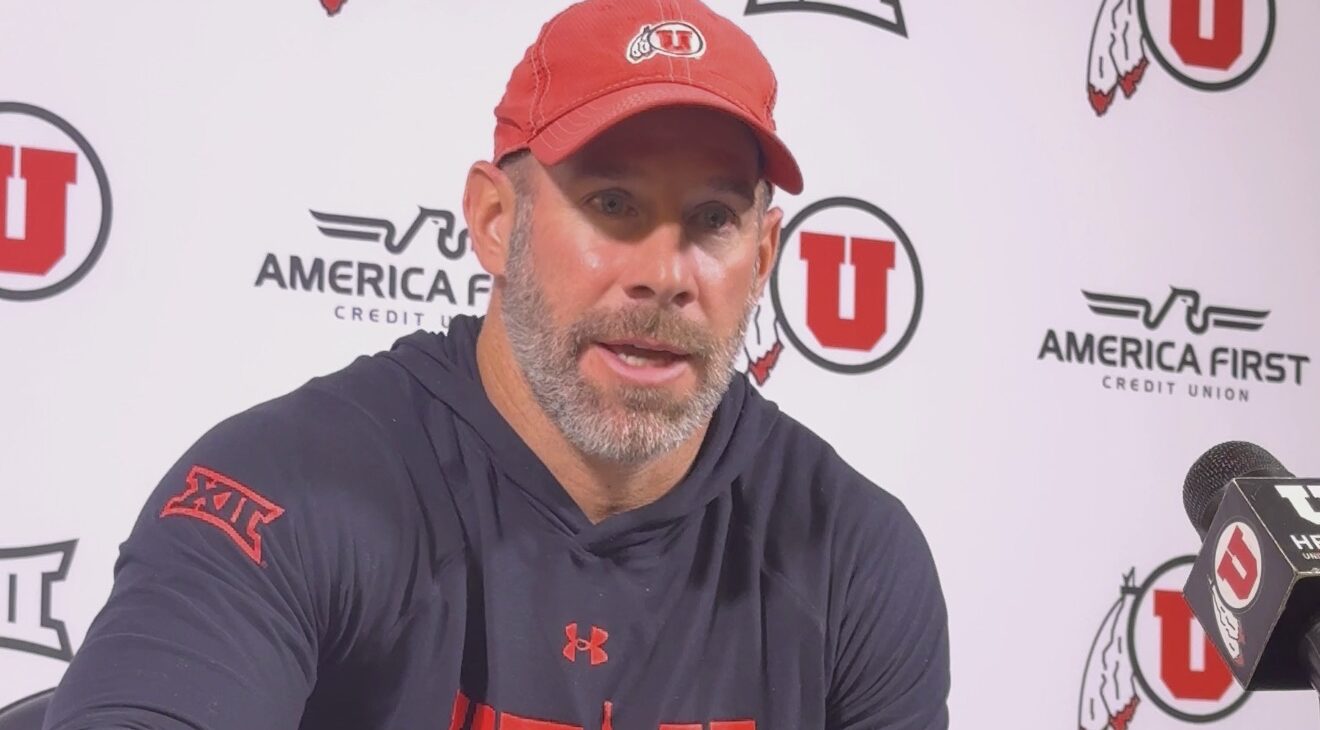
“We just need to be more consistent approaching the game about what my role is —how do I tie into the group and the other four guys on the court,” Jensen said Tuesday. “It’s a learning process, it takes time.”
That message matters now more than ever entering Wednesday’s home matchup with Arizona State, a Sun Devils team that’s hovered around .500 this season but presents specific tactical challenges.
When Utah’s offense flows — and possessions are tied to role clarity — the Utes can exploit ASU’s modest defensive metrics and rattling pace. But Jensen has been blunt about what’s holding his group back.
“We’ve done it at times — we just need to be more consistent,” Jensen shared. “Any good team has to do a few things right. Like, when you watch that team, you know what you’re going to get out of them.”
Utah’s efficiency numbers have jumped when its defense forces turnovers. It’s also generate quality looks when the ball movement gets to the third and fourth side of the floor in any given action.
“The Sun Devils, they’re dangerous, they’re explosive, they can score a lot of points, I think there’s some similarities to Oklahoma State,” Jensen shared. “Hopefully we can be led off of our defense, I think that helps us offensively and then vice versa.”
Jensen believes that the Utes can make it hard for the Sun Devils by emphasizing the ball movement on offense. Not only because that will generate better looks offensively, but will also play into their ability to better defend the Sun Devils on the other end of the floor.
Utah vs. Arizona State by the numbers
The two teams are nearly identical statistically on offense and defense, which again, reinforces the idea of this game coming down to who simply wants it more.
- Utah averages 79.5 points per game, while Arizona State hovers right around 79.2.
- On the defensive end, the Sun Devils give up 80.1 points per game, while the Utes are giving up 81.5 per outing.
- Utah averages 53.3% shooting from the field, 36.6% from 3-point range, while Arizona State averages 52.4% and 34.9%.
- Defensively, the Sun Devils allow 53.5% and 35.4% shooting clips, while Utah gives up 53.6% and 35.3%.
Arizona State’s Stat Leaders
-
Points per game: Maurice Odum — 17.1 PPG. Odum is ASU’s go-to scoring option and also leads the team in assists, making him the focal point of the offense.
-
Assists per game: Maurice Odum — 6.4 APG. Not only ASU’s top scorer, Odum also runs the show, creating looks for teammates and easing offensive flow.
-
Rebounds per game: Massamba Diop — 5.7 RPG. Diop anchors the glass for ASU, leading the team on the boards and providing second-chance opportunities.
-
Steals: Noah Meeusen — 1.5 SPG. A disruptive defensive piece, Meeusen’s hands help generate transition chances.
-
Blocks: Massamba Diop — 2.0 BPG. Diop also protects the rim at a strong clip, giving ASU an interior deterrent.
What It Tells Us
Arizona State’s game runs through Maurice Odum, who combines scoring and playmaking in a way few teammates do — essentially making him the engine of the Sun Devils’ half-court offense. Massamba Diop’s scoring (13.5 ppg), rebounding, and shot-blocking gives ASU a physical presence inside, but outside of those two pillars, production tends to thin out.
That structure helps explain ASU’s fluctuating results: when Odum gets downhill looks and Diop controls the paint, the Sun Devils are competitive; when those two are neutralized, Arizona State struggles to generate rhythm.
The Bottom Line
This game comes down to execution. Utah and Arizona State are statistical twins — nearly identical scoring, shooting and defensive splits — so the winner will be the team that controls possessions and avoids self-inflicted mistakes.
For the Utes, that means clean ball movement, disciplined shot selection, and forcing contested looks on defense.
In a matchup this evenly balanced, wanting it more — and playing with it for 40 minutes — wins. If Utah can stay consistent with Jensen’s principles and limit turnovers, the home crowd and execution should tilt this one in their favor. Otherwise, the Sun Devils’ offensive leaders keep it close down the stretch.