Inside MLB’s New Automated Strike Zone: What Fans Need To Know
Feb 25, 2026, 6:07 PM

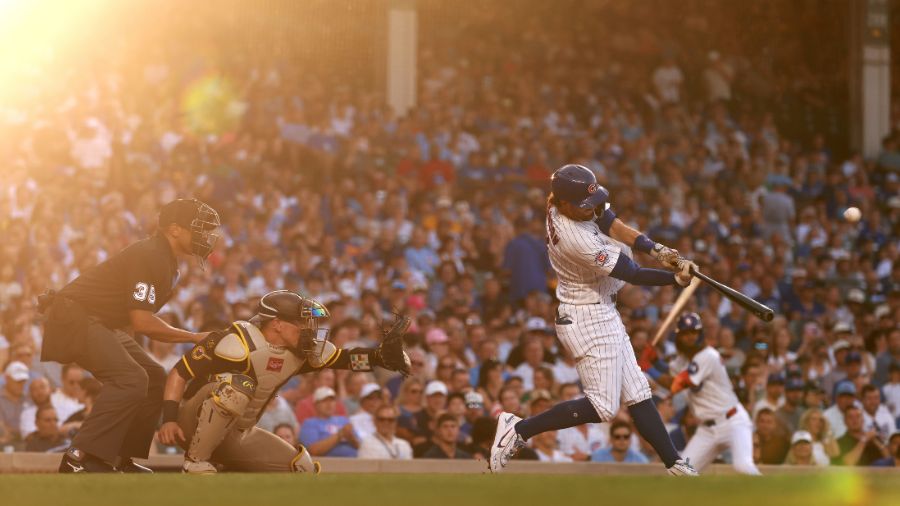
MILWAUKEE, WISCONSIN - OCTOBER 11: Pete Crow-Armstrong #4 of the Chicago Cubs at bat against the Milwaukee Brewers during Game Five of the National League Division Series at American Family Field on October 11, 2025 in Milwaukee, Wisconsin. (Photo by Michael Reaves/Getty Images)
(Photo by Michael Reaves/Getty Images)

SALT LAKE CITY – America’s favorite pastime has undergone steady evolution in recent years, as Major League Baseball continues to reshape the sport to better meet today’s fans’ expectations.
Rule changes such as a pitch clock, mound visit limits, and a focus on generating more action have helped drive a significant increase in attendance and viewership across MLB.
RELATED: MLB’s Tech Revolution Introduces Automated Ball-Strike System
The ABS challenge system will be implemented by MLB beginning in 2026, the league announced. pic.twitter.com/hW6Q7KCyJy
— Mark Feinsand (@Feinsand) September 23, 2025
That momentum was on full display during Game 7 of the 2025 World Series—a thrilling 11‑inning showdown between the Los Angeles Dodgers and Toronto Blue Jays that became the most‑watched MLB game since the iconic 1991 Fall Classic.
Next up on Commissioner Rob Manfred’s agenda is installing an automated ball-strike (ABS) challenge system at the big-league level.
How does the ABS replay system work?
The ABS system, used at various minor league levels since 2022 and introduced in MLB Spring Training last year, allows pitchers, catchers, or batters to challenge a ball or strike call by tapping their head after a pitch—a signal for the umpire to initiate a review.
Challenges must be immediate and come without assistance from the dugout or other players.
Importantly, ABS does not replace the human element of an umpire calling balls and strikes behind the plate. ABS tracks every pitch in real time, but the data is only used for a challenge.
RELATED: Manfred Signals Push To 32 Teams As MLB Considers Expansion, Realignment
The ABS challenge system will be implemented by MLB beginning in 2026, the league announced. pic.twitter.com/hW6Q7KCyJy
— Mark Feinsand (@Feinsand) September 23, 2025
Each team begins the game with two challenges and loses one if the original call is confirmed correct. Teams retain challenges when correct.
When a pitch is challenged, an animated pitch graphic is shown on the in-stadium scoreboard and on the broadcast, giving fans a clear visual of whether the ball contacted the strike zone at the midpoint of home plate—the spot at which ABS evaluates every pitch’s location.
Beyond reviewing calls, ABS will redefine how the strike zone itself is measured.
How is the ABS Strike Zone defined?
One of the most significant differences between ABS and traditional umpiring is that the strike zone is individualized.
“It was very detailed,” Milwaukee Brewers Assistant GM Will Hudgins told MLB.com writer Adam McCalvy. “You can tell they have done this in the Minor Leagues and have thought about every part of this.”
ABS Strike Zone Graphic
via #Nationals. TV pic.twitter.com/CpGAmTtJeb
— TheNatsReport 🇺🇸 ⚾ (@TheNatsReport) February 21, 2026
A strike will be called if any part of the baseball touches the zone.
“As a hitter, you have to give some to get some,” outfielder Steward Berroa told McCalvy. “And the good thing is that the strike zone is going to be the strike zone every time. If you challenge a pitch and it’s a strike, you’re not able to complain. You have to adjust.”
How much time will ABS replay reviews take?
The system is designed to review any challenge in a matter of seconds, eliminating the long replay reviews fans see in other professional sports.
With MLB embarking on its first season with the new toy, players and teams look forward to a more consistent, technology-driven strike zone. Whether it quiets controversy—or sparks new debate—remains a storyline to watch as the season unfolds.
RELATED STORIES
Follow Major League Baseball With KSL Sports
Find KSL Sports coverage of Locals in MLB here.
Take us with you wherever you go.
Brian Preece is a sports.ksl.com insider covering Locals in MLB and the Salt Lake Bees. Follow Brian’s Bees and Beehive baseball here. Find Brian on X, Instagram, and BlueSky at @bpreece24.