With Two Games Left, Utah Still Battling The Same Offensive Habits
Feb 28, 2026, 5:42 PM | Updated: 5:43 pm

Tempe, Ariz. — To start the game Saturday, the Runnin’ Utes looked connected — sharp ball movement, paint touches, rhythm threes. They built an early lead and showed the blueprint.
Then, just as quickly, they drifted back into the same pattern that has haunted them all season: stalled possessions, forced drives, and offense that devolved into one-on-one basketball.
Utah fell 73–60 in Tempe, and while Arizona State shot 49.1% from the field and 52.9% from three, the underlying issue wasn’t just shot-making. It was possession quality. It was ball movement. It was decision-making.
Final from Desert Financial Field
Utah – 60
Arizona State – 73— Utah Basketball (@UtahMBB) February 28, 2026
Alex Jensen: When the Ball Sticks, Everything Slows
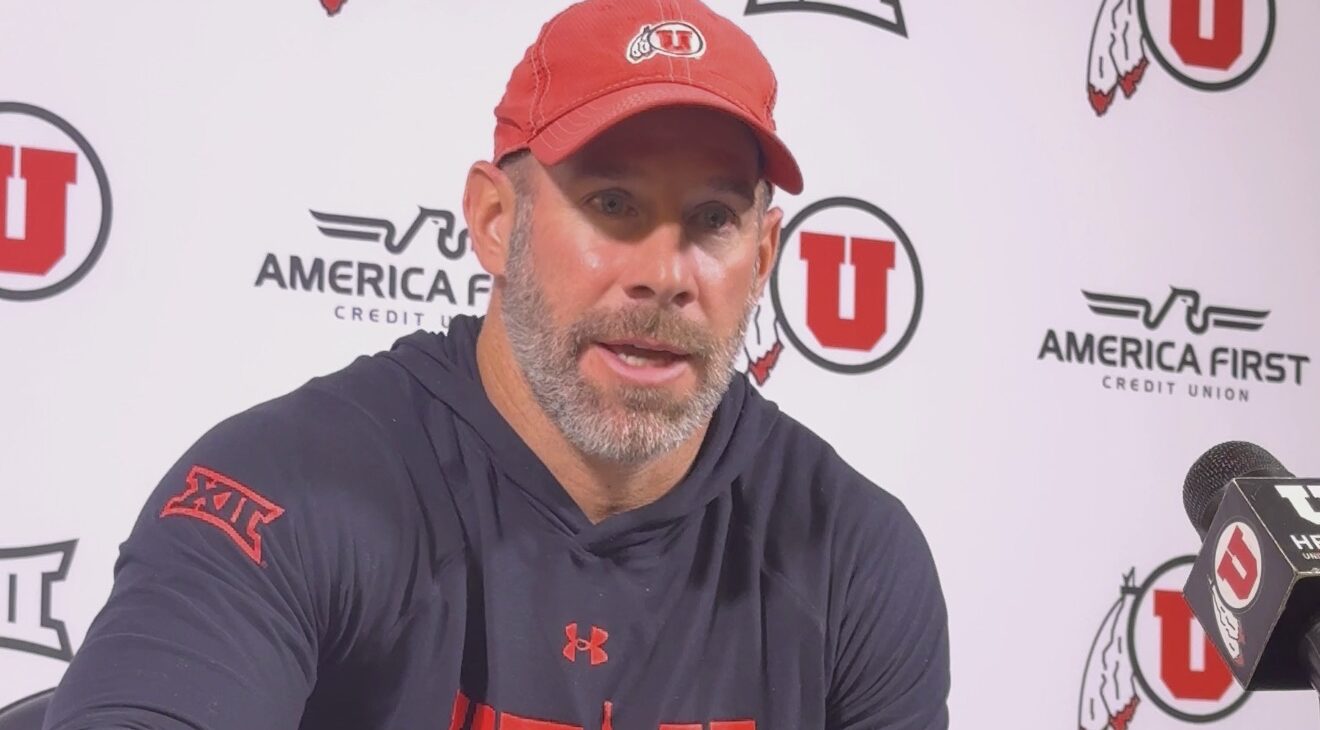
“A disappointing game for us tonight,” Alex Jensen said afterward. “Hard to win when you have one-to-one assist-to-turnover ratio, especially on the road. … I think it’s one of the more selfish games that we’ve had this year.”
The word that matters there isn’t disappointing. It’s selfish. Because this wasn’t a one-night lapse. It was a relapse.
Utah finished with 13 assists on 23 made baskets and eight turnovers. On paper, that ratio doesn’t look disastrous. On the floor, it looked disconnected. The Utes opened the game playing inside-out, moving the defense, building a 14–5 lead and later stretching it to nine. Keanu Dawes attacked decisively. Terrence Brown got into the paint and made early reads.
Unfortunately, Brown also picked up two fouls within the first two minutes of the game. That seemed to kill the rhythm for Utah collectively and for Brown individually. Then, with him on the bench, Arizona State shifted into zone and Utah’s offense slowed to a crawl.
Instead of reversing the ball side to side or attacking the middle and forcing the defense to collapse, the Utes leaned into dribble-heavy possessions and forced attempts at the rim against Massamba Diop, who finished with four blocks. Those empty trips turned into transition opportunities the other way.
“We ran the zone play, we scored, and then we didn’t keep going back to it,” Jensen said. “It’s a great lesson of learning to do it with not dribbling. You pass the ball to change sides of the floor.”
The Drought Pattern
Utah shot just 34% in the first half and scored only 10 points over the final 10 minutes before halftime. Arizona State closed on a 13–3 surge to take a 34–24 lead into the break. The drought wasn’t just about missed shots — it was about rushed shots. It was about contested drives. It was about playing one-on-one against a set defense.
“We tried to take on Diop and them at the rim, and those blocked shots led to fast break layups for them,” Jensen said. “It’s frustrating that we replicated the same mistakes we made in the first game.”
Utah has battled this tension all year — between trusting the pass and hunting a shot, between flow and force. When the ball moves, the offense looks capable. In the second half, the Utes shot 43% overall and 50% from three, cutting the deficit to six at 57–51 with 7:54 to play. Don McHenry hit timely threes. Dawes finished with 16 points. There were flashes again.
But once more, the game turned during another offensive stall. After trimming it to six, Utah missed seven of its next eight shots. Arizona State responded by scoring on eight of nine possessions, stretching the lead back to double digits. The Sun Devils outscored Utah 36–26 in the paint and finished with a 1.304 points-per-possession mark compared to Utah’s 1.017.
Utes Offense Bleeding Into Defense
And Jensen sees the bigger issue bleeding into everything else. When the offense becomes one-on-one, communication dips defensively. Rotations are a half-step late. Pick-and-roll coverage breaks down. Arizona State’s rollers slipped behind coverage. Shooters found clean looks.
“I think it goes back to offense,” he said. “The lack of passing disconnects us on defense. Then we stop talking, and we’re just a step behind.”
Arizona State’s pick-and-roll game consistently found rollers and shooters because Utah was a half-step late. Communication dipped. Rotations lagged. When the offense stagnated, the defense unraveled.
“The offense and defensive end are connected,” Jensen said. “It just kind of snowballs, and we’re just a little bit late on everything.”
Even Terrence Brown’s night reflected the broader theme. Brown finished with eight points on 4-of-12 shooting. Jensen has praised his competitiveness all season but pointed to the balance required.
“There’s a difference between hunting shots and letting them come to you,” Jensen said. “Sometimes you just gotta cerebrally think out the game.”
This season has been about building something new — 12 newcomers, a new system, a new standard. Jensen has acknowledged how difficult continuity can be in year one. But by late February, patterns matter.
Utah’s scoring droughts in the desert weren’t just cold stretches. They were symptoms of a season-long challenge: resisting the urge to rush, trusting the pass, and staying connected on both ends.