Utah AD Mark Harlan criticizes Brendan Sorsby injunction, warns of competitive integrity concerns
Jun 8, 2026, 3:25 PM | Updated: 3:27 pm
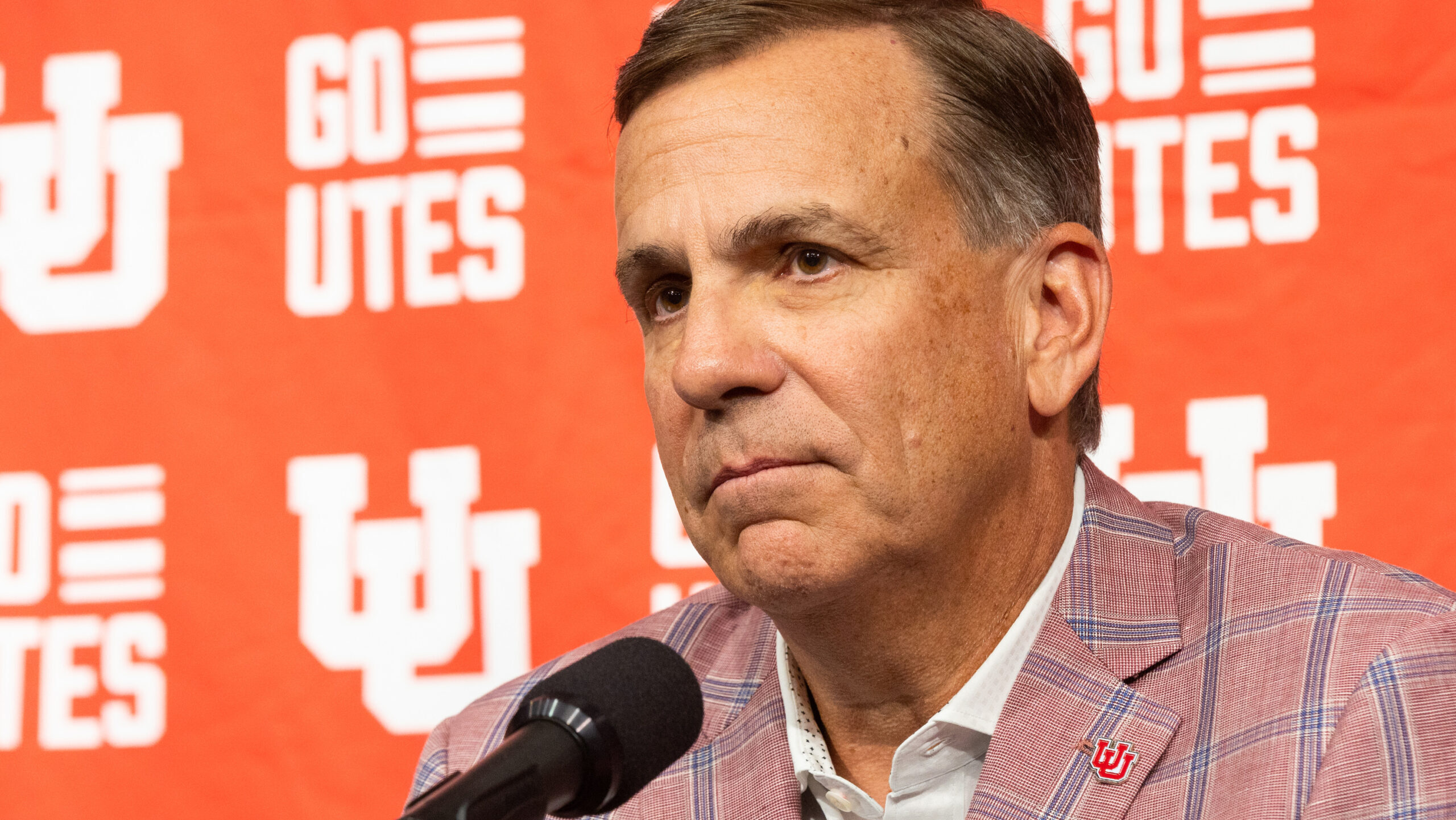
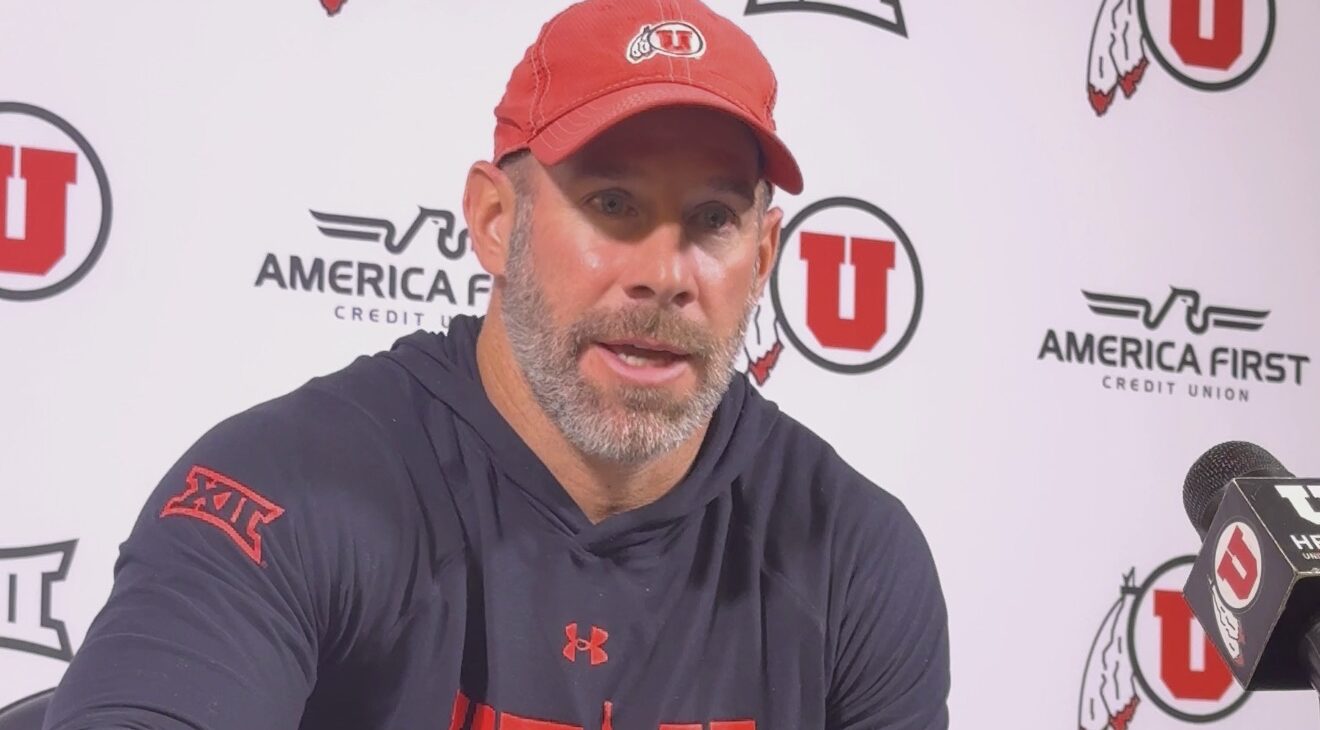
Utah athletic director Mark Harlan speaks at a press conference regarding the University of Utah’s move to the Big 12 Conference at Rice-Eccles Stadium in Salt Lake City on Monday, Aug. 7, 2023. (Photo courtesy of Megan Nielsen, Deseret News)
(Photo courtesy of Megan Nielsen, Deseret News)

SALT LAKE CITY — Never afraid to speak his mind, Utah athletic director Mark Harlan shared thoughts Monday after Texas Tech quarterback Brendan Sorsby received a temporary injunction that clears the way for him to play during the 2026 college football season.
Sorsby, who had previously been ruled ineligible by the NCAA for gambling violations, was granted relief by a Texas court, allowing him to return to the field for the Red Raiders after serving a two-game suspension. The decision immediately sent a jolt through the college football world, not simply because of Sorsby’s status as one of the Big 12’s most important quarterbacks, but because of what the ruling could mean for NCAA enforcement and the future of gambling-related discipline in college athletics.
Harlan joined the growing list of administrators expressing concern over the decision, he shared the following via X.com:
“As with many around the country, I am disheartened by the injunction issued today in the Brendan Sorsby matter, which will allow him to compete this fall despite clear violations of NCAA policies and ethical guidelines,” Harlan said in a statement. “We are all committed to supporting student-athlete well-being, but we also must have a definitive path forward that preserves the most basic tenets of competitive integrity in our industry.”
We are all committed to supporting student-athlete well-being, but we also must have a definitive path forward that preserves the most basic tenets of competitive integrity in our industry.
(2 of 2)— Mark Harlan (@MarkHarlan_AD) June 8, 2026
The statement reflects the delicate balance at the center of the case.
On one side is the issue of student-athlete well-being. Sorsby’s case has included discussion of gambling addiction, treatment and rehabilitation, all of which are serious matters that deserve to be handled with care. College athletics has become more aware of the mental health pressures placed on athletes, particularly in an era where sports betting has become more accessible and more visible than ever.
For athletic directors, coaches and conference leaders, gambling violations strike at one of the core foundations of college sports. The issue is not just whether an athlete deserves support after making mistakes. The issue is whether the sport can maintain trust when a player who violated NCAA gambling policies is allowed to continue competing while legal challenges play out.
That is why Monday’s ruling matters beyond Texas Tech.
Sorsby is not a fringe roster player. He was expected to be one of the most impactful quarterbacks in the Big 12 this season and a central figure in Texas Tech’s conference title hopes. His availability could directly shape the league race, the College Football Playoff picture and the perception of whether rules are being applied consistently across the sport.
The Utes do not play Texas Tech during the regular season, but the Big 12 championship race is decided by the full conference standings, not just head-to-head matchups. If one of the league’s projected contenders gets its starting quarterback back through the court system after an NCAA gambling ruling, that has potential ripple effects for every team trying to reach Arlington.
That is the broader concern behind Harlan’s statement. College athletics is already dealing with a fractured enforcement model. Transfer eligibility, NIL disputes, revenue sharing, roster limits and conference governance have all been shaped by legal pressure in recent years. Now gambling discipline has entered that same space.
The worry is not simply that Sorsby was granted temporary eligibility. It is that the decision could create a precedent where NCAA penalties tied to gambling violations are challenged in local courts, leaving eligibility decisions unsettled until deep into the offseason or even during the season itself.
That kind of uncertainty is difficult for the sport to absorb.
The jig is up on the Protecting College Sports Act
Last week @CharlieBakerMA made an equivocal statement and failed to endorse the bipartisan Cruz/Cantwell bill, that is aimed at and will be effective in bringing order to chaos. This week Charlie and the NCAA are begging for Congressional support and intervention.
Blame Texas… https://t.co/KWG8moJV2t
— Cody Campbell (@CodyC64) June 8, 2026
Meanwhile, Texas Tech booster Cody Campbell has been one of the loudest voices behind the Protect College Sports Act, a federal push framed around restoring rules, structure and stability to college athletics. The message has been clear: the sport needs guardrails before the current chaos becomes impossible to control.
But the Sorsby injunction cuts directly against that argument.
Sorsby is now positioned to play this fall despite violations tied to NCAA gambling rules, one of the few areas where college sports cannot afford gray area. It is hard to argue for stronger national enforcement while supporting a legal outcome that weakens enforcement when it benefits your own program.
Gambling is not just another NCAA issue. The sport can survive transfer portal disputes, NIL fights and revenue-sharing battles. What it cannot survive is the perception that gambling violations can be negotiated through the courts when enough money and influence are involved.
There is a real human element in any case involving gambling addiction, and that should not be dismissed. But competitive integrity still has to matter. If every major NCAA penalty can be challenged as irreparable harm, then rules become situational. They exist on paper, but their impact depends on who has the resources to fight them.
For Texas Tech, the injunction may solve an immediate roster problem. For college sports, it creates a much larger concern.
If the Protect College Sports Act is truly about preserving the sport, gambling enforcement should be one of the clearest lines to hold. If that line moves because a starting quarterback is involved, the argument becomes much harder to take seriously.
At that point, it is no longer just about protecting college sports, it’s about protecting a competitive advantage.
The Bottom Line
If gambling policies are going to mean anything, they have to be enforceable. If athlete welfare is going to be taken seriously, there also has to be a system that accounts for treatment, rehabilitation and proportional discipline. But if every major ruling can be slowed, paused or reversed through injunctions, then the industry loses the one thing it desperately needs right now.
That is the challenge facing college athletics now. The sport has to support athletes without weakening the standards that protect competition. It has to recognize gambling addiction as a real issue without allowing gambling violations to become just another eligibility dispute. And it has to build a process that can survive legal scrutiny without creating competitive chaos.
Monday’s ruling may help Texas Tech in the short term. But for the rest of college sports, it raised a much bigger question. If the NCAA cannot enforce its gambling rules in a way that holds up, then who is actually in charge of protecting the integrity of the game?