Unloading the notebook: New faces begin making noise on Utah’s defense
Aug 4, 2026, 1:06 PM
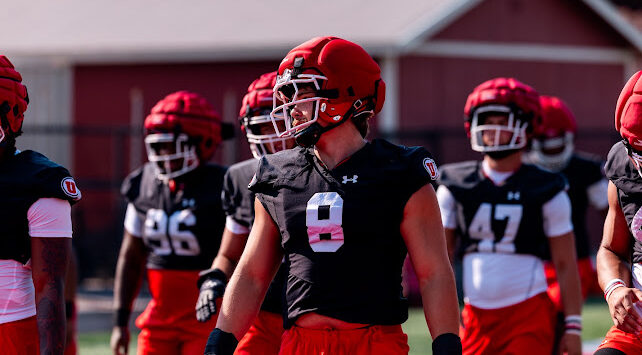
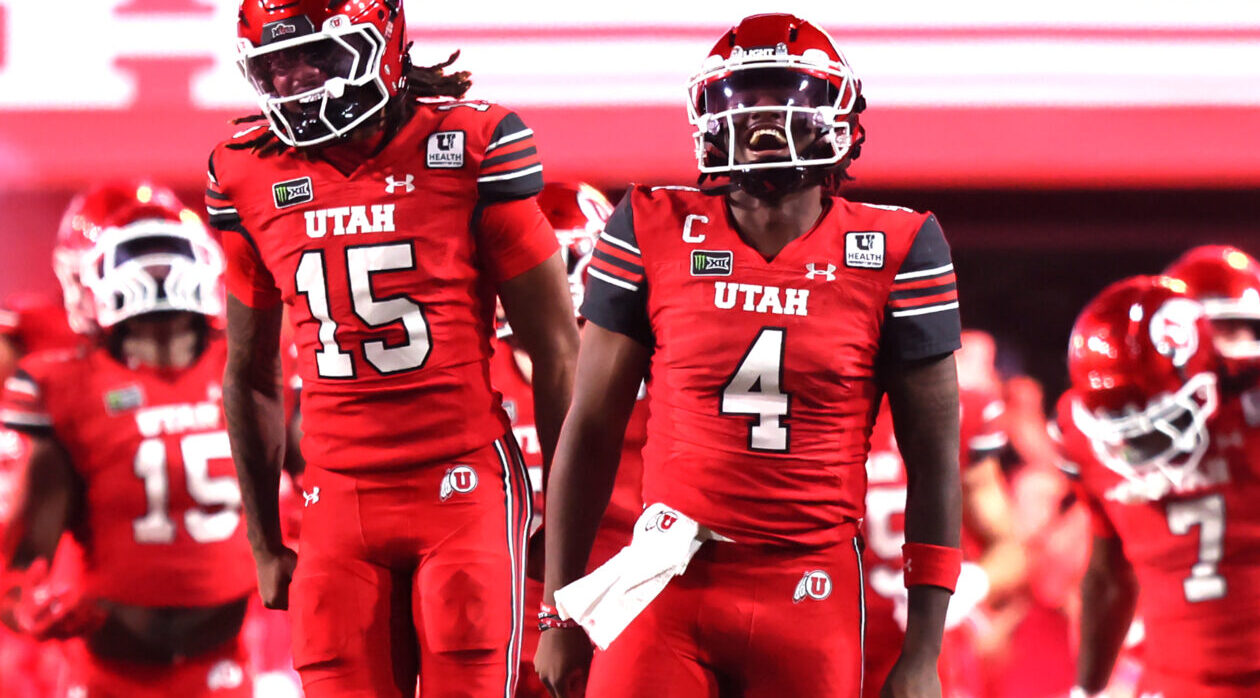
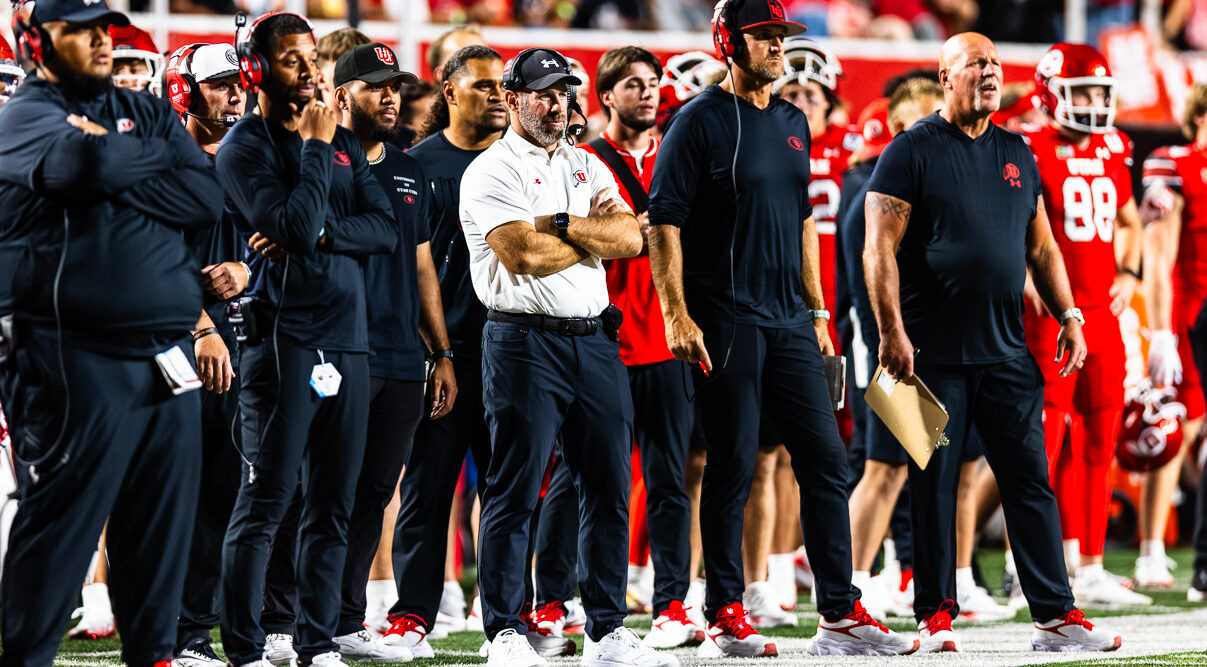
Utah Utes football first practice at Spence and Cleone Eccles Football Facility in Salt Lake City, UT on Monday, August 03, 2026.Davis Kuhn/Utah Athletics

SALT LAKE CITY — Utah’s second fall camp media availability belonged to the defense, with linebacker Johnathan Hall, defensive linemen Ethan Day and Lucas Samsula, and safety Jackson Bennee providing updates after Tuesday’s practice.
No grand declarations are necessary after two practices without pads. Still, the conversations revealed a defensive front motivated by preseason skepticism, a safety competition that is already producing turnovers and several players who believe Utah’s new strength program changed how they move and feel.
Here are the notes that stood out.
Utah Utes Fan Fest Returns to Rice-Eccles Stadium on Saturday, Aug. 22, from 6-8 p.m. The free event kicks off the 2026-27 competition year and features activities and interaction with student-athletes and coaches from all of Utah's athletics programs.⁰⁰Parking and admission… pic.twitter.com/JGT8updDND
— Utah Athletics (@utahathletics) August 4, 2026
Steve Saunders’ program continues to draw reviews
The impact of Utah director of football sports performance Steve Saunders was another recurring subject.
Day said he is at the best playing weight of his career and feels better physically than he has at previous stops. Samsula said he added six or eight pounds over approximately three months while emphasizing work designed to strengthen joints and ligaments.
Bennee pointed toward Saunders’ use of time under tension: slower repetitions, pauses and explosive finishes without always loading as much weight onto the bar.
The players’ estimates should not be mistaken for an independent scientific review, but the consistency of their comments is notable. Offensive and defensive players have now described improved body composition, greater strength and more position-specific training.
The value of the program will eventually be measured by availability, durability and performance. Through two days of interviews, the players believe the summer changed them.
Ethan Day is becoming difficult to ignore
Day clearly looks to have bulked up this offseason, which seems to have benefitted him on the field. Hall identified Day as one of Utah’s transfers who has made significant progress since spring practice.
“He is really becoming the guy,” Hall said. That does not make Day the unquestioned leader of Utah’s defensive-end rotation, but it reinforces the positive reviews that followed him throughout spring.
Day transferred from North Texas after starting all 13 games and finishing with 48 tackles, seven tackles for loss and 4.5 sacks last season. He gives Utah proven production at a position searching for new answers after losing John Henry Daley and Logan Fano.
Day said he spent the summer studying his spring film with Utah’s coaches, identifying flaws and building his training around correcting them. His primary technical emphasis has been converting speed into power.
The description was not revolutionary. Defensive ends have attempted to turn speed into power since offensive tackles first realized retreating was preferable to being run over. The important part is that Day appears to understand what Utah needs from him. He’s a physical presence along the line, one that should help re-establish Utah’s toughness in the trenches.
The defensive line has noticed the preseason skepticism
Morgan Scalley said Monday that Utah’s defensive line has carried a chip on its shoulder because the group understands what was lost and how it is being viewed externally.
Day confirmed it. “There’s just a chip on the shoulder of the whole team,” he said.
Preseason recognition will not tackle anyone, but disrespect remains one of college football’s most renewable energy sources. Utah’s defensive linemen appear happy to use it.
Day referred to the group as “over-looked.” Samsula was less diplomatic.
“We really do want to be nasty every single play,” Samsula said. “Line it up against someone who’s bigger than you, and you want to come out and pop them in the mouth.”
The Utes must replace their three primary defensive tackles and establish new pass-rushing threats on the edge. Enthusiasm is useful. Gap integrity, leverage and pocket disruption will determine whether anyone notices it in October.
Johnathan Hall may owe the defensive line dinner
Hall understands how much easier his job becomes when Utah’s defensive tackles control the line of scrimmage.
If the front occupies two blockers, the linebackers can flow freely toward the football instead of trying to disengage from 300-pound linemen at the second level. That difference can determine whether a linebacker meets a running back near the line of scrimmage or chases him five yards downfield.
“It makes my job 10 times easier,” Hall said. “If they take on two blocks or whatever the case may be, we love those guys up. I’ve got to take those guys out to dinner.”
Karson Kaufusi was the first interior defender Hall mentioned. He said Kaufusi has taken greater ownership of the defensive tackles and developed as a leader during the offseason.
That lines up with Scalley’s assessment from Monday. Utah’s defensive line is young, but it does not appear unaware of the responsibility it has inherited.
Hall also pointed toward Day and Lance Holtzclaw on the edge. Utah may not have many established stars up front, but the defense believes it has enough candidates to build a productive rotation. Hall can settle the dinner bill later.
Lucas Samsula wants to win with his first step
Samsula arrived from Wyoming with the size to hold up inside. Utah lists the sophomore at 6-foot-4 and 306 pounds (with the added weight, he’s checking in around 315 pounds) after he recorded 15 tackles and 1.5 sacks for the Cowboys last season.
His offseason focus was simple: get off the ball faster.
“I’m a strong dude,” Samsula said. “If I can get off the ball faster than the offensive line and get my hands on them, I can ragdoll them and do what I want.”
Samsula’s strength loses value if an offensive lineman consistently wins the initial movement and establishes hand placement first. Improving his first step would allow him to dictate the rep instead of responding to it.
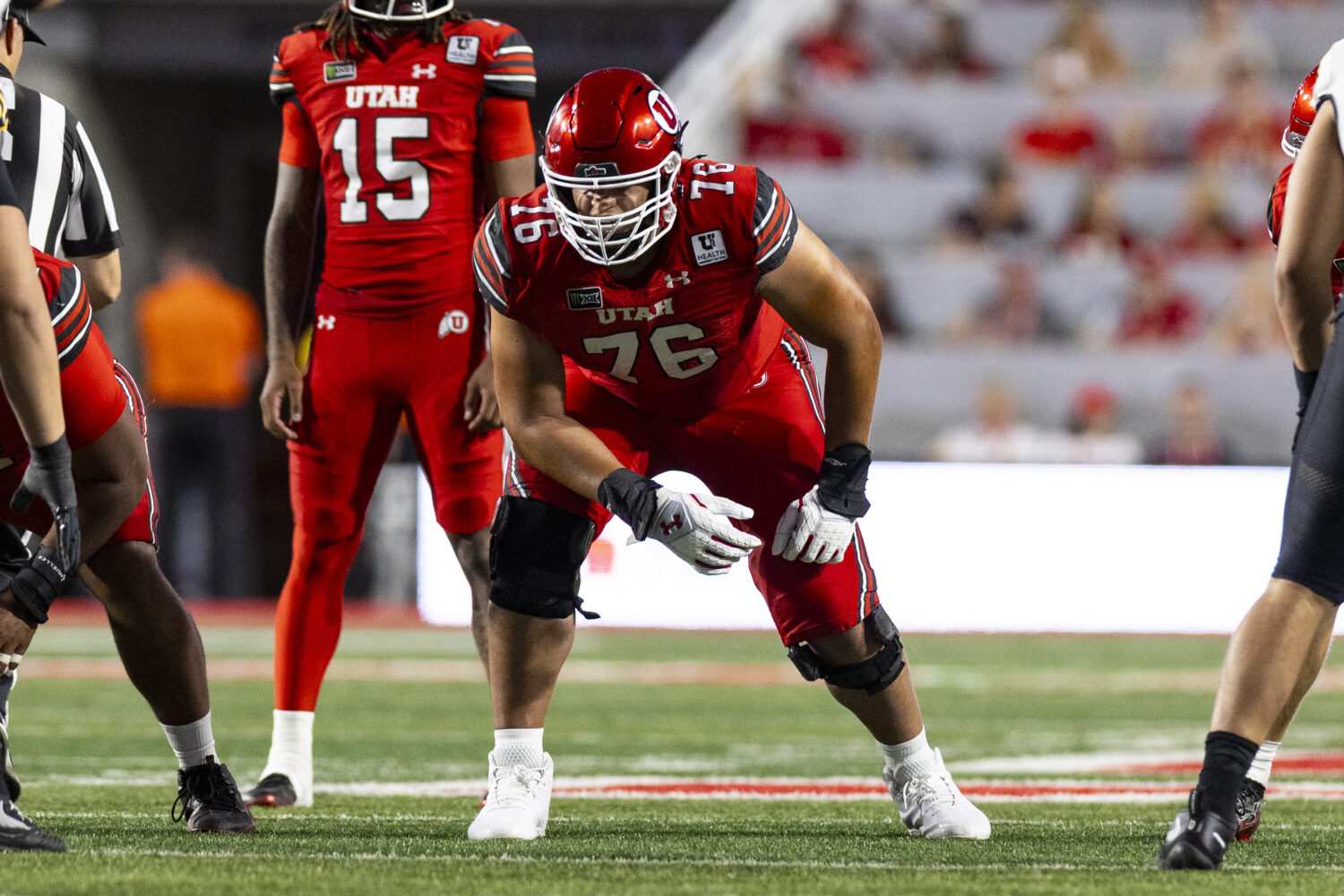
He mentioned Solatoa Moea’i as an offensive lineman who has challenged him during one-on-one work. Samsula described Moea’i as big and strong, forcing him to win with his hands and attack the blocker’s outside edge.
Those repetitions should benefit both sides. Utah needs to identify dependable defensive tackles, while Moea’i is attempting to secure a role on a completely reconstructed offensive line.
The defensive tackles are holding their own meetings
Samsula said Utah’s defensive tackles have continued meeting after their scheduled position meetings to review mistakes and dig deeper into the playbook.
That work has been especially valuable for transfers learning Utah’s terminology and defensive structure.
The extra meetings have also created a way for returning players such as Kaufusi and Pupu Sepulona to help bring the new additions along. Samsula said the objective is to develop the entire room on the same track so Utah can play multiple defensive tackles without a significant decline.
Utah needs a rotation capable of remaining physical across four quarters. If the Utes find five or six playable defensive tackles, Colton Swan can distribute the workload and keep the group fresher.
Utah’s defense likes what it sees from the offense
The quickest way to make a defense better is to give it an offense capable of punishing mistakes during practice and Hall believes Utah has one.
He the defense has enjoyed competing against its tempo and collection of playmakers. Devon Dampier was the obvious name, but Hall also mentioned Creed Whittemore as an offensive player who has stood out early.
Whittemore is part of a crowded receiver competition that includes Braden Pegan, Larry Simmons, Ricky Johnson, Kyri Shoels, Tobias Merriweather and several other options. Hall did not provide details about what Whittemore has done, but unsolicited praise from a defensive leader carries more weight than the standard August roll call.
Cyrus Polu remains a name to watch
Hall did not hesitate when asked about sophomore linebacker Cyrus Polu.
“Cyrus is a dog,” Hall said. “He’s quick, he’s a fluid mover, he can strike, he’s fast. He’s got all the tools to be a great linebacker.”
Polu does not have extensive defensive experience, but Utah has been encouraged by his development since spring practice.
Hall and Trey Reynolds provide the linebacker room with experience. Polu gives it another athletic option who could push for a larger role if his understanding of the defense catches up with his physical ability.
Hall described the competition as healthy, with the linebackers watching film and practicing together rather than dividing into starters and reserves.
He also rejected the idea that being Utah’s returning leading tackler places him above anyone else in the room.
“I’m one of the guys,” Hall said. “I treat a freshman or sophomore just how they treat me. I don’t feel like I’m anything above anybody else.”
Bennee is beginning to study the offense instead of surviving the defense
Bennee provided one of the most useful explanations of individual development from either day of camp.
He said he has become comfortable enough within Utah’s defense that he no longer spends every snap consumed by his own assignment. He can now devote more attention to formations, route concepts and the offense’s intentions.
“I’m not thinking about the defense as much,” Bennee said. “Now I’m trying to focus more on the offense and what they’re doing.”
Knowing an assignment allows a player to line up correctly. Understanding what the offense is trying to accomplish allows him to anticipate.
Bennee acknowledged making a few mental errors Tuesday, so the process is hardly complete. His offseason priorities included adding size, improving his recognition of offensive concepts and becoming a more consistent communicator.
Still, the game is beginning to slow down for him. That could be the difference between arriving near the football and arriving early enough to change the play.
Nobody has been handed a safety job
Scalley identified safety as one of Utah’s most competitive position groups following the opening practice.
“It’s definitely not a shoo-in,” he said. “There are a lot of good players. Everybody owns their 20 square feet, and everybody brings something a little different to the table.”
Bennee mentioned Rabbit Evans, Nate Ritchie and Nate Tilmon among the established options. He also highlighted Josh Sovereign, who intercepted two passes during Tuesday’s practice.
Utah’s safety room has experience, depth and several different body types. Bennee and Evans may enter camp as leading candidates, but Ritchie’s experience and the development of Tilmon, Sovereign and the younger safeties should keep the competition honest.
Bennee’s own approach reflects that reality. He went from walk-on to major contributor last season, but he said his daily mindset cannot change simply because his role has.
“I can never get complacent,” Bennee said. “It’s just compete every day.”
A few quotes from our first day back on the field 🗒️#GoUtes | #RSNB pic.twitter.com/w6YxVVcHq8
— Utah Football (@Utah_Football) August 4, 2026
Scalley is shortening practices, not lowering expectations
Bennee described an understanding between Scalley and the players. Scalley may schedule 15 periods instead of dragging the team through a 24-period practice, but the shorter workload comes with a demand: every available rep must be taken seriously.
“He definitely cares about our bodies and our physical well-being,” Bennee said. “His thing is, ‘We might not have a 24-period practice—it’s 15 periods today—but you have to give me 100%, everything you’ve got.’”
That aligns with Scalley’s criticism following Monday’s practice. He was dissatisfied with Utah’s pursuit and urgency because a controlled workload only works if the available practice time is used properly.
The bargain is reasonable. Scalley will protect the players from unnecessary wear. The players cannot protect themselves from necessary effort.
The Bottom Line
Utah’s second media availability did not provide a defensive depth chart. It supplied a clearer picture of the competition.
Day is emerging as a serious candidate on the edge. Samsula is trying to translate strength into a disruptive first step. Polu continues to generate praise at linebacker. Sovereign made an early impression in a crowded safety room, while Bennee is beginning to process offenses instead of merely executing assignments.
The defensive front still carries the most uncertainty. It also appears to understand exactly how it is being viewed.
Utah’s defenders do not lack confidence. The next stage of camp will determine whether the pads justify it.