Unloading the notebook: Utah football’s assistant coach availability
Aug 5, 2026, 2:35 PM
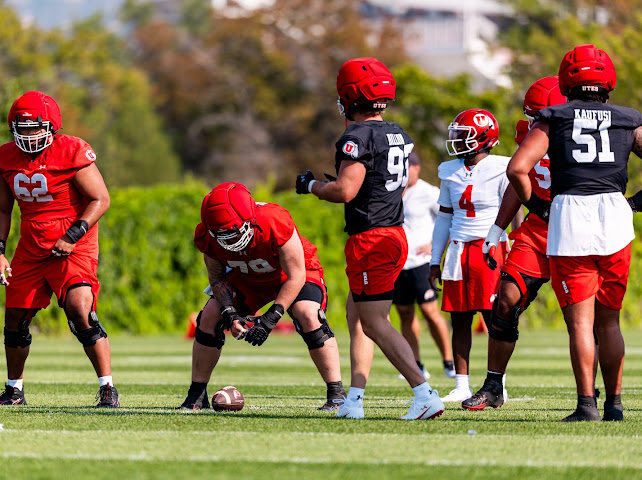
Utah Utes football first practice at Spence and Cleone Eccles Football Facility in Salt Lake City, UT on Monday, August 03, 2026.Davis Kuhn/Utah Athletics

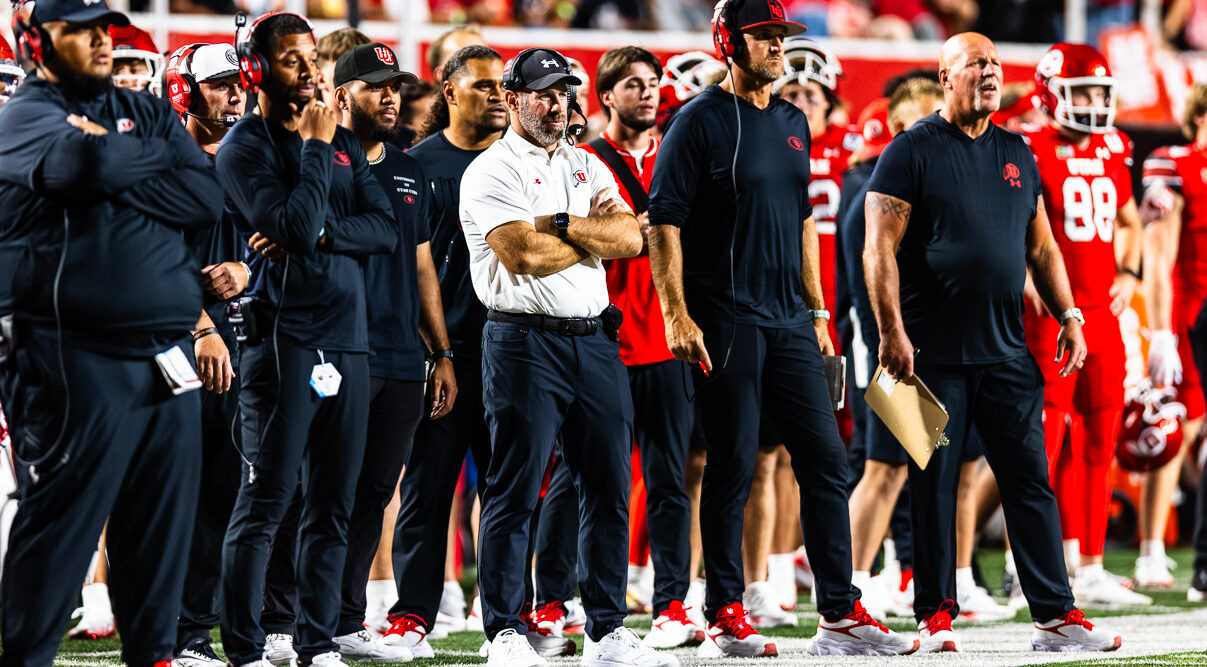
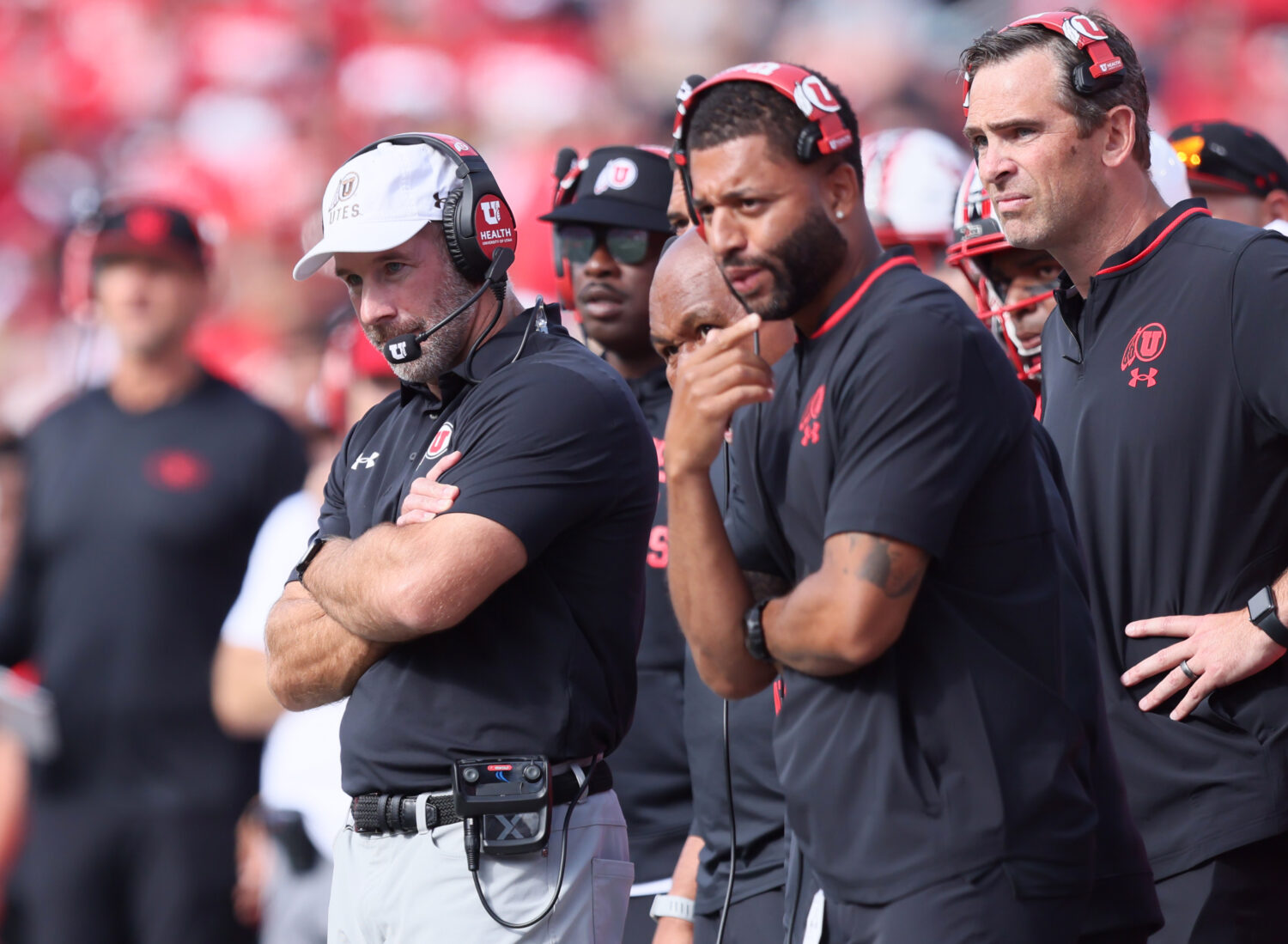
SALT LAKE CITY — Utah made each of its assistant coaches available following Wednesday’s fall camp practice, providing updates from every position group after the Utes’ first two practices.
There is only so much that can be learned before the pads come on. The offensive and defensive lines have not been tested in live work, tackling remains largely theoretical and most of the position battles are closer to opening arguments than closing statements.
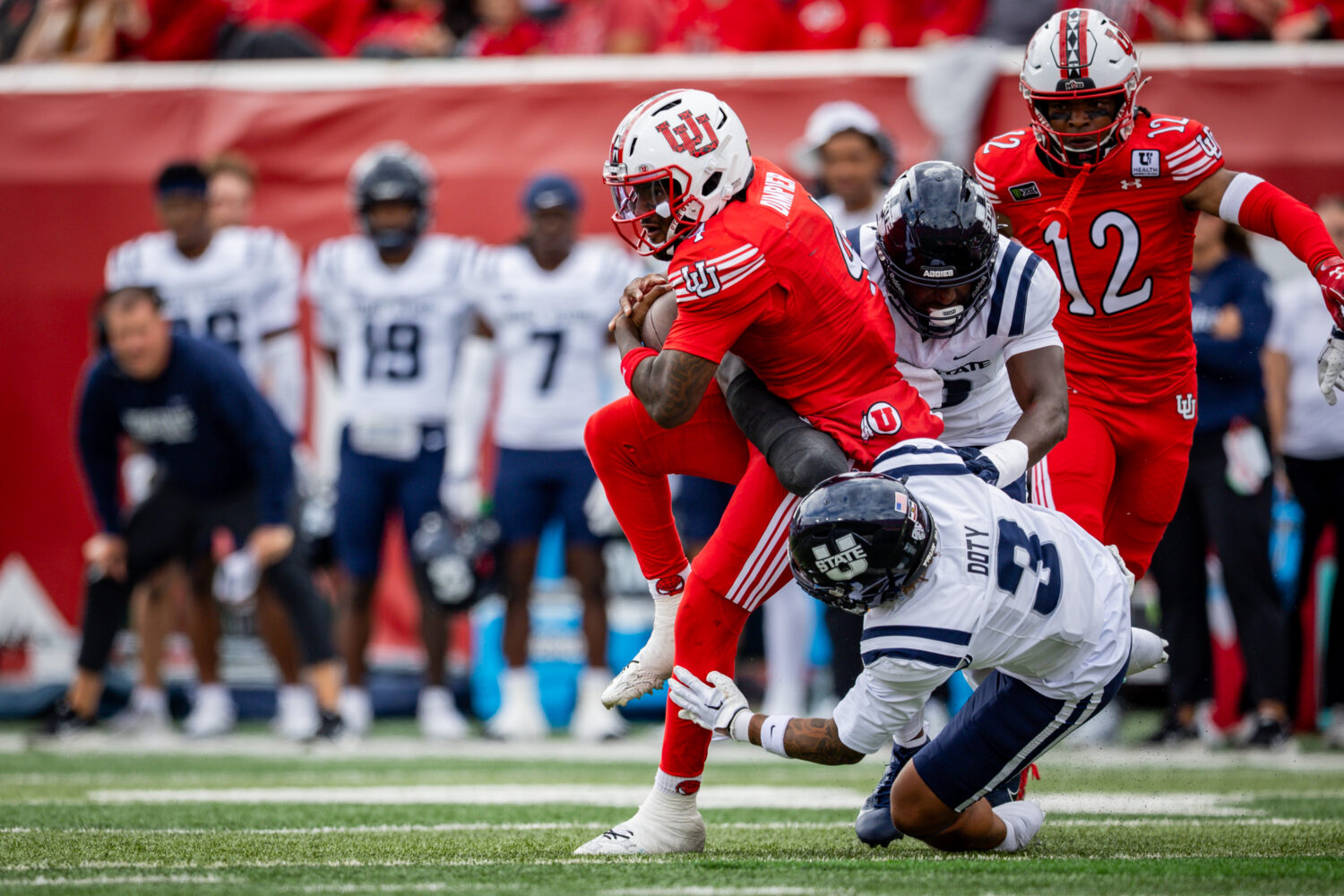
The availability still produced several meaningful updates. Devon Dampier has received greater control of Utah’s offense, Kevin McGiven has begun identifying how his personnel pieces fit together and coaches on both sides believe several uncertain position groups are deeper than they appeared during spring.
Here are the notes that stood out from Wednesday.
Kevin McGiven giving Dampier the keys
McGiven said Dampier is demonstrating greater command of the offense than he did in spring, particularly with protection checks and adjustments at the line of scrimmage.
Dampier redirected protections during the opening practices to account for defensive pressure—responsibilities Utah had not given him during spring. He also has freedom to adjust route concepts on the perimeter according to the coverage he sees.
“We’re giving him the keys to the car in that element,” McGiven said.
The most interesting example occurred when Dampier gave Utah’s receivers a coverage check that the coaches had never installed. The receivers understood the adjustment, executed it and helped create a big play.
McGiven believes Dampier and the receivers developed the check during the offseason throwing work they organized in Arizona.
“I just kind of looked over at Gundy and said, ‘I don’t know what you’re teaching these guys, but that was kind of cool,’” McGiven said.
That rep offered receipts from the offseason. Dampier saw the coverage, communicated an answer and trusted his receivers to see the same thing. The offense wants him to take ownership and apply his own flavor. This was a useful example of what that can look like when player freedom and preparation meet in the right place.
Wide receivers coach Chad Bumphis compared the Arizona session to something more commonly seen in the NFL. Utah’s option routes require Dampier and the receivers to interpret coverage the same way, making those player-led repetitions particularly valuable.
The command phase comes with guardrails
On Monday, Dampier shared that he’ll be able to make adjustments at the line of scrimmage. With that, coaches are still focused on the process more than the result.
“Bad habits with good results are still bad habits,” quarterbacks coach Ryan Gunderson said.
A quarterback can complete a pass to the wrong receiver. He can also use his athleticism to escape a mistake that will become a drive-killer against a better defense. Gunderson wants the process to remain sound even when a quarterback’s talent produces a positive result from the wrong decision.
Providing Dampier and Ficklin with the tools to make pre-snap decisions and put the offense in the best situation is what Gunderson will be tasked with.
Gunderson also compared Dampier and Ficklin to wild mustangs. His job is not to turn them into carnival horses; he wants to preserve their improvisational ability while bringing the fences in a little.
“I don’t think I’ve ever had two guys like them that dynamic,” Gunderson said.
Brandon Rose’s return gives the room another veteran who has played in consequential games, including at Utah. Nobody is suggesting a three-quarterback rotation, but his experience gives McGiven and Gunderson another dependable voice in the meeting room and greater protection against the position’s worst-case scenarios.
Dampier looks healthy, but Utah still must manage the hits
McGiven said Dampier looks and moves like a healthy quarterback after pushing through spring following offseason surgery.
The difference has been most noticeable when Dampier reaches the perimeter and opens his stride. His comfort and depth in those movements look different than they did a few months ago.
Utah will not remove the designed quarterback run game. Dampier creates a numerical advantage that changes how a defense must fit the run, and his improvisational ability will always produce additional carries.
McGiven said the offense must remain sensitive to the number and types of hits Dampier absorbs. The objective is not to remove one of his defining strengths. It is to avoid spending his body on snaps that do not justify the cost.
The offense handled an installation that overwhelmed it in spring
McGiven described Utah’s first fall camp installation as relatively vanilla. The second went “from zero to 100” with a much heavier volume of information.
A similar jump caught the offense off guard during spring. The players did not handle the details or required focus particularly well.
On Tuesday, McGiven said the same type of installation operated “like clockwork.” The offense worked through it cleanly and carried a greater level of focus from one play to the next.
Two practices do not establish offensive mastery, but this was one of the more encouraging comparisons offered Wednesday. Utah did not merely remember the playbook. It handled a volume and pace that previously caused the operation to unravel.
Tobias Merriweather is the first receiver Chad Bumphis identified when asked who has impressed since spring.
Bumphis already knew Merriweather as an off-field leader. Now, after watching him run and make plays in camp, he is beginning to see how that leadership translates onto…
— Steve Bartle (@BartleKSLsports) August 5, 2026
McGiven is still assembling the personnel puzzle
McGiven begins his offensive design with the quarterbacks—first determining what Dampier does best, then deciding how Ficklin’s package and workload fit around him.
The remaining skill personnel provide several mix-and-match possibilities.
Wayshawn Parker and Daniel Bray can be used as more than ball carriers. Creed Whittemore and Nate Johnson can align outside, in the slot or in the backfield. Bumphis said Utah could hand either player the ball and potentially allow them to throw it in certain packages.
At receiver, camp will determine who consistently makes plays, improves from one practice to the next and creates enough value to earn snaps in a crowded room.
Tobias Merriweather was the first receiver Bumphis mentioned when asked who had impressed him. Bumphis already knew Merriweather as an off-field leader but did not get to watch him participate during spring. Seeing the 6-foot-5 receiver run and make plays has provided a better understanding of what he can add on Saturdays.
Daidren Zipperer also remains a player Bumphis believes can become one of the room’s best when fully available. His biggest challenge is getting healthy and staying there.
Utah wants complete tight ends, not obvious substitutions
Tight ends coach Luke Wells is using camp to test his players in different situations rather than asking each to perform the same assignment.
He wants to know which tight end can make a contested catch, which can block on the perimeter and which can move a defender inside the box. Players capable of handling all three responsibilities will receive the most snaps.
The evaluation matters schematically. A tight end limited to one job can tell the defense what may be coming. A complete tight end allows Utah to change the play without changing personnel.
Wells shared that Hunter Andrews has looked fast and comfortable after returning from last season’s injury. Wells believes Utah can package opportunities around his speed and ability with the ball.
Will Money has also impressed after missing spring. Wells said the first two practices did not look like Money’s first days in the offense because of the conditioning and mental preparation he completed during summer.
Wells defined the Utah tight-end standard in four parts: smart, fast, violent and playing with an edge. The room must preserve that physical identity while expanding its usefulness in the passing game.
Utah’s running backs to be featured more completely
Utah’s running backs will be used differently in McGiven’s offense, with more opportunities to show their versatility as receivers, blockers and movable pieces. Atuaia did not reveal specific packages but said the scheme should showcase what the room can do beyond traditional carries.
Na’Quari Rogers’ potential return is being discussed
Running backs coach Mark Atuaia said Utah is discussing whether Na’Quari Rogers could return following the recent NCAA eligibility update.
Rogers led Utah with 11 rushing touchdowns last season and provided an established short-yardage option. Bringing him back, however, would affect a room that just completed six weeks of summer training and is already distributing developmental reps.
Bray, LaMarcus Bell, Steve Chavez-Soto and Mateaki Helu are competing for work behind Parker. Atuaia acknowledged that every rep given to a returning veteran is one fewer available for a younger player Utah is trying to develop.
“What’s best for the team is what we’re going to do,” Atuaia said.
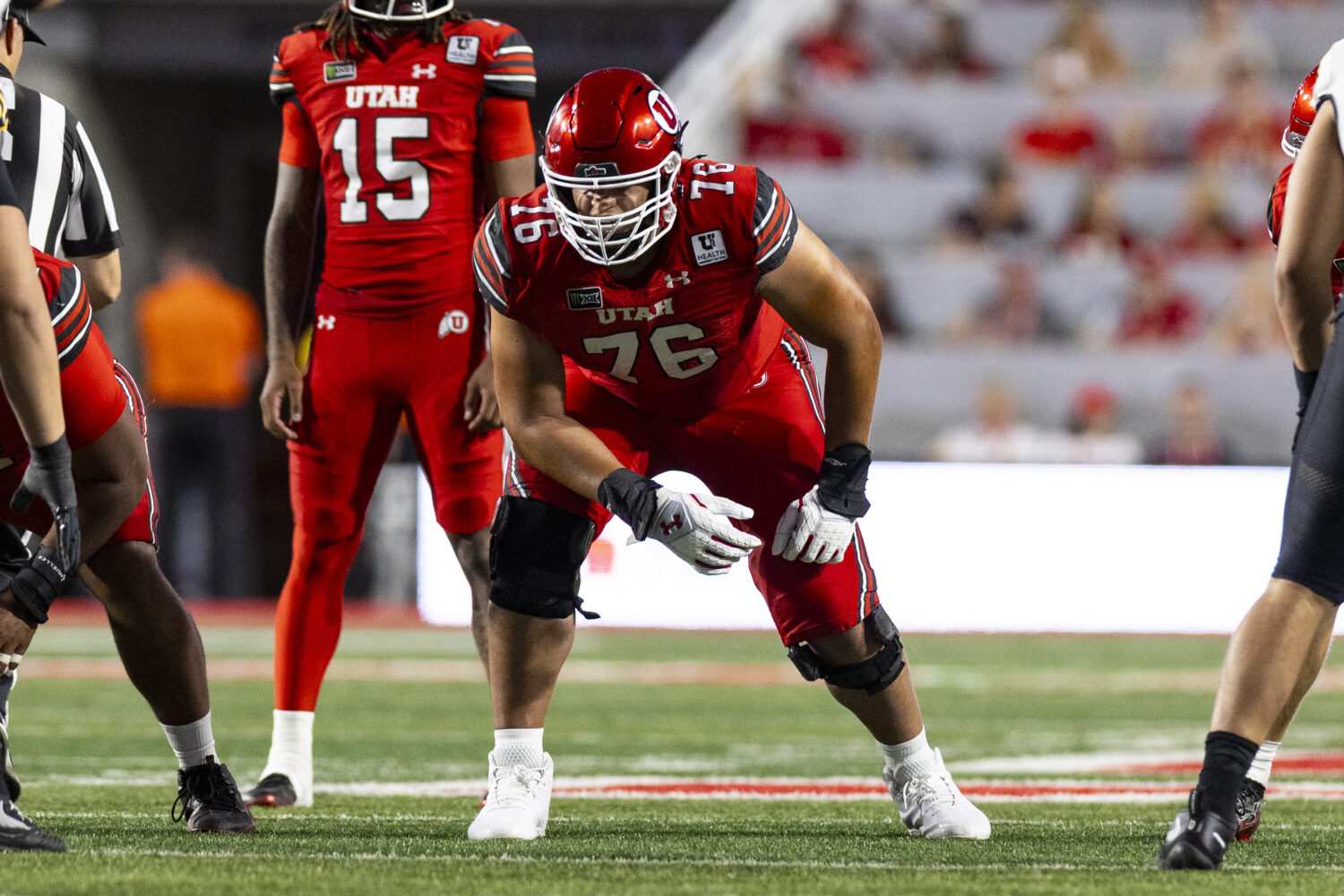
Gross believes Utah has 10 playable offensive linemen
Offensive line coach Jordan Gross said he currently believes Utah has 10 linemen it could take into a game and trust to play.
That does not mean all 10 are operating at the same level, and it does not mean the starting five has been selected. The number could grow or shrink as camp progresses.
Utah has not established a deadline for finalizing its lineup. Gross said Keith Olson would likely be included if the starting five were selected now, but Olson is currently sidelined with a sore hamstring.
Gross emphasizes a “starter mentality” because offensive-line availability can change quickly. Nick Hallock offered an early example. He began a practice further down the depth chart before Gross called him into the second unit during a two-minute drill because he needed a guard.
Alex Harrison has been “rock solid” while receiving his long-awaited opportunity at center. Gross identified Cedric Jefferson and Isaiah Garcia among Utah’s most improved linemen since spring. Jefferson added productive weight after arriving from Montana State, while Garcia continued progressing after returning from last season’s injury.
Kelvin Obot has also added enough size to place himself in contention for meaningful reps.
Zereoue Williams reached 331 pounds at one point during summer while remaining below 26% body fat, according to Gross. The added weight is productive, but Utah’s linemen must still become accustomed to moving and competing with an additional 10 to 15 pounds.
Gross saw a considerable improvement from the first practice to the second. The more important evaluations begin when the pads come on and Utah can test whether its improved size translates into movement.
Swan will put players ahead of scheme
Defensive coordinator Colton Swan will preserve the foundation of Morgan Scalley’s defense while adding his own preferences to certain coverages and run fits.
Swan’s approach is not to change successful concepts merely to establish ownership. He wants to maintain what has consistently produced at Utah and identify areas where the defense has broken down.
Personnel will determine how those adjustments take shape.
“It is all about the players,” Swan said. “It’s all about them over scheme.”
Utah’s defensive competitions may require Swan to become creative in finding the best 11 rather than placing one traditional player at each position and calling the depth chart finished.
Cyrus Polu has already earned considerable trust because of his productivity and attitude. Trey Reynolds has become one of the defense’s central leaders.
“Trey Reynolds is a rock,” Swan said. “There is not a guy on the team that will outwork Trey Reynolds.”
RELATED: A day in the life of Morgan Scalley, and what it says about his vision for Utah football
Utah has four defensive ends it trusts—and wants two more
Defensive ends coach Inoke Breckterfield identified Kash Dillon, Lance Holtzclaw, Paul Fitzgerald and Ethan Day as four players Utah could confidently take into its season opener.
The starting jobs remain unsettled. Breckterfield is also looking for a fifth and sixth end capable of maintaining the standard when Utah expands the rotation.
Dillon is competing for a starting role after producing as a reserve last season. Breckterfield praised his preparation and football obsession but wants him to become more physical. The next step includes creating greater knockback, setting a stronger edge and improving his bull rush.
Fitzgerald has looked like his old self—and perhaps better—after missing spring while recovering from injury. The pads will provide a more complete evaluation.
Breckterfield wants enough trusted ends to keep the rotation fresh. He does not want a player reaching his eighth or ninth consecutive snap and operating at half effort. The goal is to substitute without the defense losing a step or beat.
Nobody has won a starting defensive-tackle job
Defensive tackles coach Luther Elliss said his room currently has no starters.
That is not a declaration of concern as much as an accurate description of an open competition. Utah must replace its three primary interior contributors from last season, and the position remains young and largely unproven in its current form.
Jamal Wallace, Lucas Samsula and Jireh Moe are among the newcomers competing for immediate roles. Elliss believes their talent places them in the mix to play and potentially start.
The group added mass and strength during the offseason without sacrificing speed or quickness. Those gains are beginning to translate to practice, although Elliss noted that football conditioning is different from any summer drill. Defensive tackles must wrestle another 300-pound player, disengage and then run to the football before doing it again.
Karson Kaufusi has emerged as the room’s young leader. Elliss said Kaufusi first established credibility through his work and performance before becoming more vocal.
“He’s for sure earned that right to speak,” Elliss said.
At 6-foot-6 and more than 300 pounds, Kaufusi already commands attention when he enters the room. Utah now needs his production to grow into the same space as his presence.
Five or six safeties could play
Safeties coach Derrick Odum said he currently feels comfortable putting five or six players on the field.
The competition remains close enough that Odum deliberately changes lineup combinations so nobody becomes comfortable with a temporary spot on the depth chart. Utah could continue rotating several safeties during the season rather than settle exclusively on two every-down players.
Jackson Bennee has made noticeable progress by becoming more detailed. Odum said Bennee is relying less on his athleticism to overcome mistakes and taking greater ownership of his backpedal, route recognition and eye discipline.
Odum expects a big season from him.
The room’s tackling remains a more cautious evaluation. Utah’s safeties struggled with missed tackles last season, and Odum has made the correction a daily priority.
He wants the room to “smell like tackling” because of how often the players work through the body position and comfort required to finish in space. Odum saw improvement during spring but is not ready to declare the problem solved before padded practices.
Shah feels better about the cornerback room
Cornerbacks coach Sharrieff Shah said he can now identify five or six players capable of helping Utah. He did not have that confidence during spring.
Rock Caldwell’s versatility may become especially valuable. Caldwell can play safety, outside corner or nickel, giving Utah a bigger defender who can change assignments without requiring the defense to substitute.
Elijah Reed has shown physicality and length. James Chenault brings experience and savvy. J.C. Hart has become increasingly comfortable in the defense, while Earl Parker and Brandon Holmes continue competing for roles.
Nick Brown has shown improvement after moving to nickel, a position Shah acknowledged requires a considerable amount of information to process.
Shah believes the room has the pieces to become highly competitive and potentially elite. There is plenty of camp remaining before the second description can be treated as anything more than a ceiling.
Utah’s specialists are moving toward stability
Punter Orion Phillips has grown from 162 to 193 pounds since arriving at Utah and has become more comfortable operating against pressure. Shah believes Phillips is poised to take another step after showing the ability to become a high-level punter.
Kicker Dillon Curtis is nearing full strength following his injury. Shah remains excited about Curtis’ elite leg and believes Utah is approaching the point where Scalley can call for the field-goal unit with confidence.
All-conference long snapper Logan Castor remains the stabilizing presence. Shah described Castor as an embodiment of Utah football: a player who works, does not complain and asks for little attention.
Mitch Nielsen and Snow College transfer Gage Victor are developing behind him, giving Shah greater confidence in the overall snapping group.