Wayshawn Parker is chasing 1,200 yards; Utah is measuring something bigger
Aug 6, 2026, 12:00 PM | Updated: Aug 10, 2026, 9:56 am
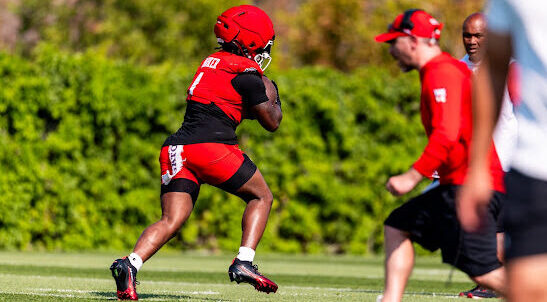
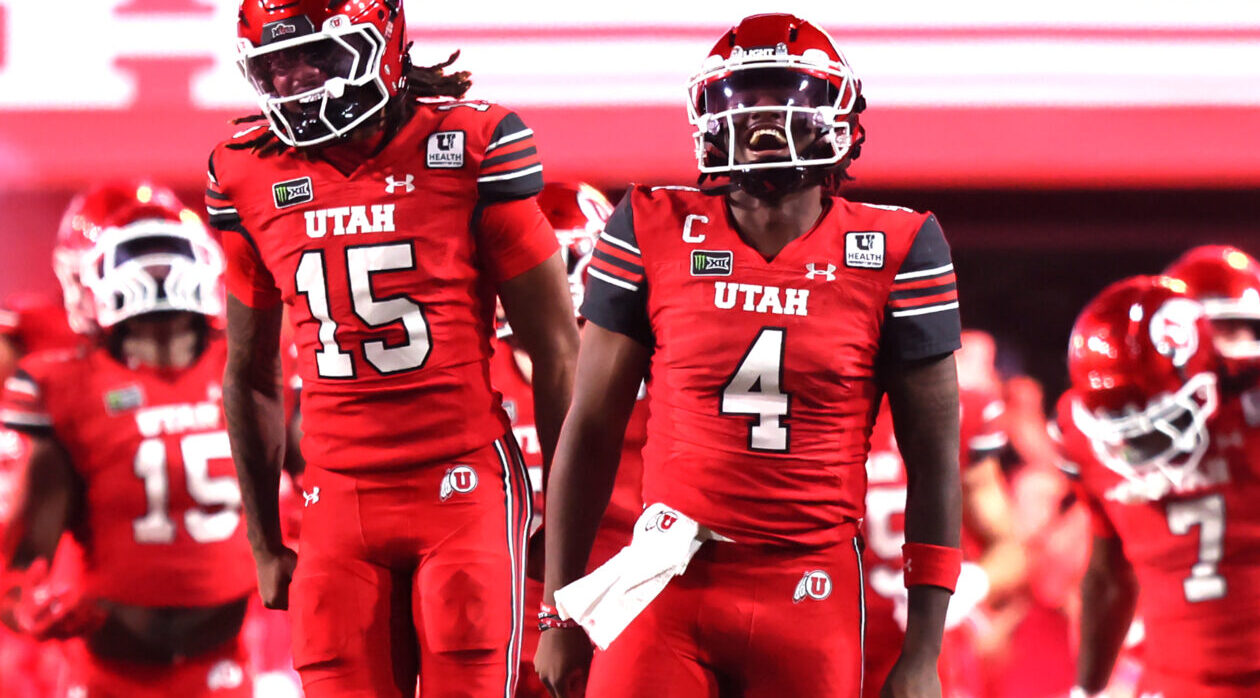
Utah Utes football first practice at Spence and Cleone Eccles Football Facility in Salt Lake City, UT on Monday, August 03, 2026.Davis Kuhn/Utah Athletics

SALT LAKE CITY — Wayshawn Parker finished 19 yards short of 1,000 last season, so he responded by moving the target further away.
“I’m going to raise it a little bit — like 1,200,” Parker said Monday. “Have higher standards and put that weight on me.”
Utah running backs coach Mark Atuaia believes Parker is capable of it, while also emphasizing the little details to his success.
This is how August usually works. Players announce the round number worthy of a preseason graphic. Coaches immediately begin rehearsing the fine print.
For Parker, that fine print explains the next stage of his development better than another promise about getting a talented player the football.
Parker does not need to prove he can produce. He rushed for 981 yards and six touchdowns on 149 carries last season, earned third-team All-Big 12 recognition and became Utah’s most dependable running back as the year progressed.
Now Utah wants more — not necessarily more carries, but more control over how he affects a defense.
Kevin McGiven’s offense plans to feature Utah’s running backs as receivers, blockers and movable personnel pieces rather than treating them exclusively as handoff recipients. Parker’s 1,200-yard goal remains the billboard number. The more interesting objective is turning him into a complete offensive problem, including on snaps when the football goes somewhere else.
Parker’s goal is ambitious — not unrealistic
Parker approached the goal during Monday’s availability like a player deliberately adding pressure rather than one casually predicting a breakout. The extra 219 yards represent a higher standard he chose for himself — not an expectation handed to him by a coach or pulled from a preseason watch list.
His production accelerated once Utah settled into the second half of its schedule. Parker recorded four consecutive 100-yard performances and averaged 103.8 rushing yards over the final six games. Maintained across a 13-game season, that pace would produce nearly 1,350 yards.
In other words, 1,200 is not some fantasy number pulled from August’s motivational vending machine. Parker has already demonstrated the required pace. Utah must extend that version of him across an entire season.
Parker’s 7.0 yards per carry ranked fourth in the Big 12 and 20th nationally. He also led the Utes with 88.6 all-purpose yards per game and turned 13 receptions into 185 yards and three touchdowns.
That late-season surge was when the “Pink Cleat Assassin” stopped sounding like a fun social-media nickname and started reading like a scouting warning. Parker wore the pink cleats for his niece; by November, they had become visual shorthand for Utah’s most reliable ball carrier.
By the second half of last season, the debate over Utah’s best running back had mostly stopped being a debate. Parker was the answer. The concern entering 2026 is whether the rebuilt infrastructure around him will allow him to remain one.
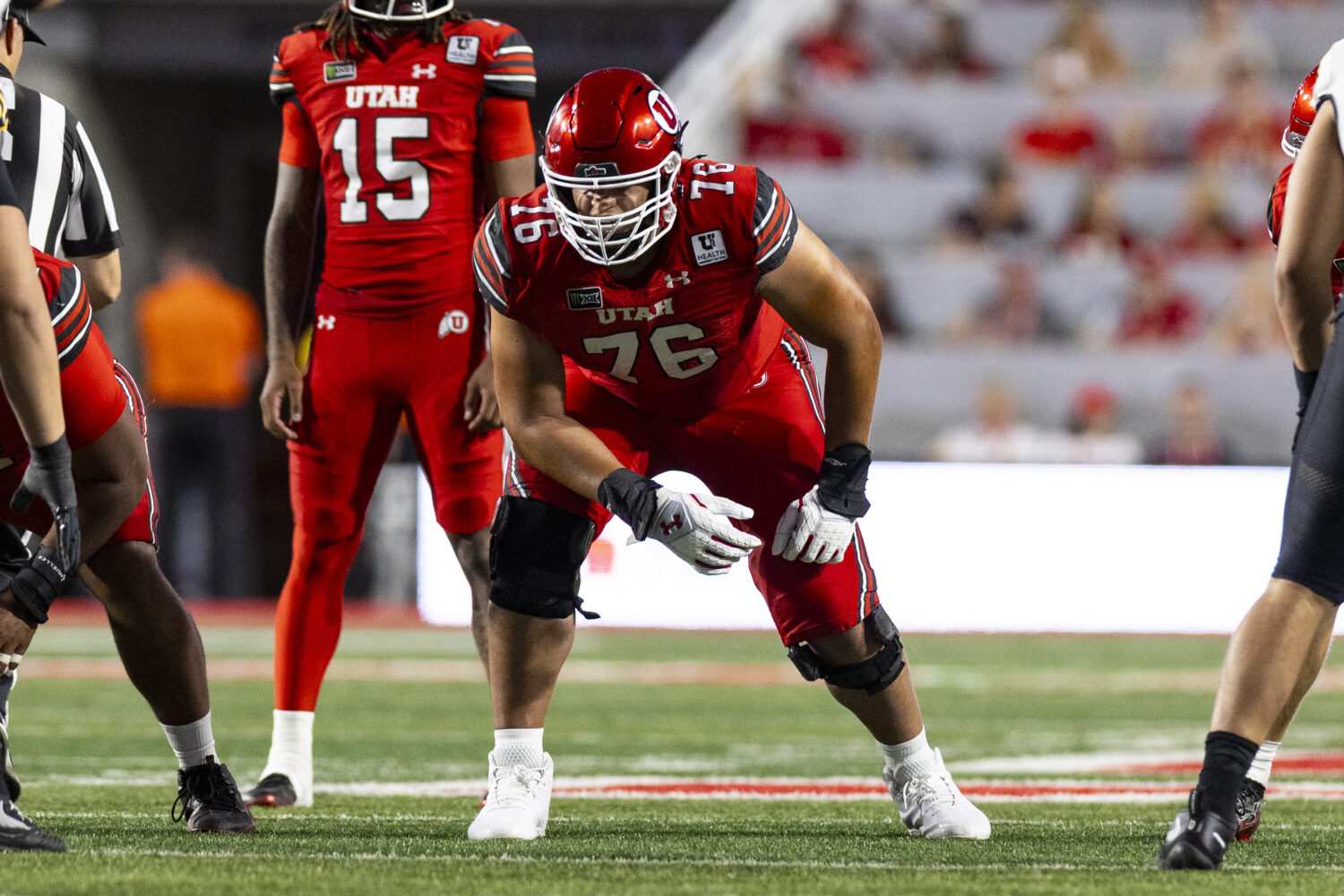
Utah is replacing all five offensive-line starters from a group that helped the program set single-season records with 3,462 rushing yards and 41 touchdowns. Parker will not always receive the clean picture he saw during the strongest portions of last season. Some lanes will develop later. Some will be smaller. Others may neglect to appear at all.
Parker expressed confidence in the reconstructed group Monday, noting that he already shared experience with some of the linemen and spent the offseason building connections with the newcomers.
Good things coming from Coach Atuaia and Coach Wells 🙌#GoUtes | #RSNB pic.twitter.com/LyevfOam1c
— Utah Football (@Utah_Football) August 5, 2026
“I feel comfortable behind them,” Parker said. “Our connection is there.”
Parker also prepared his own body for the possibility of a larger workload. He said the objective was to lose fat without sacrificing muscle, frequently remaining in the facility after teammates had finished.
“The offseason became serious for me,” Parker said. “I sat there and worked out after everybody even left. So it was dedication for me.”
When asked about Parker’s ambitious goal, Atuaia responded with an anatomy lesson. Eyes. Shoulders. Knees. And feet? That checklist is more important than the round number attached to Parker’s goal.
“It really does come down to when you get the ball, are your eyes in the right place?” Atuaia said. “Are your shoulders and your knees and your feet pointed in the right direction? And are you able to see everything formulate in front of you before you go?”
Those details separate an explosive runner from a sustainable one. Parker already possesses the balance and change-of-direction ability to make defenders miss. Better eye placement, body alignment and anticipation should help him arrive at those opportunities without spending extra steps to get there.
The 1,200 yards will be counted afterward. Atuaia is coaching the fractions of a second that could produce them.
Utah is asking Parker to become a savvier runner
Parker has accumulated 286 college carries between Washington State and Utah. Atuaia believes those repetitions are beginning to show in the way he processes a play.
“I think he’s just getting more seasoned as he starts playing more football,” Atuaia said. “You can see how savvy he is when he plays from a coaching vantage point of what we’re trying to do, and then to see what he does instinctively, it’s been a good deal for him.”
That description matters because Parker’s athleticism can occasionally make patience look optional.
He can stop on a dime, redirect and leave a defender negotiating with empty grass. The next step is pairing that improvisational ability with a more precise understanding of when the blocking structure is about to open.
RELATED: A day in the life of Morgan Scalley, and what it says about his vision for Utah football
A rebuilt offensive line increases the value of that maturity. The same running lane may not appear with identical timing each week, particularly while Utah’s linemen learn how to function together. Parker must distinguish between a crease that needs another heartbeat and one that demands an immediate decision.
That is the quiet evolution Utah needs from him. The spectacular cuts will receive the replays. The four-yard gains created by proper tempo, leverage and anticipation may matter just as much to the offense.
Savvy will not rescue every missed block. No amount of vision turns an unblocked defensive tackle into a philosophical concept. It can, however, prevent Parker from converting a developing gain into a loss because he abandoned the design too quickly.
The new offense wants more than carries
The most interesting development may be how McGiven intends to use Parker before the ball is placed in his hands.
McGiven said Parker and Daniel Bray possess different skill sets that allow Utah to use both players beyond traditional carries. Atuaia declined to reveal specific packages but acknowledged that the job description has changed.
“I’m kind of chuckling because, yeah, we’re being used a lot differently in some aspects,” Atuaia said. “It’ll show what these guys can really do.”
The possibilities extend beyond tossing another swing pass into the weekly plan and calling it creativity.
Parker can align in the backfield, release into a route or move elsewhere in the formation. Even when he does not receive the ball, that movement can force a linebacker to declare a matchup or help Devon Dampier identify whether the defense is playing man or zone coverage.
That is how Parker can become more valuable without every solution ending in another collision. His presence can clarify the picture for Dampier, create space for a receiver or make a defender follow him away from the eventual destination of the football.
His receiving production last season showed he can punish defenses for dismissing him as window dressing. Against Cal Poly, Parker paired a 43-yard touchdown run with a 52-yard touchdown reception, offering a two-play trailer for the expanded role Utah now wants to develop.
The Utes do not need to choose between featuring Parker and expanding the passing game. Using him as a receiver should make the entire offense less predictable while creating touches that do not require him to repeatedly run into a crowded box.
Parker did not attach a receiving target to his 1,200-yard rushing goal. His answer Monday was considerably less concerned with how the touches are categorized.
“I just want to factor in any type of way,” Parker said. “I want to be there so the offense can be able to score. I’m a team player. I’m not just by myself.”
The responsibility also includes the decidedly less glamorous work of blocking.
McGiven wants Utah’s running backs capable of protecting the player who receives the ball, whether that means handling pass protection, carrying out a fake or creating an angle for another skill player. A back who can perform every assignment allows Utah to change the play without changing personnel—and without sending the defense a calendar invitation explaining what comes next.
That versatility is where Parker’s value could exceed his rushing total. A 1,200-yard back changes games when he carries the ball. A complete one changes the defense before the snap.
More responsibility does not require reckless volume
Atuaia described his primary assignment with Parker in practical terms: keep him healthy, prepare him mentally and place him in position to play his best on game day.
That becomes important when an individual goal collides with a championship objective.
Parker’s 1,200-yard target may require a modest increase from last season’s 149 carries, but Utah does not need to chase the number at the expense of September legs or November availability. Daniel Bray, Steve Chavez-Soto, LaMarcus Bell and Mateaki Helu give the Utes alternatives capable of absorbing developmental and complementary work.
The depth behind Parker should not diminish his importance. It should help Utah use him with greater purpose.
It has also given Parker a different responsibility within the room. He praised Daniel Bray’s growing understanding of the offense and compared freshman LaMarcus Bell to an earlier version of himself.
“He just reminds me of me when I was a freshman,” Parker said. “He has mental mistakes, but he will ask me and I will be there for him just because I’ve been in his shoes before.”
All 👀 will be on these 2️⃣ Utes!@Devonddampier x @WayshawnParker
📰 https://t.co/huQjxKJrgs#GoUtes | #RSNB | @MaxwellFootball pic.twitter.com/rbL8gWWBFo
— Utah Football (@Utah_Football) August 3, 2026
That is another form of workload Parker has willingly accepted. He is no longer only the back attempting to establish himself. He is one of the players younger teammates expect to provide the answer.
There is a difference between featuring a running back and treating him like the emergency button mounted behind glass. Utah became too dependent on Parker as last season progressed because he kept producing. McGiven’s challenge is to preserve that reliability while making the surrounding offense strong enough that every difficult situation does not automatically become Parker’s problem.
Atuaia also does not believe Parker will place the pursuit of 1,200 yards above Utah’s larger ambitions.
“You can sit in the mirror right now and ask him his personal goals or our team goals, and he’s going to 100% of the time say it’s our team goals that mean more to him than all of that,” Atuaia said.
That balance will define how Utah handles its best running back. Parker should receive enough opportunities to control games without becoming the automatic answer every time the offense encounters resistance.
The Bottom Line
Parker’s return gave McGiven something every new offensive coordinator wants: a proven player capable of becoming the offense’s center of gravity. His next step is not merely scavenging the 219 yards that separated last season from his new goal.
It is becoming a more patient runner behind a reconstructed line, a more dangerous receiving threat and the type of complete back who can influence a play without appearing in its box-score entry.
Parker’s late-season surge made 1,200 yards feel less like an August fantasy and more like reasonable arithmetic. But if McGiven can force defenses to locate Parker before every snap—and account for him as a runner, receiver, blocker or decoy—the rushing total may become one of the least revealing ways to explain his value.
The rushing total belongs on the billboard. Utah’s season may be decided by how well Parker handles everything written beneath it.