Utah starts at No. 21 in AP Top 25 as Morgan Scalley balances continuity and change
Aug 17, 2026, 10:25 AM | Updated: Aug 18, 2026, 10:01 am
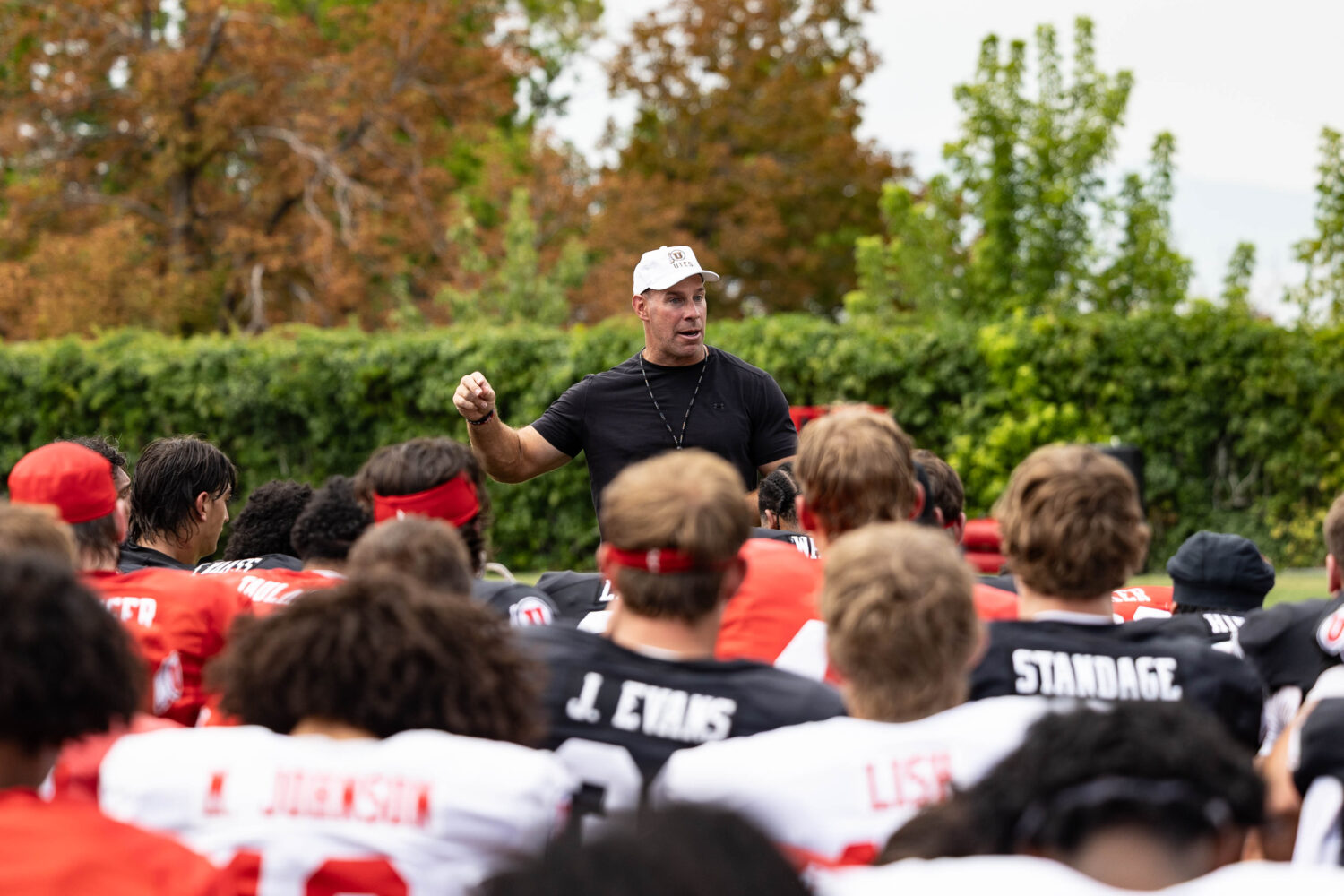
Morgan Scalley speaking to his Utah football squad at fall camp. Photo courtesy by Utah Athletics.

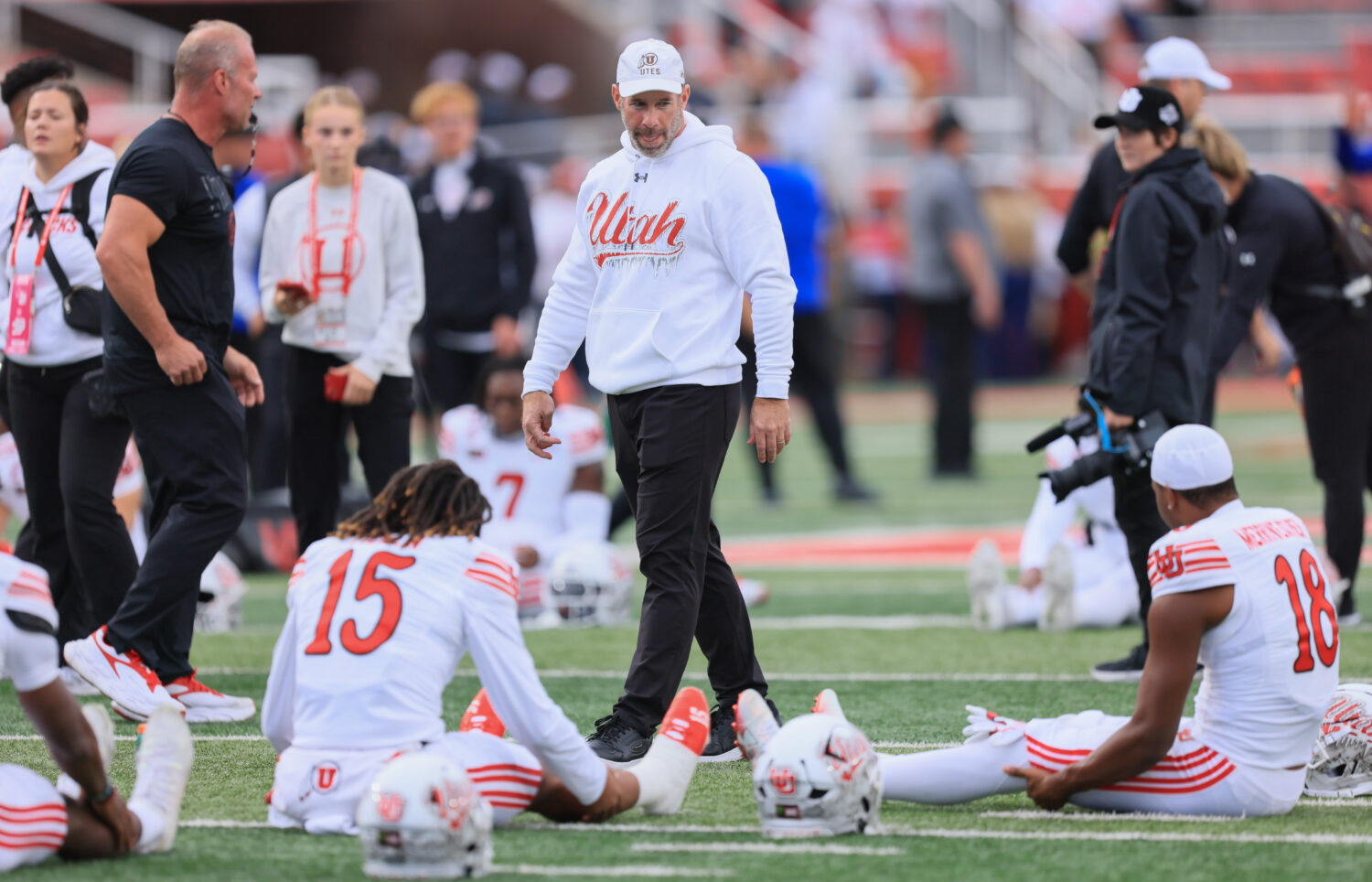
SALT LAKE CITY — Utah will begin Morgan Scalley’s first full season ranked No. 21 in the Associated Press Top 25, an indication that national voters expect the program’s established foundation to continue on with its first head-coaching change in more than two decades.
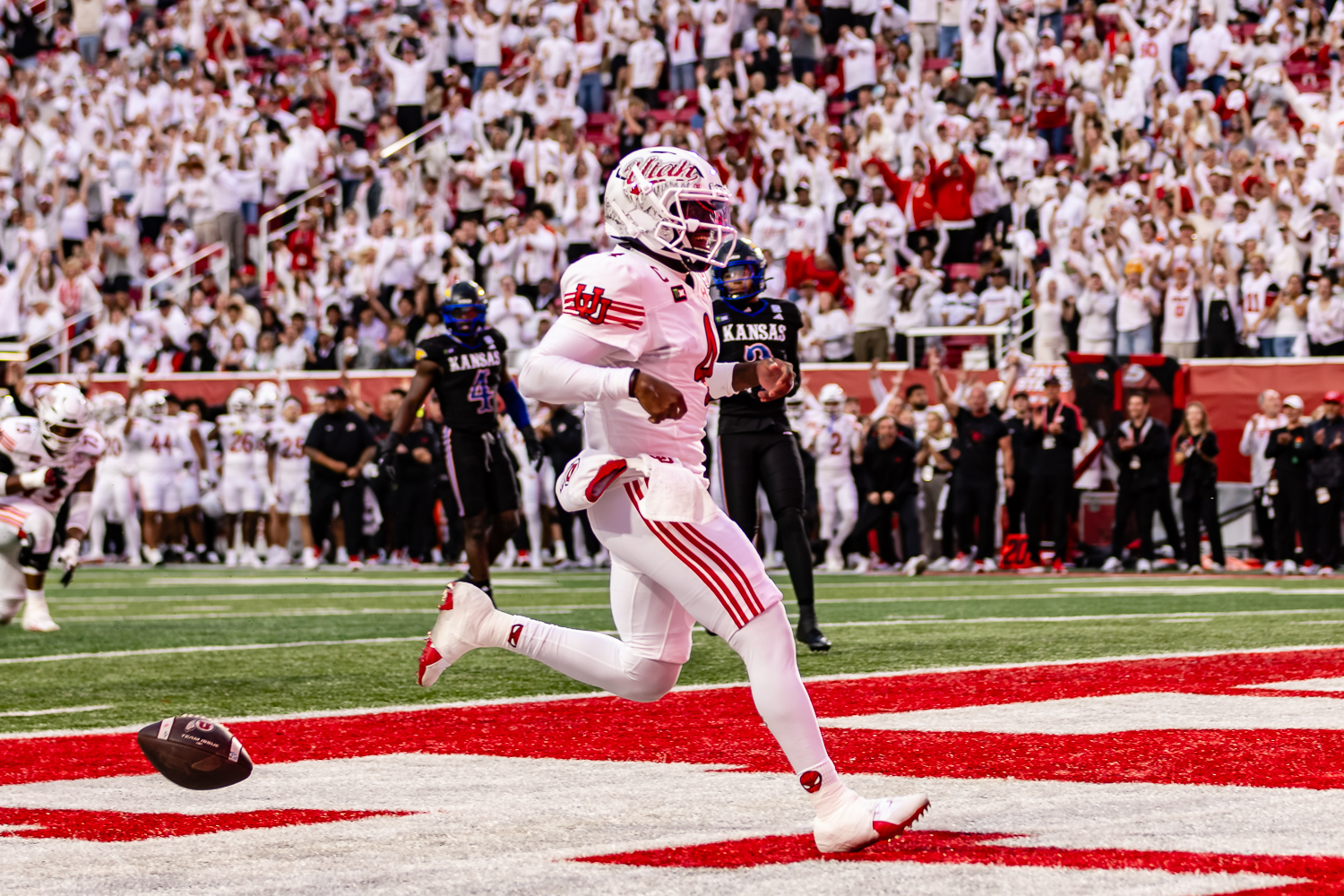
Scalley inherited an 11-win team, an experienced quarterback in Devon Dampier and a program with a recognizable formula. Utah expects to play physically, develop players others overlooked and force opponents to operate in the least comfortable version of themselves.
Those qualities helped Utah finish last season ranked No. 14. They also appear to have given voters enough confidence to keep the Utes inside the preseason Top 25 despite the coaching transition, a rebuilt offensive line and substantial defensive turnover.
Scalley’s assignment is not simply to preserve everything Kyle Whittingham constructed. He must identify which qualities remain essential and where Utah must evolve.
The program cannot become a museum dedicated to the Whittingham era. It would be equally foolish to renovate it by tearing out the load-bearing walls. Utah’s No. 21 ranking represents an early bet that Scalley can manage that balance.
Utah remains inside the Big 12’s leading group
Utah is one of four Big 12 teams included in the preseason poll. Defending conference champion Texas Tech leads the group at No. 12, followed by BYU in a tie for No. 14, Utah at No. 21 and Houston at No. 23. Here is the full AP Top 25
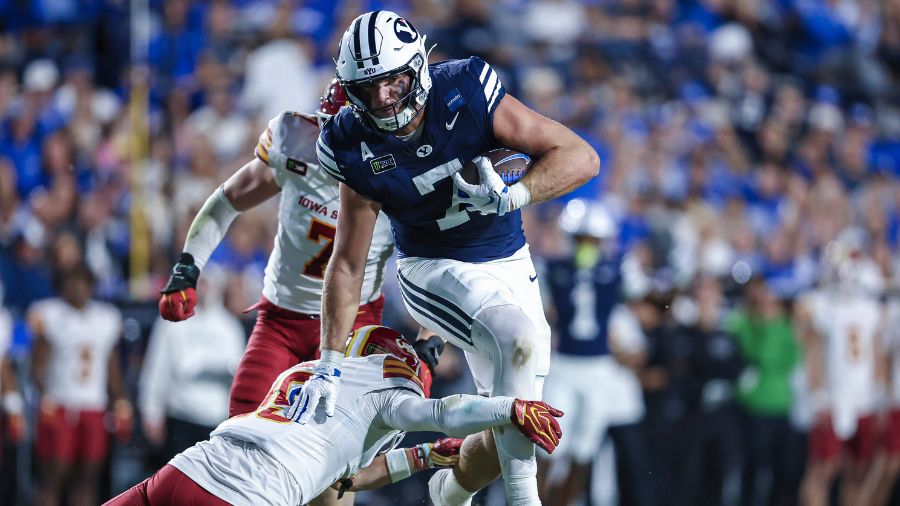
The Utes are not receiving the benefit of the doubt afforded to Texas Tech, which won the conference and reached the College Football Playoff last season. They also remain behind a BYU program that has won 23 games over the past two years and returns considerable continuity along the lines of scrimmage.
Utah is still being treated as a legitimate Big 12 contender despite carrying greater structural uncertainty than either program.
Scalley is a first-year head coach. Kevin McGiven is implementing his version of Utah’s offense. The offensive line is rebuilding all five starting positions, potentially with true freshman Kelvin Obot at left guard. The defense must replace significant production along its front and in the secondary while maintaining the expectations attached to a unit Scalley helped construct.
A No. 21 ranking does not suggest voters believe every transition will unfold smoothly. It suggests Utah’s returning talent and program infrastructure provide enough protection if some parts take longer to come together.
Preseason Top 25 recognition is a relatively modern development for Utah
Utah’s No. 21 ranking marks the ninth time the program has appeared in the preseason AP Top 25.
The Utes did not make their preseason debut until 2004, when Urban Meyer’s team opened No. 20 before completing an undefeated season and finishing No. 4. Their second appearance came in 2009, followed by six consecutive preseason rankings from 2019 through 2024. Utah’s highest starting position was No. 7 in 2022.
That streak ended last year after Utah’s injury-plagued five-win season in 2024. The Utes responded by winning 11 games and finishing No. 14 in the final AP poll.
Utah has finished ranked in five of its previous eight seasons that began inside the Top 25. That history includes teams that significantly exceeded expectations, such as the 2004 and 2021 Utes, but also the 2024 team that opened No. 12 and finished 5-7.
Returning at No. 21 reflects national respect for what Utah has built, along with measured confidence that Scalley can guide the program through its next stage.
| Season | Preseason Ranking | Final AP Rank | Record |
|---|---|---|---|
| 2004 | No. 20 | No. 4 | 12–0 |
| 2009 | No. 19 | No. 18 | 10–3 |
| 2019 | No. 14 | No. 16 | 11–3 |
| 2020 | No. 22 | Unranked | 3–2 |
| 2021 | No. 24 | No. 12 | 10–4 |
| 2022 | No. 7 | No. 10 | 10–4 |
| 2023 | No. 14 | Unranked | 8–5 |
| 2024 | No. 12 | Unranked | 5–7 |
| 2026 | No. 21 | TBD | TBD |
Preserving Utah’s identity does not require preserving every detail
Scalley’s role in Utah’s defensive rise makes him a natural candidate to protect the program’s defining qualities. He played for the Utes, helped build their defense and spent years preparing to succeed Whittingham.
That familiarity is valuable as long as continuity does not become inertia.
Utah can remain physical while creating more offensive flexibility. Its defense can retain its aggressive personality while becoming more multiple. The program can continue developing prospects while adapting to the transfer portal, revenue sharing and modern roster management.
Scalley has also attempted to create more energy and player ownership without lowering expectations. A refreshed environment can help, but only if it produces more dependable football rather than placing a nicer soundtrack behind the same mistakes.
No. 21 reflects confidence, not certainty
Voters appear to trust that Dampier, Wayshawn Parker, Scalley’s defensive experience and Utah’s developmental structure can keep the Utes competitive during the transition. They are not yet convinced those advantages will allow Utah to keep pace with the Big 12’s two highest-ranked teams.
That restraint is reasonable because Utah still must prove its offensive line can function as a connected group. Its young defensive linemen must convert physical development into dependable run fits. The cornerbacks must allow Colton Swan to call the defense as aggressively as he prefers. McGiven’s offense must execute when the clock, down and opponent remove the comfort of a practice script.
Scalley does not need to reinvent Utah to exceed its preseason ranking. He needs to protect the program’s greatest strengths while addressing the limitations that have occasionally made the Utes too dependent on defense, field position and narrow margins.
The Bottom Line
Utah beginning the season at No. 21 is not a coronation of the Scalley era. It is an acknowledgment that the program he inherited has earned national trust.
Dampier gives Utah continuity at the sport’s most important position. The defense still carries Scalley’s fingerprints, and the program’s developmental backbone remains intact. Those advantages should provide a competitive floor while Utah rebuilds its offensive line, expands its offense and adjusts to a new head coach.
The ceiling will depend on whether Scalley can convert that inherited stability into forward movement. Utah spent two decades establishing what it is. His first season will begin showing what it can become.