Arkansas brings the first real test for Utah football’s rebuilt lines
Sep 9, 2026, 9:05 PM | Updated: Sep 10, 2026, 11:57 am
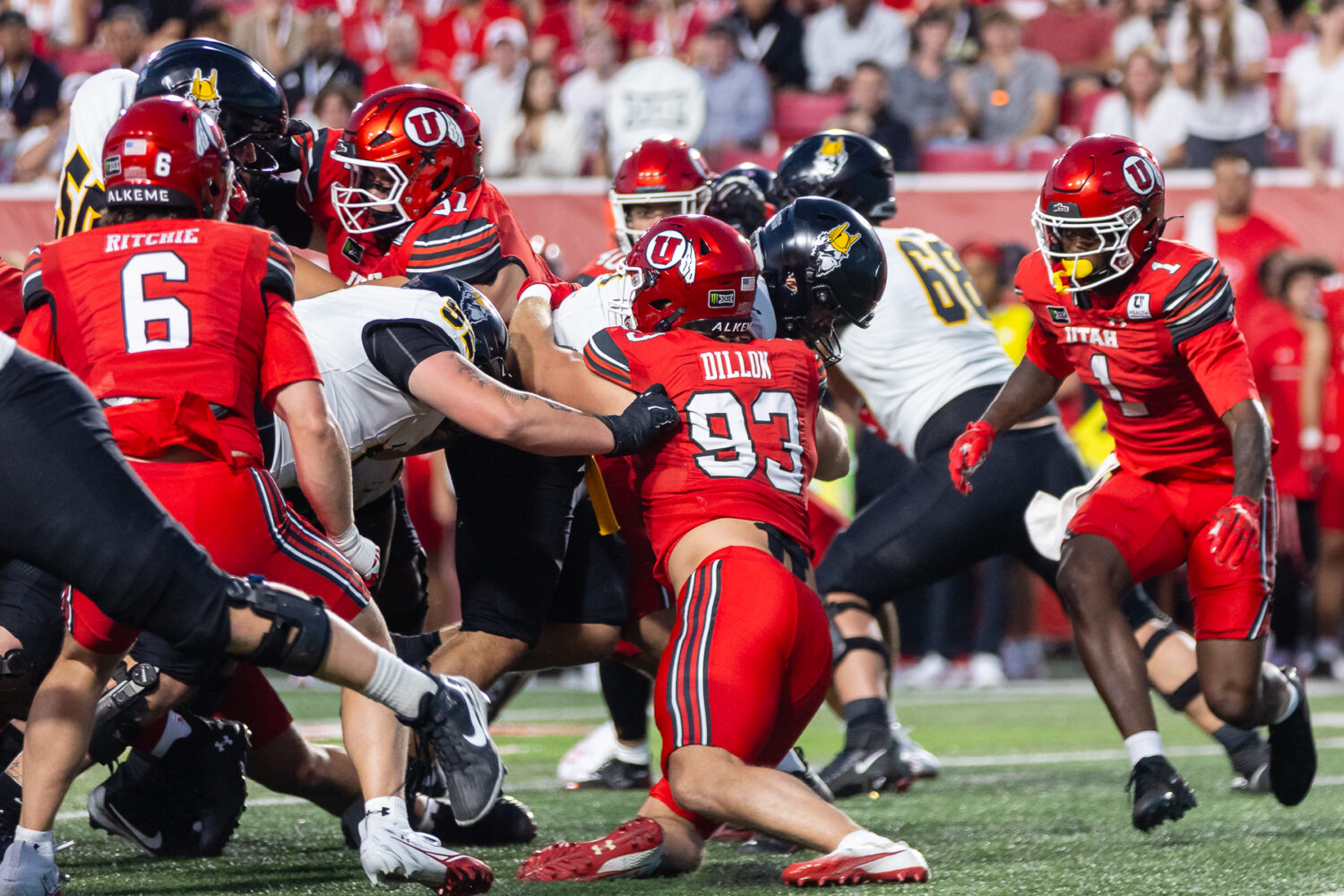
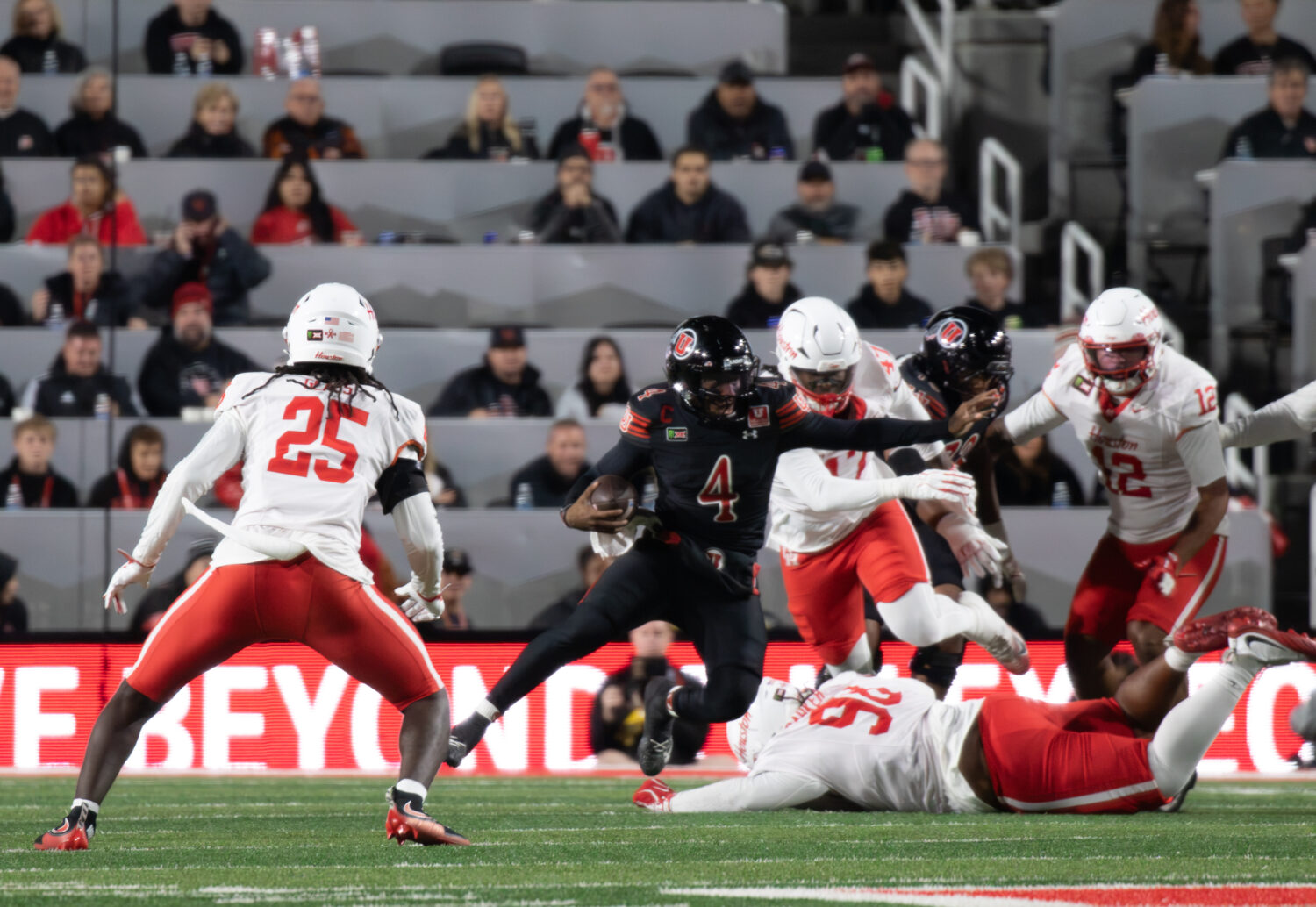
Idaho Vandals vs. Utah Utes at Rice-Eccles Stadium in Salt Lake City, Utah on 9 3, 2026. (Photo: Joel A. Davidson / UteZone, On3.com)
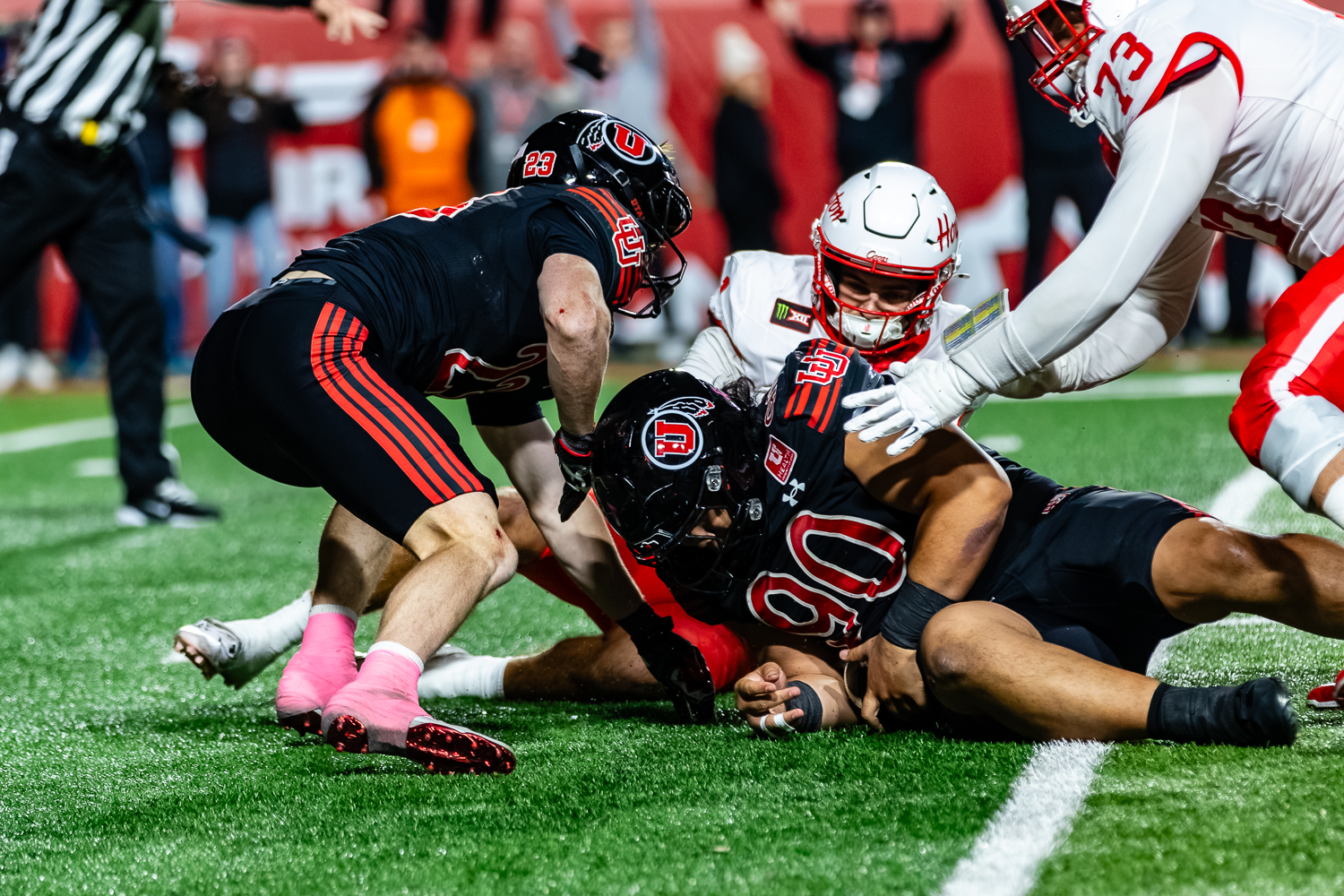
(Photo: Joel A. Davidson / UteZone, On3.com)

SALT LAKE CITY — Utah football’s season opener offered an encouraging first look at the new offense and defense.
The No. 20 Utes overwhelmed Idaho with 633 yards of offense, including 364 yards on the ground, and the offensive line did not allow a sack. Defensively, Utah produced two early takeaways and held the Vandals to 225 total yards in a 66-14 victory.
The two biggest questions this offseason centered around how Utah would rebuild the offensive & defensive lines. The answers to those questions remain largely undefined after last week. But that will change Saturday night.
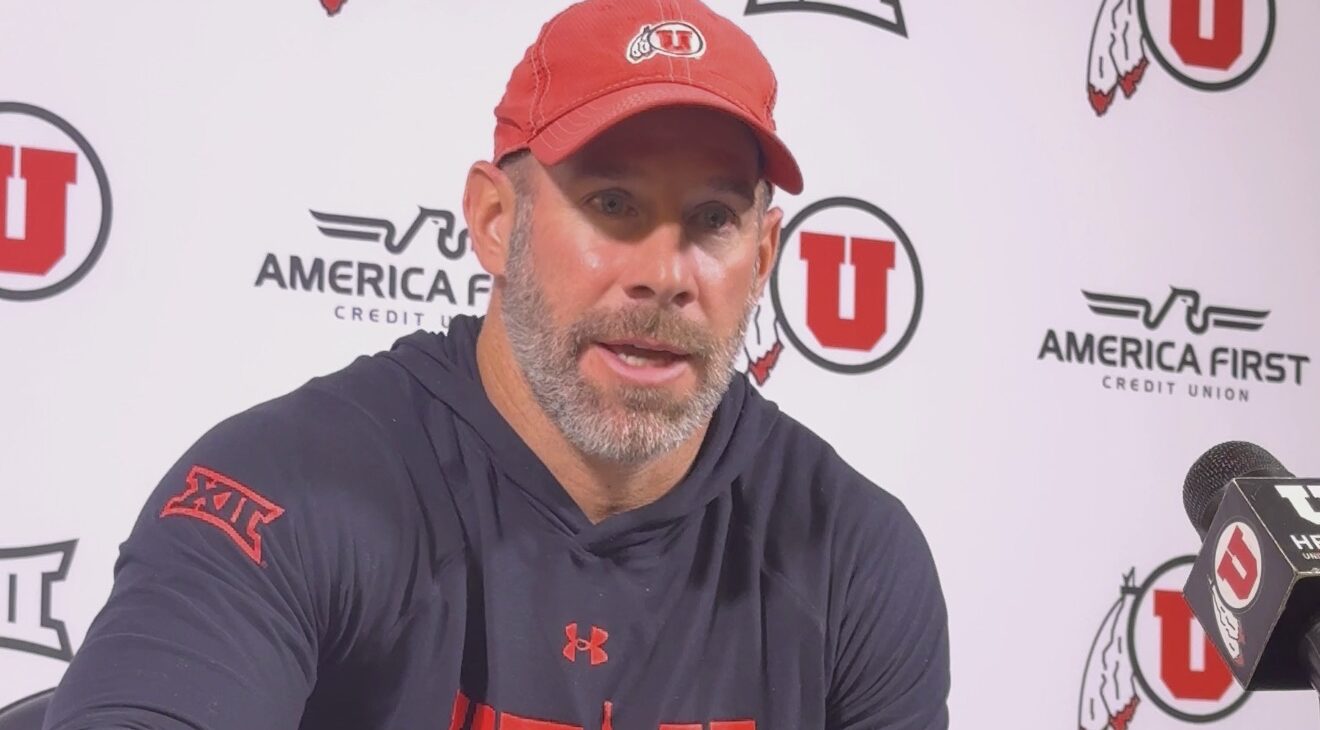
“It’s going to be a physical game,” Utah head coach Morgan Scalley said Tuesday. “They’re an SEC crew. They’ve got an offensive and defensive line that are stout. They’re physical, aggressive, and that’s where the game is going to be won or lost, really, is at the line of scrimmage.”
That was not a throwaway description from a coach filling time during a weekly press conference. It was the central theme of Utah’s Tuesday media availability.
Arkansas is bigger and more athletic than Idaho at nearly every position, particularly in the trenches.
| Team/unit | Average height | Average weight |
|---|---|---|
| Arkansas starting OL | 6-foot-5.2 | 324.0 pounds |
| Arkansas starting DL | 6-foot-3.5 | 287.5 pounds |
| Idaho starting OL | 6-foot-4.6 | 302.8 pounds |
| Idaho starting DL | 6-foot-3.0 | 267.0 pounds |
Not only do the Razorbacks have size along the offensive line, they have some physical targets in the passing game and a pair of running backs Utah’s coaches believe can create problems.
“They’ve got athletes everywhere,” safeties coach Derrick Odum said. “Their quarterback is a really good athlete. Their O-line is huge and physical. They have really good receivers — some guys that have a lot of speed, some bigger guys — and their tight ends are tough.
“They have two backs that I think are really special. We’ll have our hands full.”
The matchup will not be decided by which team looks more impressive walking off the bus. Arkansas still must prove it can consistently convert its physical profile into production.
The Razorbacks rushed 45 times for 159 yards in their 31-14 victory over North Alabama, an average of just 3.5 yards per carry. That was not dominant work against an FCS defensive front. Still, Utah cannot assume those Week 1 struggles will travel to Rice-Eccles Stadium.
The Razorbacks are likely to test the area Idaho found most encouraging.
A real test for Utah’s defensive front
Utah’s defensive front entered the season with legitimate questions about its size, depth and ability to hold up against downhill rushing attacks.
The Utes took an overall step forward against Idaho, but the two Idaho touchdown drives were a reminder that last year’s late-season issue has not disappeared.
Defensive tackle Karson Kaufusi was one of Utah’s strongest performers in the opener. He recorded his first solo sack and set a career high with 1.5 tackles for loss.
“I thought it was good, for sure,” Kaufusi said of the run defense. “There’s always room for improvement, but I thought we took a step forward.”
Kaufusi has added weight and reshaped his body during his development at Utah. His ability to hold up inside will be important against an Arkansas offensive line that will attempt to displace Utah defensive linemen rather than run around them.
“They’re good,” Kaufusi said. “We come in every week with the same idea. We’re going to be nasty and just get the job done. But they’re good, so it’ll be a good game.”
Utah does not necessarily need its defensive tackles to dominate the box score. It needs them to avoid being displaced, keep the linebackers clean and force Arkansas to earn its way down the field.
That becomes even more important within Colton Swan’s aggressive defensive structure.
Utah frequently pressured Idaho and used creative personnel packages to attack protections. Aggression works best when the defense controls the early downs. If Arkansas can create efficient rushing opportunities and stay ahead of the chains, Utah’s pressure menu becomes more difficult to deploy.
“They’re pretty good, physical, big,” Scooby Davis said of Arkansas’ receivers. “Probably the biggest group we’re going to play this year, so we’ve got to be physical.”
Safety Rabbit Evans offered an equally concise assessment.
“They’re big, fast, strong,” Evans said. “They’re a well-coached team, so it’s going to be good to compete against them. Good test.”
That is ultimately what Saturday represents for Utah. The program has spent years building its identity around winning at the line of scrimmage. Against Arkansas, that familiar identity will receive its first real examination of the season.
Utah’s offensive line is not settled
Utah’s rebuilt offensive line passed its first test, and did so without Keith Olson or Isaiah Garcia, two players who factored prominently into the discussion of the line all offseason.
Scalley said both should be available against Arkansas, potentially giving offensive line coach Jordan Gross additional options.
It likely create another week of movement up front. When asked whether Utah had settled on its five-man combination, Scalley was direct.
“As of right now, no,” he said.
With Olson missing last week’s game, that response is to be expected. Utah is still trying to settle on a starting five, making Olson’s return to practice a timely one.
However, Arkansas is not the opponent against which Utah will want to conduct prolonged auditions.
The Razorbacks’ defensive front will challenge Utah’s ability to create displacement. Arkansas will also be more capable of punishing individual mistakes, particularly on the edges, where Utah has spent much of the past month searching for the answer on the right side.
Utah’s running game can make the situation easier. Dampier’s mobility changes the numbers in the box, Wayshawn Parker provides an explosive primary option, and the depth behind him gives the Utes multiple runners with different styles.
But the foundation remains the same: Utah must give those players room to operate against a front built to collapse that backfield quickly.