No. 17 Utah football vs. Utah State: Game preview, score prediction
Sep 18, 2026, 11:25 AM | Updated: 11:30 am

SALT LAKE CITY — Utah football and Utah State have shared plenty of history, familiar faces and overlapping connections through the years, and Saturday’s latest edition of the Battle of the Brothers brings another chance for the two programs to duke it out on the field.
The Aggies are hoping to build on a competitive performance at Washington. Utah State went to No. 19 Washington and lost 16-14, with a final Hail Mary falling incomplete. The Aggies held Washington to 356 total yards and 107 rushing yards despite three interceptions from quarterback Grady Brosterhous.
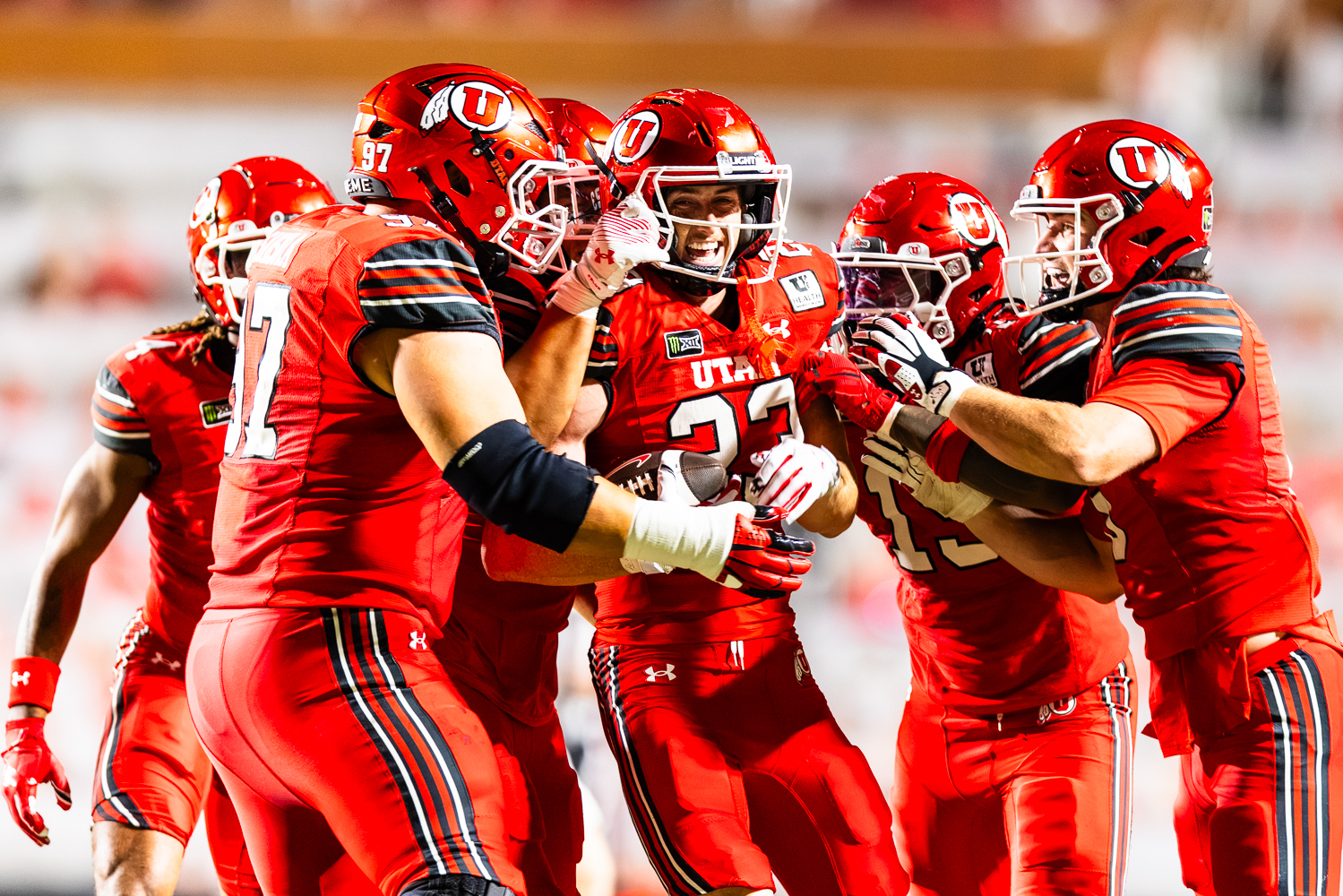
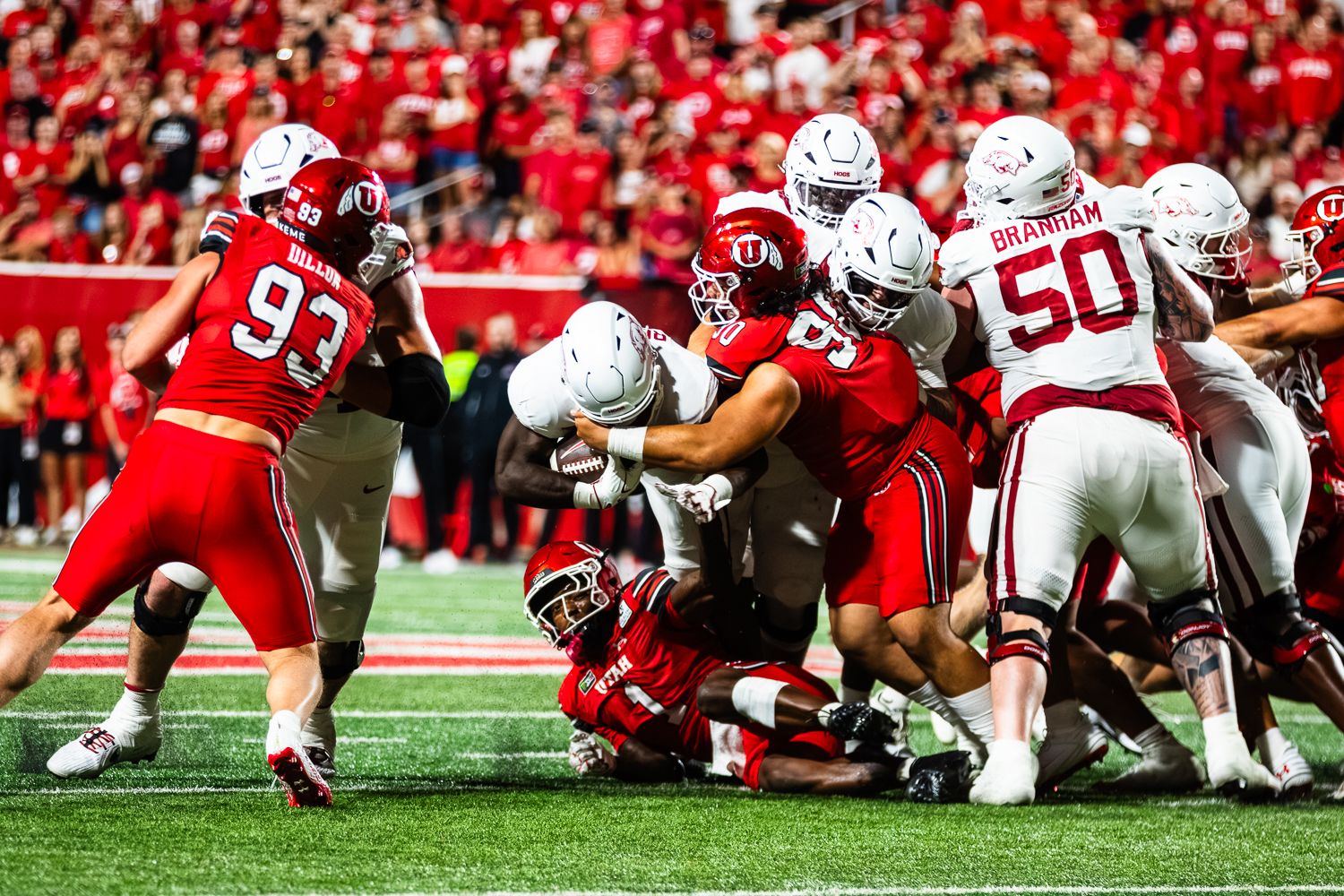
But the No. 17 Utes enter with momentum after a 2-0 start, and a 43-10 demolishing of the Arkansas Razorbacks. Morgan Scalley’s squad has been efficient & explosive on offense, disruptive on defense and enters the matchup with considerably more proven playmakers across the roster.
Going into Game 3️⃣ representing all 𝐔𝐓𝐄𝐒 ⚪️🔴🔴#GoUtes | #RSNB | @UofUHealth pic.twitter.com/MffRLHUj2x
— Utah Football (@Utah_Football) September 16, 2026
More of the same from Devon Dampier?
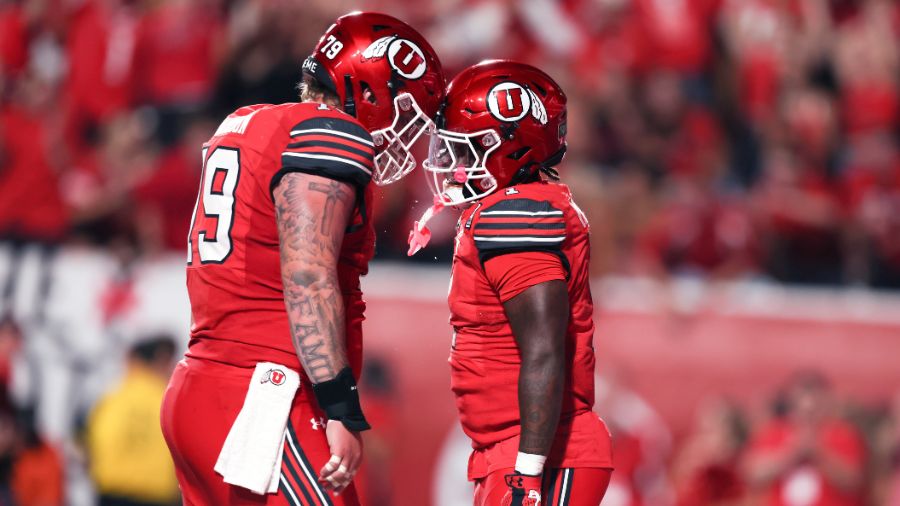
Utah State’s run defense creates a strength-on-strength matchup. The Utes are averaging 6.7 yards per rush with a 63.3% rushing success rate, while Wayshawn Parker has already scored six touchdowns.
Dampier is what makes that matchup difficult for the Aggies.
He does not need 15 carries to affect the defense. Utah has already shown option and RPO elements that allow him to hand the ball to Parker, keep it himself or distribute it into space. If Utah State loads up inside, Dampier can punish that commitment without taking unnecessary hits.
The same applies through the air. Dampier has completed 31 of 43 passes for five touchdowns and one interception while avoiding a sack. Utah is also averaging 4.36 points per drive.
There is no reason for him to force the issue. If the Aggies give up underneath and intermediate completions, take them. Dampier has plenty of options to stay efficient while making Utah State defend the entire field.
So far, the offensive line results have been encouraging. Cedric Jefferson and Zereoue Williams have allowed one pressure apiece, while Alex Harrison, Roger Alderman and Kelvin Obot have yet to allow one. Utah has not surrendered a sack through two games.
Overall, the offense has been efficient and explosive. Dampier has done a good job of taking what the defense gives and players making plays. And it’s been a rather balanced approach for the Utes as well.
The following radar charts provide an at-a-glance look at Utah’s offensive and defensive profiles, highlighting where each unit has been most efficient — or most vulnerable — through the first two games. The data visualizations are provided by HudlIQ.
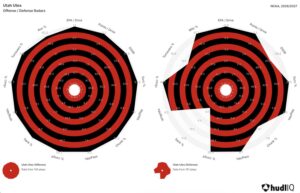
Radar visual of Utah football offense and defense provided by Hudl IQ.
Utah should find opportunities outside
Utah State’s outside corners have been tested. Markie Grant has allowed 10 catches on 18 targets, while D’Angelo Mayes has allowed seven on 10.
That should be an area of focus for the Utah offense.
Braden Pegan has seven catches for 113 yards and a touchdown in the updated data. Ricky Johnson has been quieter statistically, but his movement and versatility continue to give Utah options.
Utah does not need to force vertical throws, but there should be opportunities outside when Utah State commits additional resources toward Parker and Dampier.
Noah Bennee creates another problem after his 113-yard performance against Arkansas. Defenses now have another player they must account for in the middle of the field.
Utah State’s defense deserves respect
If there is one thing the Aggies can hang their hat on through two games, it is their run defense. Utah State is allowing just 98 rushing yards per game and has held both opponents below 3.3 yards per carry.
Opponents are averaging 4.9 yards per play against Utah State, including 3.9 yards per rush, while the Aggies have allowed only 1.3 points per drive in the current sample.
They do it aggressively. Utah State will add numbers near the line of scrimmage, attack gaps and challenge offensive lines to communicate and execute cleanly.
That makes this another useful test for Utah’s offensive line. Arkansas tested the Utes’ ability to handle size and physicality. Utah State will test their communication and discipline.
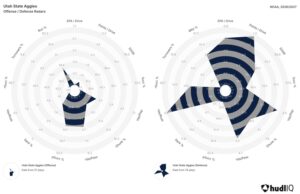
Here’s the radar visual for Utah State, which looks noticeably different than Utah’s, again, provided by Hudl IQ.
Utah State’s offense is the sore spot
The Aggies’ defense has given the offense chances to win games. The offense has repeatedly given those chances back.
Utah State has committed seven turnovers through two games, and the current Scouting Lab sample has the Aggies producing only 1.2 points per drive with a 35.1% play success rate.
The running game has struggled even more, averaging 3.4 yards per rush with a 26.9% success rate. That is the portion of Utah State’s offense Utah has to respect.
Much of the Aggies’ best rushing production has come from quarterback movement and scrambles rather than the conventional run game. Brosterhous provided some life against Washington in his first career start, completing 17 of 28 passes for 196 yards and two touchdowns while adding 81 rushing yards, 70 of which came on scrambles.
If Ethan Day, Lance Holtzclaw and the rest of the front maintain rush lanes, Utah State will be forced to consistently create offense through the passing game.
Related Utah Content
- Utah football: Morgan Scalley sees culture showing up in Utes’ early success — Steve Bartle
- Utah football: Defense building confidence ahead of Utah State matchup — Steve Bartle
- How to watch No. 17 Utah football vs. Utah State: TV channel, kickoff time, streaming — Steve Bartle
- Big 12 football power rankings: BYU, Utah separate from the pack — Steve Bartle, Josh Furlong and KSL Sports staff
- Wayshawn Parker made a promise to Byrd Ficklin — and the two delivered for Utah football — Steve Bartle
- Kickoff time announced: Utah gets FOX treatment for road contest against Iowa State — Josh Furlong
- Utah football: Five numbers that tell the story of 43-10 win over Arkansas — Steve Bartle
- BYU, Utah pass early test and move up in latest AP Top 25 rankings — Josh Furlong
- Takeaways from Utah’s dominant 43-10 win over Arkansas — Steve Bartle
No cheap explosives
Slot receiver Javon Robinson provided Utah State a shortcut last week against Washington. He caught three passes for 100 yards, including a 78-yard touchdown on what seemed to be a broken coverage.
Utah can live with Robinson catching a few underneath passes. It cannot give him another play like that.
The Aggies have not demonstrated that they can consistently manufacture long touchdown drives. Utah’s job is to make them try, and Jackson Bennee will likely be the primary matchup against Robinson, which will provide him a good test.
Overall, the Utah secondary has played quite well through two games, it’s easy to trust that approach.
The Bottom Line
Scalley’s squad is an overwhelming favorite in this one. They’re playing at a good, clean level, while still have plenty to improve upon from the first two games.
Utah State’s defense is tough enough to make this annoying for a while. But Utah has too many answers on offense, a quarterback playing efficient football and a defense facing an Aggies offense that has struggled to sustain drives without Brosterhous creating something off-script.
If the Utes don’t get off to a fast start like they did against Idaho and Arkansas, Utah State can muddy things up early. By the second half, Utah’s depth and explosiveness should take over.