Utah football’s historic start on offense reflects the balance behind Morgan Scalley’s first team
Oct 14, 2026, 12:17 PM | Updated: 12:43 pm
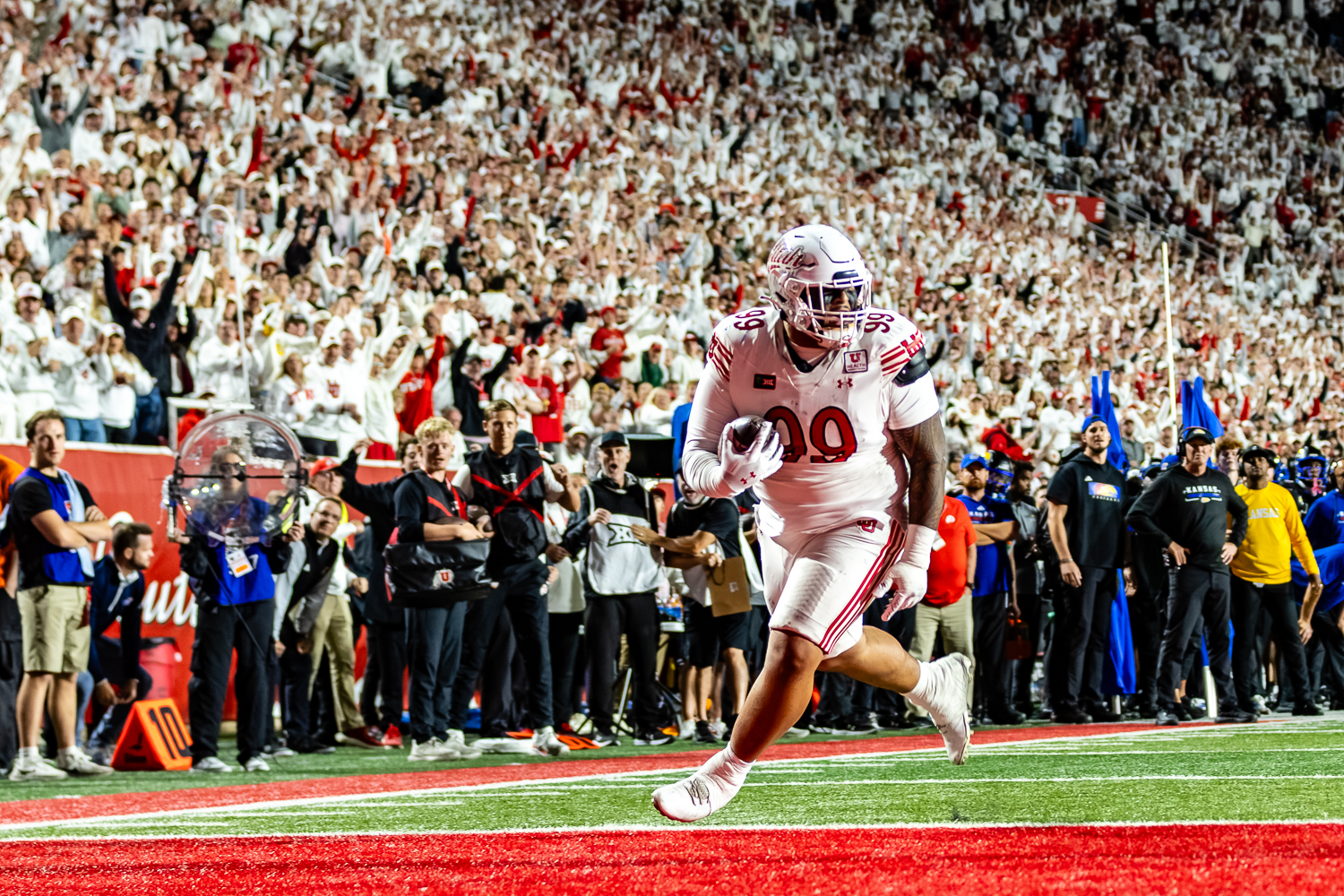
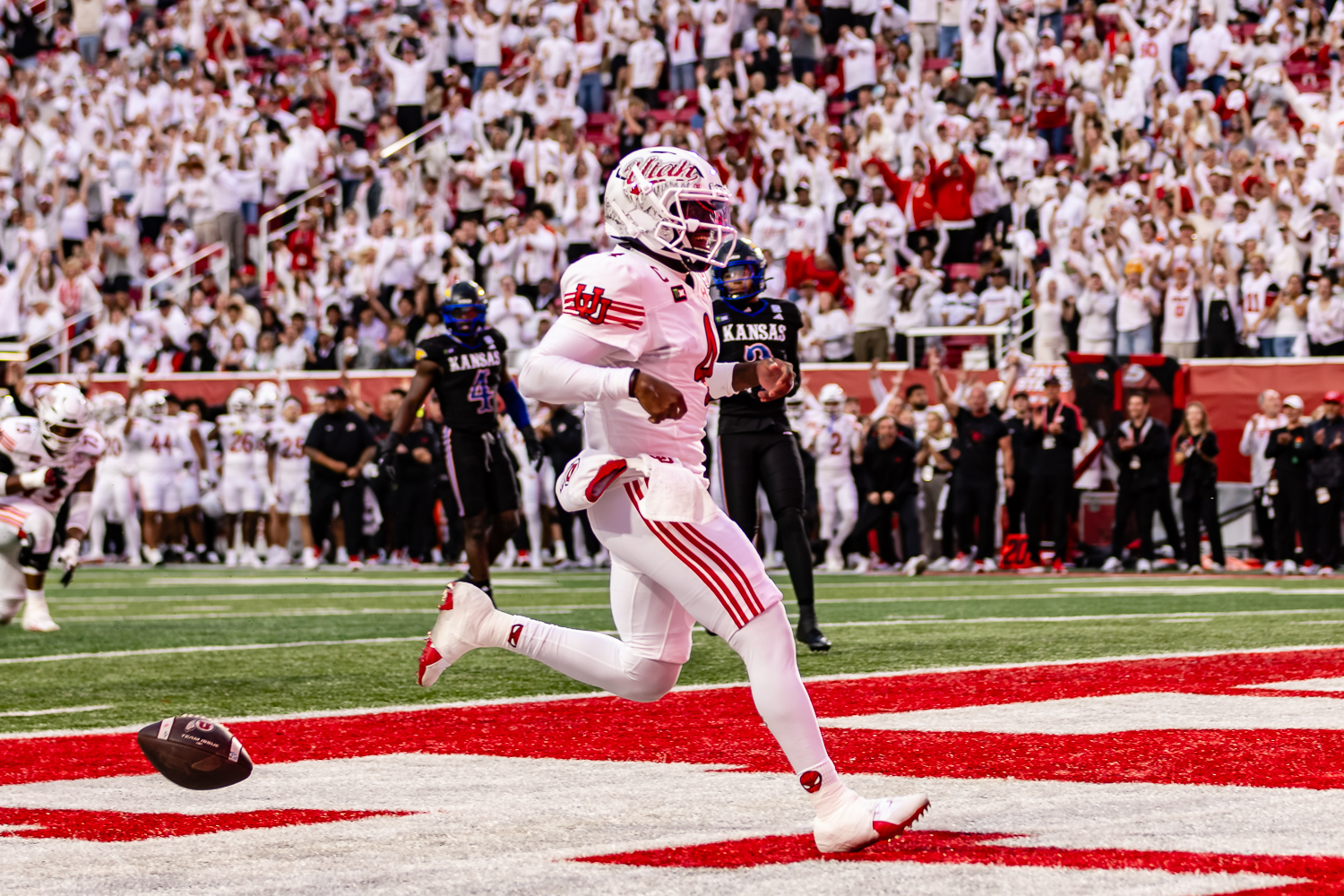
Kansas Jayhawks vs. Utah Utes at the Rice Eccles Stadium in Salt Lake City, Utah on Saturday, Oct 10, 2026. (Photo: Joel A. Davidson / UteZone, On3)
(Photo: Joel A. Davidson / UteZone, On3)

SALT LAKE CITY — Utah football’s offense is giving Morgan Scalley a productive foundation for his first season and an exciting standard to build from.
The Utes have scored at least 30 points in each of their first five games for the first time since 1994. Their 41-24 victory over Kansas extended that streak, preserved an unbeaten record and demonstrated how much this offense can accomplish while still leaving its coaches plenty to correct.
Wayshawn Parker gives Utah an emerging star in the backfield. Devon Dampier directs a passing game capable of punishing defenses that commit too much attention to the run. Offensive coordinator Kevin McGiven has enough personnel and formation options to make an opposing coordinator earn his paycheck.
Tying it all together is an offensive line giving those players room to work and those ideas a chance to succeed.
Utah has established several ways to move the football. The next step is making its best execution show up more consistently.
Utah’s balance on offense gives Kevin McGiven options
Utah can make a defense pay on the ground or through the air. The Utes run the ball on 54.3% of their charted plays, but their balance comes from having good reasons to call either.
Hudl IQ ranks Utah sixth nationally in expected points added per play, which measures how much each snap improves a team’s scoring outlook. The rushing attack ranks second, while the passing game ranks 17th. Utah is second in the Big 12 in all three categories.
| Metric | Utah | FBS rank | Big 12 rank |
|---|---|---|---|
| EPA per play | +0.292 | 6th | 2nd |
| EPA per rush | +0.273 | 2nd | 2nd |
| EPA per passing play | +0.315 | 17th | 2nd |
| Overall success rate | 58.1% | 8th | 3rd |
| Rushing success rate | 59.2% | 13th | 4th |
| Passing success rate | 56.8% | 13th | 3rd |
The success rates reinforce that picture. Utah ranks 13th nationally on both rushing and passing plays, showing that both approaches regularly produce useful gains alongside the highlights.
Load the box, and Dampier has opportunities to challenge the coverage. Keep defenders back, and Parker gets to work behind a line capable of creating running room.
Defenses can pick focus on an area of concern. But Utah has made it difficult to find a comfortable answer.
Those rankings reflect five games of charted production without adjusting for opponent strength. The remaining schedule will test how well it holds up, but McGiven already has evidence that he can lean on either phase when the matchup calls for it.
Utah changes personnel without narrowing the offense
That flexibility carries into the players Utah puts on the field.
The Utes’ most-used package is 11 personnel: one running back, one tight end and three receivers. They have taken 121 snaps with that grouping, while the next biggest group with 113 is 12 personnel, which replaces a receiver with a second tight end.
Both are foundational parts of the offense. And that second tight end does nothing to signal Utah might be looking to run the ball.
Hudl IQ charts 45 total formation+personnel variations across Utah’s offense. The two-tight-end package alone accounts for 27 of those combinations, including empty-backfield looks used on 17 snaps.
| Personnel | Package | Charted snaps |
|---|---|---|
| 11 | 1 RB, 1 TE, 3 WR | 121 |
| 12 | 1 RB, 2 TE, 2 WR | 113 |
| Two-QB | 2 QB, 0-2 RB, 0-2 WR/TE | 47 |
| 21 | 2 RB, 1 TE, 2 WR | 25 |
| 22 | 2 RB, 2 TE, 1 WR | 11 |
| 02 | 0 RB, 2 TE, 3 WR | 10 |
| 13 | 1 RB, 3 TE, 1 WR | 7 |
| 30 | 3 RB, 0 TE, 2 WR | 2 |
| 20 | 2 RB, 0 TE, 3 WR | 2 |
| 23 | 2 RB, 3 TE, 0 WR | 1 |
That creates a personnel problem for the defense. Bring in bigger bodies to handle the blocking, and Utah can spread the formation and make them cover. Go smaller, and the Utes have additional size to put to work in the run game.
Even the big bodies demand attention as receiving threats. Leave Semi Taulanga alone in the flat, and suddenly the defensive film session requires an explanation for how the 5-foot-11, 330-pound fullback was unidentified in coverage.
BIG MAN TOUCHDOWN ‼️
Semi Taulanga comes through for a Utes TD
📺 ESPN https://t.co/odW2DhVybJ
— Big 12 Conference (@Big12Conference) October 11, 2026
The two-quarterback package adds another assignment. Utah has paired Dampier and Byrd Ficklin on 47 snaps, nearly 14% of its charted offense. Ficklin’s ability to line up in the backfield or out wide forces defenders to account for who might take the snap, carry the ball, catch it or throw it.
These packages occupy a meaningful portion of Utah’s offense. Opponents have to spend preparation time on them, then recognize and defend them on Saturday.
Utah’s offensive line ties it all together
Every formation still brings Utah back to the same requirement: the players up front have to make it work.
The offensive line connects McGiven’s variety to the production. It gives Dampier time to find the favorable matchup and Parker space to turn a crease into an explosive run. Its ability to handle different blocking assignments allows Utah to change the look while maintaining a credible threat on the ground and through the air.
Against Kansas, the Utes produced 545 yards and 31 first downs. Their line earned Big 12 Offensive Line of the Week recognition, a fitting acknowledgment for the group supporting so much of the offense’s flexibility.
After putting up 5️⃣4️⃣5️⃣ total yards (287 rushing) on offense, 𝐎𝐁𝐋𝐎𝐂𝐊 is the @Big12Conference 𝐁𝐄𝐄𝐅 𝐎𝐅 𝐓𝐇𝐄 𝐖𝐄𝐄𝐊 😤
#GoUtes | #RSNB https://t.co/bNEqwArHwg
— Utah Football (@Utah_Football) October 12, 2026
McGiven can give a defense plenty to think about before the snap. The line still has to provide the physicality required to execute it all properly.
That work deserves a central place in explaining Utah’s start. The skill players supply the highlights. The line helps make those opportunities repeatable.
Utah’s next step is making its best football more dependable
Utah’s next step is getting more consistent production from an offense that already gives defenses plenty to handle. Against Kansas, the Utes scored 41 points despite turnovers and uneven stretches.
The ability to recover in the second half secured the win, and that is a positive. But the mistakes did happen and cleaning those up will be a focus.
As Utah prepares for Colorado, the useful goals are specific: protect possessions, make sound decisions and respond to defensive adjustments before an empty possession becomes an extended stall.
Four flawless quarters is a steep demand. Fewer self-inflicted problems is a reasonable one. Scalley’s first team has the weapons, the options and an offensive line helping bring them together. When that group handles its assignments, McGiven can put the full menu to work.