Takeaways: Utah basketball wins, but turnovers keep progress uneven
Nov 5, 2026, 10:02 PM | Updated: 10:15 pm
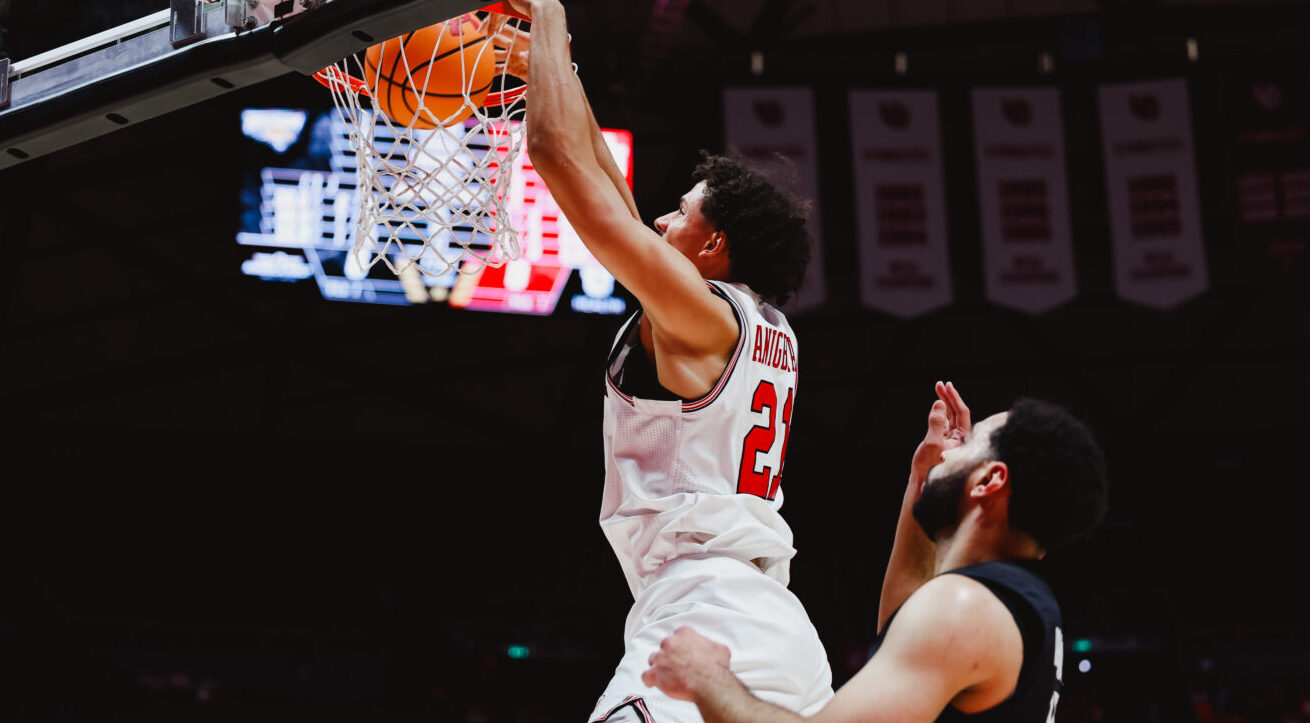
Alex Anigbata throws down a dunk vs. Towson. Photo courtesy by Utah Athletics.

SALT LAKE CITY — Utah basketball beat Towson 67-57 Thursday at the Huntsman Center, following Monday’s escape against Long Beach State with another performance that mixed encouraging stretches with entirely avoidable problems.
The Runnin’ Utes are 2-0, but getting there has required considerably more work than it should have.
Utah defended well enough to take and maintain control for the majority of the game. Utah received important contributions from its bench and made its free throws down the stretch.
But the Utes also committed 18 turnovers, repeatedly undercutting its chances to make the evening more comfortable.
The team took a step forward tonight — a very, very small one, but a step forward. But there’s a difference between allowing that process to unfold and accepting mistakes that keep making winning harder.
Here are five takeaways from Thursday’s victory.
Utah finished, but control remains elusive
Utah led by 15 with 15:20 remaining. That should have been an opportunity to make the rest of the game considerably less stressful.
Instead, Towson remained within punching distance, and the Utes had to keep working to secure the result.
Give Utah credit for making the plays necessary to finish. The Utes shot 10-for-18 in the second half and made 16-of-19 free throws.
Alec Anigbata finished with 13 points, including a 9-for-11 performance at the line.
Those are positives Utah found enough of to protect its lead even as Towson’s shooting improved. But the standard has to rise considerably beyond surviving stretches of self-inflicted pain.
Through two games, Utah has shown it can respond to adversity. The next step is playing with enough ball security, confidence, and consistency that these opponents have fewer opportunities to hang around.
The turnovers are becoming too expensive to excuse
Utah finished the first half with 11 turnovers and 10 made baskets, which is a fairly easy way to explain why the opening 20 minutes were such a difficult watch.
The Utes improved after halftime, but seven more giveaways brought their total to 18.
Towson attempted 56 shots to Utah’s 44, with the Utes’ ball-security problems helping create a substantial gap in opportunities. The Tigers scored only 11 points off those turnovers, which softened the immediate damage.
But every possession surrendered is another opportunity Utah loses to establish rhythm, build confidence in its scorers and extend a lead.
Some mistakes are inevitable as players develop familiarity. Eighteen turnovers against Towson still demands a more urgent response than simply waiting for everyone to get comfortable. Utah needs cleaner decisions, and Alex Jensen’s staff needs to identify which responsibilities can be clarified or simplified to produce them.
The defense deserves credit for carrying the first half
Without Utah’s defense, the offensive struggles could have produced another substantial halftime deficit. Instead, the Utes led 27-19.
Towson shot 7-for-31 before halftime, including 3-for-13 from beyond the arc. Utah blocked four shots in that stretch and continued getting stops while its own offense struggled to hold onto the ball.
An ugly offensive possession cannot lead to a poor defensive one, that was last season’s issue. To this groups credit, Utah did not allow the offensive issues to impact the defensive end.
The full-game numbers were solid: Towson finished at 39.3% shooting and 30% from three, while Utah recorded six blocks and won the rebounding battle 35-30.
However, Towson shot 60% after the break and scored 38 points, so this was not 40 minutes of defensive control. The Tigers also missed nine free throws, which Utah is plenty familiar with.
Figuring out roles is still an issue during games
Utah’s distribution of production reflected a team still sorting out how its pieces fit. The starters combined for eight first-half points. The bench supplied 19, with Taison Chatman and Jaxon Johnson providing offense that the opening group had struggled to generate.
Different players contributing is a good sign. Utah lacked options last year. Establishing a rotation and a hierarchy of go-to options remains the larger task.
Who initiates when the first action stalls? Who needs to be aggressive looking for a shot? Who can step up as the reliable second-option?
The uneven offense and widespread turnovers suggest Utah still have a lot of work to do establishing those roles, but again, unfamiliarity does not explain every mistake.
Players need to understand and execute their assignments. Jensen needs to make those assignments clear and find combinations that help players succeed.
Developing roles is a process. Right now, some of that development is happening at the expense of possessions Utah needs to finish.
Taison Chatman supplied much-needed offense
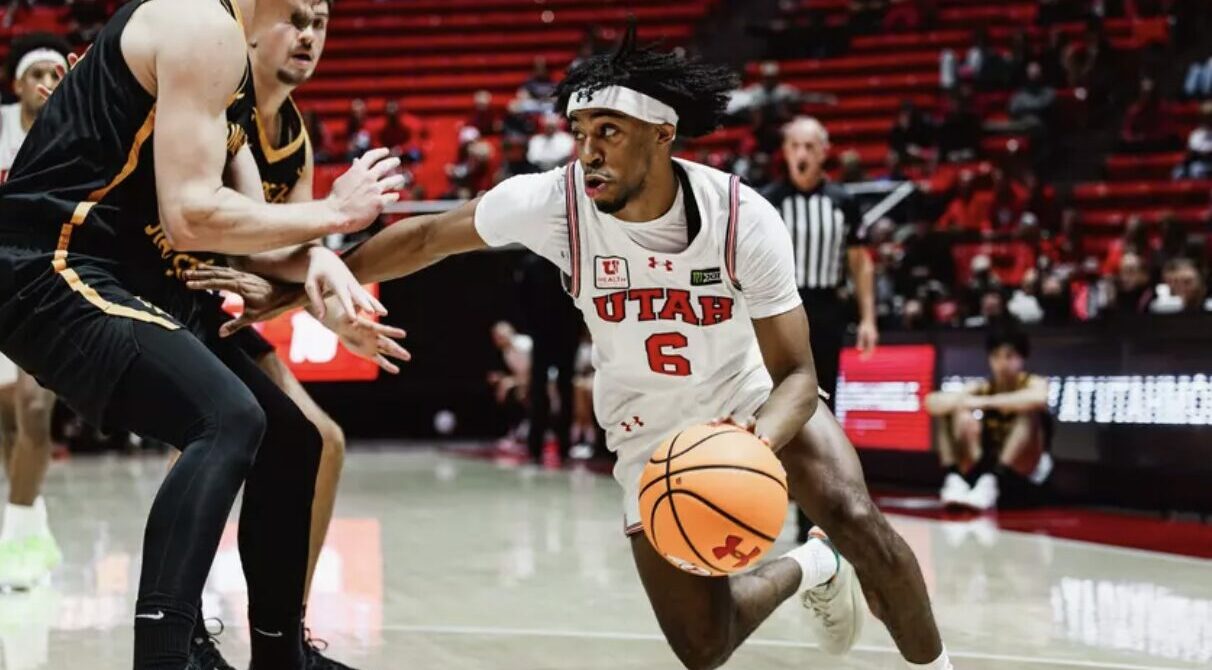
Chatman was Utah’s most productive scorer, finishing with 15 points on 4-for-6 shooting, including three makes from beyond the arc.
He also made all four of his free throws and scored eight of Utah’s 27 first-half points.
On a night when offense frequently felt difficult, that efficiency was especially valuable. Utah needed someone who could turn an opportunity into points without requiring a high volume of attempts.
But even Chatman struggled with the turnovers, ending the night with three of them. Still, his performance gave Utah an important contribution to build on. Jaxon Johnson added five points and seven rebounds, helping the Utes finish with a 26-8 advantage in bench scoring.