‘I trust myself more’: How a transfer that nearly fell apart changed JuanMa Sanabria’s career
Jul 13, 2026, 10:54 AM
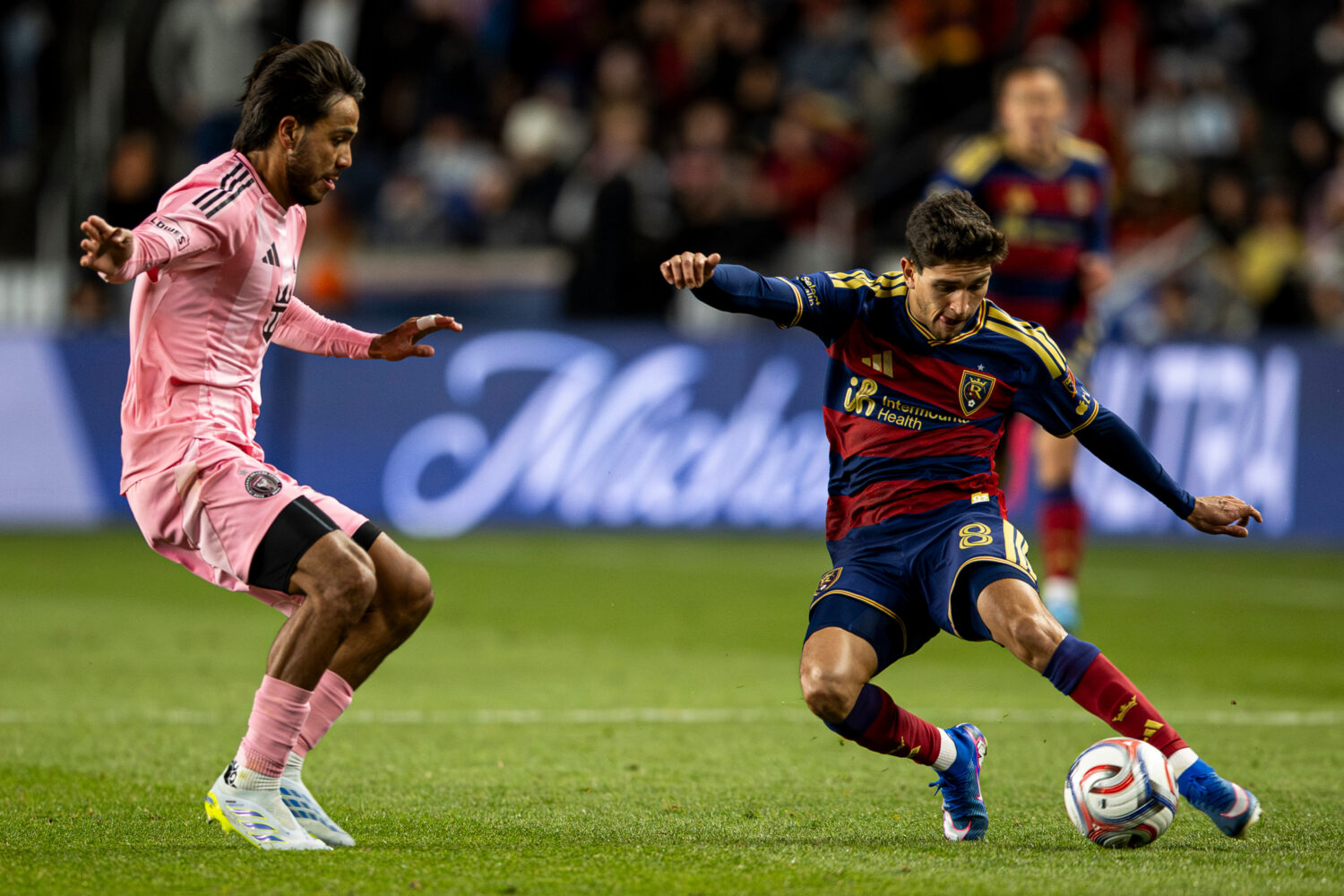
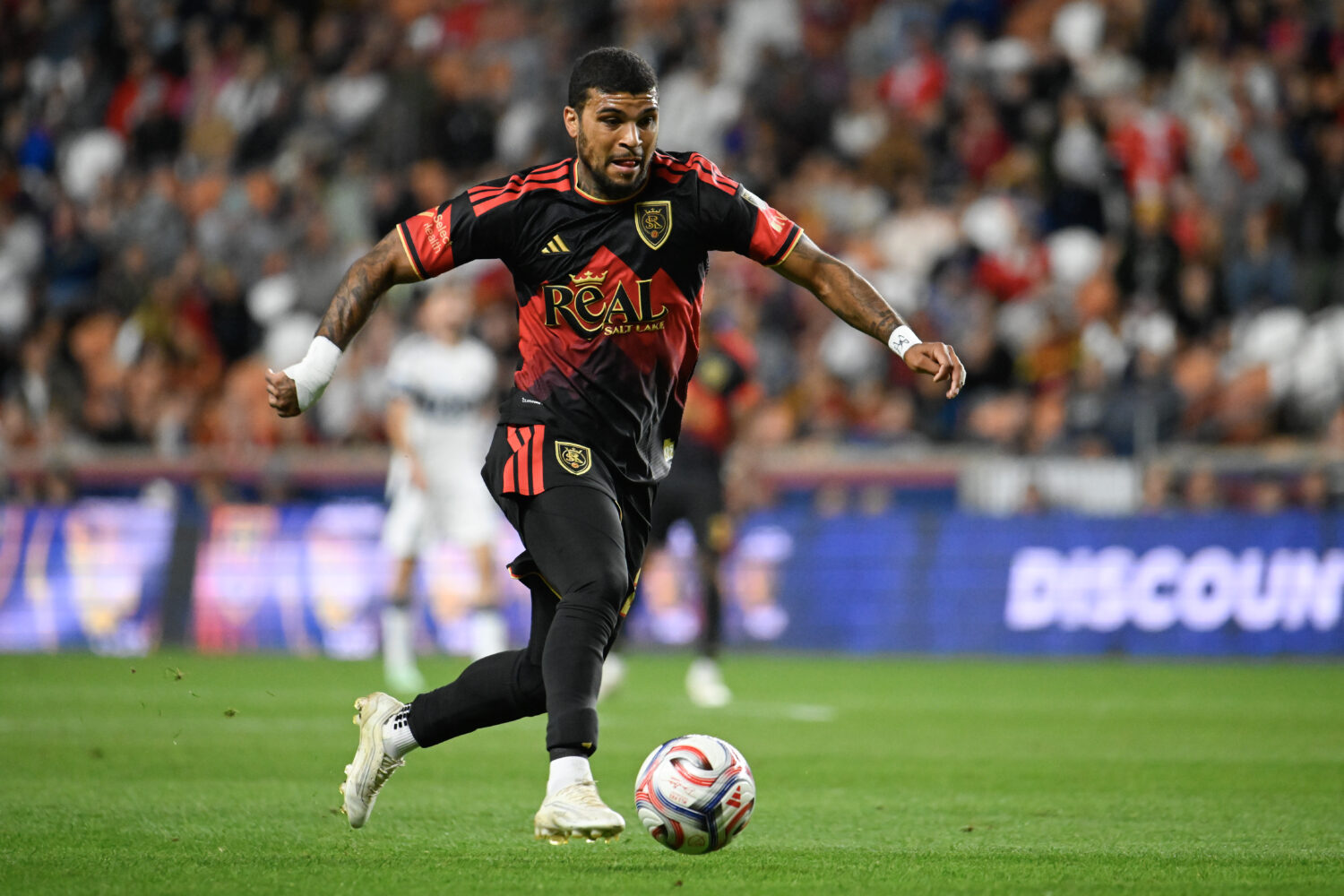
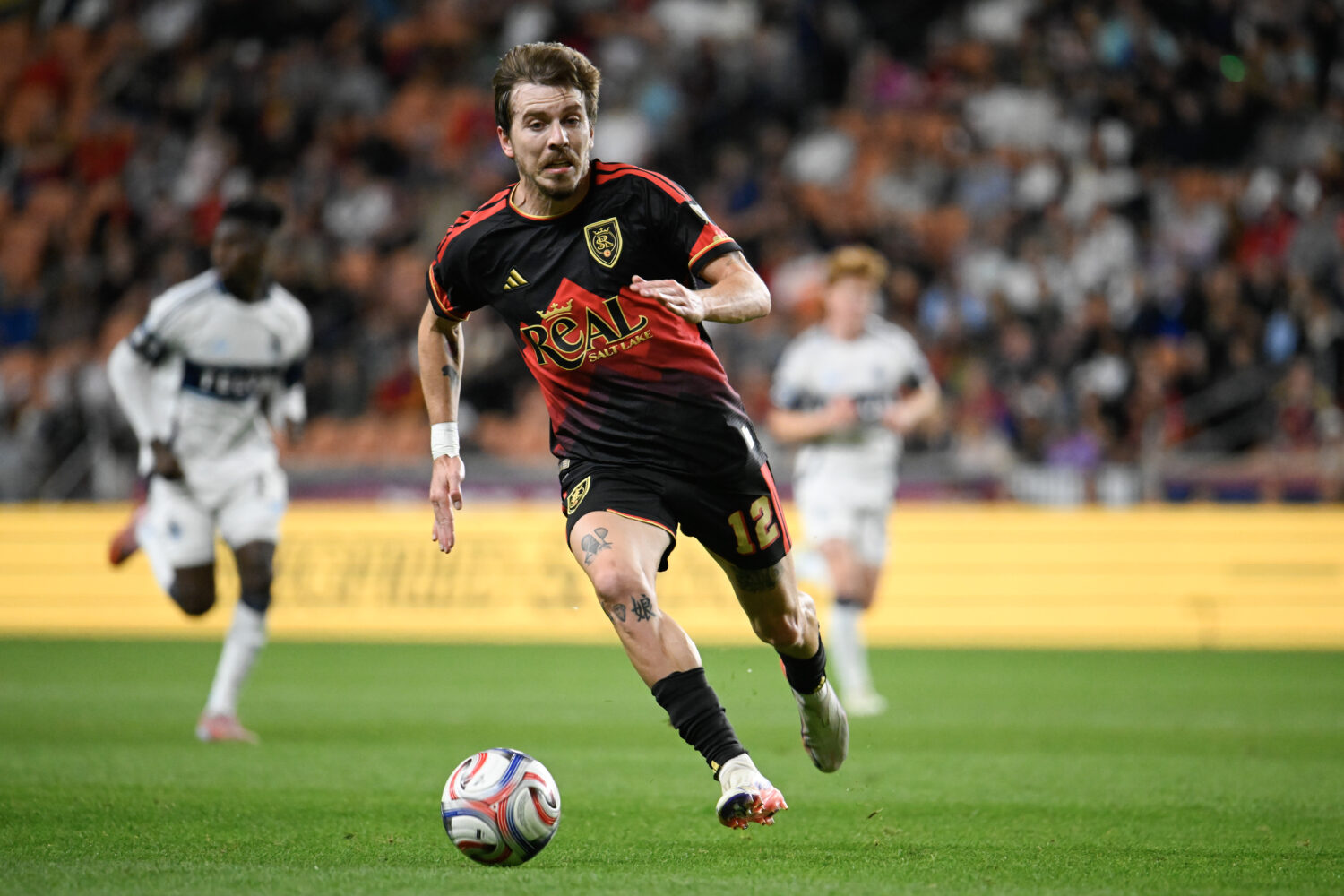
Real Salt Lake midfielder Juan Manuel Sanabria (8) controls the ball during the second half of an MLS game against Inter Miami at America First Field in Sandy on Wednesday, April 22, 2026.
(8)

SANDY — Six months ago, Juan Manuel “JuanMa” Sanabria was supposed to be on his way to Utah.
Then, suddenly, he wasn’t.
Real Salt Lake and Atletico San Luis reportedly agreed to a transfer, but a fierce backlash from supporters threw the move into doubt. Reports emerged that the deal had collapsed entirely before it was revived days later.
“Deal has been a saga,” MLS insider Tom Bogert wrote as Sanabria finally traveled to Utah.
Real Salt Lake officially announced his signing on Feb. 10, acquiring the 25-year-old on a permanent deal through the 2029-30 MLS season.
At the time, Sanabria had entered the player pool for Uruguay but was far from an established starter, having made four appearances over six call-ups.
Less than five months later, Sanabria was standing across from Lamine Yamal at the World Cup, playing like he belonged there.
Sanabria believes his move to Real Salt Lake helped prepare him for the greatest challenge of his career.
“Ever since I came to MLS, I’ve been facing different kinds of players,” Sanabria said. “Physically, the players here are more athletic. They’re faster and stronger than what I was used to in Mexico.
“I think that helped me grow a lot during these first six months because I knew that, at the World Cup, I was going to face every type of player.”
Sanabria arrived at RSL after making 169 appearances for Atlético San Luis, where he became the club’s captain and all-time assists leader. RSL chief soccer officer Kurt Schmid called adding his attacking qualities on the left “pivotal” to the roster the club was constructing.
Sanabria quickly emerged as one of the most complete players on RSL’s roster.
Before departing for Uruguay’s World Cup camp, Sanabria had recorded six assists in 11 league appearances, leading RSL in that category. His ability to defend one-on-one, advance the ball, combine in tight spaces and deliver from the left helped make him an automatic selection for Pablo Mastroeni.
The move also prepared him for the speed and physicality he would encounter at the World Cup.
“That experience has helped me make better decisions, both defensively and offensively,” Sanabria said. “That was the biggest thing I learned during my first six months before the World Cup, and it helped me tremendously.”
Thanks world, we'll take it from here 🫡#RSL | @MLS pic.twitter.com/WBqebf9xls
— Real Salt Lake (@realsaltlake) July 13, 2026
Earning the hardest assignment
Sanabria did not travel to the tournament assured of a major role.
Uruguay possessed established options at his position, and Sanabria knew the competition for minutes would be fierce.
He earned them anyway.
Sanabria entered at halftime of Uruguay’s opening 1-1 draw against Saudi Arabia and played the final 45 minutes. His performance was enough to earn his first World Cup start six days later against Cape Verde.
He played the full 90 minutes in that 2-2 draw.
By the time Uruguay faced Spain with its tournament survival at stake, Sanabria had played his way into the starting lineup.
In the span of two matches, he had gone from a World Cup debutant to the player Uruguay trusted with one of the most unforgiving assignments in international soccer.
Lamine Yamal was waiting on his side of the field.
Sanabria did not approach the matchup as though he were simply hoping to survive it.
“When I knew I was going to face that player, it was something I worked on beforehand,” Sanabria said. “I worked on how to defend him and how I could attack to create advantages on that side as well.”
He understood that allowing Lamine Yamal room to turn, accelerate or isolate him in open space would be begging for trouble. Sanabria therefore worked to compress the field, close Yamal’s preferred channels and force him to make decisions under pressure.
Sanabria played 70 minutes against Spain, recording seven tackles while repeatedly disrupting one of the world’s most dangerous attackers. He received a yellow card early in the second half but continued to defend aggressively and intelligently before being replaced.
Watching the match, it was impossible to miss how rarely Lamine Yamal found room to operate. Sanabria stayed connected, denied him space to turn and repeatedly disrupted Spain’s attempts to isolate him.
“I knew that, with space, he could do a lot of damage,” Sanabria said. “I tried to close down as much space as possible so I could control him better.”
Uruguay ultimately lost 1-0 and was eliminated from the tournament, making it difficult for Sanabria to fully celebrate his own performance.
“I’m satisfied with what I was able to do,” he said. “But we didn’t win, and that was what mattered.
“Because we didn’t get the result, it didn’t serve for very much.”
It’s revealing that Sanabria does not describe the match as the night he pocketed Lamine Yamal.
He describes it as the night Uruguay failed to advance.
“Mentally, it was a challenge for me because I knew I was going to play against one of the best wingers in the world,” Sanabria said. “I had to be very well prepared.
“But I never stopped believing in myself. I think that was one of my strengths.”
Asked whether he considered his tournament personally successful, Sanabria did not hesitate.
“Yes,” he said. “Based on the expectations I had before going to the World Cup, I think so.
“I knew there were very good players at my position, and I ended up earning the starting job. Personally, I think I did well.”
Bringing it back to Utah
Sanabria returned to Utah with more than World Cup appearances on his résumé.
He returned with a different understanding of himself.
“I grew mentally more than anything,” he said. “It was a major challenge, and now I look at things differently. I plan for matches differently.
“It helped me trust myself more.”
When Sanabria rejoined RSL for training on Friday, Mastroeni noticed the difference.
“He was super excited and was really grateful to the group that helped him prepare, both from a physical perspective and a tactical perspective, to be ready for this World Cup,” Mastroeni said. “He gave the guys a lot of praise.”
“Just a true professional,” Mastroeni continued. “I was really pleased with how he represented himself and the club at the World Cup.”
Sanabria felt that connection throughout the tournament.
RSL teammates and coaches sent messages of support before matches. Even thousands of miles from Utah, Sanabria said he felt he was carrying the club with him.
“I felt like I was representing Real Salt Lake and all of its supporters,” he said. “They have always shown me a lot of affection.”
Sanabria said the World Cup introduced both him and Real Salt Lake to people who had barely seen them before, particularly in Uruguay.
Pablo Mastroeni called that exposure both “a blessing and a curse.”
“If people talk too much, there’s a good chance we won’t have him around too long,” Mastroeni joked.
Mastroeni said representatives have contacted RSL regarding several members of its roster, with the club’s strong first half and the individual performances of its players attracting attention.
That is the reality of successful recruitment and player development. Improve good players long enough, and other clubs notice.
Despite leading RSL in assists before departing for international duty, contributing on both sides of the ball and then producing an excellent World Cup, Sanabria was not selected as an All-Star or added as a commissioner’s pick.
Mastroeni was unequivocal when asked whether Sanabria deserved recognition.
“Absolutely,” Mastroeni said. “He’s been top on both sides of the field.
“If you want attacking but defensively solid players on display to represent your league, I think he would be a great option.”
RELATED STORIES

Sanabria took the high road.
“I respect the decision,” he said when asked if he felt snubbed. “The players who were selected have had outstanding seasons.”
“I’m especially happy for Zavier Gozo,” he said with a broad smile. “He’ll represent our club, and I’ll be excited to watch him.”
A few months after a transfer that appeared to collapse under the weight of emotion and uncertainty, Sanabria became a World Cup starter.
He faced one of the brightest young attackers in the world and proved he belonged on that stage.
He returned to Utah more confident, more experienced and more certain of what he can become.
And he believes Real Salt Lake helped him get there.
For a player who nearly never arrived, Sanabria has quickly become difficult to imagine RSL without.
Asked what he would tell the younger version of himself, the boy who dreamed of one day playing in a World Cup, Sanabria paused before offering the lesson he had earned.
“Keep going,” he said. “Never give up.
“Eventually, dreams come true. Trust yourself. You can do it.”