Soccer brought them together
Jul 1, 2026, 5:53 PM | Updated: Jul 2, 2026, 12:01 pm

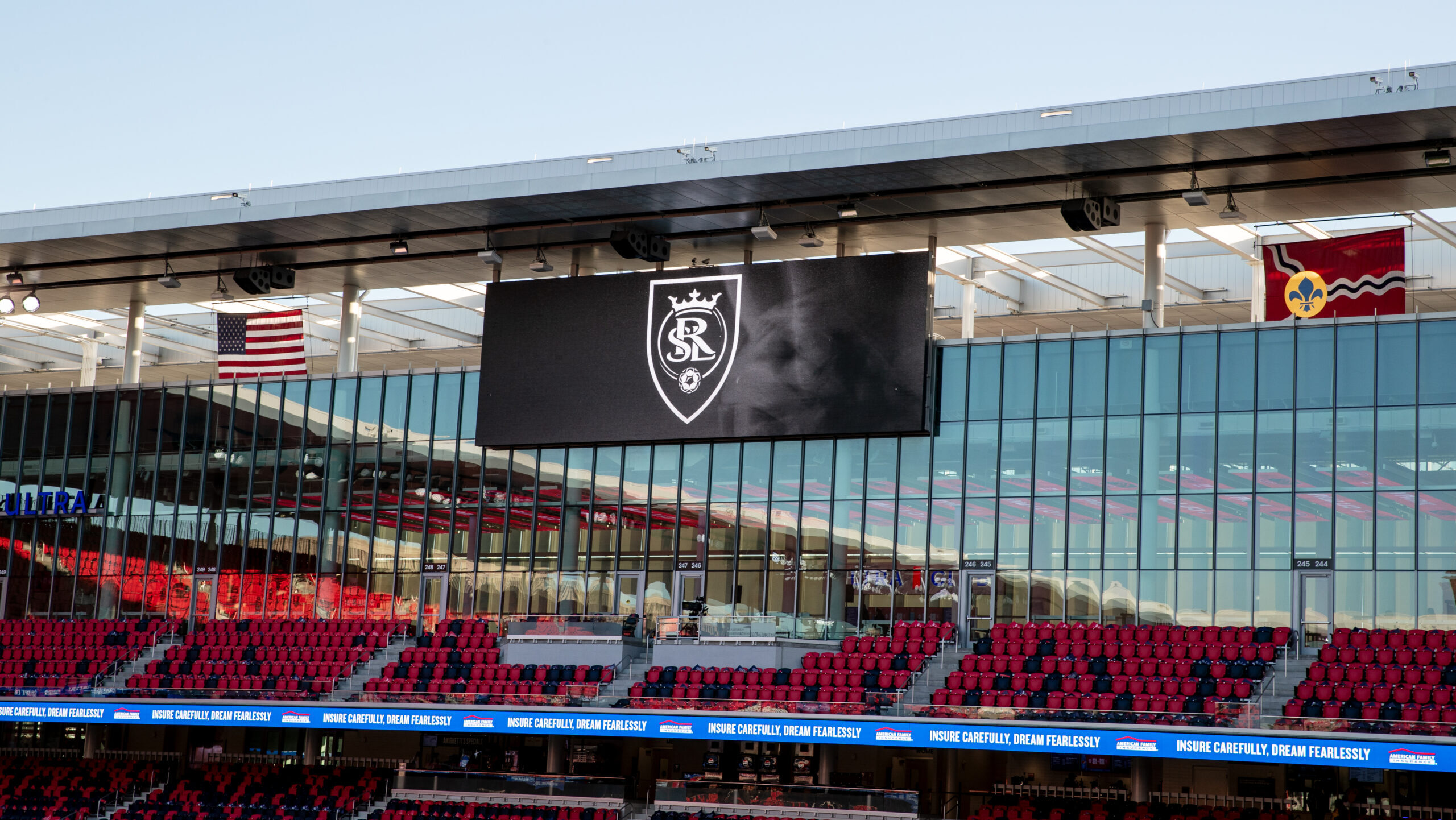
SANDY, UT - AUGUST 23: America First Field of the Real Salt Lake is seen before their game against Minnesota United FC on August 23, 2025 in Sandy, Utah. (Photo by Chris Gardner/Getty Images)
(Photo by Chris Gardner/Getty Images)

SANDY — Three hours before kickoff on Tuesday night, lightning delayed the Round of 32 match being played hundreds of miles away in Mexico City.
It didn’t matter.
Outside America First Field, families unfolded lawn chairs and laid down blankets. Children with painted faces chased soccer balls across the plaza. Fans in green Mexico jerseys stood shoulder to shoulder with Real Salt Lake supporters wearing claret and cobalt, talking about results from earlier in the day.
Some had watched every World Cup match.
Others admitted they barely knew the rules.
They came for the same reason.
They wanted to experience the World Cup together.
As music blared from the DJ booth, the autograph line never seemed to end.
Former Real Salt Lake goalkeeper Nick Rimando smiled for photos with fans alongside Utah Royals players Chloe Lacasse, Alex Loera, Kiana Palacios, and Nuria Rábano, while Sergi Solans, Nate Junqua, and Zach Booth represented RSL a few yards away.
Nobody was in a hurry.
Kids showed off jerseys and Panini sticker books, explaining which players they lacked. Parents introduced their children to players they’d only watched from the stands.
By the time Mexico defeated Ecuador 2-0 to reach the Round of 16, more than 11,000 fans had packed the plaza outside America First Field.
Not to watch soccer inside the stadium.
To experience it together.
‘Never say never, but honestly, no’
Nick Rimando came into MLS in 2000, drafted by the Miami Fusion.
He remembers playing alongside RSL head coach Pablo Mastroeni in front of crowds of 7,000 when MLS was fighting for survival.
Now he’s standing outside the same stadium where he became a legend, surrounded by more than 11,000 people who came to watch another country’s national team on television.
When asked if he thought back then that soccer could get this big in the United States, his trademark grin falters momentarily.
“Never say never,” Rimando said, shaking his head, “but honestly, no.”
He talked about the early challenges MLS endured, seeing his own team and the nearby Tampa Bay Mutiny folding prior to the 2002 season.
“Being there from the beginning, it was hard to imagine. The league went through a lot of struggles early on. Credit goes to everyone who believed in this sport and this league. They believed soccer would continue to grow in this country.”
Players who couldn’t catch on with new teams had to retire and get “real” jobs. But those who remained paved the way for what is now a thriving league, and Rimando is gratified to see the growth in support in his adopted home of Utah.
“I’m so happy to see not only the support for the U.S. and Mexico, but what we have here in Salt Lake…” He shakes his head, almost in disbelief. “We get sold-out crowds week after week. You see billboards featuring our local players, national television coverage, and soccer is on TV every single day.
The growth has been tremendous.
To have played even a small part in those early years is really special to me. It feels good to see how much the game has grown, and I’m really excited to see what happens after this World Cup.”
Twenty-five years ago, American soccer hoped people would come.
On Tuesday night in Sandy, they came without being asked.
USA vs Bosnia
Wednesday night promises an even bigger crowd as the United States take center stage.
The United States enters Wednesday having won its group despite a last-minute loss to Türkiye in its final opening-round match, a heavily rotated game for both teams last Thursday in Los Angeles.
Now they will look to get their tournament back on track, and Rimando believes this team has something his 2014 World Cup squad also possessed.
Not just talent.
Belief.
“I was at the game in Seattle, and there was something different about this team,” he said.
“When they score, look at the bench. Everybody jumps up. Everybody’s invested. It doesn’t matter who’s on the field. They’re playing for each other. You get the sense that all they want to do is win and move on.”
That chemistry, he believes, has become one of the United States’ biggest strengths.
Winning the opening two matches gave the Americans confidence, but it also created trust. Injuries have forced different players into the lineup throughout the tournament, yet the team’s identity hasn’t changed.
For Rimando, that looked familiar.
Back in 2014, the United States rode a similar wave of momentum to escape what many called the “Group of Death.”
One thing, he remembers, made an enormous difference.
“The support from the country,” he said.
“Even while we were overseas, you couldn’t go on social media without seeing watch parties,” he said, gesturing toward the crowd on the plaza, “and fans all over the United States behind us.”
He believes today’s players feel that same connection.
“They know the fans, the communities and the entire country are behind them.”
Wednesday night in Sandy, thousands more will be.
The other home team in Utah
Standing in the United States’ way is Bosnia and Herzegovina, the nation that chose Salt Lake City as its World Cup home.
Scattered around the world by war three decades ago, Bosnia’s diaspora has followed the team from Toronto to Los Angeles to Seattle.
Along the way, 7,000 Bosnian fans packed the lower bowl at America First Field two weeks ago to drink strong coffee, chat, and watch their team train.
Now they face another host nation, knowing they’re underdogs but also knowing that there have been multiple “cup-sets” already in the knockout round, and hoping they can be next.
They have the pieces to make life uncomfortable for anyone: pace on the wings, a veteran capable of controlling the game between the lines, and towering center backs who are just as dangerous attacking set pieces as they are defending them.
For Bosnian-Americans in attendance, the plaza will become something more than a watch party. For one night, it will feel like home.
More than 90 minutes
The World Cup has always been about more than ninety minutes.
It’s about neighbors becoming friends.
It’s about grandparents explaining the game to their grandchildren.
It’s about immigrants watching the country they left behind alongside the country they now call home.
It’s about believing that, for a few hours, thousands of strangers can cheer, gasp, celebrate and suffer together.
They’ll arrive wearing different colors.
They’ll stand shoulder to shoulder all the same.
Some will be cheering for the United States.
Some for Bosnia and Herzegovina.
Some simply wanting to be part of the moment.
They’ll leave reminded why they came in the first place.
Not just for soccer.
For each other.