Austin Ainge on drafting for fit, analyzing intangibles, and keeping draft plans close to the vest
Jun 12, 2026, 3:13 PM | Updated: Jun 15, 2026, 10:49 am

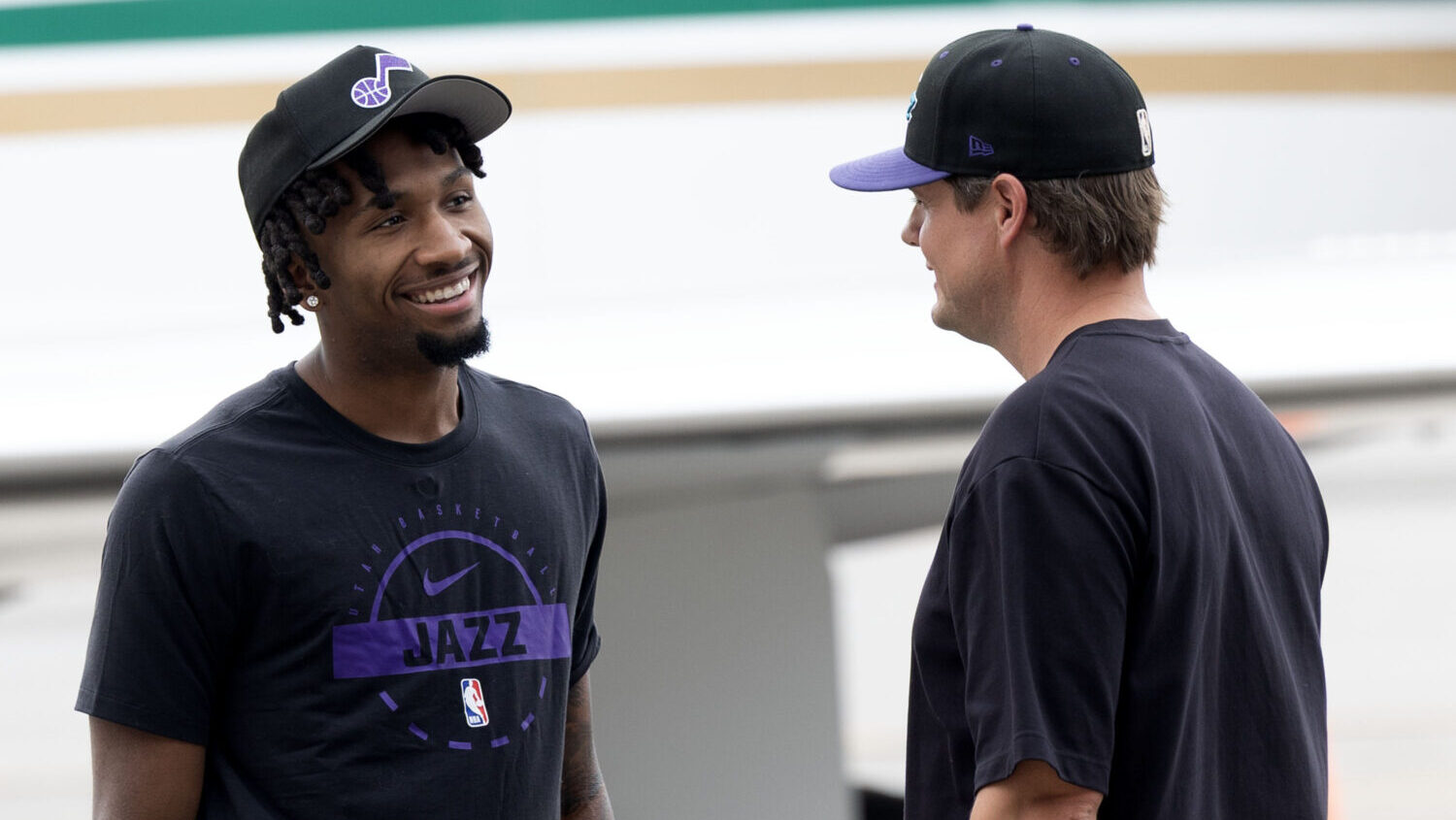
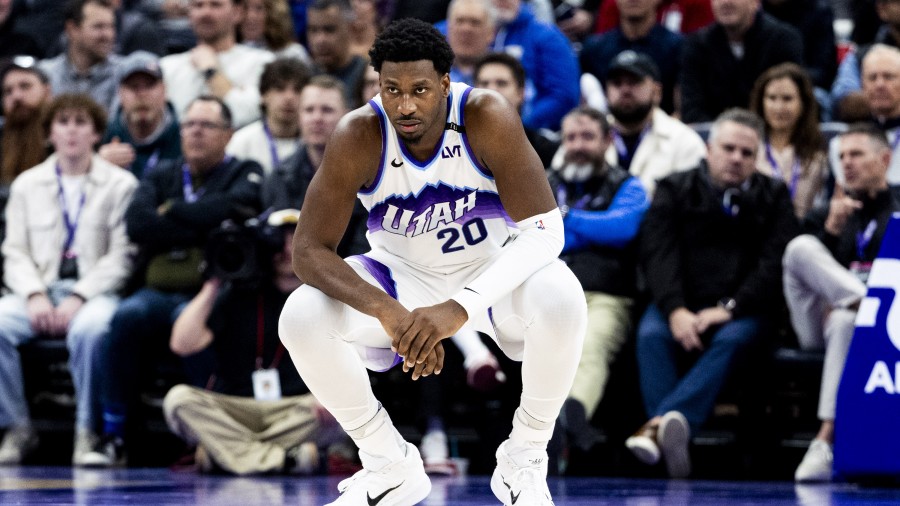
Austin Ainge, president of basketball operations for the Utah Jazz, speaks during an introductory media availability with Utah Jazz Governor Ryan Smith, left, at Zions Bank Basketball Campus in Salt Lake City on Monday, June 2, 2025. (Photo courtesy of Tess Crowley, Deseret News)
(Photo courtesy of Tess Crowley, Deseret News)

SALT LAKE CITY — In recent years, hiding your cards during the NBA Draft process has become more of a necessity than simply a strategy.
Projecting prospects is difficult enough. Giving other teams, agents or outside voices a chance to complicate draft night only adds another avoidable wrinkle.
Utah Jazz president of basketball operations Austin Ainge joined the KSL Sports Zone to talk about that reality, as well as several other notable draft topics.
First, Ainge touched on the fact that both analyzing prospects now and getting it right for the future is a tough task.
The main avenues teams take are watching film and talking to the players. A lot of information can be gained, but some of the most important aspects like work ethic and response to adversity come down to a guessing game.
It evolves in the things I care about, think about, and ask about. These guys are 18, 19, and sometimes a little older. I feel like I’ve learned a lot of what’s typical of a 19-year old, what’s not, what stands out, who is really mature for their age, who isn’t, and how to rate that properly in the grand scheme of things. We’re talking a lot about who they are as people. That matters a lot, I think I value that more than I did earlier. None of these guys are ready-made or ready to step in and be what they’re going to be. So much depends on who they are, how much they’re willing to work, integrate with the team, take coaching, and handle money. All these different variables. Mostly, we try to see what they’ve done and who they’ve been in their life, and then make our best judgments going forward. Most of the time, the guys who have the outlier toughness have usually had it their whole lives. The really, really tough guys are easy to see. The guys who really don’t have it are easy to see. Everyone in between, it’s hard.
Once all of the information has been combed through, it’s then on the team to decide what is most important and what they value the most.
A lot of that comes down to opinions. If there were a 100 percent successful draft cheat sheet, all nuance would be removed from team-building.
For example, how much does day one fit matter as opposed to the long-term outlook? Ainge said simply that it is a consideration but far from a top priority.
It’s a consideration how they fit because it affects their development. But I would say it’s not the No. 1. The No. 1 priority is how they’re going to be in a few years.
Utah Jazz president of basketball operations Austin Ainge on how fit plays into looking at draft prospects. 🏀
“It’s a consideration how they fit because it affects their development. But it’s not the #1 priority.” pic.twitter.com/gSs0QUqqX9
— Chandler Holt (@CHoltSports) June 12, 2026
Ainge then offered a sneak peek into Utah’s draft room.
As could be expected, there are many opinions being thrown around, and every point is met with a counterpoint. That said, Ainge explained that the group tries their best to return to game film and other mediums that are more objective.
We go back and forth. We spend some time asking questions like: ‘If it works, why will it work?’ ‘If it doesn’t work, why won’t it work?’ ‘What’s the best case?’ ‘What’s the worst case?’ ‘What’s the 90 percent outcome?’ ‘What’s the median outcome?’ We ask these questions in all different ways. You can imagine a group full of people whose entire job is to pick these players. All the different angles and the ways we can talk ourselves into circles. In the end, we try to really know the league and what works in the NBA. We try to really ground ourselves in the film so that you don’t let your mind wander too far. Film is reality. Let’s stay where they’re at right now, and let’s try to predict three years in advance. Keep it as simple as possible.
Lastly, Ainge touched on what it’s like to be in the know and how often he gets asked for an inside scoop.
This time of year, the media landscape is littered with speculation and filled with fans starved to know what will happen on draft night.
Ainge basically said that it is a safe bet to assume that any and all reports about what the Jazz are thinking are made with little to no basis.
Everywhere I walk, people ask. We don’t tell anybody. I don’t tell my wife. I don’t tell some of the people on my staff that I work with every day where I’m leaning. On top of the competitive advantages, the trades that could kill, and some of the other things that would harm. There are huge betting markets now. Some guy I play golf with makes $500,000 on who the draft is, and then the FBI is knocking on my door. We can’t be having that.
At this point, Jazz fans know only one thing for certain: they’ll have to wait until June 23 to learn the pick.