Jazz Mailbag: Do the Jazz have a death lineup?
Aug 18, 2026, 1:57 PM

SALT LAKE CITY – Welcome to the Utah Jazz Mailbag! This week, we look at whether or not the Jazz have a “death lineup”.
Each week, we will send out a prompt on X and BlueSky asking for the questions you have about the Jazz.
Then, we’ll respond to as many as we can in that week’s Jazz mailbag in the Jazz Notes podcast.
Jazz Mailbag: Does Jaren Jackson Jr. give the Jazz a death lineup?
How many minutes a game do you think we will see the Key/DP/Ace/Lauri/JJJ lineup? Could you see it being the starting or closing lineup? Defense and rebounding could be a concern, but it has potential to be very good offensively. It also allows Lauri to play his natural position
— KC (@KCW_Jazz) August 17, 2026
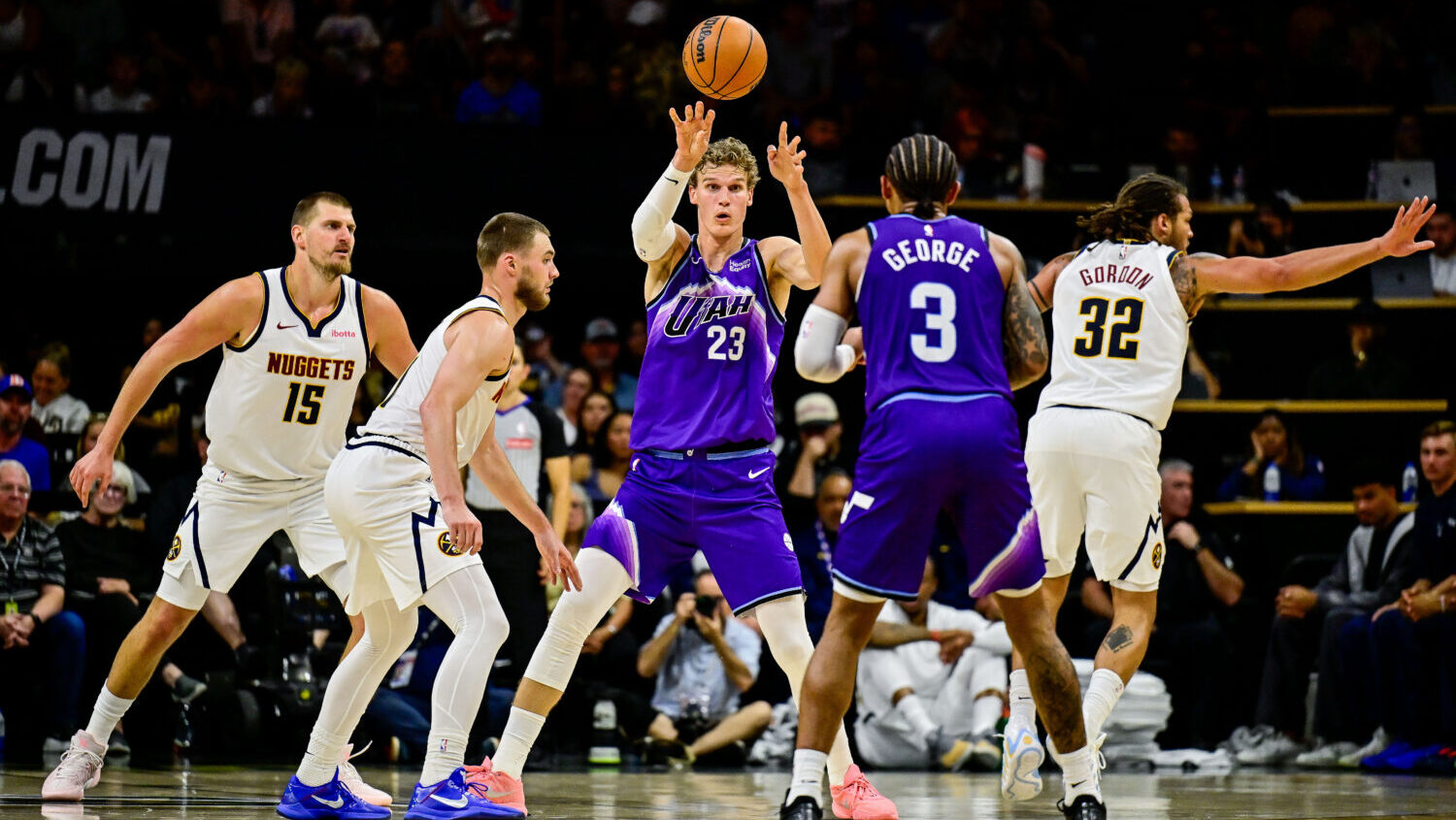
Question: How many minutes per game do you think we will see the Keyonte George, Darryn Peterson, Ace Bailey, Lauri Markkanen, Jaren Jackson Jr. lineup? Could you see it being the starting or closing lineup? Defense and rebounding could be a concern, but it has potential to be very good offensively. It also allows Lauri to play his natural position.
Answer: First, a brief history of the phrase “death lineup” and why it became popular in NBA circles.
In the 2010s, Golden State Warriors coach Steve Kerr began using an unconventional lineup without a true center. The group maximized floor spacing, basketball IQ, and, most importantly, put the team’s five best players on the court together.
That lineup originally featured Stephen Curry, Klay Thompson, Harrison Barnes, Andre Iguodala and Draymond Green before the Warriors replaced Barnes with superstar Kevin Durant.
The results proved devastating for opponents, who struggled to match the skill, ball movement, and shooting of the death lineup. The group’s success helped usher in a new NBA era that prioritizes versatility over traditional positions.
The Warriors are starting their “Death Lineup” for the first time, according to @anthonyVslater. pic.twitter.com/pY4ioSxNU8
— SLAM (@SLAMonline) May 6, 2018
Its influence remains evident today. Many of the league’s top teams, including the New York Knicks, Oklahoma City Thunder, and San Antonio Spurs, deploy five-man units that thrive because of their balance of skill rather than traditional basketball roles.
So, do the Jazz have a unit capable of producing similar results?
Entering the 2026-27 season, the answer is probably no, though it could eventually become a maybe.
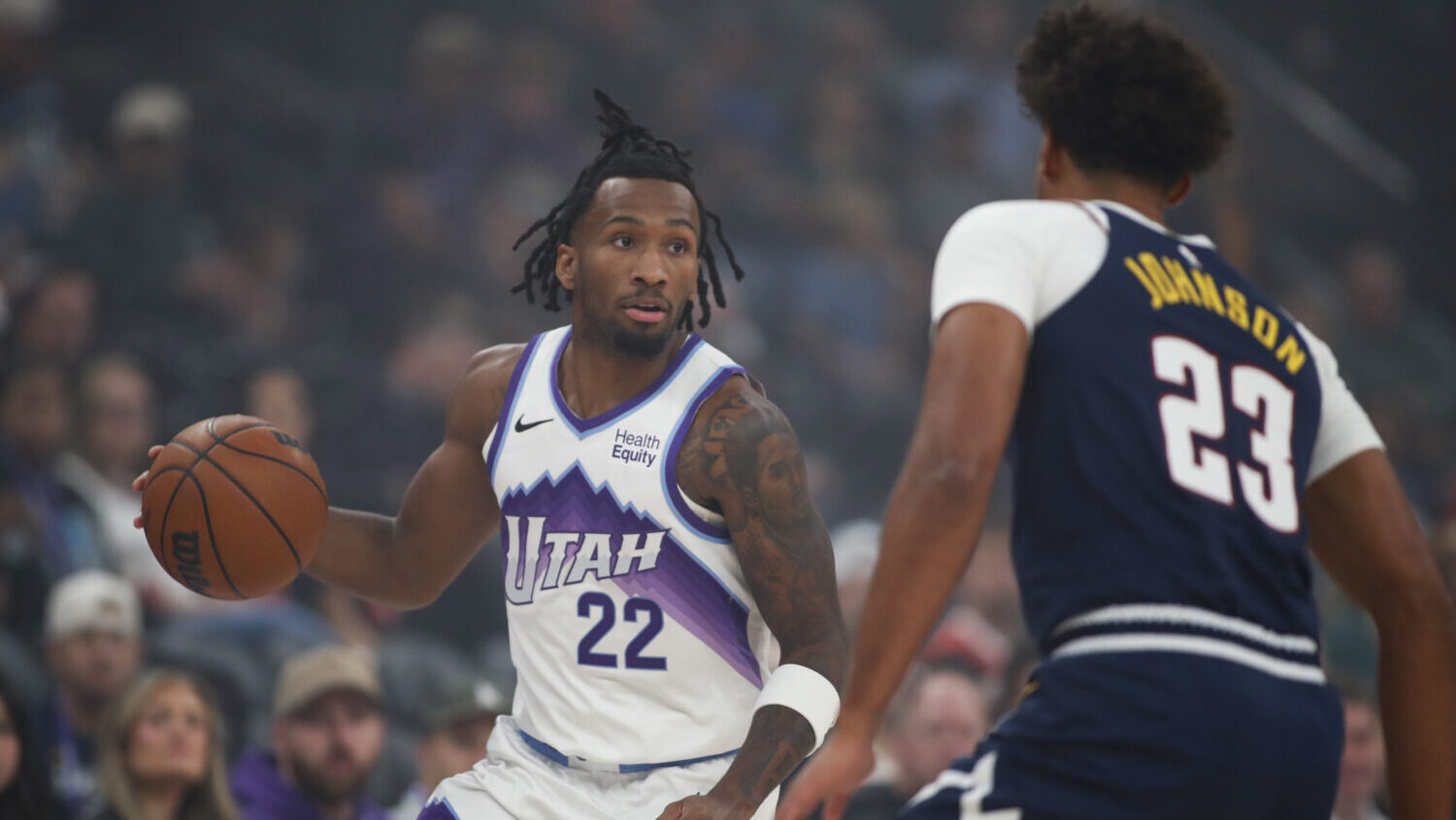
Keyonte George must improve defensively to increase his overall value to the Jazz. However, it’s worth noting that two aforementioned death lineups featured their weakest defender at point guard.
Both the Warriors and Knicks death lineups included defensive liabilities at the position, with Curry and Jalen Brunson serving as the weakest defenders in their respective groups.
KEYONTE GEORGE 40-PIECE! 🔑🔑🔑
that’s a new career-high! 🔥 pic.twitter.com/Sf3ydzpL3u
— Utah Jazz (@utahjazz) January 21, 2026
Curry was a better defender than Brunson is today, but both teams won championships in spite of those players’ defense, not because of it.
The Warriors surrounded Curry with four significantly better defenders. The Knicks placed three elite defenders around Brunson while also compensating for Karl-Anthony Towns’ inadequacies.
For the Jazz’s proposed death lineup to work, Darryn Peterson, Ace Bailey, Lauri Markkanen, and Jaren Jackson Jr. will all need to defend at a higher level to offset George’s shortcomings, unless the fourth-year guard takes a leap on that end of the floor, which shouldn’t be dismissed.
Jackson Jr. is currently the Jazz’s best defender, having won the NBA Defensive Player of the Year Award in 2023. Additionally, both Peterson and Bailey project as players who could become strong defenders in time.
Markkanen has never established himself as a high-level defender, though his size and athleticism could provide defensive value in the right situations.
Still, rebounding and rim protection, two pillars of NBA basketball, would present major concerns for this group.
Jackson Jr. is an unusually poor rebounder for a player of his size, and none of the other four players in the lineup has shown an ability to compensate for that weakness.
The @utahjazz trail the @OrlandoMagic 9-7 five minutes into Jaren Jackson Jr.’s debut.
JJJ has 4 points to lead the Jazz. #TakeNote pic.twitter.com/GSXrzxTzTw
— KSL Sports (@kslsports) February 8, 2026
While defense remains a significant question, this Jazz unit could excel offensively, particularly due to its potential to space the floor at all five positions.
Even that, however, is far from guaranteed.
Markkanen is the group’s most proven 3-point shooter. He has made 37 percent of his attempts throughout his career while taking a high volume.
George connected on 37 percent of his 6.7 attempts per game last season, marking a significant improvement from his first two years in the league.
Peterson enters the NBA as a potentially lethal shooter, but not every successful college shooter adjusts immediately to the NBA’s deeper 3-point line.
Likewise, Bailey projects as a strong long-term shooter, but made only 34 percent of his attempts as a rookie.
Sounds like the plan for the @utahjazz is to keep Ace Bailey in the starting lineup for the time being.
He was up to the challenge tonight. #takenotepic.twitter.com/gixqCd6meM
— Ben Anderson (@BensHoops) November 11, 2025
Jackson Jr. has consistently shown he can stretch the floor, though he may not fit the mold of a traditional floor spacer.
The 26-year-old owns a career 35 percent mark from the 3-point line on nearly five attempts per game, a strong number, though not quite elite.
In theory, each player’s ability to create space could generate cleaner looks for his teammates, leading to easier shots and improved efficiency. For now, however, that remains a hypothesis rather than a proven outcome.
For comparison, the Warriors’ death lineup with Durant featured four players who shot at least 36 percent from 3-point range, including two who shot better than 40 percent.
All five players in last season’s Knicks death lineup shot better than 36 percent from beyond the arc, including one player who topped 40 percent.
As things stand, the Jazz’s most intriguing five-man unit would include only two players coming off seasons in which they shot better than 36 percent from 3-point range.
Furthermore, most traditional death lineups feature elite passing, an area in which this proposed Jazz group falls short.
Lauri Markkanen is the third player in @utahjazz history to score at least 38 points while shooting 80 percent from the field or better.
He joins Adrian Dantley and Karl Malone who last did it on January 8, 1998. #takenote | @kslsports pic.twitter.com/bo7CpOVrYY
— Ben Anderson (@BensHoops) November 19, 2022
George is a developing playmaker and the most accomplished passer in the lineup, but he still has considerable room to grow. Peterson, Bailey, Markkanen and Jackson Jr., meanwhile, have historically graded as average or below-average passers.
Improved chemistry could raise the passing level across the roster, but no one can assume that will happen entering the season.
Ultimately, this five-man unit has the potential to become the Jazz’s most dangerous lineup because of its size, talent, shooting, and defensive upside.
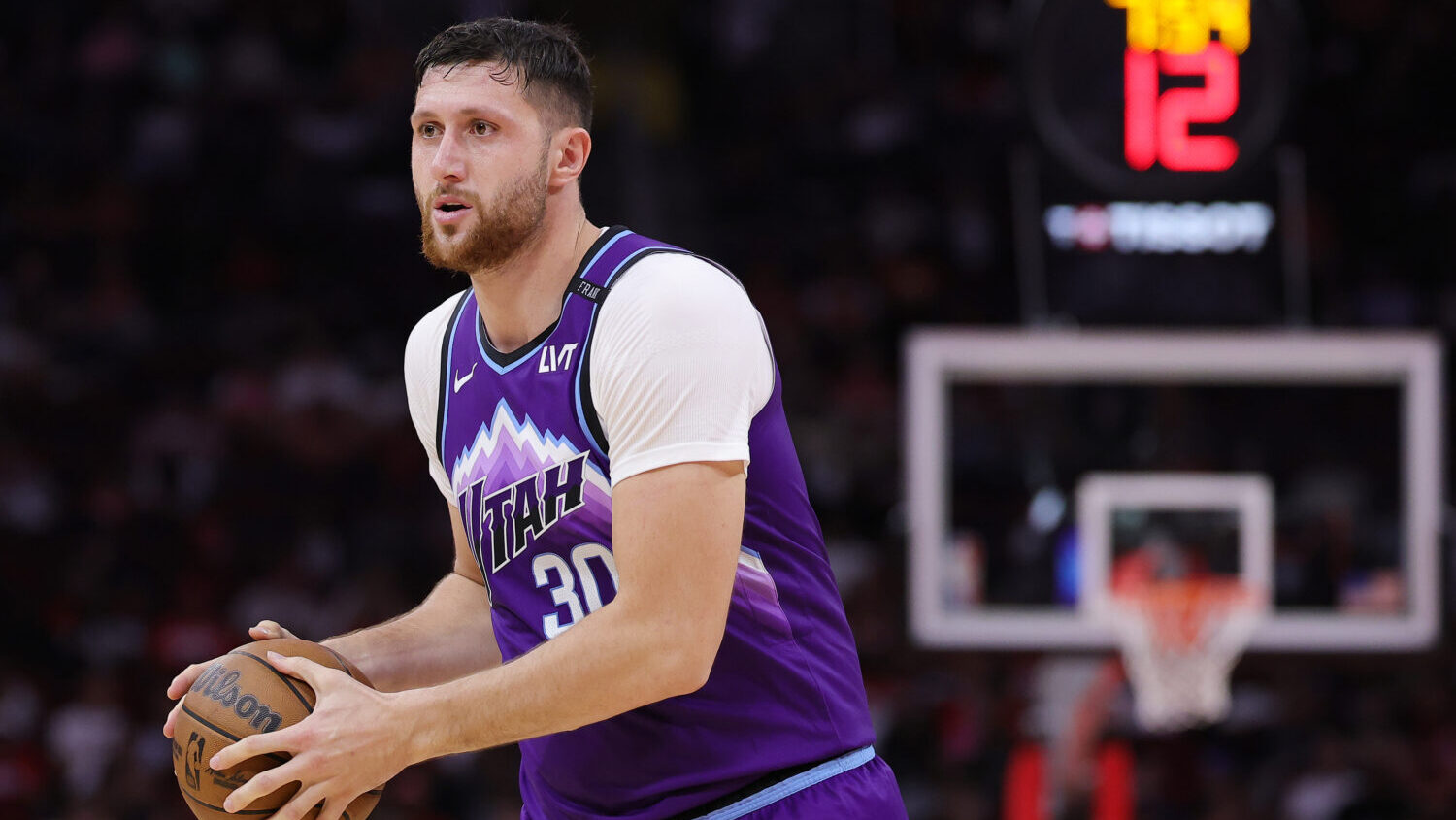
For now, though, more traditional lineups featuring stronger rebounders, such as Jusuf Nurkic, or more conventional rim protectors, such as Jaxson Hayes, may provide a more effective formula to open the Jazz’s 2026-27 campaign.
Want to ask a question in next week’s Jazz mailbag? Follow KSL Sports on social media.
Are you on Instagram? Let’s connect; give us a follow @kslsports.
Ben Anderson is the Utah Jazz insider for KSL Sports and the co-host of Jake and Ben from 2-6pm with Jake Scott on 97.5 The KSL Sports Zone. Find Ben on Twitter at @BensHoops, on Instagram @BensHoops, or on BlueSky.