Alex Jensen Calls First Half “Embarrassing” As Utah Falls to Colorado
Mar 3, 2026, 11:36 PM

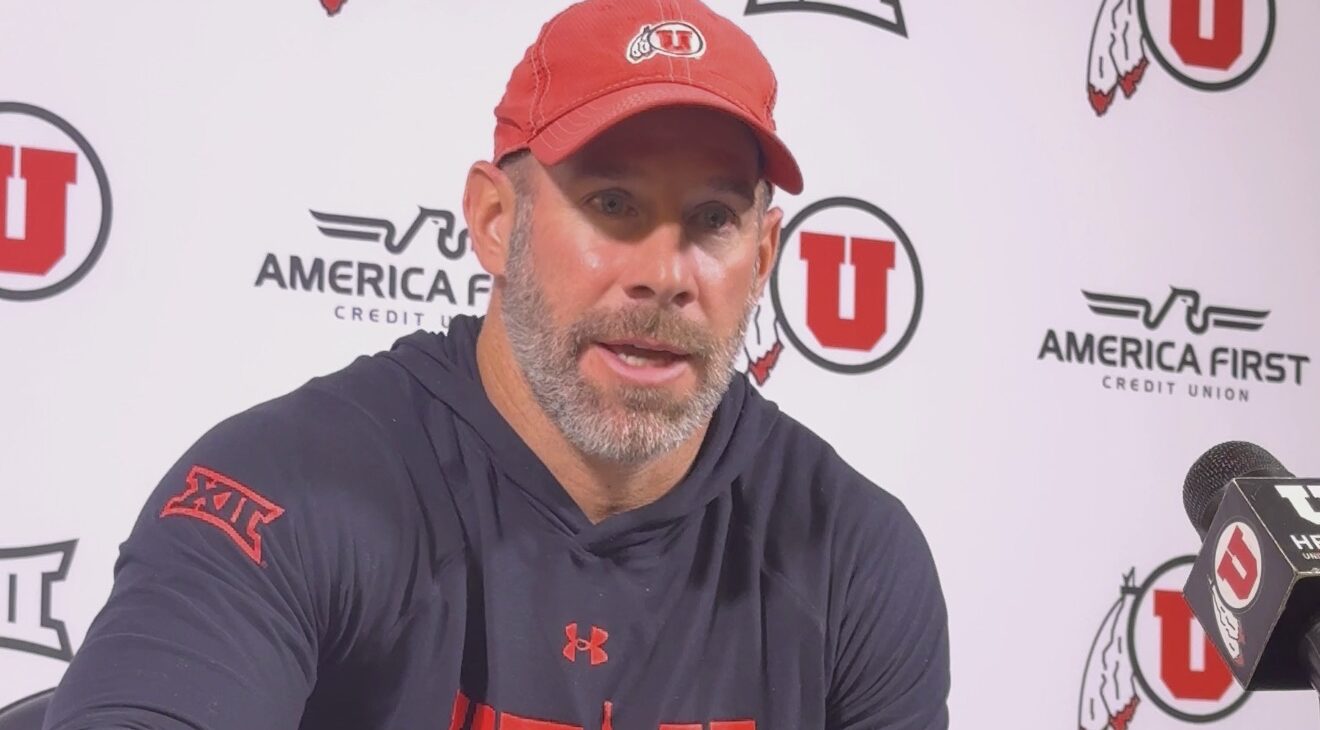
Mar 3, 2026; Salt Lake City, Utah, USA; Utah Utes head coach Alex Jensen looks on against the Colorado Buffaloes during the first half at Jon M. Huntsman Center. Mandatory Credit: Rob Gray-Imagn Images

SALT LAKE CITY — Utah head coach Alex Jensen didn’t sugarcoat it.
After Colorado built a massive early lead and held on for a 92–78 win at the Jon M. Huntsman Center, Jensen’s postgame message centered on the way the Utes started the game.
“Very disappointing first half,” Jensen said afterward. “I think everybody expects more out of our guys. Having played here, I think the fans and the university deserve better than that.”
Colorado’s opening stretch proved decisive. The Buffaloes shot nearly 70 percent in the first half and punished Utah’s early mistakes, racing to a 51–25 halftime lead.
Utah tied the game early at 13–13, but the game quickly unraveled. Turnovers sparked Colorado’s transition offense, and a barrage of efficient scoring runs created separation the Utes never fully recovered from.
Jensen pointed to the familiar issue that helped fuel that run.
“I think it’s hurt us all year — the turnovers,” he said. “Those nine were in the first ten minutes, if I’m not mistaken. You’re going to have turnovers, but the problem is it’s the same ones we’ve had all year.”
For Jensen, the frustration wasn’t simply the mistakes themselves — it was the repetition.
“You’re going to make mistakes,” he said. “But don’t let those mistakes be not playing hard or doing the same thing over and over again.”
Utah Responds After the Break
If the first half was a collapse, the second half showed the version of Utah Jensen wishes showed up earlier. The Utes shot a scorching 75% in the second half, hitting 15 of their 20 shots while dramatically increasing their offensive tempo and aggression.
Terrence Brown led the charge with 22 points, while Don McHenry added 19, helping Utah cut the deficit to single digits late in the game.
But the deficit proved to be too much. Every time Utah pushed momentum, Colorado answered with a timely basket or trip to the free-throw line.
Jensen credited his team’s fight, but emphasized the pattern that has haunted the Utes this season.
“We came out and fought in the second half,” Jensen said. “But that’s been kind of our thing all year long — you can’t play a half and win a lot of games.”
At the half from the Huntsman Center pic.twitter.com/ATiBdtObpa
— Utah Basketball (@UtahMBB) March 4, 2026
A Halftime Message
Jensen said the conversation at halftime wasn’t about tactics or schemes. It was about accountability.
“I told them it was embarrassing,” Jensen said. “The people out there watching and cheering for you deserve more. Your parents deserve more. The people who made it possible for you to be here deserve more.”
“And you yourself deserve more. The guy next to you deserves more.”
The response — at least statistically — was immediate. Utah’s offense became far more efficient and the energy inside the Huntsman Center rose with it. Still, Jensen believes the team must find a way to bring that intensity from the opening tip.
“It’s easy to ramp it up when you’re down,” he said. “But can you do that at the beginning and sustain it throughout the game?”
Nearing the Finish Line
With only one game left in the regular season, Tuesday night carried the unmistakable weight of a long, difficult year.
Utah has battled through the grind of the Big 12 basketball — a league where mistakes get punished immediately and where every lapse in focus tends to snowball.
The Utes were sharp for stretches in the second half, showing the same offensive rhythm and fight they’ve flashed at times throughout the season.
But the repeated mistakes in the first half raised a difficult question that often surfaces late in challenging seasons: whether the mental energy required to sustain that level for forty minutes had begun to slip. Or more simply put, was the team checked out?
Jensen framed it more diplomatically, pointing to the learning curve his roster has faced.
“It’s difficult, I think most of our guys, this is the first time they’ve played at this level,” he said. “The higher level you get, the more it demands from you. You can’t have those letdowns.”
In a season that has tested the group in nearly every way, sustaining that edge from the opening tip has too often proven elusive. And with the finish line finally in view, the opportunity now is finishing the season with the urgency that might have changed nights like this earlier in the year.