Jackson Holcombe bringing the leadership Utah basketball needs
Oct 1, 2026, 10:24 AM | Updated: 10:33 am
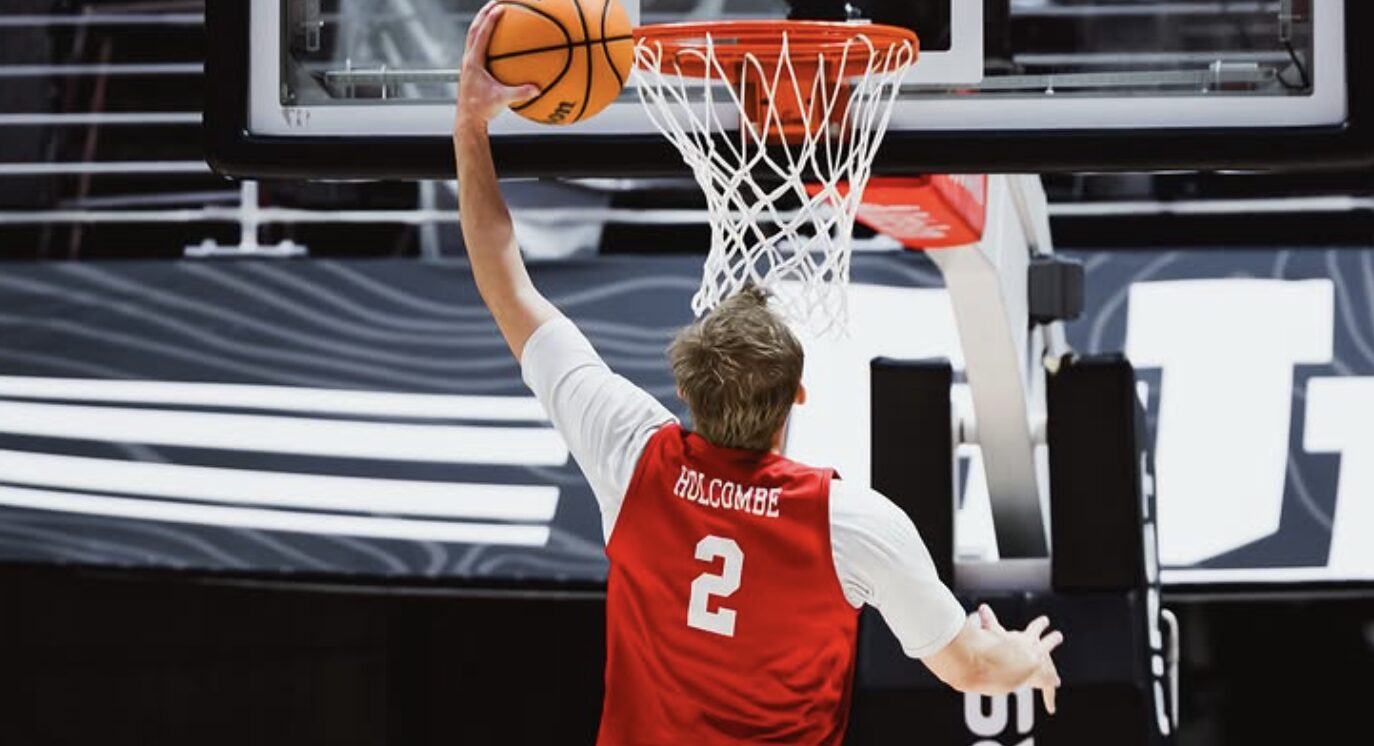
Jackson Holcombe at practice. Photo courtesy by Utah Athletics.

SALT LAKE CITY — Ask Utah basketball players about Jackson Holcombe, and the conversation quickly moves toward his competitiveness and what he demands from the people around him.
Obomate Abbey described a teammate who points out mistakes and holds players accountable. Zati Loubaki highlighted the intensity Holcombe brings to their practice battles. His determination to win has become a recurring topic, including accounts of open runs that cannot end until Holcombe wins the last game.
As much as college basketball revolves around talent, experience can determine how effectively a team puts it to use. The kind gained through competitive success was something Utah sorely lacked last season.
The leadership required to dig Utah basketball out of its hole must be determined, demanding and even defiant. Those qualities are emerging in one of its most important newcomers.
𝗦𝗶𝗴𝗵𝘁𝘀+𝘀𝗼𝘂𝗻𝗱𝘀 🔊#GoUtes pic.twitter.com/zQV7idSJU9
— Utah Basketball (@UtahMBB) September 24, 2026
Jackson Holcombe brings a winning standard
Holcombe arrived at Utah with an understanding of what winning requires and little interest in lowering his expectations to accommodate the program’s recent struggles.
“I just think about it as, you know, we had a standard at Utah Valley of winning games and just carrying that standard here,” he said.
He called Utah’s conference record last season “unacceptable” and said there were too many losses overall. It was a blunt assessment from a newcomer, but the Utes need someone willing to make it and take responsibility for changing it.
Experience becomes valuable leadership when a player can translate it into expectations, recognize when teammates are falling short and demand a response. Holcombe is bringing that perspective into a locker room that needs the habits of winning to become daily obligations.
Those demands also come with support. Jaxon Johnson, who is readjusting to basketball after his church mission, credited Holcombe with offering advice from his own experience navigating that transition. Johnson also described a broader willingness among the veterans to provide honest feedback.
“Multiple teammates come and tell me things that I can improve on, but they also tell me things that I did well in that practice,” Johnson said.
That combination gives demanding leadership a chance to take hold. Players know where they stand, what needs to improve and that the person challenging them is willing to help.
Holcombe’s assessment of last season may sound harsh, but Utah’s recovery requires players dissatisfied with where the program has been and determined to change what it accepts. A missed assignment, careless possession or lapse in effort cannot always wait for a coach’s correction. Holcombe is helping make that standard the players’ responsibility.
Related Utah content
- Utah basketball lands commitment of three-star guard Pierce Thompson
- Baer Bailey comes away impressed after official visit to Utah basketball
- Utah men’s basketball reveals 2026-27 Big 12 conference schedule
- Why Alec Anigbata chose Alex Jensen’s vision for Utah basketball
- Utah basketball’s roster comes into focus after a whirlwind 12 hours
- Utah football enjoys bye week unbeaten, with plenty still to prove
- Utah football announces ‘exclusive’ on-field seating for games at Rice-Eccles Stadium
- The Utah Checkdown: Should the Wayshawn Parker Heisman campaign begin?
- Utah’s Wayshawn Parker named Big 12 Offensive Player of the Week
Competition carries through practice
And it’s not just Holcombe who is establishing a new standard.
TJ Burch, was another whom teammates repeatedly identified as a defensive tone-setter. Alec Anigbata praised his relentless competitiveness, while Abbey highlighted the “dawg mentality” that allows him to move past mistakes and keep attacking.
His leadership showed up during a competitive segment of Wednesday’s practice. Burch’s team fell behind 13-2, but he got after his teammates to keep fighting, and the group responded with a comeback victory.
“I got teammates that want to fight with me, like, they want to be able to win, too,” Burch said.
An intrasquad comeback does not establish how Utah will handle Big 12 competition. It does provide an example of teammates working through adversity together, with another demanding voice helping sustain the fight when the score gives them reason to get discouraged.
Taison Chatman described a competitive environment that extends beyond five-on-five basketball. The Ohio State transfer said players challenge one another throughout their daily work.
“It’s one of the most competitive teams I’ve ever been on,” Chatman said. “Day in and day out in practice, whether it’s at the little gym or the weight room, I think we compete in everything we do.”
Earning trust through winning plays
Holcombe described winning through defense, communication, rebounding and pursuing loose balls as ways to influence a game when his shot is not falling.
“I do those things because I believe that scoring isn’t the only way to impact a basketball game,” he said.
That gives his leadership a foundation. Demanding more from teammates carries greater weight when a player does the less glamorous work himself. Utah needs that example when the offense struggles, frustration builds and the next defensive assignment still has to be handled.
Ultimately, Holcombe’s play will have to support his expectations. Competitive practices and direct conversations are a beginning, but Utah needs them to produce better basketball when the season starts.
He understands why fans might reserve judgment.
“I understand we’ve got to earn that trust,” Holcombe said. “I can’t wait to prove those people wrong.”
Earning it starts with accepting the responsibility to change Utah’s direction. His teammates’ descriptions suggest Holcombe is already making that expectation clear.