Kevin McGiven wants to build on Utah’s foundation, shift focus on quarterback growth
Mar 25, 2026, 7:13 PM

Utah Utes football spring practice in Salt Lake City, UT on Thursday, March 19, 2026. Anna Fuder/Utah Athletics

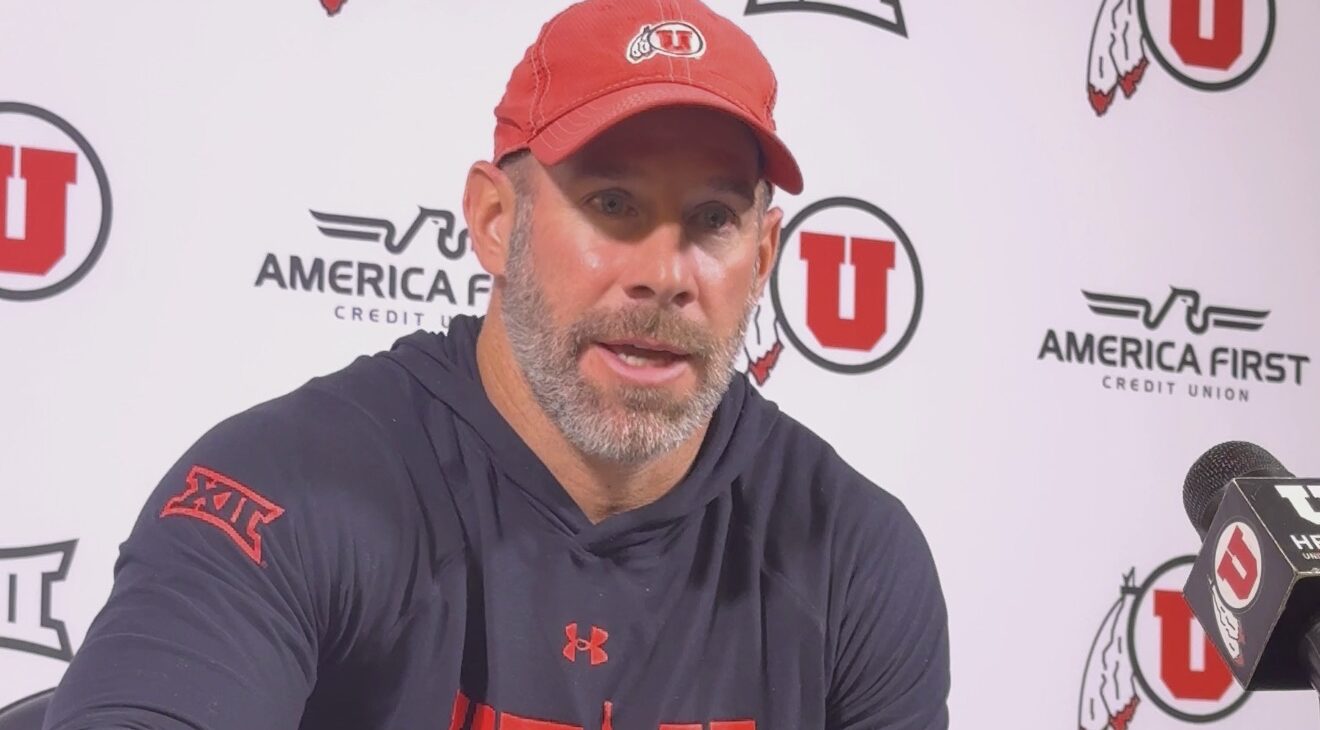
SALT LAKE CITY — With Kevin McGiven and all of the new personnel on the roster, Utah’s offense isn’t just being rebuilt this spring — the identity is going through a bit of an evolution at its most important position.
Utah football has been built upon a physical, run-first foundation. That still matters to Morgan Scalley, but there is also a desire to elevate the ceiling through quarterback play.
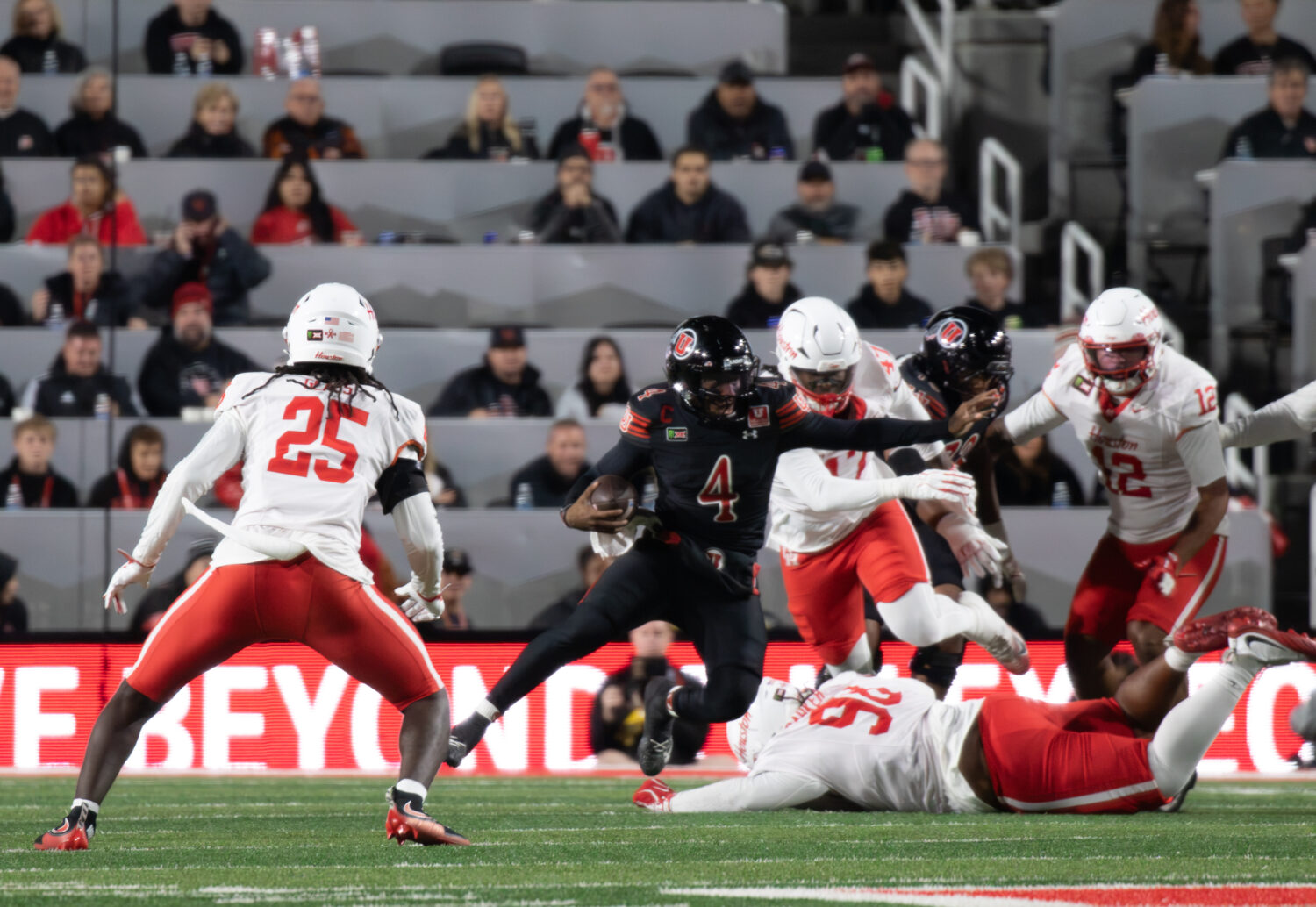
That means taking what already works — the structure, the toughness, the production — and layering in a more demanding, more complete approach for Devon Dampier and Byrd Ficklin, where decision-making, full-field processing, and control of the offense become the difference between good and dangerous.
Building the system — and the chemistry
McGiven described Utah’s offensive install as “going pretty well,” but made it clear that the real work is happening in the details.
The Utes have structured spring with alternating install and review days — a deliberate approach designed to slow things down just enough for players to actually absorb the system.
There’s still plenty to clean up. That part isn’t negotiable. But in McGiven’s mind, that’s not a problem — it’s the point.
“Still a lot of details, a lot of things we have to clean up, which is normal, we just got to have a growth mindset,” he shared.
Quarterbacks: tools are there — now it’s about development
Perhaps Utah’s most significant offseason roster construction win, was retaining both starting and backup quarterback.
McGiven didn’t hesitate to acknowledge what everyone already knows about Devon Dampier and Byrd Ficklin — they’re dynamic athletes who can stress a defense.
“Everyone knows how athletic Devon and Byrd are — that’s not a secret,” McGiven shared. “It’s something we can absolutely lean on. Their ability to create and get you out of tough situations is a huge asset, especially as a play caller.”
But McGiven’s focus is on building complete quarterbacks, not just explosive ones. The biggest shift? Mental load.
“The focus is developing them into complete quarterbacks,” he stated. “That starts with decision-making — their process, their reads, how they see the field. It’s the transition from being told, ‘throw it here,’ to working through full-field progressions within the structure of the system.”
Instead of just simplified reads, Utah’s quarterbacks are now being asked to work through full-field progressions. And the initial returns? Better than expected.
“And honestly, I’ve been really impressed with how quickly they’ve picked that up,” McGiven said. “They’re doing some really good things out there — things you don’t typically see at that stage.”
That’s a big deal. Because if Utah’s quarterbacks process faster, the ceiling of this offense jumps with it.
Scalley’s influence — culture first, scheme second
Under Morgan Scalley, the directive to the offense hasn’t been about playbooks or philosophy. It’s been about identity.
McGiven made it clear that the standard set by Utah’s defense — toughness, relentlessness, physicality — is now the expectation for the offense.
“I think the biggest directive from Coach Scalley starts with culture, he’s built a clear identity on the defensive side,” McGiven shared. “the goal is to make that a program-wide standard. That’s what we’re really focused on offensively: matching that same toughness, that same relentlessness in how we play.”
With culture and identity coming first, Scalley has given McGiven room to operate. And according to the coordinator, the mission is simple — maximize personnel and play complementary football.
“There haven’t been a ton of specific mandates, it’s more just about maximizing our personnel — putting guys in the right positions and using them the right way, and a big piece of that is playing complementary football,” McGiven explained.
Blending old and new, then maximize
McGiven is not walking in and scrapping everything Utah did well. He’s studying it — then marrying that with what he brings to the table and building on it.
“I’d say it’s extremely important, every place I’ve been is different, and part of the process is understanding what’s already worked,” McGiven shared. “Here, they were very successful offensively with a clear philosophy — leaning on the run game and doing it at a high level. When you’re scoring 40 points a game and moving the ball like that, you’d be doing yourself a disservice not to study it.”
That starts with personnel — specifically the players who already proved they can produce. McGiven pointed directly to Utah’s backfield usage, including Wayshawn Parker, and hinted at untapped upside with Daniel Bray.
“You look at returning players — the backs, how they used guys like Wayshawn Parker and Daniel Bray — and you start thinking about how you can expand those roles,” he said. “Bray, especially, is a dynamic player I’d love to do more with.”
At quarterback, the philosophy is more nuanced. It’s not about giving Devon Dampier and Byrd Ficklin more responsibility — it’s about sharpening how they handle what’s already on their plate.
“It’s not necessarily about expanding their role as much as it is refining what we’re asking them to do,” McGiven said. “How much can we put on their plate? That comes down to how well they process and make decisions.”
That answer will ultimately dictate how far the offense can go — whether it leans further into the passing game, layers additional concepts into the run scheme, or builds out more RPO elements.
But maybe the most intriguing piece of all is the versatility around them.
Utah has what McGiven describes as “rhino” types — hybrid players who blur positional lines and open up creative possibilities in the system.
🚨Attention all high school coaches🚨
There's still time to register for our 2026 Utah Football Coaches Clinic! You won't want to miss hearing from our coaches along with guest speaker, @CoachDanCasey ‼️
🔗: https://t.co/QeaQUiFkRi pic.twitter.com/6owzqPlcHR
— Utah Football (@Utah_Football) March 25, 2026
“We’ve got some unique pieces — those ‘rhino’ types who can line up and do a little bit of everything. I’m like, ‘okay, I haven’t really played with a rhino, but these guys are really cool. I just know that they’re in there and knocking people around.”
There’s no shortage of pieces. No shortage of ideas. It’s going to be about who executes the most consistently and what works best to maximize the potential of the offseason.
“It’s a good problem to have,” he said. “There’s a lot to work with — now it’s about putting it all together.”
The Bottom Line
Utah isn’t establishing a completely new identity — the foundation is still there: physicality, run game, complementary football. That’s not changing.
What is changing is the margin for growth — especially at quarterback, where decision-making and full-field processing now become the engine of the offense.
If Devon Dampier and Byrd Ficklin handle that jump, this offense doesn’t just stay productive — it becomes more complete. Add in expanded roles for playmakers, plus the flexibility of hybrid personnel, and the pieces are there.
That’s the reality of where this thing sits right now. It’s going to be a process to tie it all together, but it’s obvious McGiven is eager to figure it out.