Morgan Scalley press conference takeaways: Utah’s culture, physicality and versatility continue to show
Sep 14, 2026, 12:48 PM | Updated: 1:35 pm
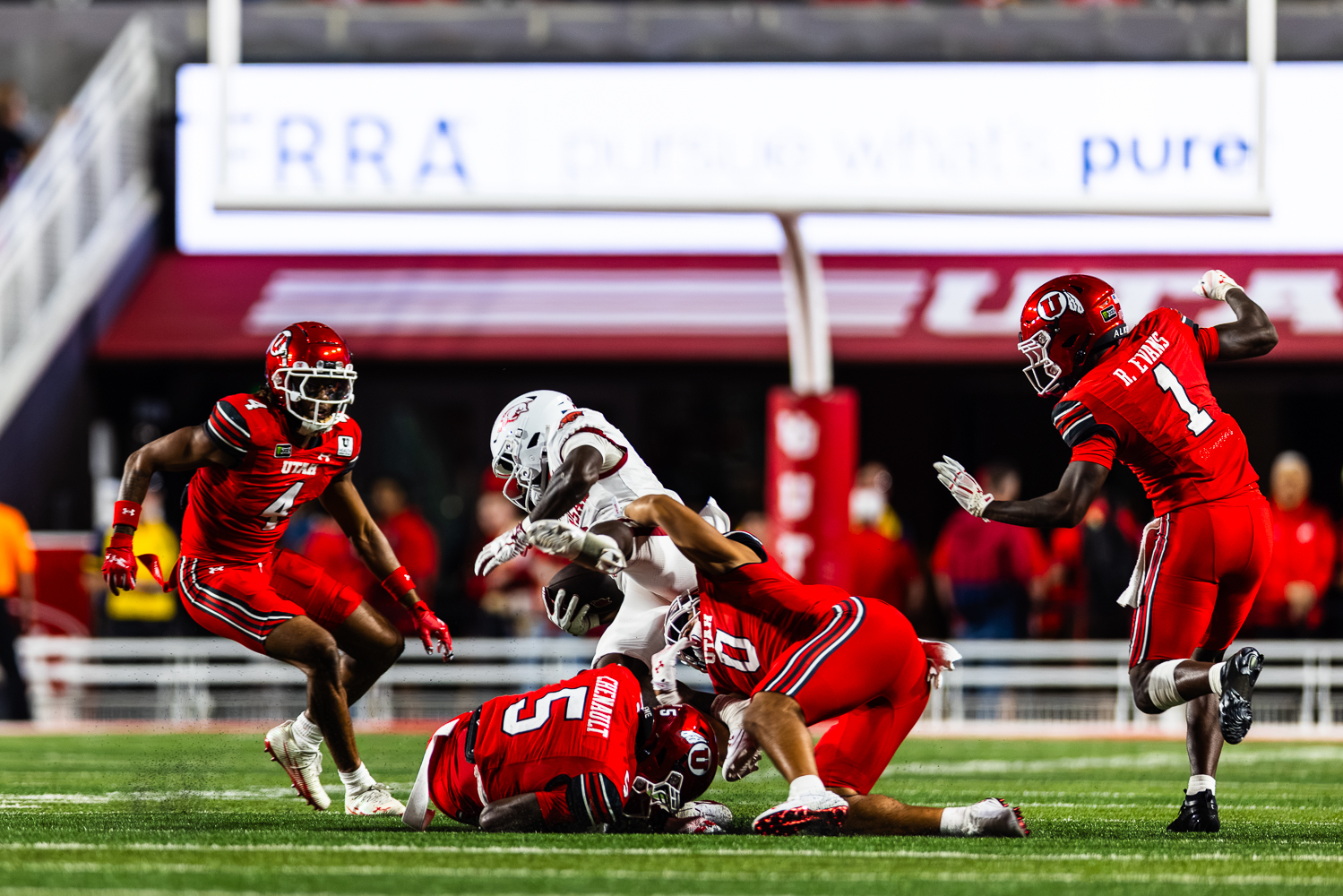
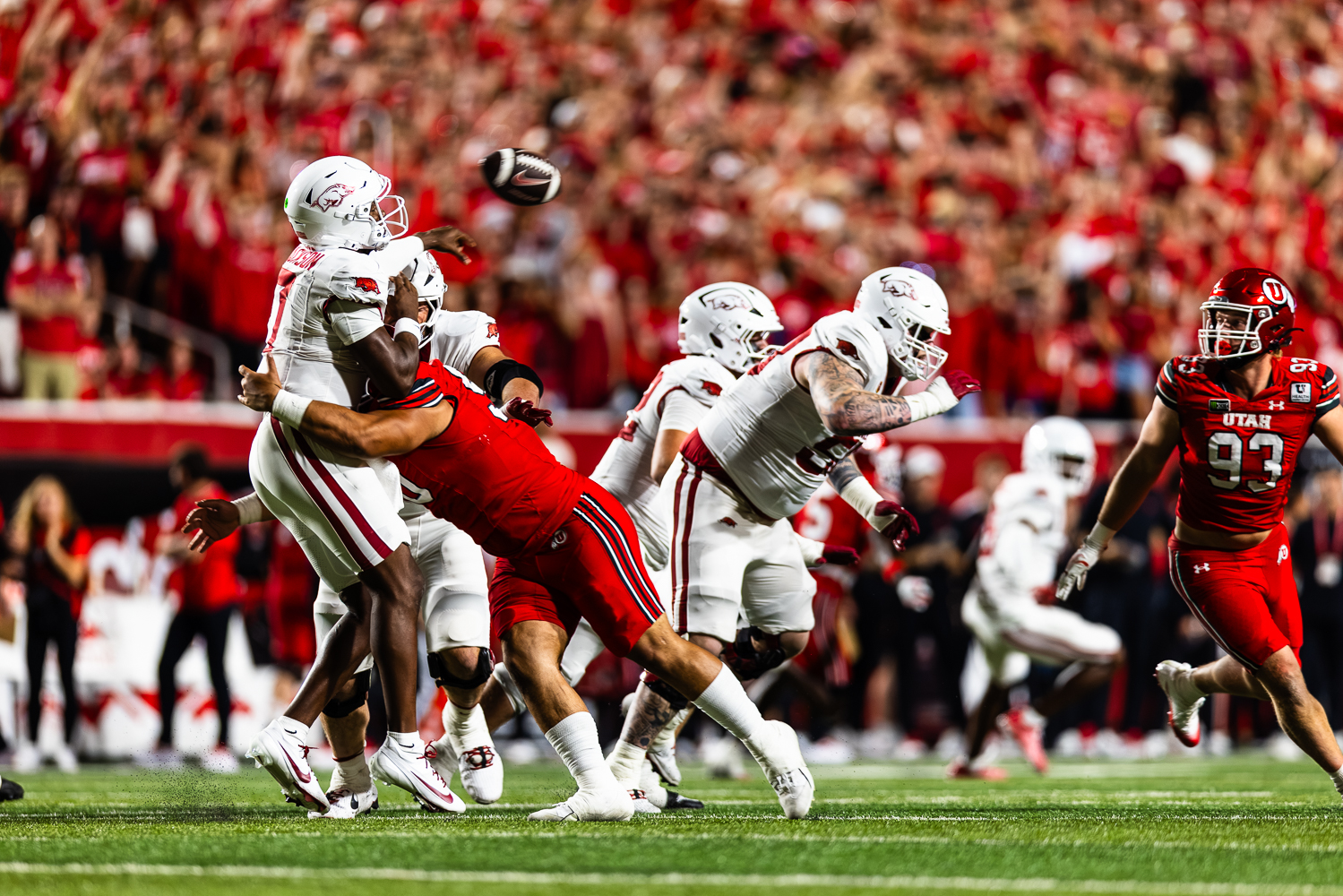
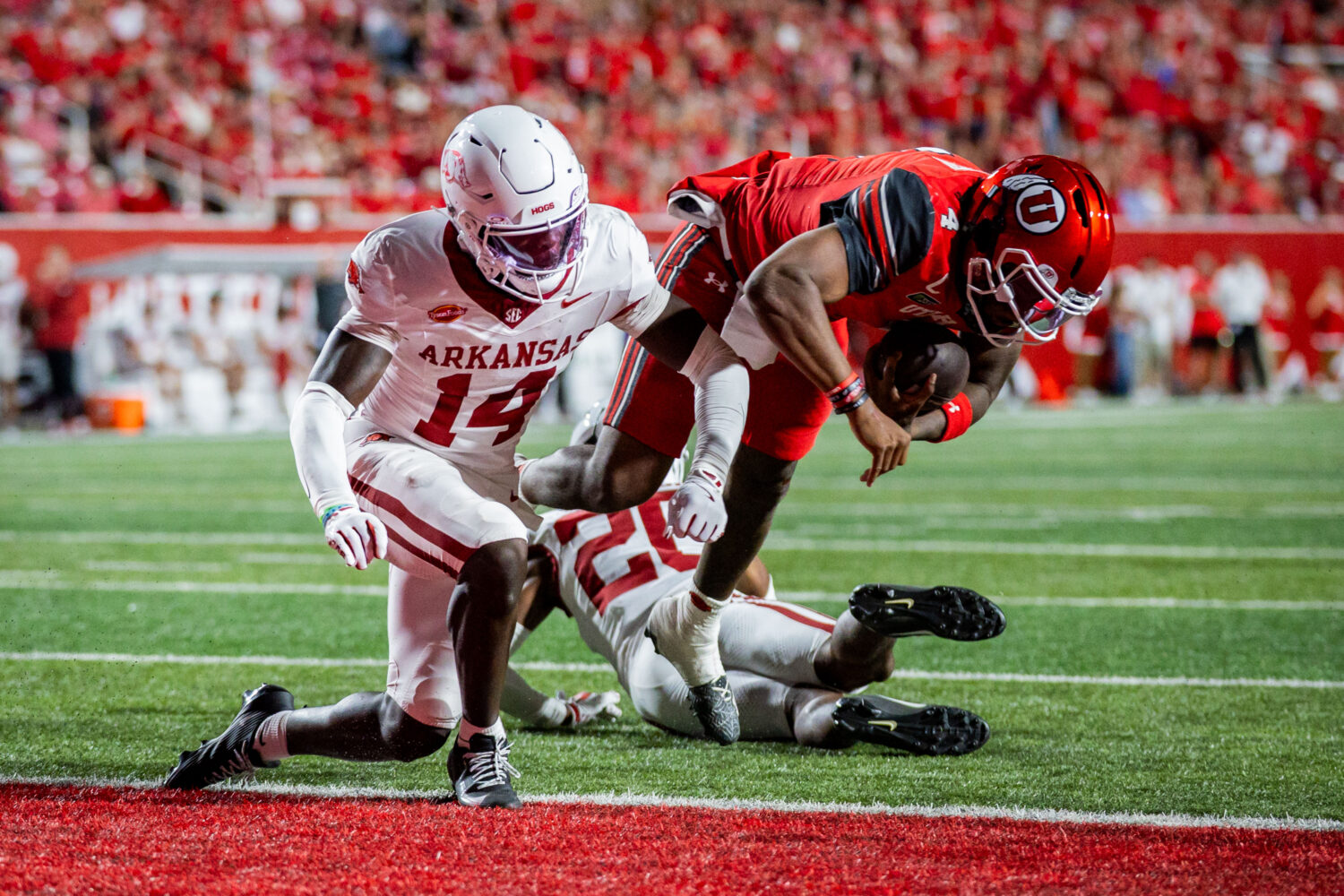
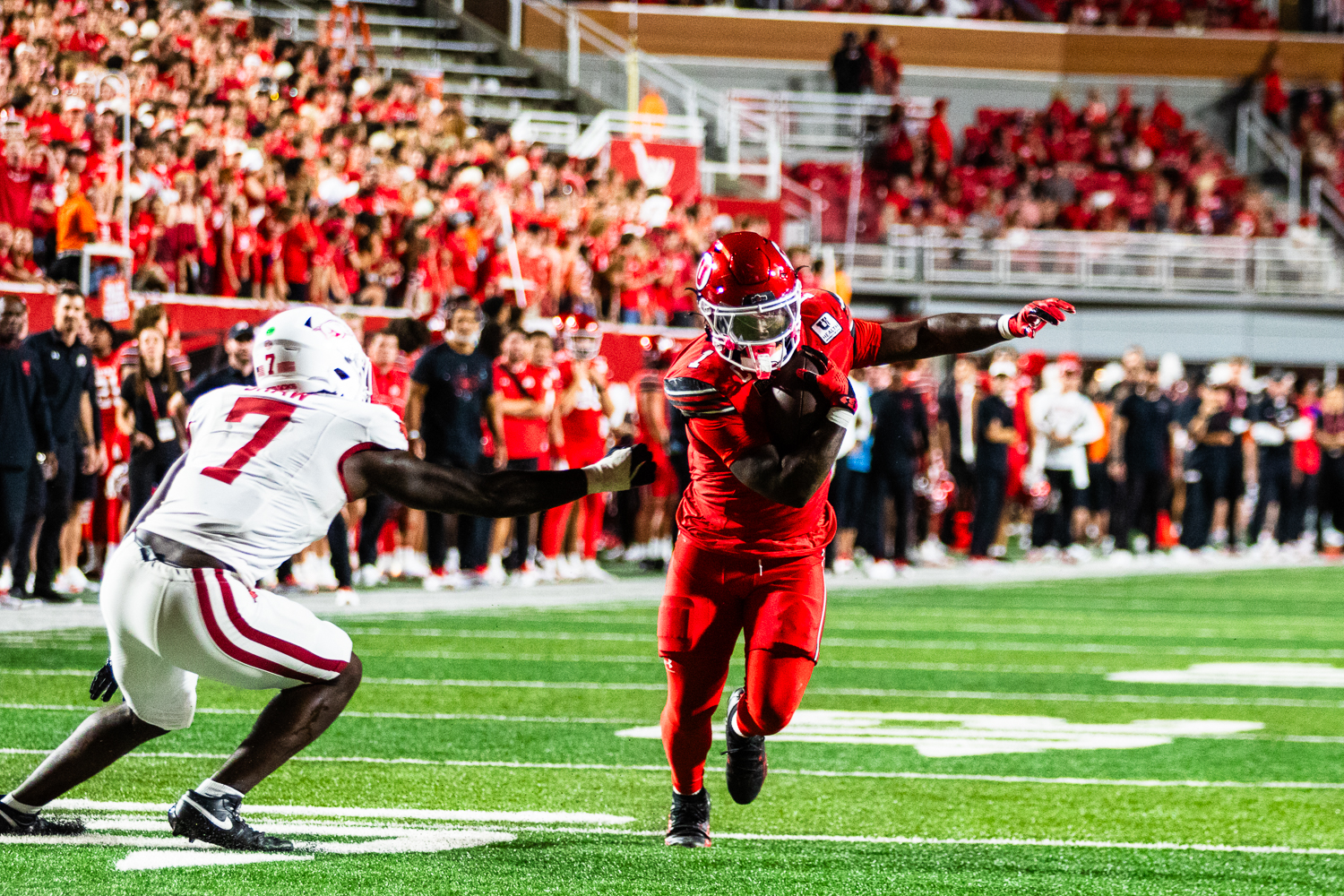
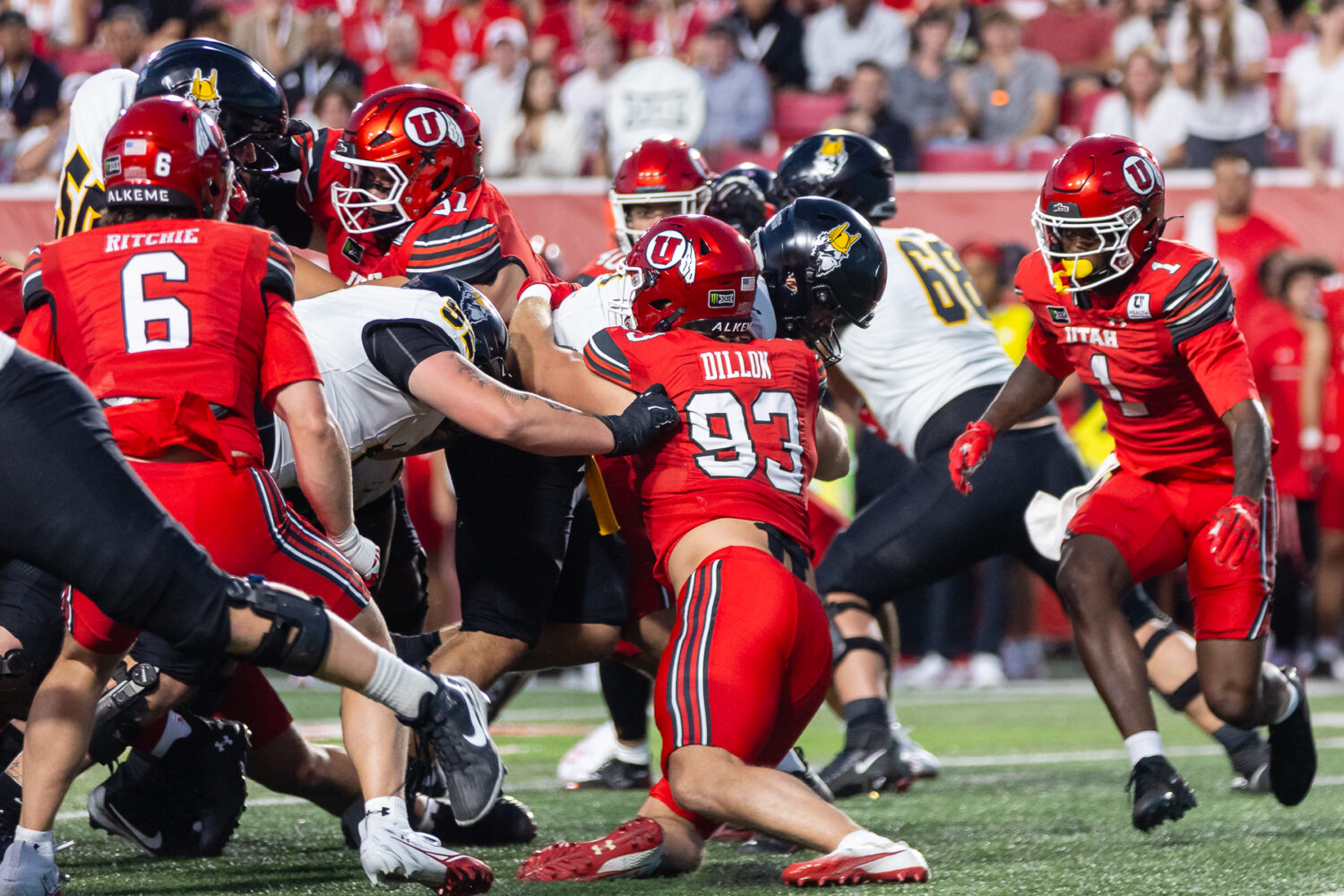
Arkansas Razorbacks vs. Utah Utes at Rice Eccles Stadium in Salt Lake City, Utah on Saturday, Sep 12, 2026. (Photo: Joel A. Davidson / UteZone, On3.com)
(Photo: Joel A. Davidson / UteZone, On3.com)

SALT LAKE CITY — Morgan Scalley had plenty to praise after Utah’s 43-10 win over Arkansas, but the Utah head coach opened his Monday press conference by spreading the wealth.
He thanked the fans for another strong home environment, and then acknowledged several other Utah athletic programs. Scalley also gave shoutouts to several programs competing this week, including cross country, golf, women’s soccer, baseball, swimming and volleyball.
He then turned his attention towards Saturday’s game. “I can’t say enough about the coaches, their game plans,” Scalley said. “As a head coach, it’s all about the culture and how we do things.”
Scalley credited offensive coordinator Kevin McGiven, defensive coordinator Colton Swan and their staffs before highlighting both lines, Utah’s linebackers, Nate Ritchie, the tight ends and several special teams players.
Utah’s identity is beginning to take shape, and Scalley believes it is being driven by collective buy-in.
Utah’s culture is showing up in how the team shares roles
Scalley’s most revealing comments came when discussing Utah’s offensive personnel usage, because it’s also a factor on the defensive side of the ball.
McGiven has already shown a wide variety of formations, tempos and groupings. Players such as Daniel Bray, Byrd Ficklin, and Semi Taulanga can line up in multiple spots, forcing defenses to quickly identify personnel and matchups.
“When you have athletes that can play multiple positions,” Scalley said, “these are the issues that you face every single snap.”
That versatility only works if players accept that their opportunities may fluctuate.
“You can be part of a great team and do something,” Scalley said. “You may get yours one week, you may not get as much the next week, but it doesn’t matter who scores, it matters that we score. And guys are bought into that right now.”
Utah is rotating heavily on defense, using multiple backs and tight ends and moving skill players around without much concern for traditional snap or touch hierarchies. So far, the buy-in is obvious.
The offensive line’s progress is becoming harder to ignore
The offensive line entered the season as perhaps Utah’s biggest question mark. Through two games, Scalley likes the direction of the group.
He specifically praised its discipline against Arkansas, noting that Utah’s offensive linemen were not responsible for a penalty.
“The holding penalty was on a tight end, and really no false starts from offensive linemen,” Scalley said. “So I’m really pleased with the discipline there.”
The lineup is not completely settled. Scalley said the tackle spots are more established, while Utah will continue evaluating the interior and getting other players meaningful reps.
“I don’t think we’ve necessarily solidified, ‘This is what it’s going to be for the rest of the season,’” Scalley said.
Still, Utah’s line features Cedric Jefferson & Zereoue Williams leading the team in snaps. While Alex Harrison, Solatoa Moea’i, Roger Alderman, and Kelvin Obot have played the next most. Those six have answered the test against Arkansas.
One key player to consider in that regard is Keith Olson, who did not dress against Idaho but was suited up against Arkansas. Even with how the line has performed so far, Olson is an important piece to this offensive line.
Utah’s line is still a work in progress but Scalley has been encouraged with the early signs and level of physicality.
“A lot of being physical is not just blowing snot rockets and trying to tee off on people,” Scalley said. “It’s actually using really good technique.”
He pointed to hand placement, leverage and finishing blocks as areas where Utah has improved.
“There’s always going to be minus stuff that you’ve got to clean up,” Scalley said. “But for the most part, I think coaches are doing a really good job of teaching these guys really good technique.”
𝗚𝗮𝗺𝗲 𝗧𝗶𝗺𝗲 𝗨𝗽𝗱𝗮𝘁𝗲‼️
🆚 Iowa State
🏟️ Jack Trice Stadium
📅 SAT, SEPT 26
⏰ 1:30PM MT
📺 @CFBONFOX
📻 @ESPN700 #GoUtes | #RSNB pic.twitter.com/E1F6RFJxTk— Utah Football (@Utah_Football) September 14, 2026
Utah’s tackling improvement
Utah has emphasized tackling since spring, and Scalley believes the work is carrying over.
Through two games, Utah has kept its missed tackles in the single digits in each outing. The improvement was particularly noticeable against Arkansas, which managed only 61 rushing yards on 28 attempts — 2.2 yards per carry.
“Good tackling is good tackling,” Scalley said. “Sometimes you face really good athletes that make you miss.”
Jireh Moe recorded three stops against the run with an average tackle depth of 0.0 yards, while Johnathan Hall produced four run stops at an average depth of 1.8 yards. Neither was credited with a missed tackle.
The key, Scalley said, is relentless pursuit.
“If you’re relentless to the ball, that shouldn’t be an issue,” Scalley said.
That allows defenders to play aggressively knowing help is coming behind them. It also helps explain why Arkansas struggled to turn initial contact into meaningful additional yardage.
Scalley credited Colton Swan and the defensive staff for making tackling fundamentals a constant throughout spring and fall camp.
“If you don’t do it, you don’t hold them accountable for it, then you shouldn’t expect to see it on game day,” he said.
Through two games, that work is showing up not only in the missed-tackle numbers, but in how little opponents are generating after Utah gets bodies to the football.
Utah’s defensive performance was all three phases
Arkansas quarterback KJ Jackson started efficiently, completing several short throws on the Razorbacks’ opening drive. That changed quickly.
Scalley credited Utah’s ability to make Jackson uncomfortable even when the pressure did not result in sacks.
“The cumulative effect of getting hit,” Scalley said. “He was getting hit quite a bit. If not, he was getting bodies thrown into him.”
Utah’s success on early down put Arkansas into longer-yardage situations on 3rd, which led to windows being tightened and Utah’s coverage became more disruptive.
Utah also finished with 13 pass breakups, with a couple coming at the line of scrimmage from Karson Kaufusi. In coverage, Elijah Reed led the team with three, while James Chenault and Scooby Davis each had two.
In his opening, Scalley singled out Nate Ritchie.
“I thought Nate Ritchie had his best game as a U,” Scalley said.
Ritchie’s tackling and pass breakups stood out, while Utah’s linebackers were also praised for their activity and physicality.
Utah believes it has the weapons to consistently threaten defenses vertically
The most interesting offensive discussion centered on Utah’s deep passing game.
Byrd Ficklin showed off his arm on the opening trick play against Arkansas, while Utah has demonstrated considerably more willingness to attack downfield than it did a year ago.
That showed up throughout Saturday night. Seven of Utah’s 11 explosive plays came through the air, with Noah Bennee averaging 28.3 yards per reception on his four catches and Wayshawn Parker adding 65 receiving yards on five receptions. Devon Dampier finished with 261 passing yards at 10.9 yards per attempt, while Utah produced 301 passing yards as a team.
But Scalley made clear that quarterback arm strength is only part of the equation.
“You don’t just throw deep shots to throw deep shots,” Scalley said. “You’ve got to have guys that can actually go get them.”
Scalley specifically mentioned Braden Pegan and Larry Simmons as receivers Utah trusts vertically.
“If you want to loosen up a secondary, you’ve got to be able to have those options,” Scalley said.
Pegan, in particular, has impressed Utah with more than his receiving production. Through two games, he has established himself as one of Dampier’s primary targets, but Scalley has been just as pleased with what he provides when the ball goes elsewhere.
“He’s everything and more,” Scalley said. “I love that kid.”
Scalley also praised Pegan’s willingness to block and play within the structure of the offense.
“It’s so much fun to see these guys block for each other and understand team football,” Scalley said. “Braden Pegan has been fantastic.”
That fits the broader theme of Utah’s first two games. The Utes are creating explosive plays without relying on one receiver or one method of generating them, giving defenses more of the field — and more personnel — to account for.
Scalley still cautioned that two games are not enough to fully define the team.
“You really don’t know who you are until probably midway through the season,” he said.
But through two weeks, he likes the direction. “I like our progress.”