Morgan Scalley press conference takeaways: Utah’s versatility, growth and aggressiveness stand out
Sep 21, 2026, 2:38 PM
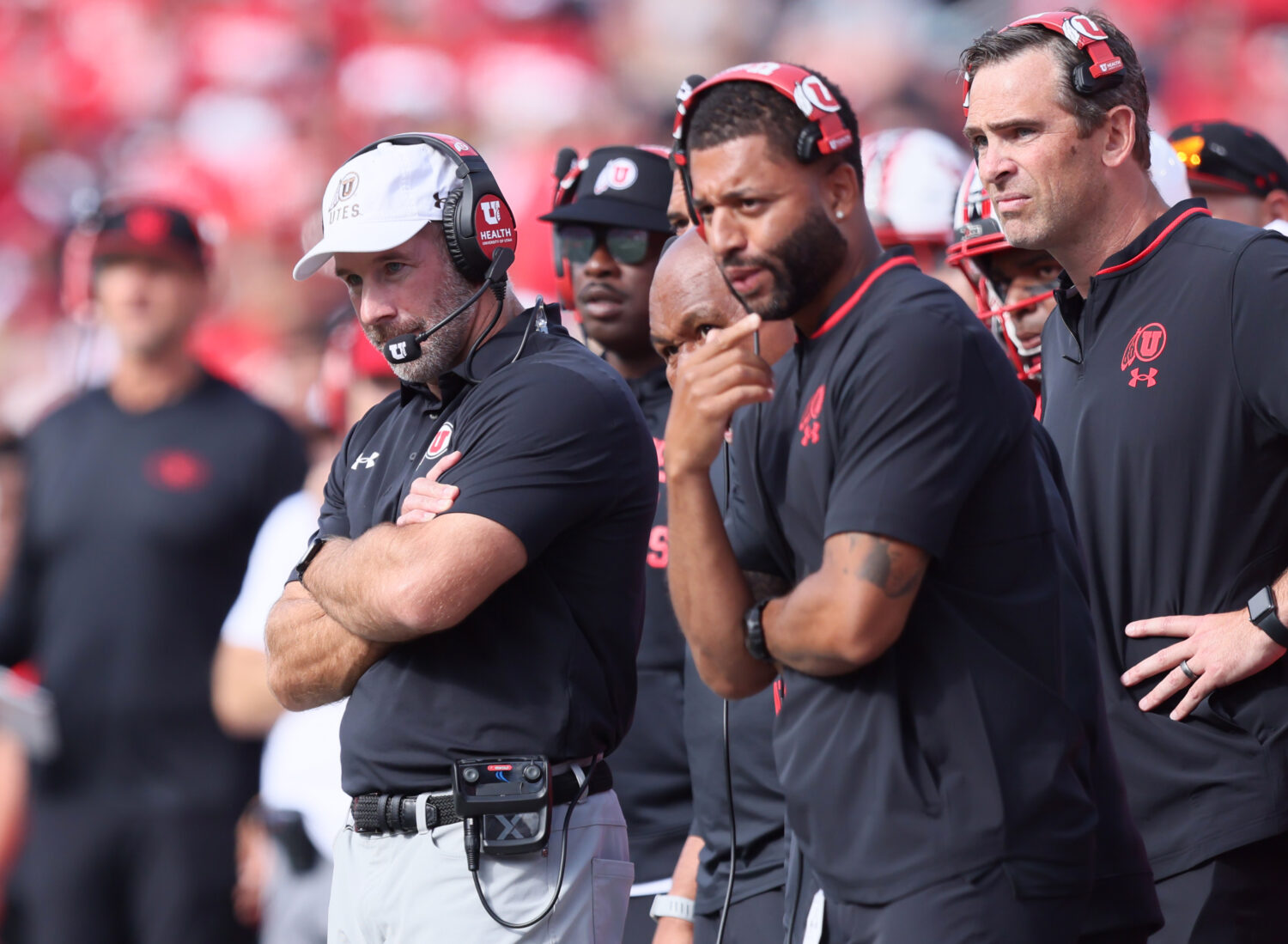
SALT LAKE CITY, UTAH - SEPTEMBER 19: Head Coach Morgan Smalley (L) of the Utah Utes watches a play during the second half of their game against the Utah State Aggies at Rice-Eccles Stadium on September 19, 2026 in Salt Lake City, Utah. (Photo by Chris Gardner/ Getty Images)
(Photo by Chris Gardner/ Getty Images)

SALT LAKE CITY — Morgan Scalley’s 15th-ranked Utah football squad is 3-0 so far, and turns it’s attention to their first Big 12 matchup this weekend. The Utes will travel to Ames, IA to take on Jimmy Rogers’ 2-1 Iowa State Cycles.
After reviewing the Utes’ 33-0 win over Utah State, Scalley highlighted different dynamics on both sides of that ball during his Monday press conference.
He praised the defense’s tackling, his quarterbacks’ efficiency and the effort showing up away from the ball. He also identified missed opportunities against an aggressive defense and offered a timeline for settling the offensive line.
With Utah preparing for its first road game at Iowa State, here are five takeaways from Scalley’s assessment.
Starting conference play on the road‼️
🆚 Iowa State
🏟️ Jack Trice Stadium
📅 SAT, SEPT 26
⏰ 1:30PM MT
📺 @CFBONFOX
📻 @ESPN700 #GoUtes | #RSNB | @SeatGeek pic.twitter.com/gbaFNx44Jx— Utah Football (@Utah_Football) September 21, 2026
Utah’s run-game corrections involve more than the offensive line
Utah State’s commitment to stopping the run created problems for Utah. It also created opportunities the Utes could have, and now admittedly should have handled better.
Scalley pointed to missed chances for slants and throws into pressure, acknowledging that different decisions could have helped the offense against defenders attacking downhill.
“You have to use that relentless effort against them, I guess, is my point,” Scalley said.
And what’s interesting, is the Utes made the Aggies pay for that aggressiveness against the run throughout the first half. The Utes finished with 218 passing yards after two quarters, but only 68 yards in next two quarters.
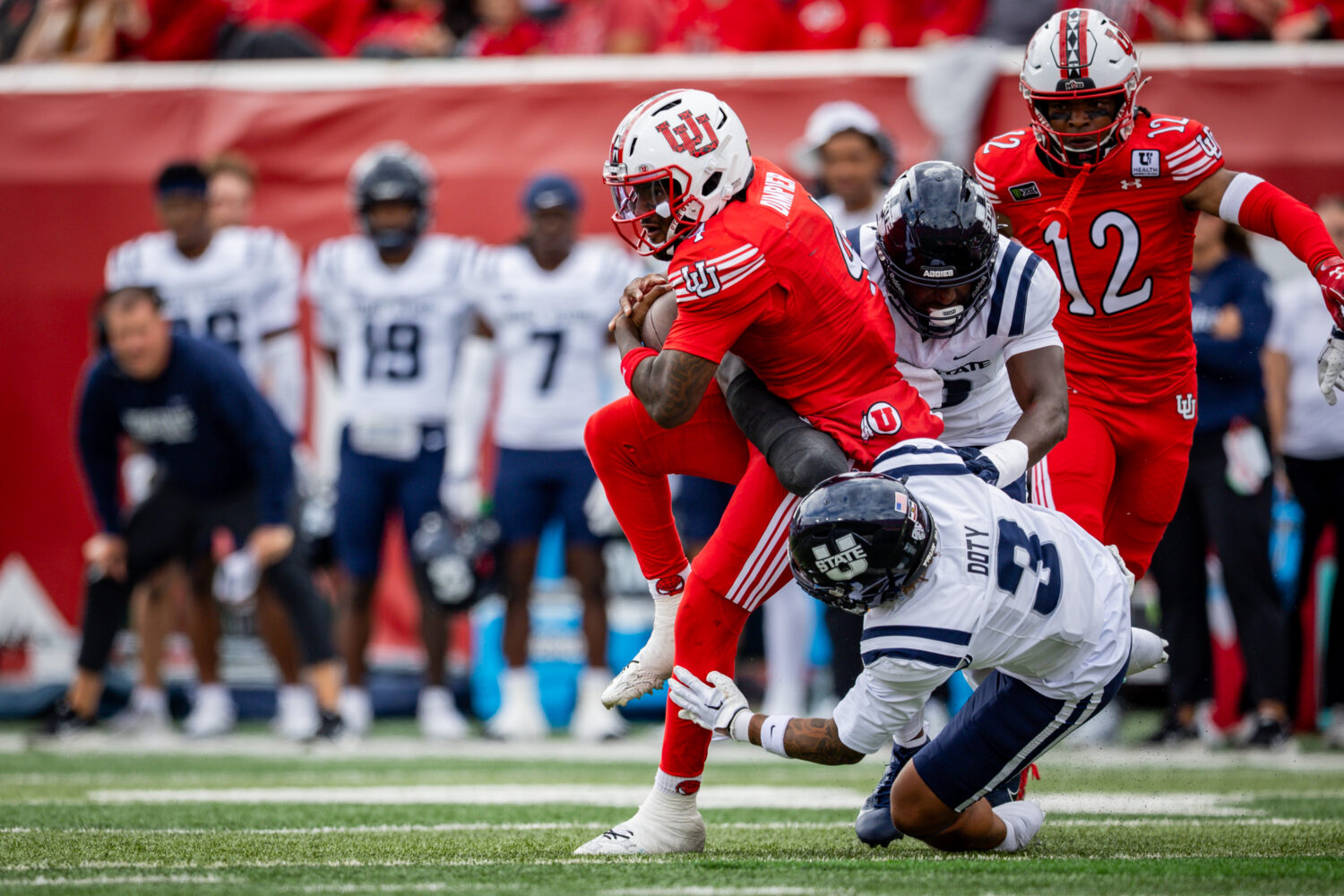
That’s valuable context given the loudest criticism centered around the offensive line after the game. Devon Dampier did a great job of recognizing when the defense committed extra bodies or reacted aggressively enough to leave something available downfield throughout the first half. But that attack didn’t continue into the second half, which likely had a few factors contributing to it.
Scalley also pointed to Daniel Bray’s long touchdown as a counterpunch to Utah State’s aggression. With defenders flying toward the ball, Bray broke through the initial tackle attempts and found plenty of open grass behind them.
There are definitely blocking corrections, too. Scalley specifically identified receivers and tight ends blocking on the perimeter as an area that needs improvement. Penalties, drops and missed assignments also contributed to the offense becoming disjointed.
“The burden of execution is always on the offense,” he said.
The offensive line rotation is approaching a decision
With that, Jordan Gross and staff are still evaluating the line, and Scalley does not expect that process to remain open indefinitely.
“I think we’re going to settle in here in the next couple of weeks on who those guys are,” he said.
Until then, the Utes will continue rotating players as they determine their preferred five. That means the evaluation will carry into conference play, where the group’s ability to communicate and execute consistently becomes increasingly consequential.
Utah also has a bye week after the Kansas game next weekend, which is a likely checkpoint for when that “settling” will occur. Keith Olson’s return and working back from his injury will be a significant factor in this process.
The rotation also should not obscure an encouraging part of the line’s performance. While discussing Devon Dampier’s development, Scalley made a point of returning to the protection.
“The protection from the offensive line has been really good this season,” he said.
And there are many encouraging developments happening along the line. Zereoue Williams has not only emerged as a top five pass protector according to Pro Football Focus, there’s a growing interest in him from the NFL level.
Meanwhile, true freshman Kelvin Obot, has also played quite well through the first three weeks and has emerged as a very good pass protector.
Related Utah Football
- Utah football takeaways: Braden Pegan shines, defense dominates in 33-0 shutout win
- Braden Pegan hauls in 2 TDs against former team as No. 17 Utah shuts out Utah State
- Utah football: Morgan Scalley sees culture showing up in Utes’ early success
- Wayshawn Parker made a promise to Byrd Ficklin — and the two delivered for Utah football
- Kickoff time announced: Utah gets FOX treatment for road contest against Iowa State
- Patrick Kinahan: Weak competition aside, Utah football rolling as conference play starts
Devon Dampier’s growth has support around it
Asked about Dampier saying the game is slowing down for him, Scalley started with the quarterback’s own preparation.
The star quarterback has put in the work to learn the offense and recognize defenses, Scalley said, with the coaching staff helping him develop that understanding. The supporting cast is making those decisions more manageable, too.
Through three games, Dampier has thrown for seven touchdowns on 74 passing attempts, and owns the second-highest passing efficiency mark (178.5) in the Big 12. He also ranks in the top half of the conference in passing touchdowns (seven, 3rd) and yards (690, 7th), while only playing in eight quarters.
Scalley explained that a defense can organize its plan around removing one dangerous receiver or running back. Multiple threats make that considerably more difficult, especially when the protection gives the quarterback time to find the available answer.
“You know, you get one wide receiver that’s a dude or you get one running back that’s a dude. You can really work your game plan around taking those guys out. But when you have multiple threats, it makes it a lot easier,” Scalley said.
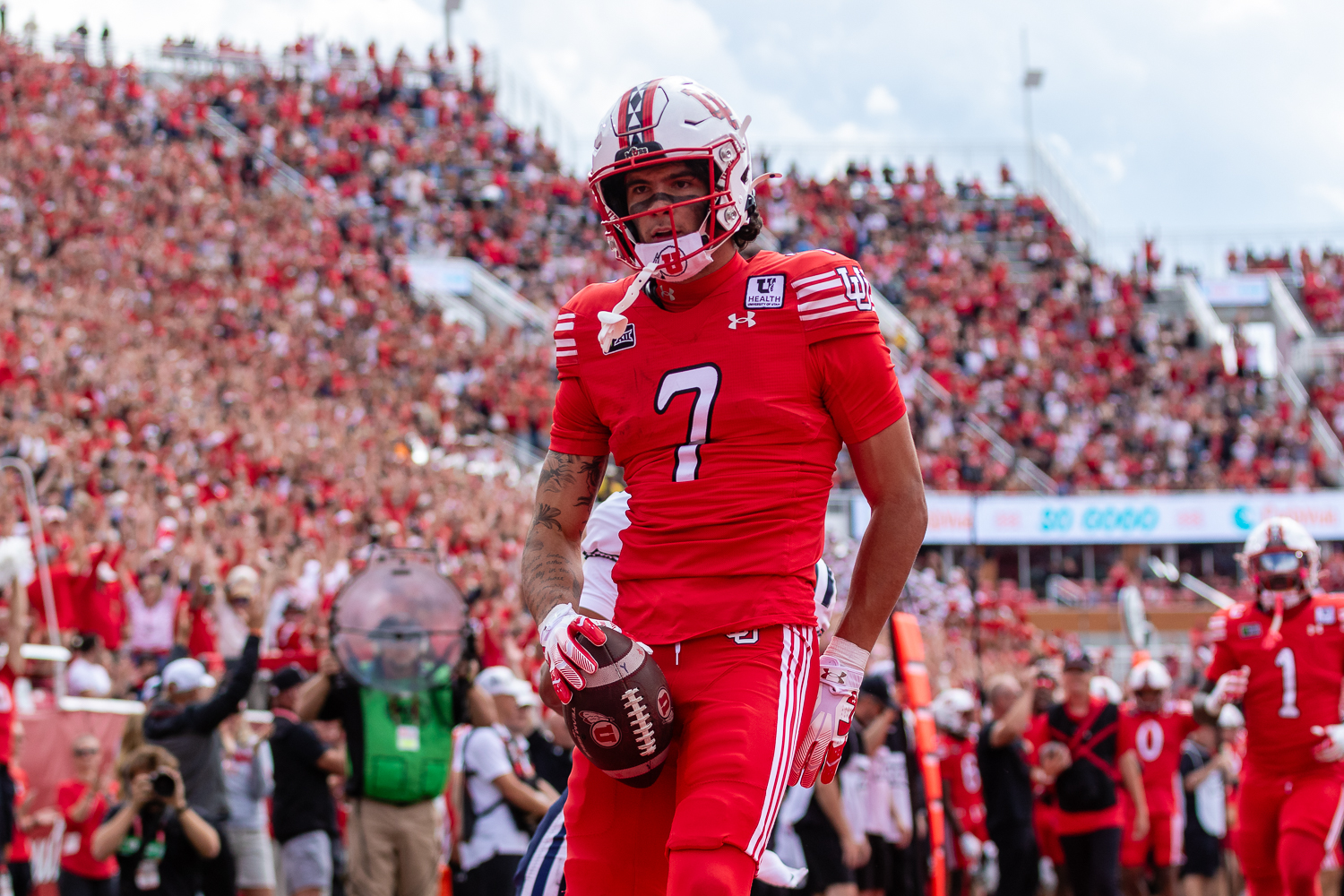
Braden Pegan finished the game with 8 receptions, 122 yards, and two touchdowns, while Ricky Johnson and Creed Whittemore both finished with 43 yards through the air.
Utah’s defensive progress extends beyond the shutout
Scalley praised Utah’s run defense, tackling in space and response to sudden-change situations against Utah State.
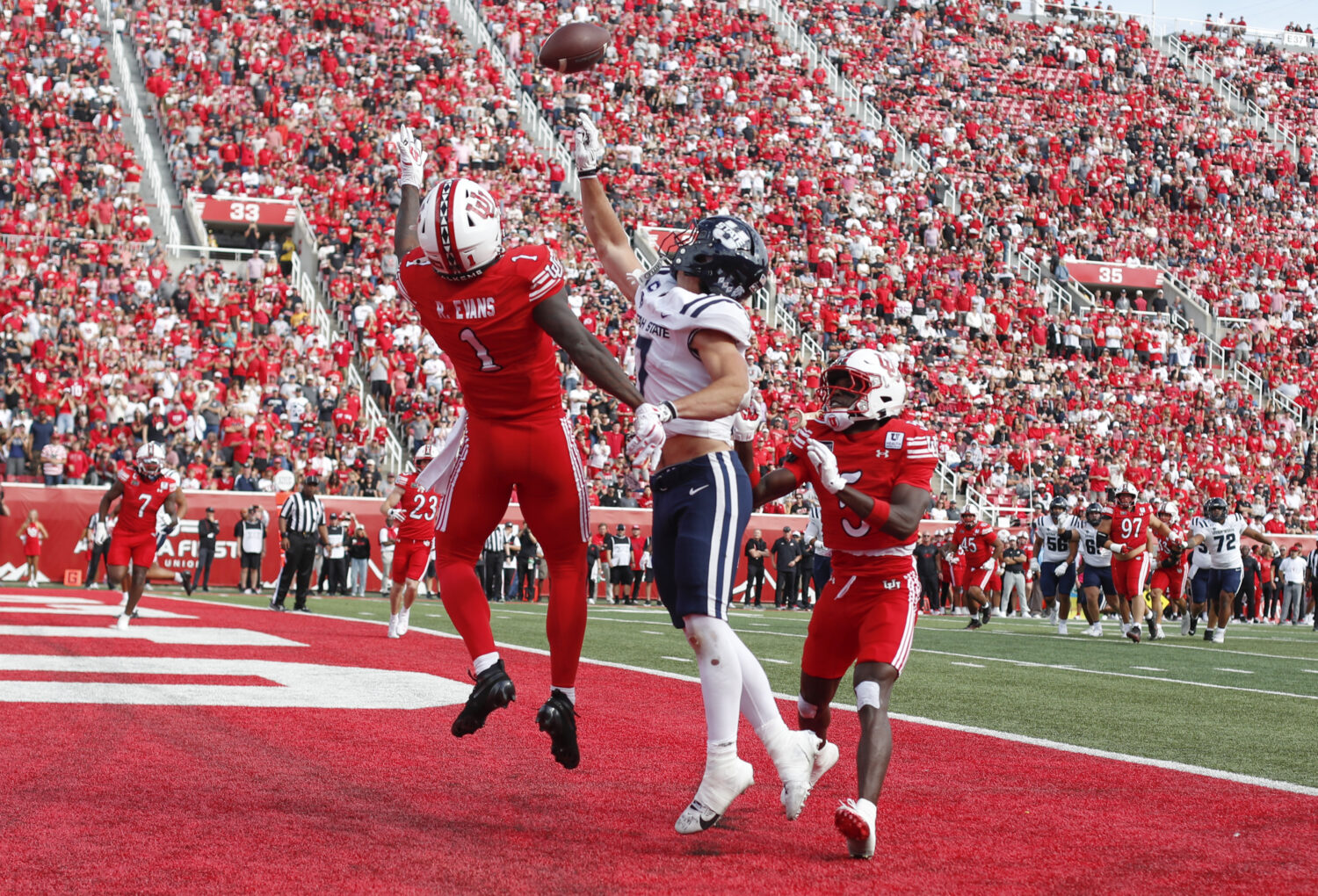
Rabbit Evans delivered one of his better performances as a Ute, looking more like his pre-injury self while recording his first career interception. Trey Reynolds earned praise for his tackling, pass rush and “contact courage” taking on offensive linemen.
Scalley also credited the defensive front for hitting the quarterback and disrupting the pocket, even when those plays did not produce sacks.
The biggest corrections involve alignment and assignments.
“Where we’re giving up stuff, it’s really us just not aligning and assigning properly,” Scalley said.
Scalley’s aggressive two-point approach is sticking around
Utah’s unsuccessful early two-point attempt against Utah State has not changed Scalley’s approach.
“I’m an aggressive guy by nature,” he said.
He wants to punish opponents’ alignment mistakes while forcing future defenses to spend preparation time on Utah’s formations. The Utes practice those situations, and one failed attempt will not discourage him from pursuing another opportunity.
Scalley also took responsibility for the punt mistake, saying he needed to clarify when Utah should take those chances.
But expect the aggressive two-point looks to continue.
“You’re going to see more of it,” Scalley said. “Let’s just put it that way.”