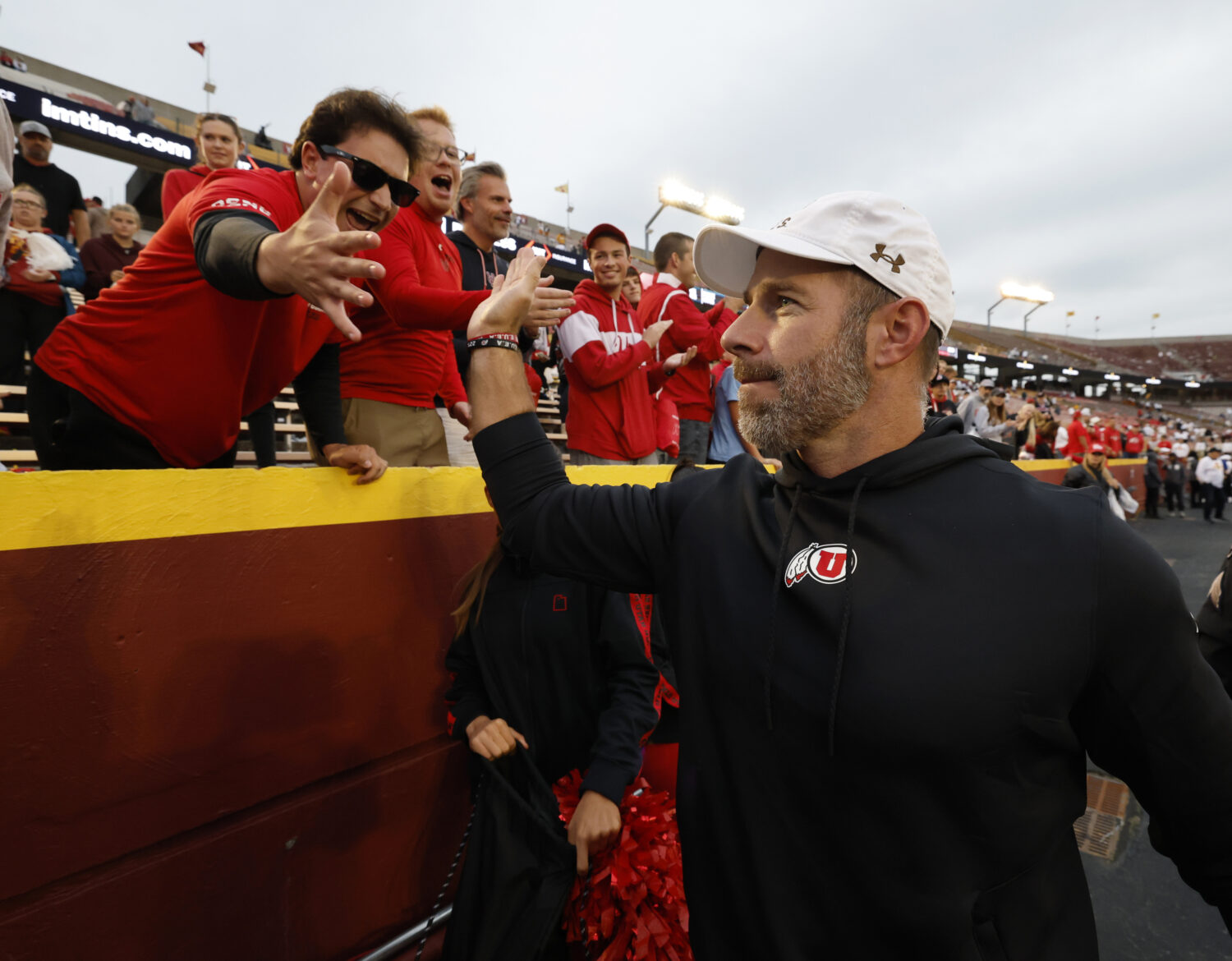
Five Morgan Scalley takeaways: Utah’s standards, Kansas’ challenge and a connected program
Oct 5, 2026, 1:38 PM | Updated: 1:52 pm
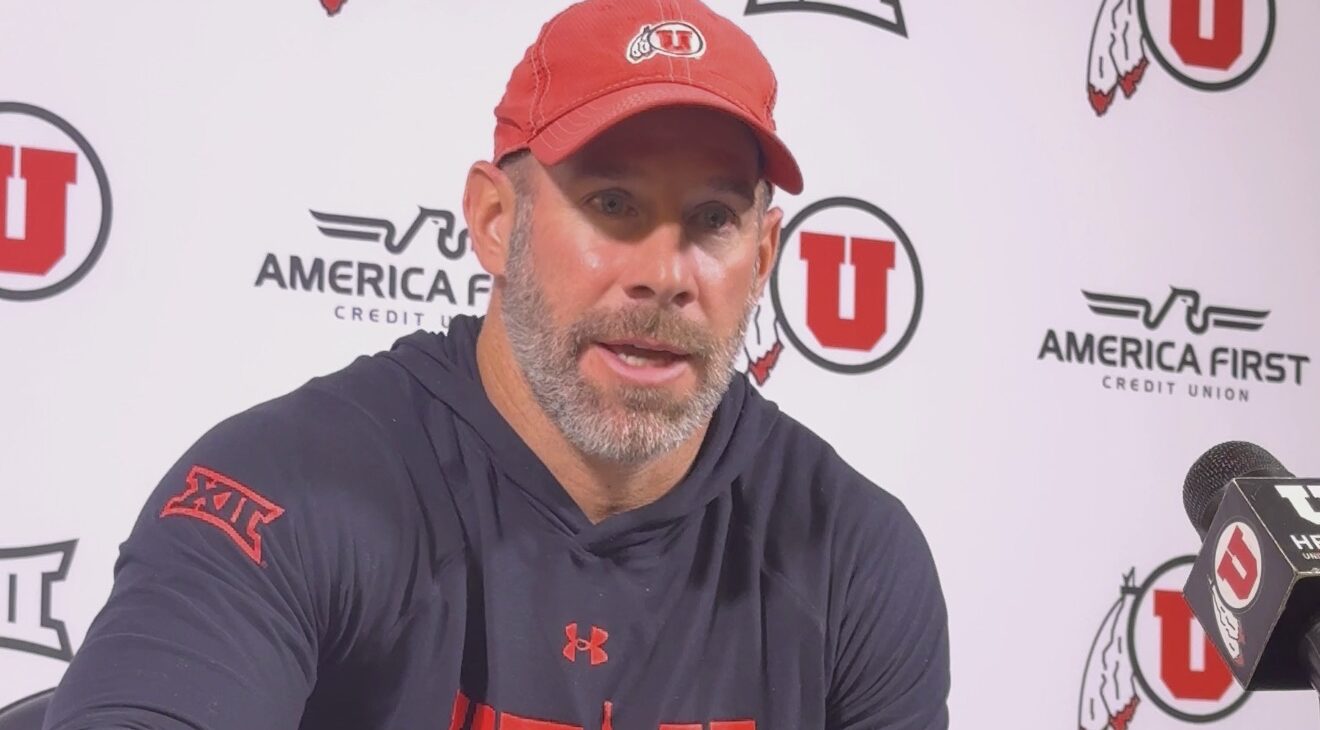
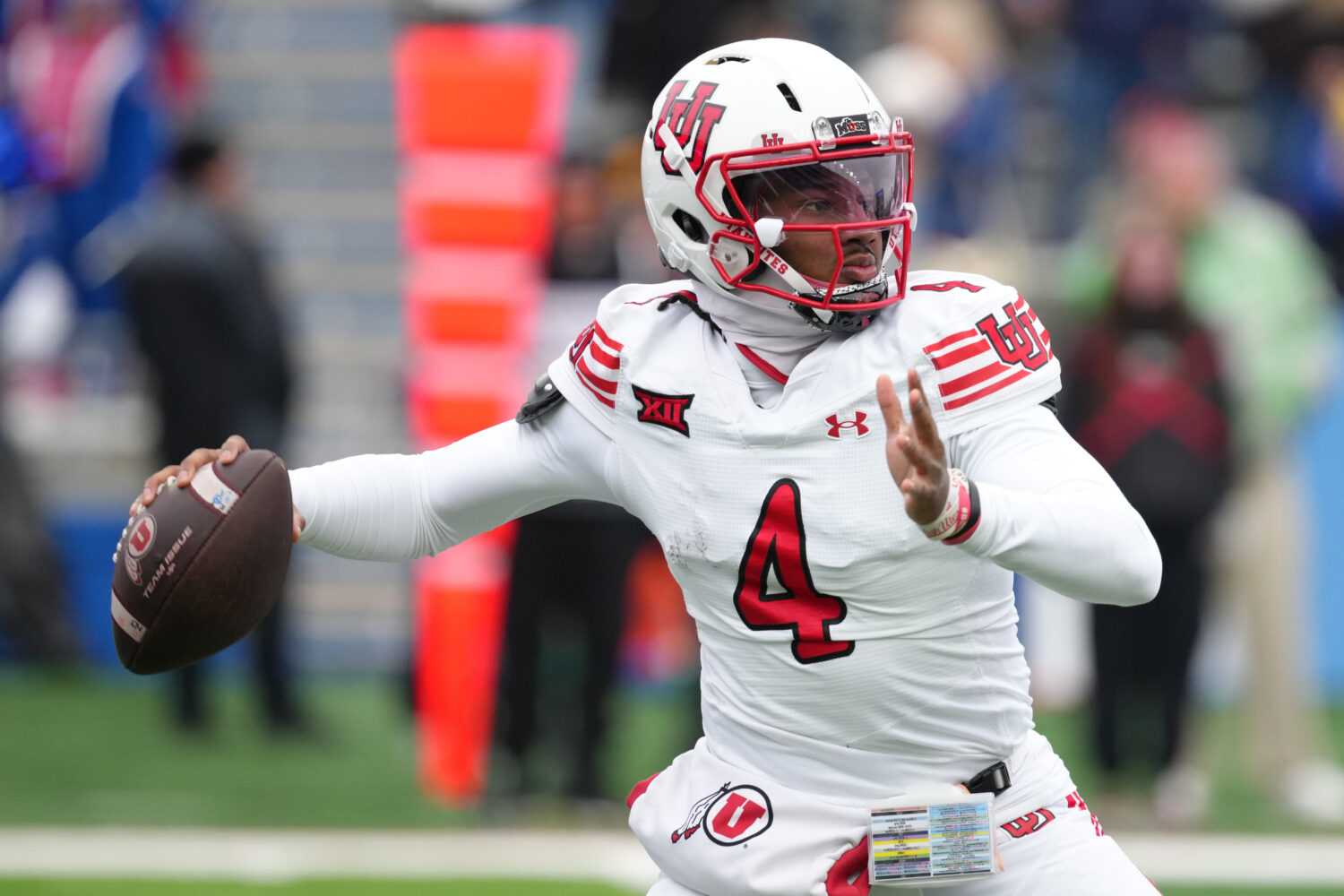
Morgan Scalley's Kansas week press conference for Utah. Photo by Steve Bartle.

SALT LAKE CITY — Coming off of the bye week, Morgan Scalley was back at the podium for Monday press conference. He talked through a number of different topics and offered insights on where his Utes stand heading into week six.
The Utes took care of business in the regular season finale last year, defeating Kansas 31-21. This is the first trip to Salt Lake City for the Jayhawks program since 1996.
This weekend’s contest will provide some valuable insight into how the Utes handled the time off, especially as outside expectations continue to rise for the program.
Here are the takeaways from Scalley’s press conference.
Back 🏠 for a 𝐖𝐇𝐈𝐓𝐄 𝐎𝐔𝐓 ⚪️
🆚 Kansas
🏟️ @Rice_Eccles
📅 SAT, OCT 10
⏰ 8:15PM MT
📺 @ESPNCFB
📻 @ESPN700🎟️ https://t.co/2cfvBjgtVU
#GoUtes | #RSNB | @SeatGeek https://t.co/VRp6z50Pdn
— Utah Football (@Utah_Football) October 5, 2026
Second-halves need work, but Morgan Scalley sees no reason to panic
Utah opened the second halves against Idaho and Arkansas with touchdowns and scored against Utah State after early missed opportunities. Scalley felt the Iowa State performance needed cleanup, particularly the three-and-outs that followed promising but stalled drives.
“The burden of execution is on the offense,” Scalley said. “You can have a guy wide open, and it’s a misread, or he drops the ball. And then penalties can also be a factor in that.”
Scalley acknowledged that they needed to be sharper at Iowa State, particularly after halftime.
“Iowa State’s kind of the one time where coming out of halftime, I thought, OK, we’re not as clean as we need to be,” Scalley said.
But he also distinguished between possessions that moved the football before stalling and those that gave Utah little opportunity to establish anything.
“It really was the third and fourth possessions that you can’t go three-and-out,” Scalley said.
He concluded that the Iowa State struggles deserved attention, but he did not view them as cause for alarm.
The bye week was still a work week
Utah kept practices physical and fast during the bye, adjusting individual workloads while addressing mistakes and preparing for Kansas.
“No lackluster practices, in my opinion,” Scalley said. “I thought they attacked it.”
Scalley credited that response to personal accountability, reinforced by the “S” in Utah’s NASTY acronym: “Starts with me.”
“If you need someone to motivate you to get you there, you’re in the wrong business,” Scalley said.
The expectation is that months of preparation produce players who understand the value of each opportunity. Scalley emphasized that all 12 guaranteed games matter and credited the leadership for maintaining that urgency during the break.
Related Utes Football Content
- BYU, Utah continue to inch up rankings in latest AP Top 25 poll
- Utes enjoy bye week unbeaten, with plenty still to prove
- Holy Score: On Utes new ‘normal’ offense, the early blowouts and the challenges to come
- The Utah Checkdown podcast: Should the Wayshawn Parker Heisman campaign begin? Recap of Iowa State
- Big 12 football power rankings: Oklahoma State surging as BYU, Utes pace the league
- Utah football’s ‘whiteout’ game against Kansas gets a kickoff time
Kansas presents another physical test
Scalley’s description of Kansas began with its physicality and commitment to running the football.
Quarterback Isaiah Marshall adds a particularly challenging element because of his ability to escape the pocket, plant his foot and get upfield.
“He’s a guy, I would say he’s probably the quickest that we’ve faced thus far, putting his foot in the ground, getting vertical, the ability to escape the pocket,” Scalley said.
“He’s not afraid of contact and doesn’t necessarily slide or avoid it,” he continued. “So when you’ve got players like that that run the ball like a running back, that’s pretty difficult.”
Marshall’s willingness to take contact also stood out. Scalley described a quarterback who runs like a running back and does not necessarily look to slide or avoid a collision.
The dynamic quarterback has fueled Kansas’ running game to 254.0 yards per game and 5.5 yards per carry. Marshall alone has accounted for 234 yards on 51 carries this season.
Kansas’ defensive front drew praise as well. Scalley highlighted its ability to generate tackles for loss, its aggressiveness and the way the defense runs to the ball.
Leroy Harris III is a pretty disruptive player, leading the Jayhawks with 7.0 tackles for loss, and three forced fumbles. As a defense, they’re limiting opponents to roughly 100 yards a game and 3.3 yards per carry.
Utah’s team-first habits are showing up on film
Asked what he saw on film that might not show up in the statistics, Scalley pointed to the ways players support one another.
“It’s about the team, and it’s showing up in a bunch of different areas, the way our guys block, block for each other, celebrate together, interact with each other on the sideline when things aren’t going great,” Scalley said. “And that’s a credit to our leaders.”
Scalley also emphasized recognizing the contributions that make a scoring play possible. There have been numerous examples this season, and his specific example came from Larry Simmons’ effort to block on Wayshawn Parker’s final touchdown at Iowa State.
Parker finished the play, but Simmons’ work helped make it possible. That was the kind of contribution Scalley wanted recognized when discussing what team football looks like.
“When you score, celebrate together because there are other guys doing their job in order for you to score,” Scalley said.
Those habits also informed his assessment of the coaching staff. He said he was “very pleased” with the coordinators, emphasizing accountability, corrections and the loyalty and unity across the staff.
Connections matter, from recruiting to alumni
The Utes bye-week work extended beyond the current roster. Scalley said all of the coaches were on the road recruiting over the weekend, an opportunity he described as essential to the program.
“We have jobs as coaches because of players, it’s not the other way around,” Scalley said. “So, you know, finding guys that fit your culture, getting out on the road and showing your brand, your logo, but finding guys that fit your culture. That’s such a huge part of what we do here is bringing in the right guys.”
Keeping former players connected is another part of that effort.
Asked about the players association and alumni involvement, Scalley credited director of alumni relations Bo Nagahi for making former Utes feel heard, valued and welcome.
“If you played here, Bo’s going to find you,” Scalley said.
He pointed to former players giving back and representing Utah in the NFL as signs of the connection the program wants to maintain.
“A sign of a healthy program is when you see your players giving back,” Scalley said.
For Utah, those relationships help connect what the program has been with what its current players are being asked to build.