Morgan Scalley Hit The Ground Running As Utah Football Head Coach
Feb 13, 2026, 12:39 PM

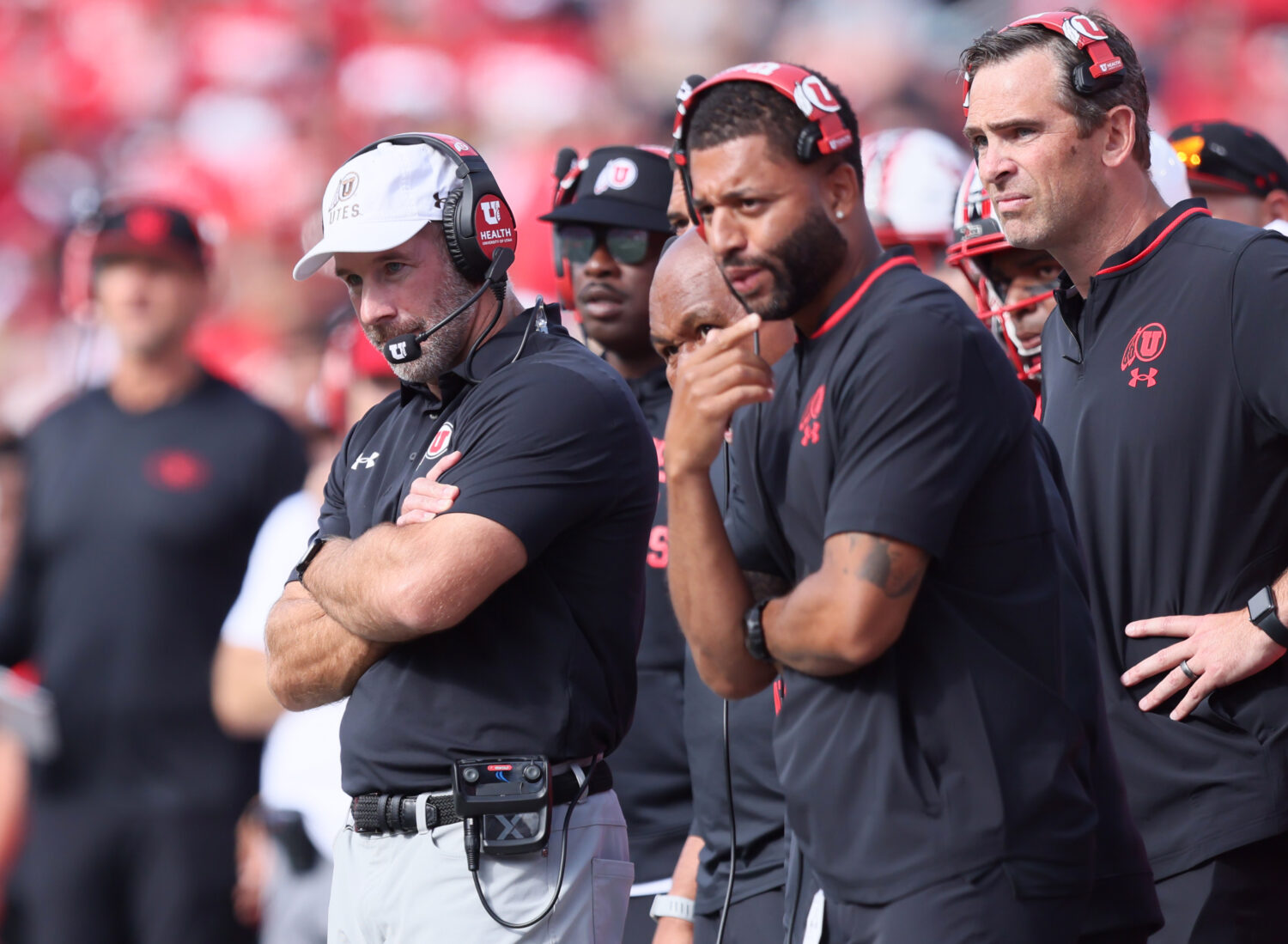
SALT LAKE CITY — Even with the head-coach-in-waiting tag, Morgan Scalley’s transition to head coach of the Utah football program was anything but smooth.
Scalley became the head coach after longtime leader Kyle Whittingham stepped down, and then took the head job at Michigan. That created a bit of a chaotic transition for a program that enjoyed stability for nearly two decades.
Scalley took the reigns prior to the bowl game. Utah defeated Nebraska 44-22 in the Las Vegas Bowl, enjoying one last strong performance on both sides of the ball before all hell broke loose.
Who was going to stay? Who was going to leave? Those answers seemingly changed not only day by day but even hour by hour at certain points. Still, Scalley was a steadying force for the program that just put it’s final stamp on the 2025 season.
Following the bowl game on December 31, Scalley was formally introduced as head coach on January 6, which also included a fully finalized coaching staff.
“Yeah, it’s slowed down a little bit,” Scalley shared on Scotty G. & Friends on KSL Sports Zone. “That first month was just crazy because of how things unfolded.”
The whirlwind began with victory and immediately shifted to staff building, retention, and operational clarity — all while preparing for spring ball.
“The biggest thing for me was getting the right hires, the guys in the building, and then I knew that everything would take care of itself in terms of everyone pulling the same direction,” Scalley shared.
Hires That Reflect a Teach-First Philosophy
Scalley’s first task as a head coach was constructing his new staff. He didn’t chase big names, he chased big understanding.
“There’s so much teaching, you have to be a very good teacher,” Scalley said. “But there’s so much that goes into it outside of just understanding X’s and O’s, and still the teaching element is huge.”
That aligns with what Scalley told reporters at his introductory press conference: great teachers, great men, and culture first. Scalley hired and assembled centered around the following pillars:
-
Teaching ability — especially vital given the turnover modern college football demands.
-
Recruiting chops — being able to sell Utah’s culture to players and families.
-
Adaptability — experience in multiple systems, pointing to adaptability.
For him, it wasn’t about Xs and Os alone. It was about retention and onboarding in an era when rosters flip constantly via the transfer portal.
“Can you sell Utah football and what we’ve got going? Our culture, our success? Can you help the parents, the family, and the decision makers feel the love that we have for their young men?” Scalley shared. “So one great teacher, and two great recruiter.”
Following the bowl game, there was concern Utah would lose nearly 50% of the roster to the transfer portal. However, Utah was able to retain the majority of the the roster.
“I think we did a very good job both in the portal and also retaining our players,” Scalley said. “That’s a big part right now of college football is the retention, you’re constantly recruiting your own players.”
Retaining not one but two QB’s is a big win for Utah
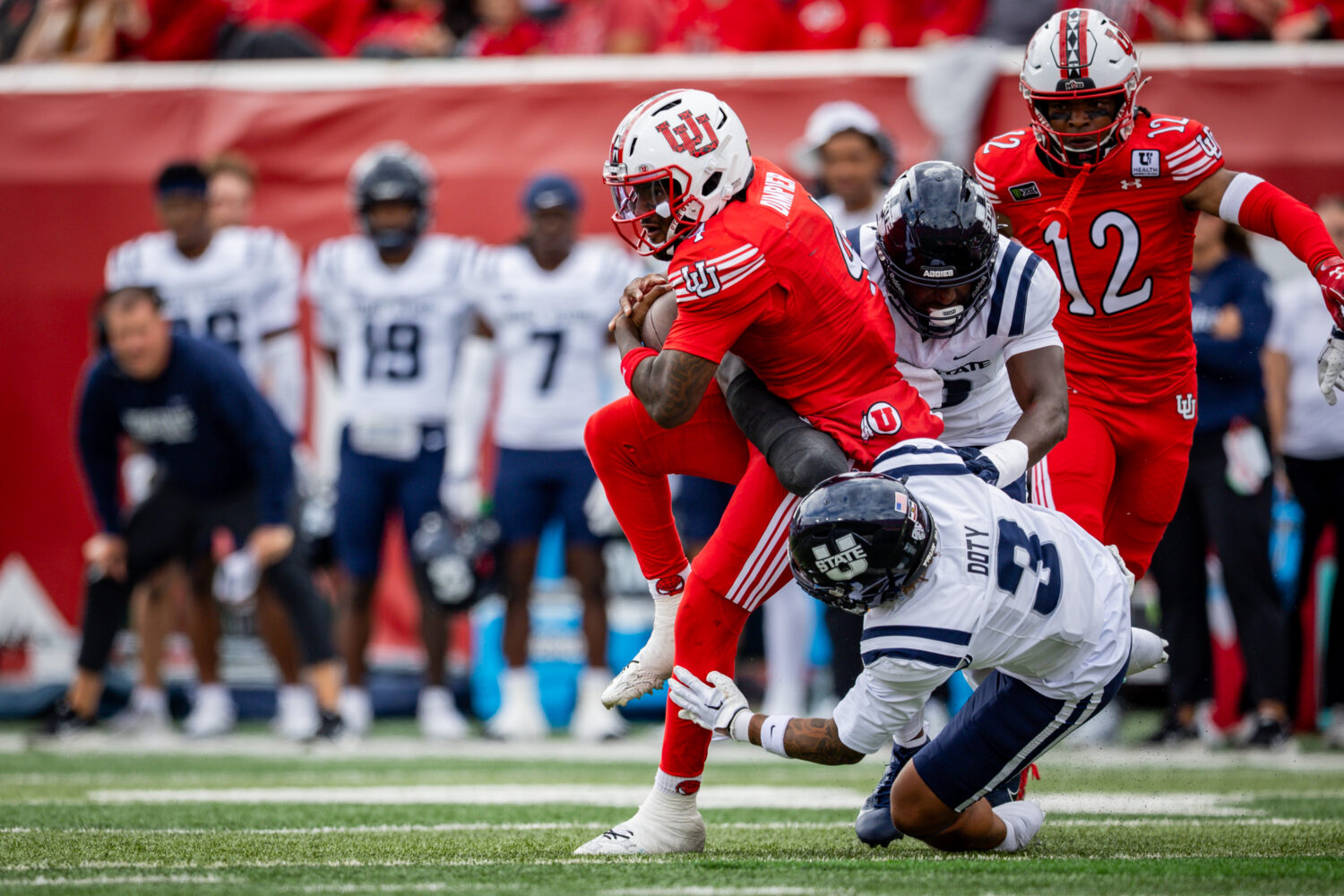
Scalley’s comments about keeping quarterbacks like Devon Dampier and Byrd Ficklin struck a theme: culture matters as much as scheme.
“Them feeling comfortable here, loving Salt Lake City, loving the fan base” were the big reasons Scalley believed they stayed.
That cultural selling point was echoed at his introductory press conference, where he emphasized that a strong experience — not just a financial one — keeps players committed.
“You’re going to see some creativity, some innovation on offense and do some things with those guys that really maximizes both of their strengths. We’re excited because they love Utah. They love our fan base. They love being here.” – Morgan Scalley on quarterbacks Devon Dampier & Byrd Ficklin
Scalley acknowledged that there was a lot of communication between him and the two quarterbacks. He also shared that the similarities in scheme between McGiven’s and Jason Beck’s was a focal point in the coordinator hire, but also in retaining these two quarterbacks.
He also highlighted his intent to expand beyond predictable roles, especially with Ficklin. His playmaking ability should see an expanded role as a passer, signaling a more dynamic offense than Utah has often shown.
“I think Byrd has a vision too of this is Devon’s last year and he can step in after him to be that guy,” Scalley shared. “He’s proven what an unbelievable playmaker he is. And at the same time, we want to be able to utilize him more and not just the running aspect of what he does, because he can throw it, he can zip it.”
🕷️ X 🦅 pulling up to the Huntsman Center to see @UtahGymnastics do their thing tonight!
Pack the Huntsman and Wear RED‼️@Devonddampier x @FicklinJamarian pic.twitter.com/8cCjmc2yM9
— Utah Football (@Utah_Football) February 13, 2026
Rebuilding Utah’s O-line room
Jordan Gross wasn’t a random pick. Scalley knew exactly what he was getting, another teacher. He emphasized that there’s no coach he’d rather bring in to develop his line group.
“If there’s a better teacher out there at offensive line, and there’s a lot of good ones, we just lost one in Jim Harding, but I am so excited for Jordan,” he said.
Not only does Scalley believe in Gross as a teacher, but seemed fired up about the work ethic he brings to the program.
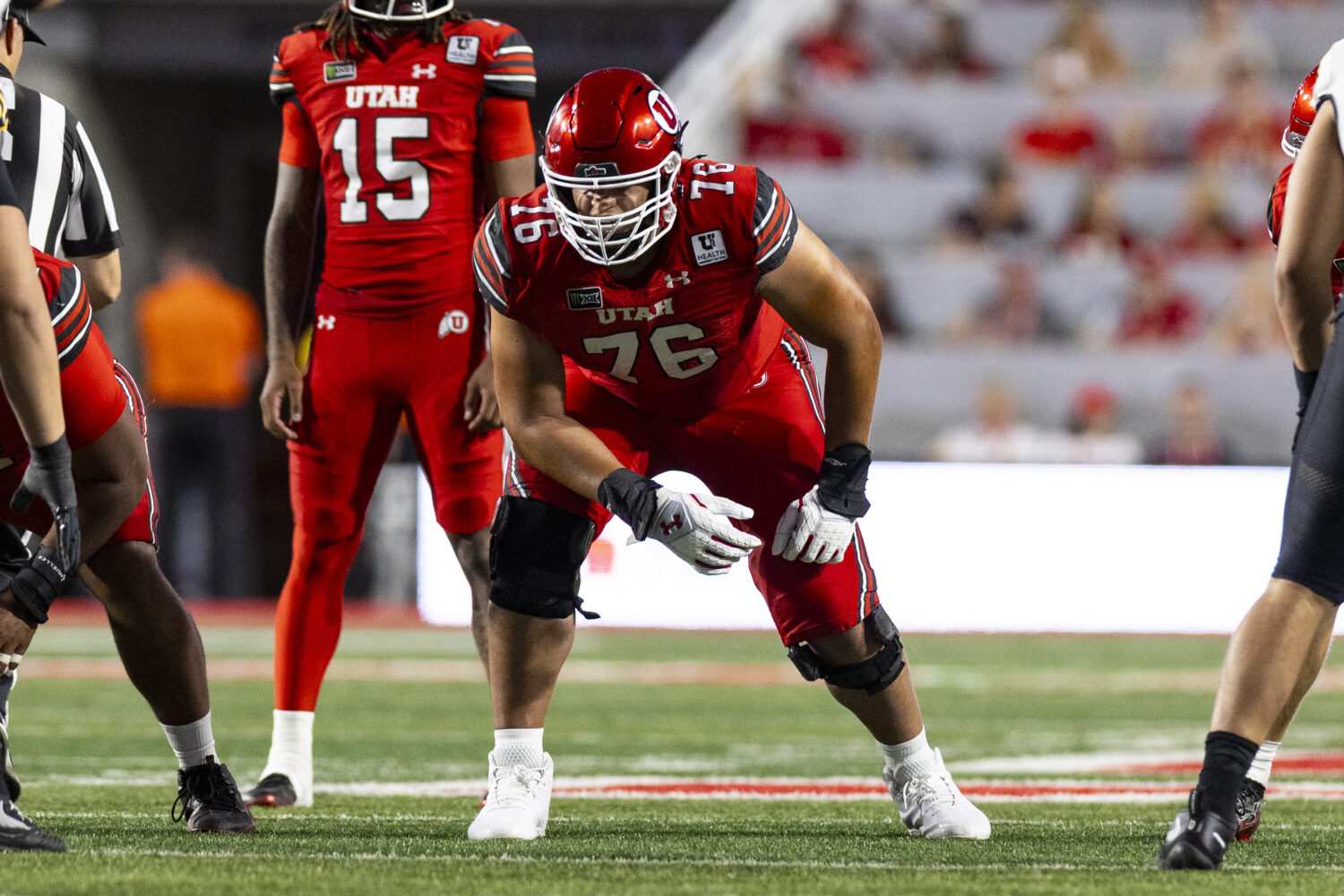
Gross quickly got to work in retaining core linemen and adding players from the portal. That included Cedric Jefferson (Montana State), and Isaiah Kema (Ohio State). Meanwhile, Kelvin Obot — a five-star Gross previously coached in high school, is another key factor in all of this.
“Man, is he every bit of what a five star should be,” Scalley said. “So we’re excited for him, and just the guys that we got coming back.”
The Bottom Line
Scalley’s first chapter as Utah’s head coach has been all about setting the foundation of his program. He acted quickly in filling out his staff in order to stabilize the program during one of it’s most chaotic stretches in quite some time.
Perhaps the biggest early victory has been retention: holding onto both quarterbacks, Devon Dampier and Byrd Ficklin, in a portal era where talent often leaves before spring practice. Keeping them not only preserves continuity but gives his offense a strong foundation as McGiven installs a system similar enough to last year’s to ease the transition yet flexible enough to maximize Utah’s playmakers.
With the roster secured, and a teaching-first staff in place, Utah enters 2026 poised to protect what worked while evolving where it needs to.