Previewing Utah football’s class in the 2026 NFL Draft
Apr 23, 2026, 2:04 PM
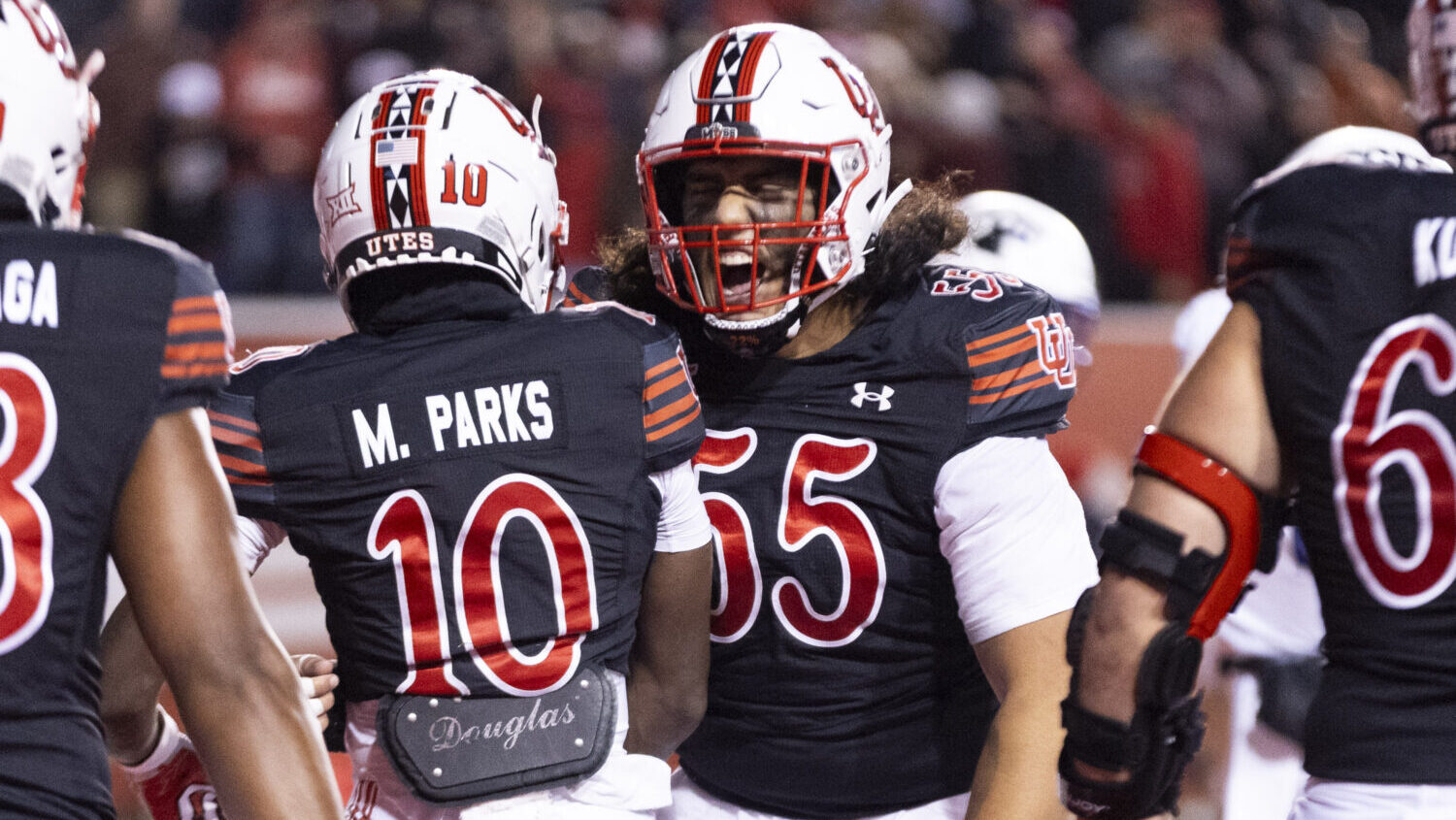
Utah Utes wide receiver Money Parks (10) and Utah Utes offensive lineman Spencer Fano (55) celebrate after a touchdown by Parks during a game between the University of Utah and the TCU Horned Frogs at Rice-Eccles Stadium in Salt Lake City on Saturday, Oct. 19, 2024. The TCU Horned Frogs defeated the Utah Utes 13-7. (Photo courtesy of Brice Tucker, Deseret News)
(Photo courtesy of Brice Tucker, Deseret News)

SALT LAKE CITY — The next wave out of Utah football isn’t built on projection alone — it’s built on production, and a track record that NFL evaluators trust.
The 2026 NFL Draft class from Utah reflects what the program has quietly become over the last decade-plus: one of the most reliable pipelines in the country for pro-ready linemen, defensive front players, and high-floor contributors.
This year’s group has the top-heavy star power of past classes, while also having some depth to it.
𝐅𝐢𝐫𝐬𝐭 𝐑𝐨𝐮𝐧𝐝 starts tonight⏱️
🔟 #ProUtes have been selected in the first round of the #NFLDraft 𝐰𝐡𝐨’𝐬 𝐧𝐞𝐱𝐭?⁉️#GoUtes | 📺 NFL Network/ESPN/ABC pic.twitter.com/VfkCISkIod
— Utah Football (@Utah_Football) April 23, 2026
Spencer Fano
Everything starts with Fano. He is the new standard — not just for this class, but for what Utah has become up front.
There’s a lot to how he wins, and that’s exactly why NFL teams trust him. His game is built on athleticism, efficiency, and control. You don’t see panic in his pass sets. You don’t see wasted movement. It’s clean, repeatable football — the kind that translates immediately on Sundays.
- Projection: Day 1
- Best Trait: Athleticism, consistency, versatility
What stands out on tape is how rarely he loses outright. Edge rushers don’t just run by him. Power doesn’t overwhelm him. When he does get tested, he recovers quickly and re-anchors. That combination — footwork, core strength, and processing — is what separates him from most college tackles.
Fano’s résumé is clean: Freshman All-American. First unanimous All-American in program history. Outland Trophy winner.
What separates Fano isn’t just movement skills, though. It’s efficiency. His pass protection metrics consistently graded among the best in the country — minimal pressures allowed, controlled footwork, and elite recovery ability.
There’s been some noise about arm length thresholds (the classic 33-inch debate), but here’s the reality: tackles who move like that and process like that get drafted early. Period.
Projection: Day 1
Swing Skill: Athleticism, efficiency, and play-to-play consistency
Energy + Juice + Versatility = @FanoSpencer 📈#ProUtes | @NFLDraft pic.twitter.com/Q0c7VvsvIG
— Utah Football (@Utah_Football) April 21, 2026
Caleb Lomu
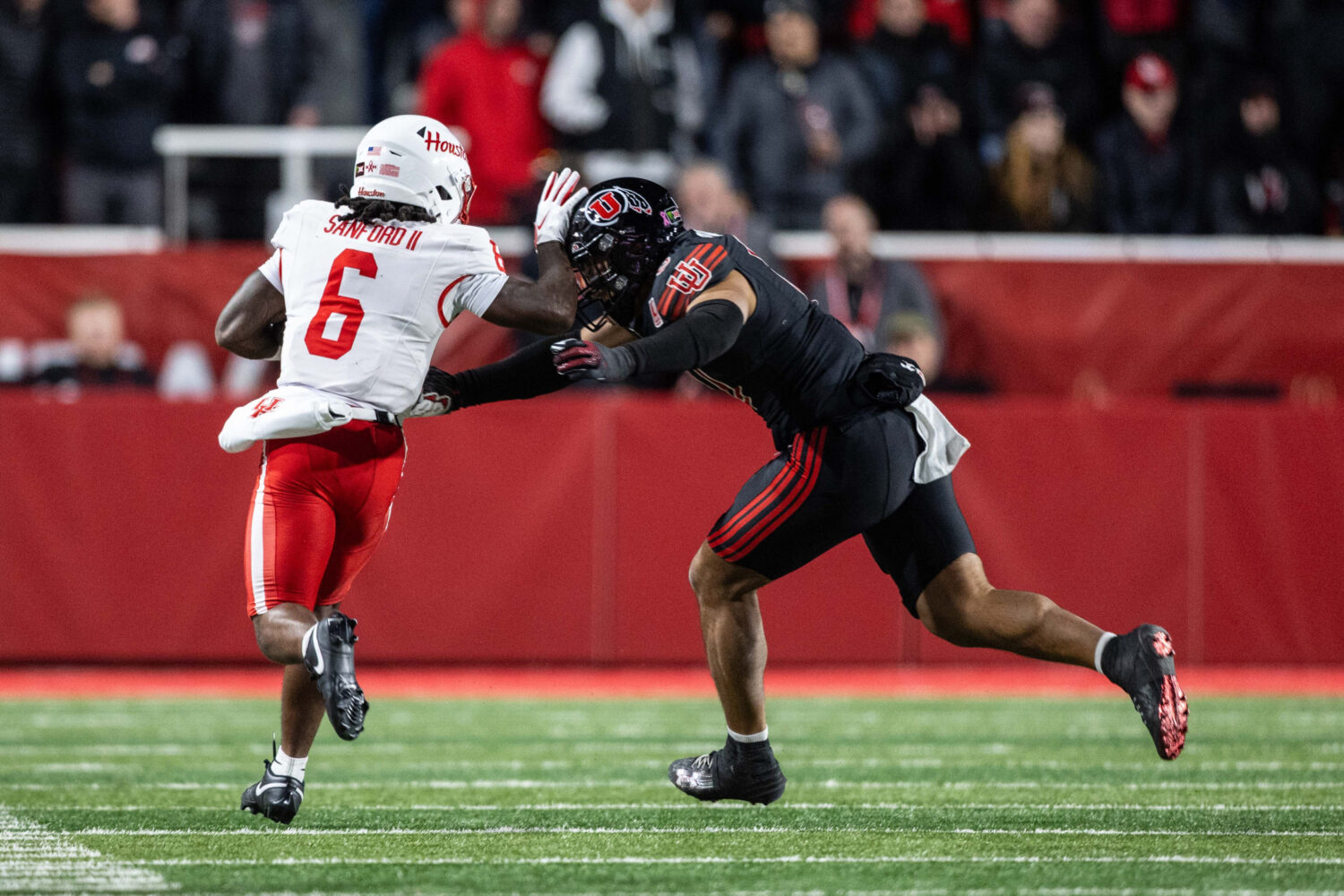
If Fano is the safest pick in the room, Lomu might be the highest ceiling. And he isn’t a projection piece anymore — he’s part of the headline.
While Fano brings polish, Lomu brings traits that NFL teams chase early. The frame, the length, the movement — it all checks out for a modern tackle.
- Prototypical size with elite length
- Functional power in the run game
- High-end flashes in pass protection, especially when his timing is right
When Lomu is technically sound, he looks like a capable starter. That’s not hyperbole — the tape backs it up. His best reps stack up with anyone in this class.
There are stretches where his hands get wide, his base narrows, and rushers get into his chest. At the next level, that’s the difference between winning clean and losing fast.
But here’s the reality: NFL teams bet on traits at tackle. And Lomu has more of them than most.
Projection: Day 1 / Early Day 2
Swing Skill: Hand placement, balance, and play-to-play consistency
Great Human & Great Athlete 📈‼️#NFLDraft | @CalebLomu51 pic.twitter.com/9goudFCihV
— Utah Football (@Utah_Football) April 22, 2026
Dallen Bentley
Bentley isn’t walking into the draft with hype — he’s walking in with a résumé that NFL special teams coordinators and wide receiver coaches respect.
His path tells you a lot: JUCO background, earned role, carved out production in a system that doesn’t inflate receiver numbers. He’s been developed, coached hard, and asked to do real work — not just catch passes. He’s contributed to special teams and will do whatever it takes to stick in the league.
Those guys stick longer than people expect — especially coming out of a program like Utah, where the transition to NFL structure is usually smooth.
Projection: Day 2 / Day 3
NFL Value: Special teams + depth versatility
Logan Fano
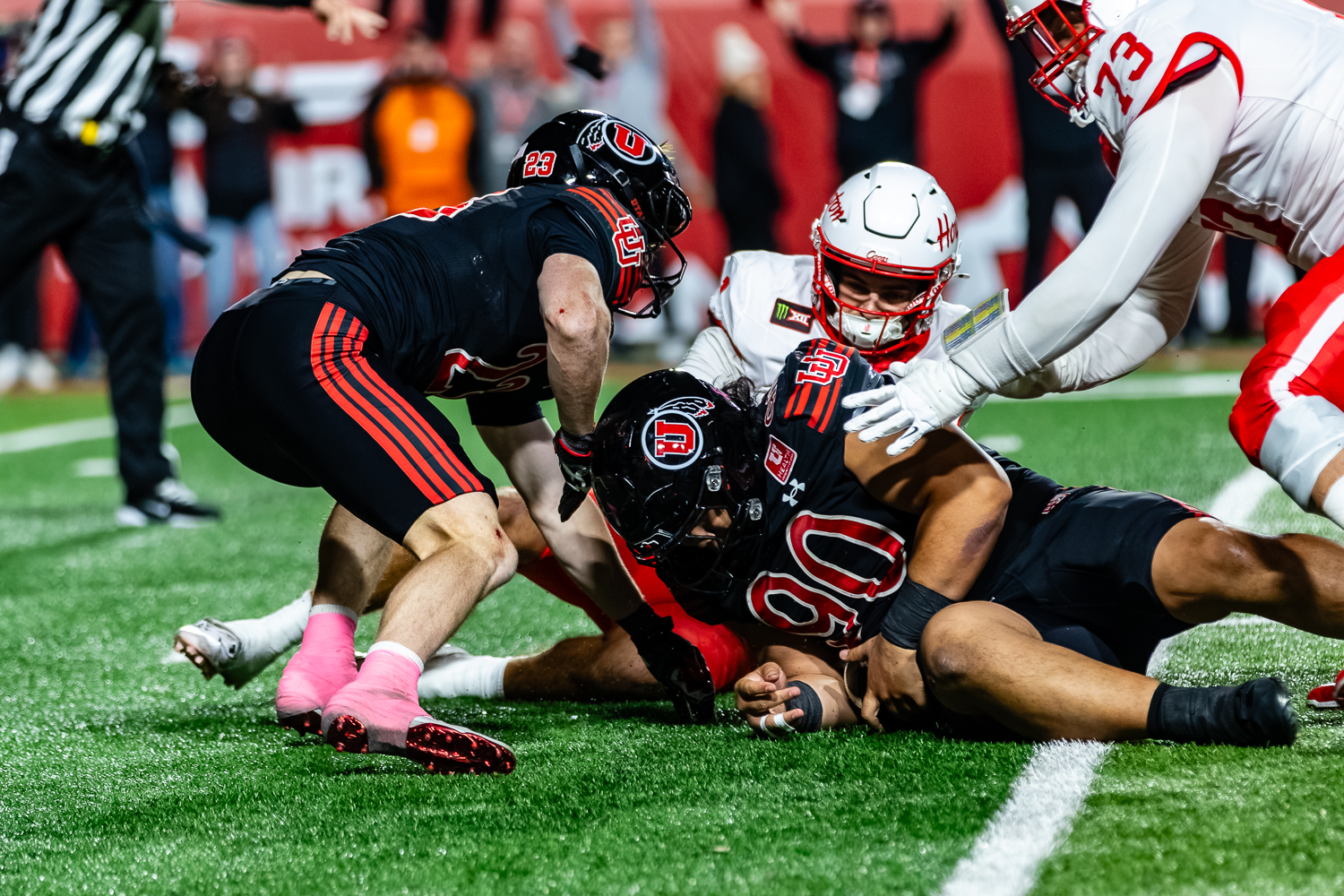
If there’s a player in this class who could outperform his draft slot, it’s Logan Fano.
The production hasn’t always matched the flashes — and that’s the tension evaluators are working through. But when you turn on the tape, the traits are obvious:
He plays with the kind of edge you can’t teach, and that alone is going to get him looks. The question is refinement. Right now, Fano wins with effort, strength, and moments of disruption. To stick long-term, he’ll need to tighten up his pass-rush plan — more counters, more consistency, more ability to finish once he wins early in the rep.
Projection: Day 3
NFL Value: Special teams + depth versatility
Lander Barton
Barton fits the mold of recent Utah linebackers who’ve made the jump — instinctive, productive, and well-coached. There’s very little hesitation in how he plays, and that shows up in his production. The production is there.
Where the evaluation gets more nuanced is in space. Barton isn’t a twitch-heavy, sideline-to-sideline athlete in the mold of a Devin Lloyd, and that will show up in coverage situations.
Projection: Day 3
NFL Value: Special teams + depth versatility
Utah’s NFL Draft numbers
Since 2016, Utah has had 32 players selected in the NFL Draft. That number alone puts them firmly in the conversation as one of the more consistent developmental programs in the country — not because they overwhelm the top of the draft, but because they show up every year.
There have been three first-round picks in that stretch — Garett Bolles, Devin Lloyd, and Dalton Kincaid — but that’s not really where Utah’s identity lives. The real story is in the middle of the draft, where they’ve consistently produced players across Rounds 3 through 7, often stacking three to five selections in a given year.
- 32 players drafted since 2016
- Three first round draft picks (Bolles, Lloyd, Kincaid)
- Multiple years with 3–5 draft picks
- Consistent presence across Rounds 3–7
Utah isn’t operating with the same volume of five-star prospects as the traditional powers, yet it continues to send a steady stream of players into the league. That’s been the formula for the last decade — and it’s why Utah’s presence in the draft carries more weight than the raw numbers might suggest at first glance.
The Bottom Line
Utah’s 2026 draft class reflects exactly what the program has become — not just a producer of talent, but a developer of it.
Spencer Fano headlines the group as a legitimate Day 1 talent, with Caleb Lomu not far behind as a high-ceiling bet. Around them is a familiar mix — players like Dallen Bentley, Logan Fano, and Lander Barton who may not dominate headlines but fit cleanly into NFL roles.
That’s been the formula. And if the last decade says anything, it’s this – Utah players don’t just get drafted — they find a way to stick.