Arkansas vs. No. 20 Utah, game preview, score prediction
Sep 11, 2026, 6:53 PM | Updated: 7:15 pm

SALT LAKE CITY — Utah football’s season opener provided almost everything the program could have wanted.
The No. 20 Utes produced 633 yards, scored nine offensive touchdowns and overwhelmed Idaho 66-14. Devon Dampier looked comfortable operating Kevin McGiven’s offense. The rebuilt offensive line did not allow a sack. Colton Swan’s defense created two early takeaways and held the Vandals to 225 total yards.
It was a fun season-opener but it meant little to change the outlook for the season. But that won’t be the case after Saturday night.
Arkansas will bring considerably more size, speed and individual talent into Rice-Eccles Stadium on Saturday night. The Razorbacks were uneven in their 31-14 victory over North Alabama, but they have the physical profile to challenge the Utes in ways Idaho could not.
This should be a very competitive contest, more competitive than the score prediction will suggest. Regardless of how this game ends up, there will be greater definition to what Morgan Scalley’s first team actually is.
The Razorbacks are capable of making the home team uncomfortable at the line of scrimmage, shortening the game and forcing the offense to earn its way down the field. The difference should ultimately come down to the quarterbacks.
🔴 𝐑𝐄𝐃 𝐎𝐔𝐓 under the lights 🔴
🆚 Arkansas
🏟️ @Rice_Eccles
📅 SAT, SEPT 12
⏰ 8:15PM MT
📺 @ESPNCFB
📻 @espn #GoUtes | #RSNB | @SeatGeek pic.twitter.com/g193mK4VH0— Utah Football (@Utah_Football) September 7, 2026
The quarterback advantage belongs to Utah
KJ Jackson played well enough in his debut to make the matchup interesting. He completed 24 of 35 passes for 267 yards and three touchdowns against North Alabama, distributing the ball through quick throws, screens and intermediate concepts.
He also threw an interception, put the ball in danger on another occasion and was sacked three times.
The passing game was efficient when Jackson could operate on schedule. Problems arrived when the first read disappeared or the protection forced him to speed up. The defense he will face Saturday is considerably more aggressive and deceptive than the North Alabama unit he saw last week.
Dampier presents a different problem.
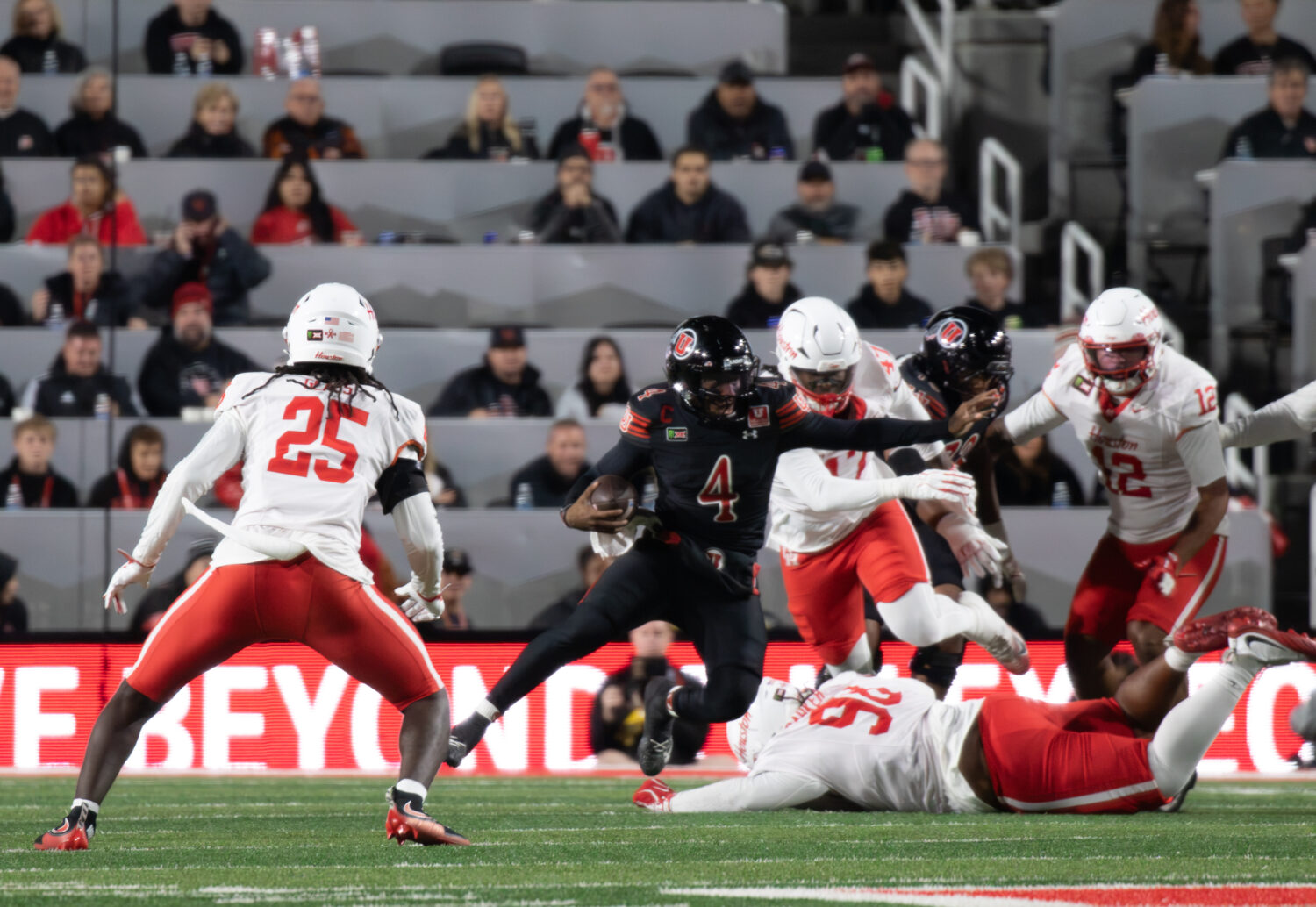
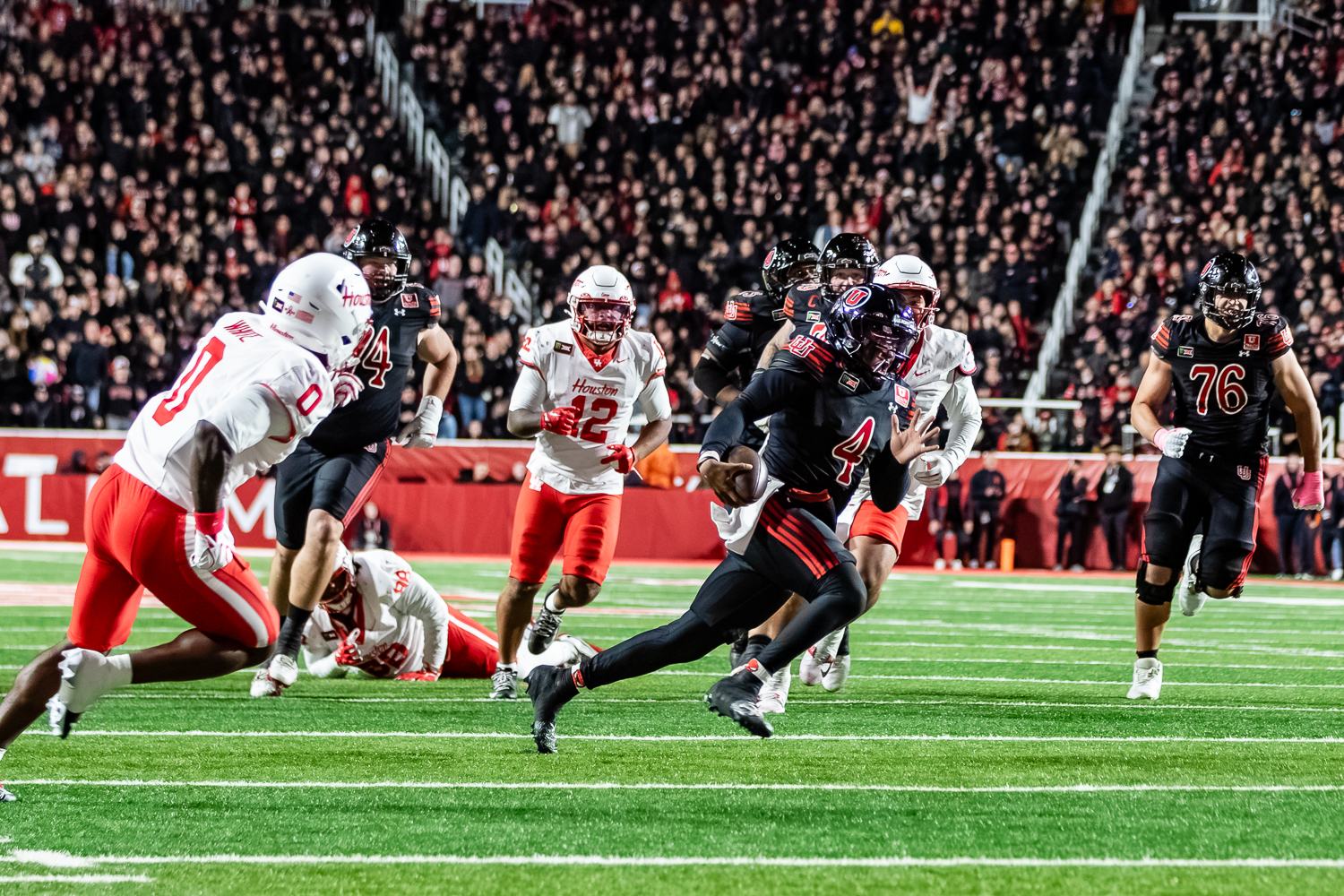
He does not need the original play to survive in order to create offense. His ability to escape pressure, manipulate underneath defenders and threaten a defense as a runner gives the Utes answers when a possession begins to break down.
That may be the most important difference in this game.
The Razorbacks can win enough matchups along the line of scrimmage to disrupt the offense’s timing. They can cover well enough to force Dampier beyond his first read. But ending the play is another matter.
KJ Jackson was efficient in Arkansas’ opener: 24-of-34 for 267 yards, three touchdowns and one interception.
But the passing game lived underneath—a 4.2-yard average depth of target with most completions clustered short outside. Accuracy slipped when throwing downfield.
Images… pic.twitter.com/JVK0gJkK9c
— Steve Bartle (@BartleKSLsports) September 11, 2026
Dampier can convert a third-and-7 with his legs, extend a passing window or turn a protection mistake into a positive gain. Jackson must prove he can consistently do the same against a defense that will show pressure from several locations.
The Utes do not possess an overwhelming advantage everywhere. They possess the most important one.
Arkansas will make this a physical game
Nothing about the Razorbacks’ Week 1 rushing performance was dominant.
They finished with 49 attempts for 148 yards, averaging 3.0 yards per carry against an FCS defensive front. That is not the type of production expected from an offensive line that averages 324 pounds.
The group is physical, but its chemistry and execution remain works in progress.
Still, the Utes cannot assume those struggles will repeat. Maintaining control of the line of scrimmage will require the defensive front’s best effort.
The visiting offensive line is large enough to displace defenders, and its running backs are capable of turning modest creases into productive gains. The offense also revealed a clear preference for using heavier personnel after crossing midfield.
The Razorbacks ran the ball on 15 of their 17 charted snaps from 12 personnel. Thirteen of those plays came in North Alabama territory, including 10 in the red zone.
The two passes from that personnel grouping both produced touchdowns.
𝙏𝙝𝙚𝙧𝙚 𝙖𝙧𝙚 𝙥𝙡𝙖𝙮𝙚𝙧𝙨 𝙮𝙤𝙪 𝙣𝙚𝙫𝙚𝙧 𝙛𝙤𝙧𝙜𝙚𝙩. @weddlesbeard is one of them 🐐
This weekend, we honor 𝒂 𝒍𝒆𝒈𝒆𝒏𝒅.
🎥 Hear from the newest member of the Ring of Honor.#GoUtes | #RSNB pic.twitter.com/DIthJDBxXs
— Utah Football (@Utah_Football) September 11, 2026
Swan’s defense must respect the tendency without becoming trapped by it. When a second tight end enters the game, the Utes should expect downhill runs and short-yardage football. Near the goal line, however, the linebackers and safeties cannot become so aggressive that they lose track of a tight end slipping into the flat or behind the defense.
Karson Kaufusi and the defensive tackles do not need to dominate the box score. They need to avoid being displaced, keep Johnathan Hall and Trey Reynolds clean, and prevent the offense from living in second-and-manageable situations.
If the Razorbacks consistently create four- and five-yard gains, this game will remain uncomfortable deep into the fourth quarter.
Utah has opportunities against Arkansas’ coverage
The Razorbacks played zone on 25 of 26 charted coverage snaps in their opener, relying primarily on Cover 3 and Cover 4 to keep defenders’ eyes in the backfield and provide support against quarterback scrambles.
That approach makes sense against Devon Dampier. It should also provide Kevin McGiven with a relatively clear picture of where to attack.
Dampier completed 13 of 18 passes for 176 yards, three touchdowns and no interceptions against Idaho. He also added 31 yards on six carries.
His distribution was equally encouraging. Dampier completed passes to eight players, led by Braden Pegan’s four receptions for 81 yards and Wayshawn Parker’s three catches for 23 yards. All three of his touchdown passes went to those two playmakers.
The Razorbacks’ Cover 3 was extremely effective against North Alabama, but their quarters coverage was more vulnerable. The Utes should test those defenders through play-action, vertical routes and crossing concepts while using Dampier’s legs to occupy the underneath defenders.
| Pressure type | Usage | Yards allowed | EPA/pass allowed |
|---|---|---|---|
| No blitz | 61.5% | 2.2 | -0.92 |
| Simulated pressure | 19.2% | -1.6 | -0.58 |
| Blitz | 19.2% | 14.1 | +0.75 |
First Saturday back in @Rice_Eccles‼️🔊
Here’s your full 𝐆𝐚𝐦𝐞𝐝𝐚𝐲 𝐓𝐢𝐦𝐞𝐥𝐢𝐧𝐞! 🔴🔴
🎟️ https://t.co/bzfcSX4So9#GoUtes | #RSNB | @Venmo pic.twitter.com/u7n4i7TfUF
— Utah Football (@Utah_Football) September 10, 2026
The challenge will be remaining disciplined and patient. Arkansas wants Dampier to see bodies, hesitate and eventually force the ball into a crowded window. He may need to spend most of the night taking the available five- and six-yard gains before deeper opportunities appear.
The windows will not be as large as they were against Idaho. The Razorbacks want Dampier to see bodies, hesitate and eventually force the ball into a crowded area. The Utes cannot become bored with five- and six-yard gains while searching for another 66-point performance.
Utah must pressure Jackson without giving away explosives
Swan blitzed on more than half of Idaho’s charted dropbacks. That aggression helped create hurried decisions, two early turnovers and an offensive game that never developed much rhythm.
The visitors could see similar pressure, but the defensive coordinator cannot simply repeat the same plan.
The Razorbacks have more talented receivers. If the rush does not reach Jackson, they have players capable of winning isolated matchups and creating yards after the catch.
Swan can threaten Jackson with numbers at the line of scrimmage and force the protection to declare itself before dropping defenders into the quick passing lanes he preferred in Week 1.
The opportunity should exist. Arkansas’ offensive tackles surrendered six combined pressures, including two sacks, against North Alabama. The Utes have enough speed on the edges to create problems, especially when Jackson is placed in obvious passing situations.
The more often the defense wins on early downs, the better. But the pressure must remain connected to the coverage. Losing containment or missing one tackle on a receiver screen could produce exactly the type of inexpensive explosive play the visitors need.
The defensive checklist is straightforward: control first down, tackle the quick game and make Jackson hold the ball long enough for the rush to matter.
Expect a close game into the fourth quarter
There is a temptation to treat Week 1 as proof that the Utes are prepared to overwhelm the Razorbacks. One team won by 52 points. The other spent much of the afternoon struggling to separate from North Alabama.
College football rarely works that neatly.
The visitors are substantially more physical than Idaho and have enough talent to challenge both of the Utes’ rebuilt lines. Ryan Silverfield’s team should be capable of running the ball more efficiently, creating a few favorable matchups in the passing game and preventing the home team from controlling the night as easily as it did last week.
The offensive line should also expect moments when it looks considerably less settled than it did against Idaho. The Razorbacks will win some of those matchups. The question is whether those victories end possessions.
That brings the game back to Dampier.
The Utes can survive a protection breakdown because their quarterback can escape. They can recover from an unsuccessful early-down run because he can create on third down. His mobility forces zone defenders to account for one more threat than the structure would normally require.
Over four quarters, those extra answers should become the difference.
The Bottom Line
The prediction here is not that the Utes will control the game from beginning to end. The Razorbacks should remain within one possession for most of the night and have an opportunity to apply real pressure in the fourth quarter.
But the home team has the more experienced quarterback, appears more capable of producing explosive plays and showed a more disruptive defensive structure in Week 1.
The final margin may look comfortable. The game probably will not feel that way.
Look for Dampier to make the decisive plays before a late touchdown pushes a competitive, one-score game to a two-touchdown finish.