Utah basketball’s new standard fuels second-half turnaround in overtime win over Oregon
Oct 21, 2026, 9:45 PM
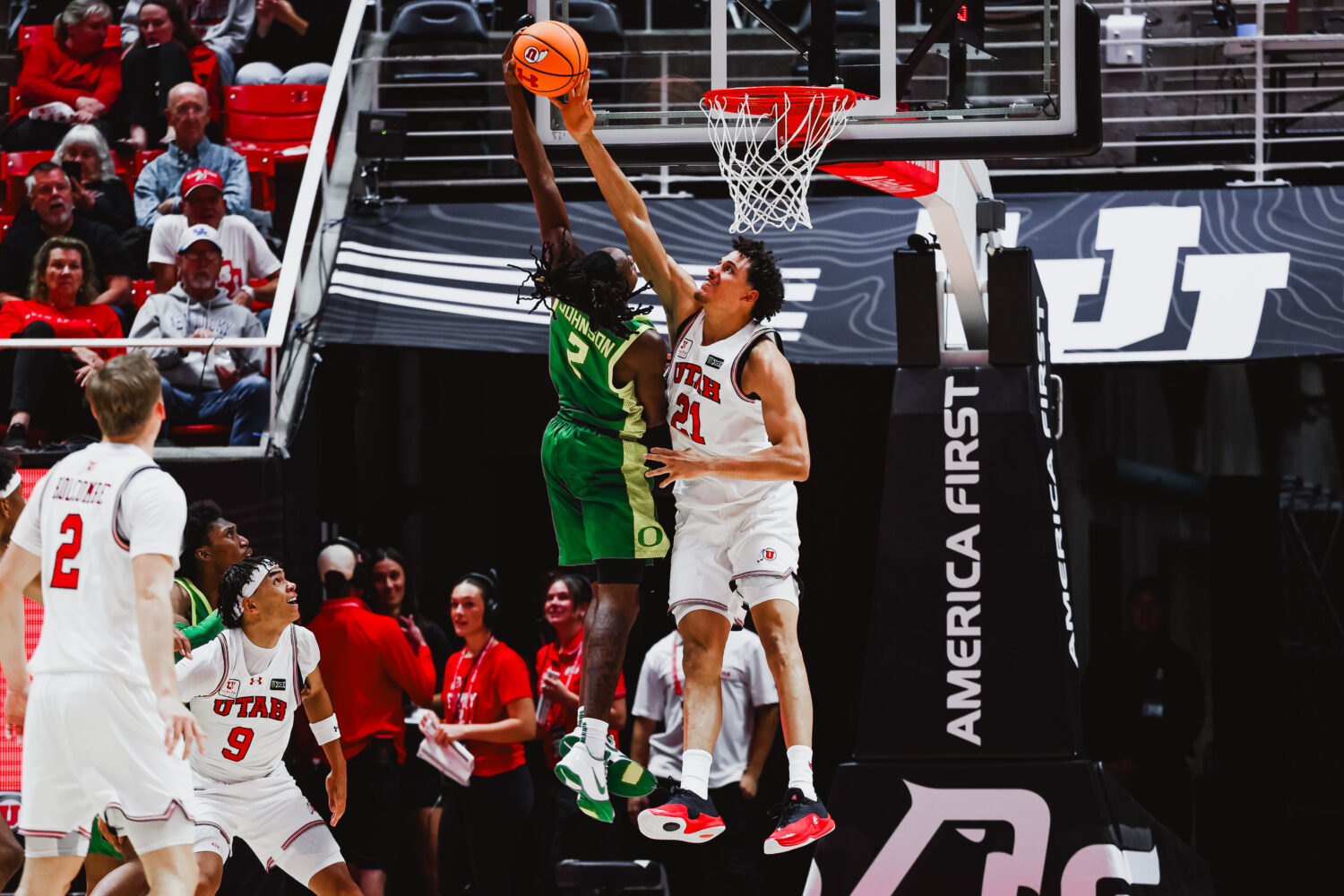
Utah basketball's Alec Anigbata blocks a shot vs Oregon. Photo courtesy by Utah Athletics.

SALT LAKE CITY — Sure, Utah’s shots began falling after halftime, but its work to create and extend possessions helped make those baskets count.
The Runnin’ Utes scored in transition, received more production from players who had struggled early and collected timely rebounds to rally past Oregon 81–77 in overtime Wednesday at the Huntsman Center.
After trailing 35–29 at halftime and falling behind by 10 early in the second half, Utah scored 44 points to force overtime. It then held Oregon to one field goal in the extra period, with Malek Gomma collecting four rebounds to help finish the win.
The shot that sent us to OT 🎯
#GoUtes https://t.co/GSEOM4KMUW
— Utah Basketball (@UtahMBB) October 22, 2026
Taison Chatman hit the clutch 3-pointer to send the game into overtime. Trey Campbell and Jackson Holcombe led Utah with 20 points apiece. But the most encouraging takeaway for Alex Jensen was how many different contributions went into the turnaround.
Utah shot 51.3% across the second half and overtime, compared with 32.4% before halftime. Alongside that improvement came 13 fast-break points, 10 second-chance points and a broader group of players finding ways to help.
Utah turned activity into offense
The Utes managed just two fast-break points in the first half. They generated 13 in the second, outscoring Oregon by nine in transition during a half they won by six.
Those opportunities gave Utah a needed source of offense against an Oregon team that had blocked five shots before halftime. The Utes could get points before the Ducks established their defense, easing the burden on an offense that had struggled through the opening 20 minutes.
Holcombe and TJ Burch each finished with three steals, while Campbell added two. Utah recorded 11 steals overall, with seven coming before halftime.
The Utes were already creating disruptions early; their ability to produce transition points improved considerably after the break.
One crucial late sequence captured how Utah’s hustle could turn a possession.
Alec Anigbata was defending his man in the post. He contested the first attempt effectively, but fell down on the rebound, which bounced to his man. With what seemed like an easy bucket for him, Holcombe rotated over to help and elevated to block the shot.
That then led to a semi-transition opportunity the other way. Ultimately, Gomma stayed with a second-chance layup that wouldn’t fall and tipped in his own miss. It took a tip-in off his own miss to finish the possession, but Utah’s persistence produced a basket after Holcombe’s effort had prevented one.
Utah also became more responsible with its own possessions. After committing eight turnovers against six assists in the first half, it recorded 11 assists and six turnovers across the second half and overtime.
The combination gave the comeback substance: more production in transition and fewer possessions surrendered before Utah could get a shot.
Gomma’s response showed up around the basket
Gomma’s night offered one of the clearest examples of Utah’s improvement.
He entered halftime scoreless with three rebounds. He finished with 10 points, nine rebounds and five offensive boards, making four of his five shots after the break.
His overtime contribution was particularly valuable. Gomma collected four rebounds in the extra period, including three on the offensive end, and added a basket as Utah outscored Oregon 8–4.
Those offensive rebounds gave Utah additional opportunities in a period when neither team scored easily. With the Utes making just one of four overtime free throws, extending possessions carried added importance.
MALEK WITH BACK-TO-BACK DUNKS ‼️
#GoUtes https://t.co/i1og93U09Y
— Utah Basketball (@UtahMBB) October 22, 2026
Utah increased its second-chance scoring from four points before halftime to 10 across the second half and overtime. Gomma’s work helped turn a quiet opening half into a consequential finish.
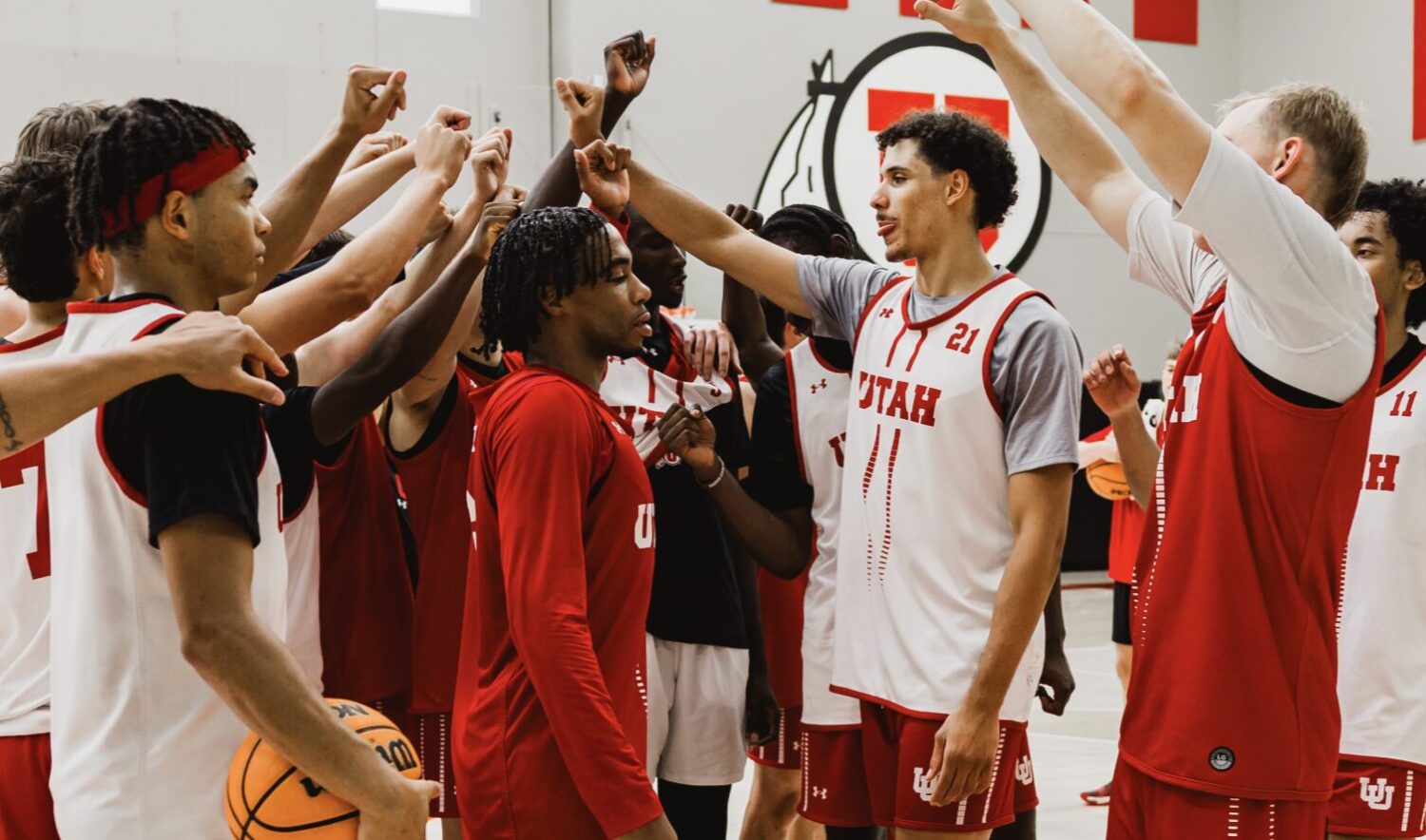
He also had the quote of the night regarding the hustle plays Utah made simply being the standard: “That’s the standard. We are so blessed to be in the position we are in right now. To not dive on the floor for a ball, I feel like it’s selfish — selfish to the team, selfish to Coach Jensen and Wes, who invested in us. That’s just the standard for us.” — Malek Gomma
Holcombe and Burch supplied more than baskets
Holcombe’s scoring remained steady: 10 points before halftime and 10 afterward. His broader contribution helped hold Utah together while the offense searched for consistency.
He finished with seven rebounds, three assists, three steals and a block. Even during the difficult first half, Holcombe had five rebounds and all three of his steals, giving Utah useful possessions when points were harder to find.
Burch provided another source of activity off the bench. He finished with 11 points, three steals, three assists and no turnovers in 18 minutes.
Seven of his points and all three assists came after halftime. His ability to contribute offensively without giving possessions away was particularly helpful after Utah’s turnover-heavy opening half.
Together, Holcombe and Burch accounted for six of Utah’s 11 steals. Their contributions gave the Utes more ways to affect the game than shooting alone.
Better shooting rewarded the work, and overtime stops finished it
Utah still needed to convert its opportunities, and the improvement was substantial.
The Utes went from 4-for-15 beyond the arc in the first half to 8-for-16 across the second half and overtime. They also improved from 7-for-19 to 12-for-23 on two-point attempts.
Campbell finished with six made 3-pointers. Alec Anigbata, scoreless at halftime, added eight points afterward. Gomma and Burch combined for another 17 after the break.
That broader production helped Utah force overtime. Once there, the Utes held Oregon to 1-for-9 shooting and won the rebounding battle 9–6.
HUGE 3 by @JacksonHolcomb9 ‼️
#GoUtes https://t.co/vCFIUa6w0i
— Utah Basketball (@UtahMBB) October 22, 2026
The finish was far from flawless. Utah missed eight of its 15 free throws, and Oregon collected 10 offensive rebounds after halftime. Consistently completing defensive possessions remains an area to address.
But Utah found enough productive plays to overcome those shortcomings. Transition scoring helped erase the deficit. Offensive rebounds supplied additional chances. Contributions from Gomma, Burch and Anigbata supported the scoring of Campbell and Holcombe.
For a team still establishing how its pieces fit, that was a meaningful step: Utah found ways to keep working through an uneven night until its offense caught up.