Five Takeaways From Utah’s 45-14 Demolition Of Cincinnati
Nov 2, 2025, 12:30 PM | Updated: 1:56 pm

Utah's Caleb Lomu celebrates touchdown against Cincinnati. Photo courtesy by Joel Davidson.

SALT LAKE CITY— From sunrise at ESPN’s College GameDay to a packed blackout crowd after dark, Saturday belonged to Utah. The No. 24 Utes didn’t just beat No. 17 Cincinnati — they steamrolled the Bearcats 45–14, handing them their first Big 12 loss and reigniting Utah’s push in the conference race.
Utah not only gave Cincinnati its first Big 12 Conference loss, but gained a valuable upper-hand in a potential tiebreaker scenario with them.
Kyle Whittingham’s squad improved to 7–2 overall and 4–2 in Big 12 play — and did so with another complete, three-phase performance.
Here are the takeaways:
1. Utah’s offense provided steady, consistent barrage
Utah’s offense has been efficient all season, and Saturday night was no different.
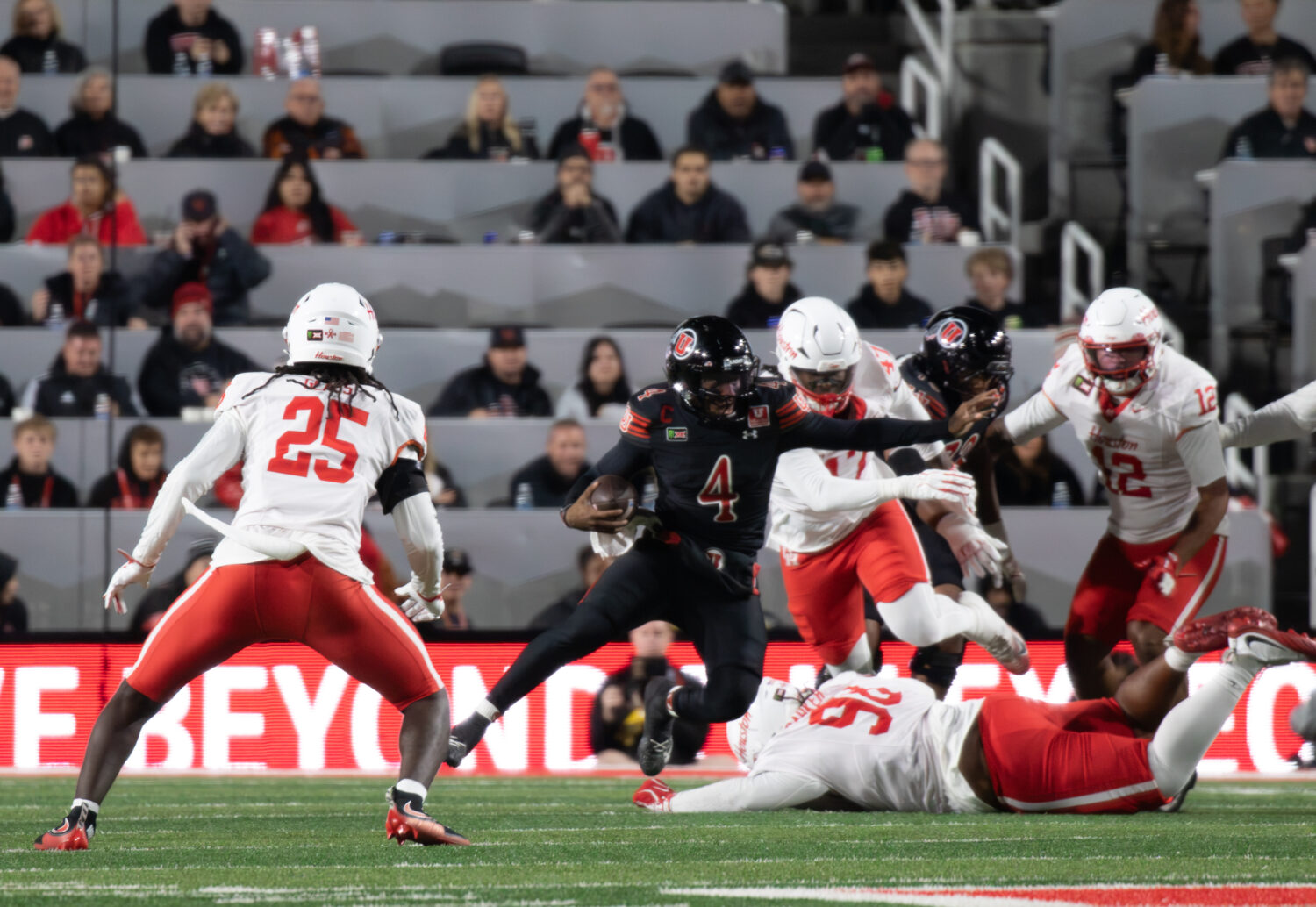
The Utes scored on four of their first five possessions, including three touchdowns, taking a 24–7 halftime lead. Utah controlled tempo, dictated physicality, and stayed balanced in play-calling.
The Utes rushed for 267 yards and finished with 480 total yards of offense.
• Wayshawn Parker ran for 104 yards and a 39-yard score, sparking momentum early.
• Devon Dampier added 78 rushing yards, while Daniel Bray chipped in 43.
• NaQuari Rogers and Byrd Ficklin punched in short touchdown runs to extend the lead.
📺 @ESPNCFB | #GoUtes pic.twitter.com/hPmzocIXNC
— Utah Football (@Utah_Football) November 2, 2025
The passing game wasn’t perfect — Dampier threw an interception in the third quarter — but Utah still generated explosive plays, highlighted by:
• Ryan Davis’ 34-yard touchdown grab to open the scoring, adding a 46-yard reception as well.
• Creed Whittemore’s first Utah touchdown, a physical 11-yard catch-and-run.
Davis finished with 8 receptions for 132 yards and a score — exactly the deep-threat presence the offense needed. He is now top five in multiple receiving categories in the Big 12, including No. 4 in yards per game and No. 2 in receptions per game.
Utah converted 7-of-15 on third down and 2-of-2 on fourth down, both of which helped sustain long drives and wear down Cincinnati’s front. Dampier was particularly effective on 3rd down, as he converted a handful of key conversion downs.
2. Utah’s defensive progress led to frustrating outing for QB Brendan Sorsby
Rewind it back to the first few weeks of the season. The biggest concern was Utah’s secondary after some uncharacteristically unsound outings in coverage.
Cincinnati quarterback Brendan Sorsby entered the night as one of the most efficient QBs in the Big 12. He was No. 7 in the country in QBR and owned a 20:1 touchdown:interception ration.
However, the progress Utah’s secondary has made over the last few weeks allowed the Utes to change that narrative immediately.
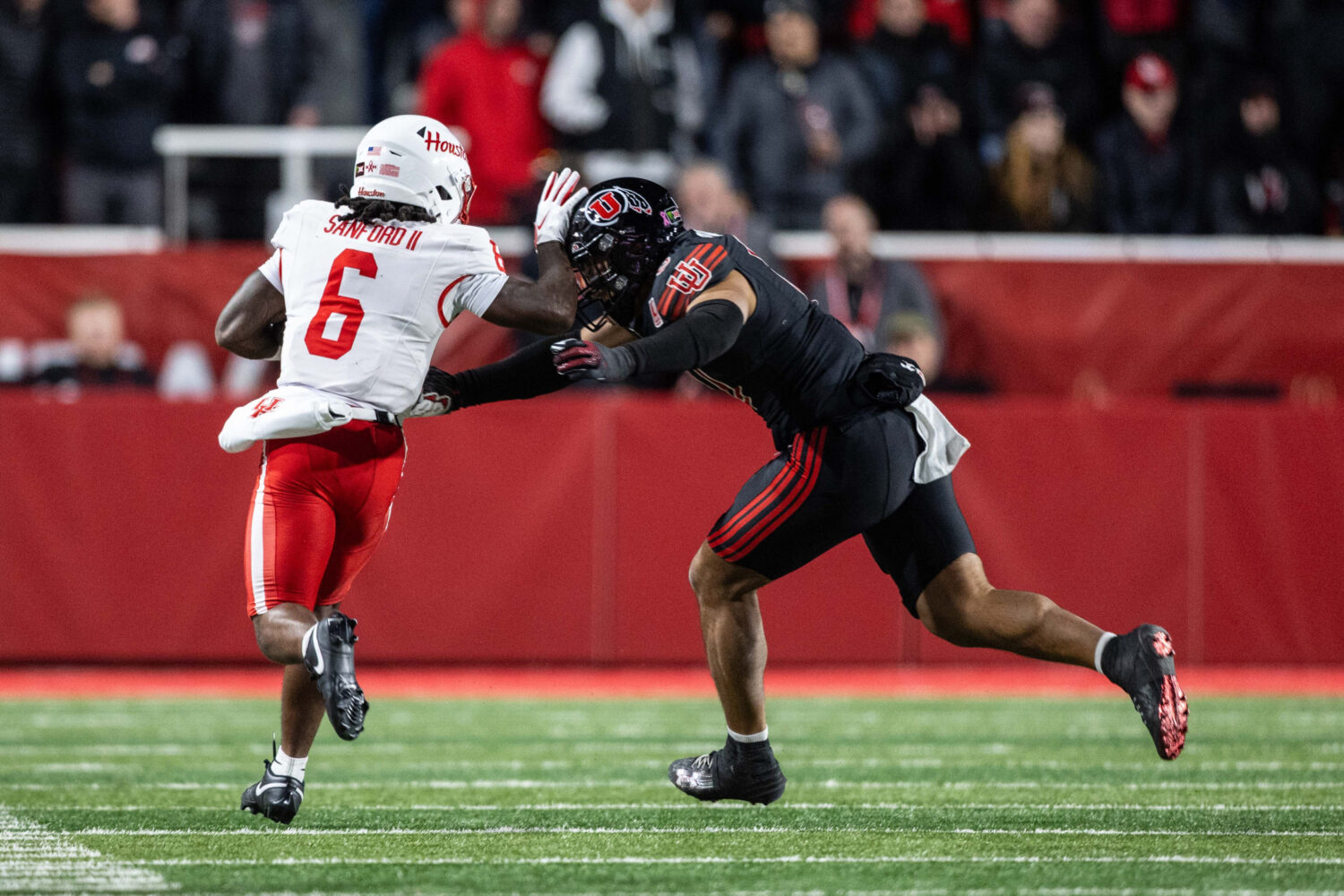
Sorsby completed just 11 of 33 passes for 221 yards, with one touchdown and one interception, and much of that production came on a single play — an 88-yard touchdown in the third quarter.
Outside of that completion, Sorsby went 10-of-32 for just 133 yards combined. The frustration grew more visible throughout the night.
Utah’s secondary was stingy. Tao Johnson, Blake Cotton, Scooby Davis, and Donovan Saunders each registered an impressive PBU, while Smith Snowden hauled in an interception off of pass tipped at the line of scrimmage.
Time and time again, Sorsby tested cornerbacks in coverage down the field. Nearly every time, Utah’s cornerbacks were in great position to disrupt the play. A big improvement over the separation this group conceded in the opening weeks of the season.
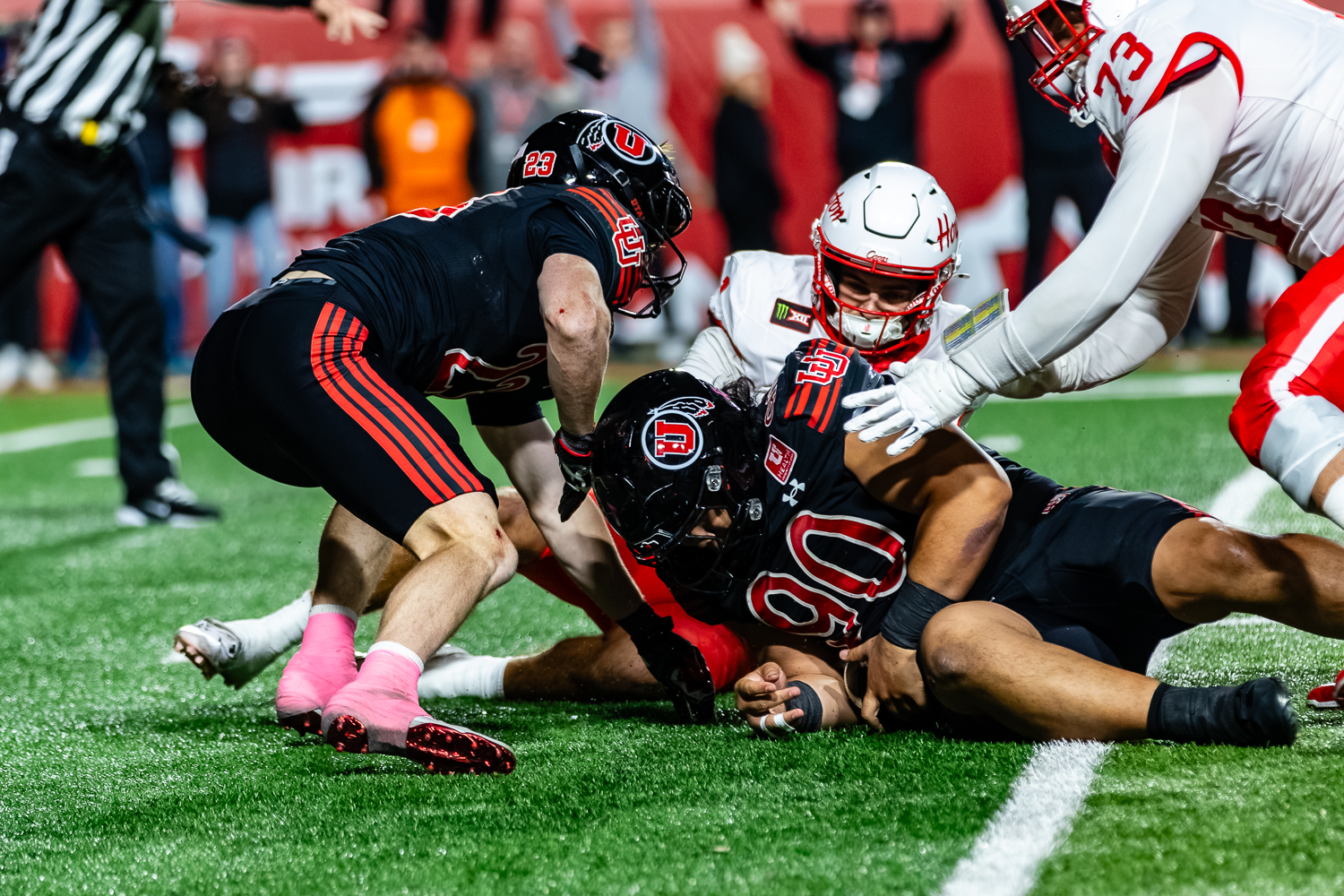
Add to that, defensive linemen Aliki Vimahi and Jonah Leaea batting passes at the line of scrimmage, and Sorsby was out of sorts.
The defense makes a HUGE play and forces the fumble and recovery‼️😤#GoUtes pic.twitter.com/snVgXWgw6M
— Utah Football (@Utah_Football) November 2, 2025
Cincinnati had done a good job of protecting Sorsby, but the Utes pressured Sorsby on 43% of his drop backs.
When the game was still competitive, Utah forced:
- Four 3 & outs
-
A fumble (Johnathan Hall punch out)
-
Multiple stalled drives near the red zone
The Utes held Cincinnati to 1-for-3 in scoring opportunities that crossed their 30-yard line — a defining difference.
3. Utah’s special teams delivered the knockout punch vs Cincinnati
Cincinnati pulled within 24–14 early in the second half, momentarily swinging momentum.
Then Mana Carvalho happened.
First, Carvalho returned a punt 23 yards to set up a touchdown drive that pushed the lead back to 31–14.
On Cincinnati’s next possession, Utah forced another stop — and Carvalho delivered a 75-yard punt return touchdown, igniting Rice-Eccles Stadium.
📺 @ESPNCFB | #GoUtes pic.twitter.com/mHdwhavAqL
— Utah Football (@Utah_Football) November 2, 2025
It was Utah’s first punt return TD since Britain Covey (2021) — fittingly in nearly the exact style: patient, decisive, electric.
Cincinnati missed a field goal earlier in the game that could have tightened the margin — special teams swung the game in both directions.
4. The energy in Rice-Eccles mattered — and Utah fed off it
With GameDay in town, blackout uniforms, hand-painted helmets, and a ranked opponent under the lights, Rice-Eccles Stadium felt like a stage.
This is where Utah has historically thrived: physical game, emotional edge, loud stadium, cold night, November stakes.
You could feel it — the Utes played like a team that expected to win, not hoped to. The crowd was engaged from the jump and the student section remained locked in late into the final quarter.
When Carvalho returned the punt for a touchdown, the Rice-Eccles crowd erupted. It was perhaps the loudest moment since Cam Rising’s two-point conversion against USC in 2022 or Britain Covey’s punt return against Oregon in 2021, both of which featured hand-painted helmets as well.
Byrd Ficklin scored a touchdown and the Mighty Utah Shirtless Section went wild. pic.twitter.com/jtEgX5wkLW
— Steve Bartle (@BartleKSLsports) November 2, 2025
5. The Big 12 implications
Utah is still in the Big 12 title hunt—and now, given some results in other leagues, are in the CFP conversation—but Utah will need help. The Big 12 isn’t quite the chaos factory some leagues are this season, but it’s still crowded at the top.
As many as seven teams remain mathematically alive to reach Arlington with two losses or fewer, which means the tiebreaker web is about to matter just as much as the scoreboard.
In a league this large—where not everyone plays each other—résumé edges, head-to-head matchups, and cross-division results are all in play. Even if the Utes win out, the path isn’t guaranteed, even though there are a number of tiebreaker scenarios in their favor.
One of those results may come as soon as next weekend. BYU at Texas Tech is shaping up to be the pivot point for the conference race. A Red Raider win would shift momentum toward a late-season Cincinnati vs. BYU showdown in Nippert Stadium that could effectively serve as an elimination game.
Utah will be watching closely.
Just like last season, nothing in the Big 12 is going to be simple. And based on the way this conference has behaved in 2025, it’s safe to assume the finish is going to be loud, messy, dramatic, and very, very fun.
What’s next?
With momentum back in hand and confidence restored, Utah heads into the final stretch with everything still in reach. The Big 12 race remains crowded — but Utah is now prominently situated in the conversation.
A bye week comes at just the right time for Utah to regroup before the final three opponents of the season: Baylor, Kansas State, and Kansas.
If the identity shown Saturday continues — physicality, explosiveness, defensive toughness, and special teams impact — Utah will be a factor deep into November.