Braden Pegan gives Utah’s passing game a clear starting point
Jul 23, 2026, 1:57 PM
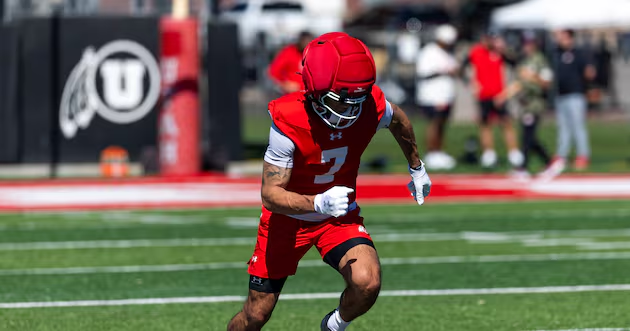
Utah's Braden Pegan practicing routes at spring ball. Photo courtesy by Utah Athletics.

SALT LAKE CITY — Utah will enter fall camp with a crowded receiver room, several intriguing options and a new offensive system. The Utes also possess something that should make those moving parts easier to organize: a potential No. 1 receiver already positioned at the top of the hierarchy.
Braden Pegan, the prized transfer addition, has the production, size and system familiarity to establish the hierarchy of Utah’s passing game.
The Utah State transfer earned first-team All-Mountain West honors in 2025 after leading the Aggies with 60 receptions for 926 yards and five touchdowns. He produced three 100-yard games and now reunites with offensive coordinator Kevin McGiven.
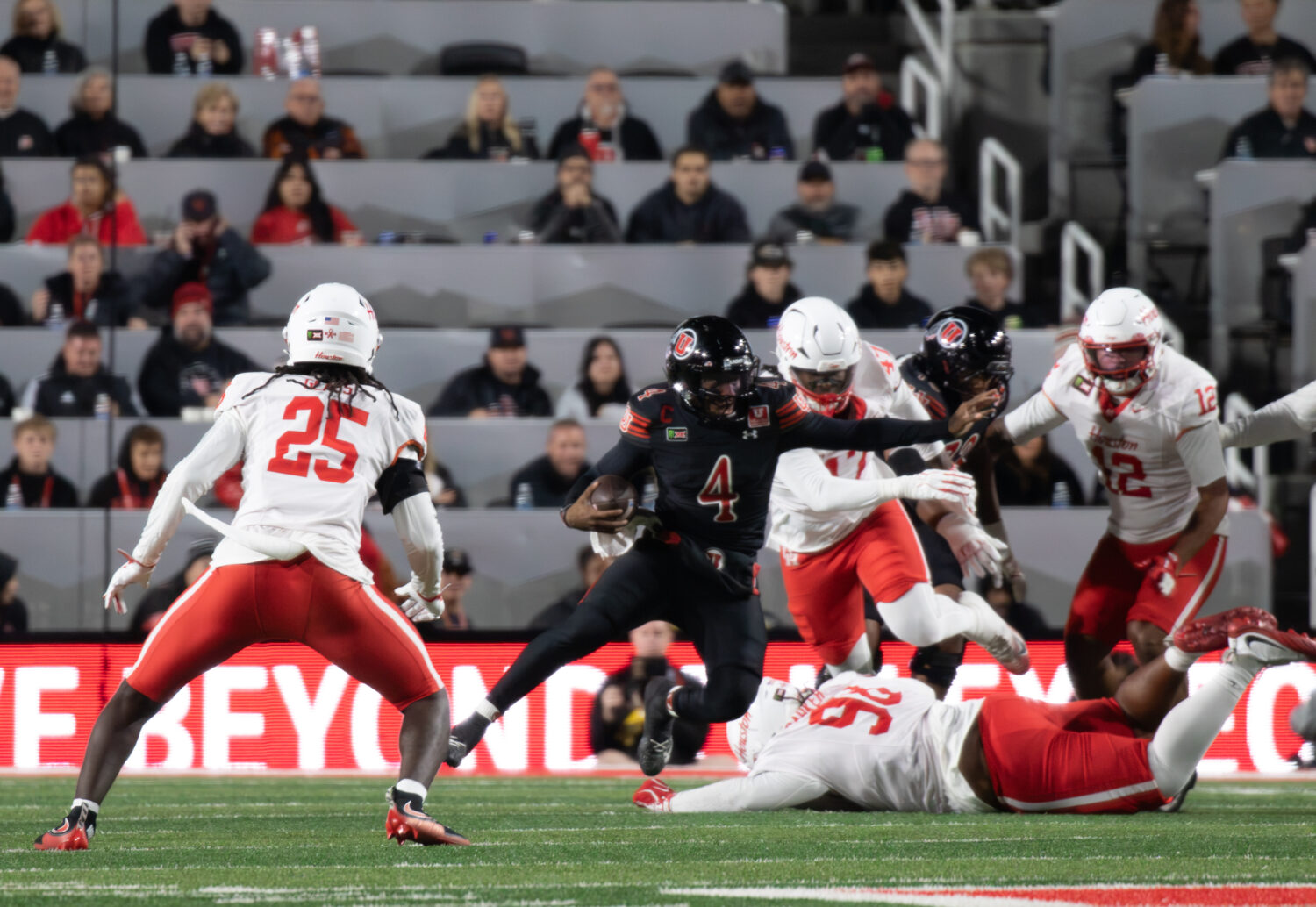
Ryan Davis paced the Utes with 725 yards, but the offense leaned heavily upon Devon Dampier, Wayshawn Parker and a rushing attack that averaged 266.3 yards per game. Utah averaged 216.6 passing yards and finished with 2,816 yards and 27 touchdowns through the air.
The passing game was productive. It was not consistently organized with a receiver who could influence coverage.
Pegan has an opportunity to change that, but the value of having a clear No. 1 depends on how quickly he and Utah’s other receivers develop functional chemistry with Dampier.
Pegan leading establishes the hierarchy
At 6-foot-3 and 210 pounds, he offers size against press coverage and in contested situations. His 60 receptions show he can handle regular volume rather than function only as an occasional downfield target. His experience with McGiven also gives Utah more certainty than it normally would receive from a transfer entering a new offense.
His experience with McGiven also gives Utah more certainty than it normally would receive from a transfer entering a new offense. So the fit is unusually clean, and a true No. 1 helps define everyone else, especially when it includes leadership.
“Braden Pegan gets a lot of talk about coming with McGiven, and I think he’s been handling the role pretty well,” Dampier said at Big 12 Media Days. “He’s showing that leadership. I’m very proud of him and that group, they’ve gotten better by the day.”
There will still be a substantial adjustment from the Mountain West to the Big 12. So, while his 2025 production establishes a credible foundation, it does not guarantee another 900-yard season, that will be determined by the work he’s put in this offseason to make that adjustment.
Taking ownership of chemistry building
Dampier has already tried to shorten the transition. He brought Pegan, Simmons, Shoels and Johnson to Arizona for player-led summer workouts but the work has only continued.
“I feel strong about those boys. We have an older room, a lot of those guys are seniors,” Dampier said at Big 12 Media Days. “And they’re getting after it. I see them doing drills every day. We’re doing extra work outside of conditioning and stuff like that. We’re putting it in—and they want it.”
That continued investment reflects the larger purpose of the Arizona trip: accelerating trust and creating shared ownership of the offense before fall camp begins.
“The biggest part was them being new,” Dampier said. “I wanted them to feel like they’re in this offense—like this offense is going to be us—and we need to build that trust as soon as possible. This isn’t the year where we can lose that chemistry. We’ve got to keep gaining the most we can.”
The relationship is about more than timing routes against air. Utah’s receivers must see coverage the way Dampier sees it, particularly against Big 12 defenses that frequently turn zone concepts into man-style assignments once routes develop.
“We’ve got to be on the same page against so many different coverages, so many different looks you can see in football,” Dampier said. “Just for us to have that chemistry—especially outside the field—you get a feeling for someone.”
Pegan’s potential value appears in that equation. If he consistently wins isolated matchups, defenses may have to lean a safety toward him. That creates more favorable opportunities elsewhere and can remove a defender from the box for Parker and Utah’s running game.
The summer work Pegan and the rest of the receivers have had with Dampier are a big positive, which has to continue into fall camp.
The Bottom Line
Utah has done the necessary offseason work to give its passing game a head start, but chemistry cannot be assumed until it survives game speed, tighter coverage and meaningful third downs.
Pegan gives Dampier a proven receiver with the potential to become Utah’s clear first option. If that connection clicks early, the rest of the room can settle into complementary roles and give McGiven the balanced, adaptable offense he is trying to build.