Utah’s spring ball begins with clear message from Morgan Scalley
Mar 19, 2026, 7:35 PM | Updated: Mar 20, 2026, 11:11 am

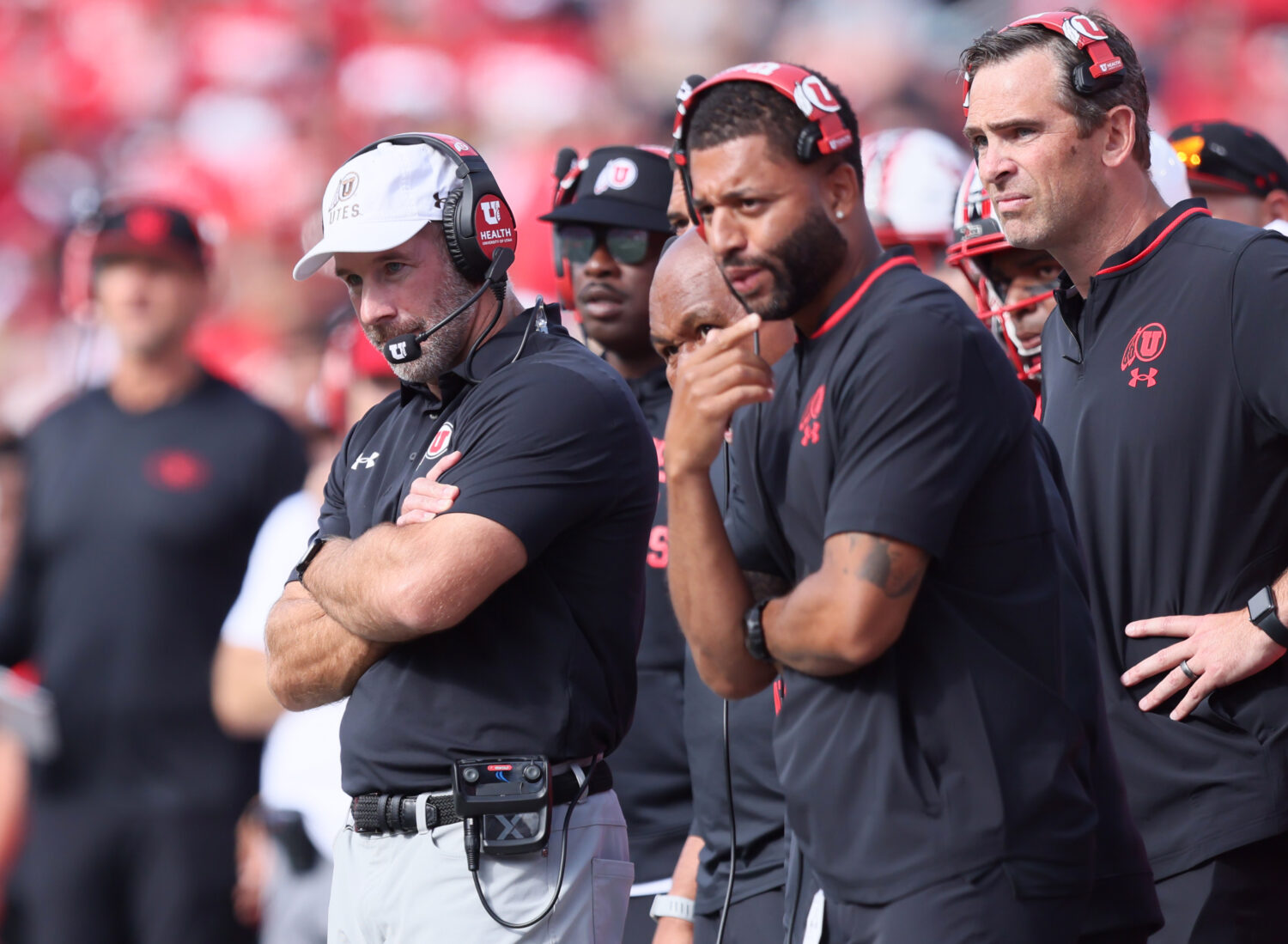
SALT LAKE CITY — Day one of spring ball came with a clear message from new head coach Morgan Scalley: effort is non-negotiable.
Utah opened its first spring practice under Scalley with what he called a “solid” start — high energy, strong teaching, and noticeable physical development from an offseason spent building strength and power. But in typical fashion, he stopped short of drawing any real conclusions.
“Till we put the pads on… you gotta suspend your opinion,” Scalley said.
Laying a foundation of relentless effort
If there was one theme that defined day one, it was relentless effort. Scalley made it clear that mistakes are expected this time of year — but how those mistakes happen matters more than the mistakes themselves.
“Be relentless,” Scalley said of what he emphasized to his team in the lead up to today. “You’re gonna make mistakes, make ’em full speed.”
It’s a philosophy rooted in something deeper than just practice tempo. For Scalley, effort isn’t just about hustle — it’s about creating outcomes.
“Effort makes up for a lot in a lot of aspects of your game,” he shared. “People talk about luck. You make your luck a lot of time by the way you work. Ball’s on the ground and a guy’s there to pick it up. ‘Oh, how lucky, how fortunate.’ No, he was running to the ball. He was there for a reason.”
“You make your own luck by the way you work,” he added.
That mindset reflects a subtle but important shift. This isn’t just about maintaining Utah’s identity — it’s about sharpening it. Faster. More urgent. Less margin for passive reps.
A new offense requires repetition
As Scalley emphasized to start, it’s way to early to assess who and what is standing out. Still, much of the offseason conversation has centered around Utah’s new offensive system under coordinator Kevin McGiven, the early returns — at least structurally — are promising.
Scalley pointed to the foundational elements: alignment, assignment, and technique. Those are being installed quickly.
“This isn’t the first time they’ve lined up in formations,” Scalley said, emphasizing the amount of offseason prep that went into getting to this point. “But I’m pleased, a lot of the stuff that we did during the off-season was to prepare for today.”
Still, the reality is what it always is in spring, repetition will determine everything.
“Reps, reps, reps, building a skill takes time and effort, and that’s why we’re out here doing this,” he shared. “Coach McGiven and the staff’s done a great job.”
Culture isn’t talk — it’s daily enforcement
If there’s one area Scalley didn’t hedge on, it’s culture. He was blunt: it’s not a slogan, and it’s not something you check in on once a week.
“It’s important every day,” he said. “If you’re just talking about it once a week… it’s fake.”
The standard is simple:
- Promote it when you see it
- Call it out when it’s not there
- Don’t tolerate anything in between
“Culture is not just words on walls. You have to practice it, you promote it when you see it,” he said. “When we see the behavior that we’re asking for, man, you gotta shout it to the rooftops.”
That’s as direct as it gets — and it sets the tone for how this program is going to operate moving forward.
New faces, quick fit
Another early positive: Utah’s influx of transfers and freshmen appears to be integrating smoothly.
Scalley credited the existing leadership within the program for that transition — and explained why it’s working.
“It’s great to have those guys in the program that are compelling, that are not just focused on themselves,” Scalley said. “They’re on a journey. They’re bringing other people with them. That’s what you’re looking for in leadership, and we’ve got that.”
That piece matters. It’s not just about talent acquisition — it’s about who’s setting the tone inside the building.
Scalley also pointed to the front-end of the process: recruiting.
“It’s recruiting the type of players that you know will fit into your culture, that you don’t have to spend a lot of time grooming and getting them in the right mindset.”
That’s how this gets streamlined. When evaluation aligns with identity, onboarding becomes a lot less complicated — and a lot more effective.
And right now, Utah looks like a team where the locker room is doing just as much development as the coaching staff.
Quarterback Focus: Progress, Not Perfection
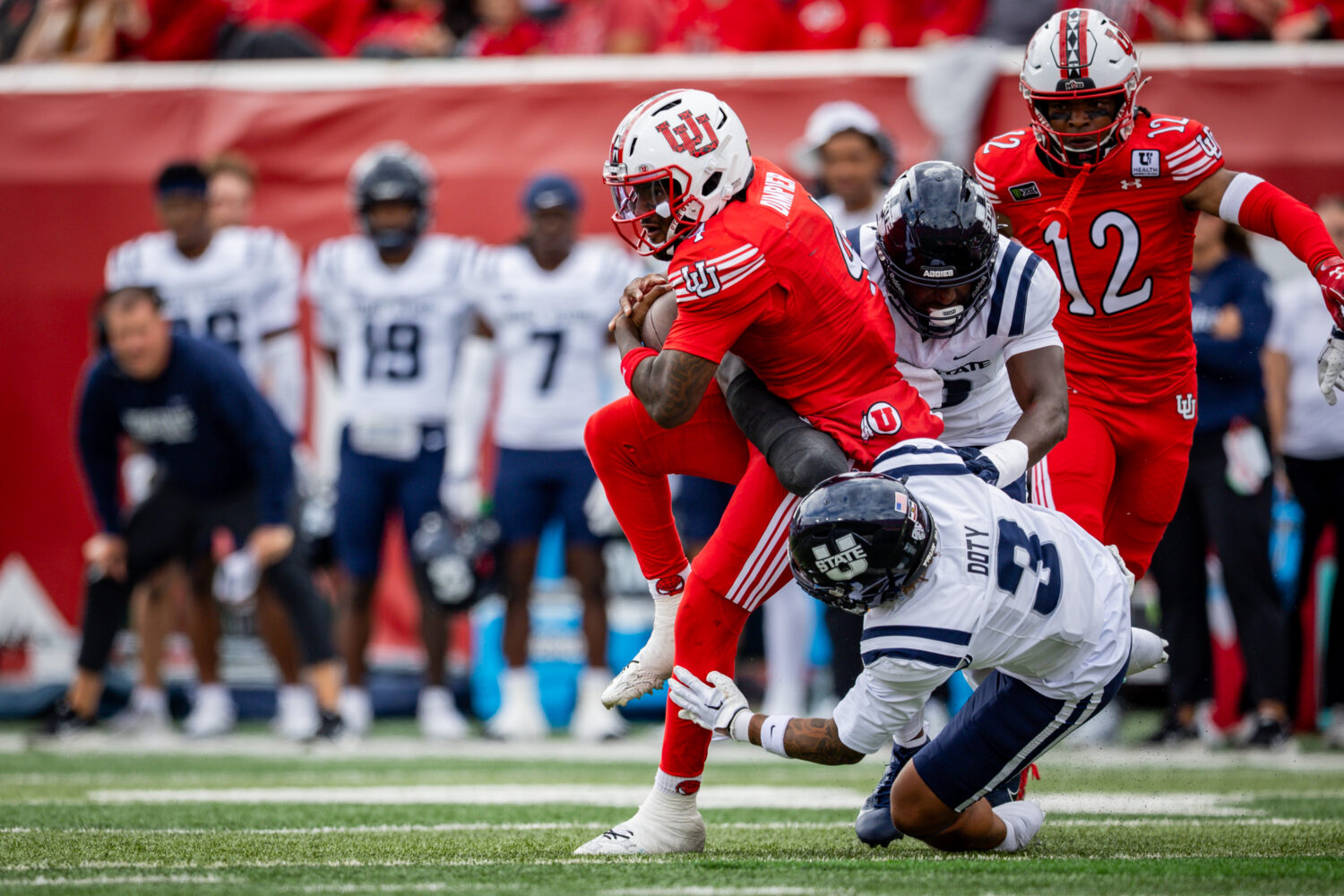
All eyes this spring will naturally land on Devon Dampier, and Scalley didn’t dodge that.
The priority right now is getting him fully healthy. Dampier had surgery to address two sports hernias and is still working his way back to 100-percent.
“He’s not there yet,” Scalley said. “So, the first thing with him is making sure he’s fully healthy.”
From there, it’s about growth within a more demanding offensive structure — particularly with reads and decision-making.
“We want to see progress, there’s some different things that we’re asking of him in this offense maybe a little bit more, in terms of reads and stuff like that,” he said.
But Scalley made one thing clear: the mental side isn’t a concern.
“He is so smart, he’s so football savvy… he enjoys the challenge,” he said.
The Bottom Line
Day one didn’t answer the big questions — and it wasn’t supposed to. What it did reveal is the standard. Morgan Scalley is building this version of Utah on effort, accountability, and daily enforcement of culture. The schemes will evolve, the depth chart will shift, but the expectation is already set: play fast, work relentlessly, and eliminate excuses.
With day one out complete, Utah will continue to work. Pads will come on, competition will tighten, and players like Devon Dampier will be judged on progress, not potential. For Utah, spring isn’t about hype — it’s about stacking reps and proving who can meet the standard when it actually counts.