Instant Takeaways: Utah’s Margin Was Thin — and Washington Exploited It
Dec 29, 2025, 11:48 PM | Updated: 11:49 pm

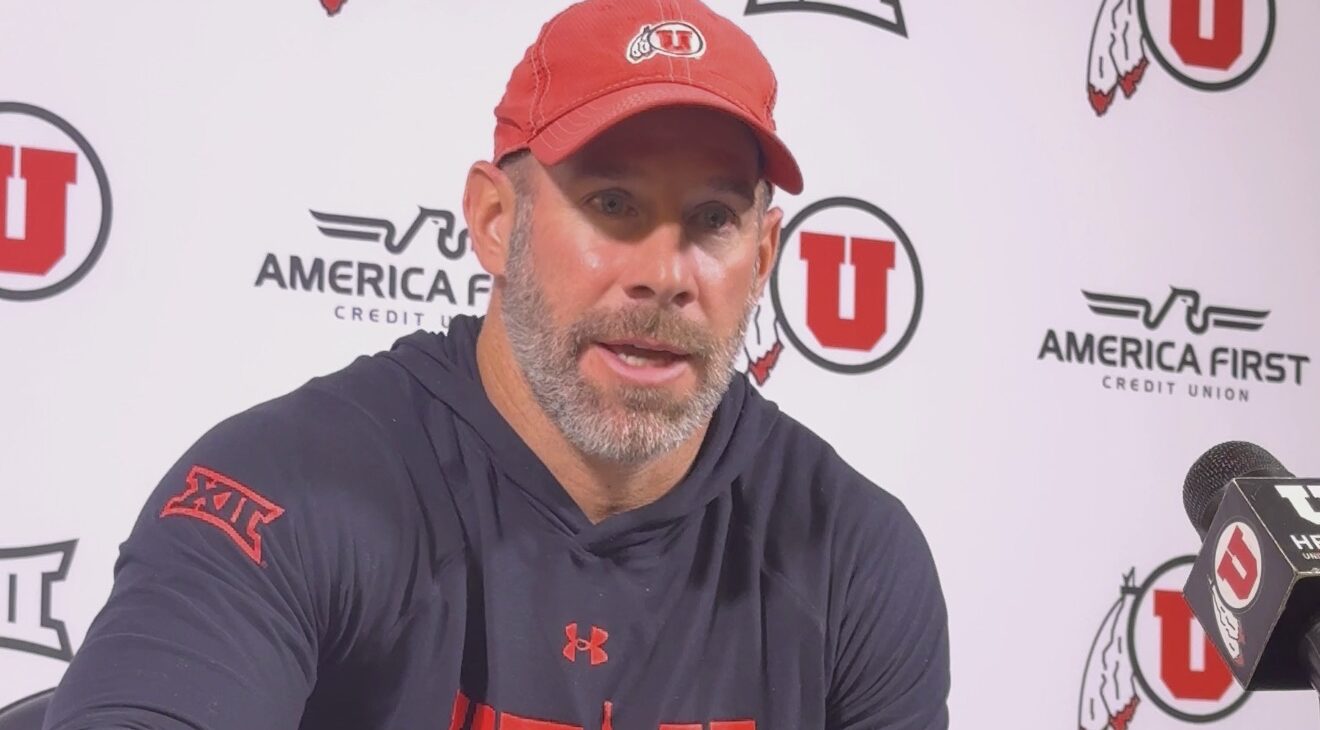
Dec 29, 2025; Seattle, Washington, USA; Utah Utes head coach Alex Jensen during the first half against the Washington Huskies at Alaska Airlines Arena at Hec Edmundson Pavilion. Mandatory Credit: Steven Bisig-Imagn Images

SEATTLE — Utah didn’t lose this game on effort, energy, or fight. It lost it in the margins — where shot quality turns into shot results, where one missed possession becomes a five-point swing, and where needing a third scorer becomes unavoidable.
Washington didn’t overwhelm the Utes with threes or tempo; it won by owning the paint, shrinking the floor, and punishing every Utah miss on the way to a 74–65 win that felt closer than the math ever suggested.
Here are the takeaways from tonight’s action.
Shot Quality vs. Shot Results — The second-half split was everything
Utah finished at 0.94 points per possession. Washington finished at 1.14.
That gap wasn’t created at the arc — it was created inside.
Utah shot 39.1% overall and 29.2% from three. Washington, despite hitting just 3-of-15 from deep (20%), shot 50.9% from the floor and an eye-opening 75% on two-point attempts in the second half.
The shot charts tell the story clearly:
-
Utah: 5-of-17 on twos after halftime
-
Washington: 12-of-16 on twos in the second half, including two dunks and four layups
Utah wasn’t careless. It just couldn’t convert when possessions tightened.
The 7-minute swing that decided the game
The defining stretch came between 15:39 and 8:18 of the second half.
During that span:
-
Utah went 3-of-11 from the field
-
Washington went 8-of-10 on two-point shots
-
The lead grew from 2 to 9
During that span, Utah generated looks that were mostly acceptable but rarely clean. Washington, meanwhile, almost all of them coming at the rim or on short, uncontested paint touches. What started as a one-possession game quietly grew from two points to nine, without a knockout punch — just steady pressure.
Even when Utah defended well, it couldn’t capitalize. Missed shots didn’t just stay missed — they turned into run-outs, deep seals, or free throws. Washington didn’t need to shoot threes to stretch the floor; it stretched Utah by making every Utah mistake count.
By the time Utah finally steadied itself around the 8:18 mark, the damage was done. The crowd was engaged, Washington was in rhythm, and Utah was now playing uphill — needing multiple clean possessions in a row to claw back.
Washington’s frontcourt size shrunk the floor
Hannes Steinbach and Franck Kepnang never hijacked the offense — they controlled the space around it. Together, they posted 24 rebounds, seven blocks, 12 free-throw attempts, and a +32 combined plus/minus, numbers that reflect influence more than volume.
Their presence forced Utah into constant compromise. Every paint touch required help, every drive came with a second defender looming. That shrank the floor and tilted the geometry of the game in Washington’s favor.
Once Utah collapsed, the chain reaction followed:
-
Zoom Diallo and Desmond Claude found clearer driving lanes.
-
Late-clock situations favored Washington’s size and balance.
-
Utah’s missed shots turned into run-outs, deep seals, or fouls instead of resets.
Washington didn’t need perimeter shooting to stretch Utah — it stretched them by making the paint non-negotiable. And when the game tightened, that advantage showed up at the line. The Huskies went 11-of-13 on free throws in the second half, calmly converting Utah’s desperation into points.
Brown and Dawes were the only reliable engines — Utah needed more
The numbers make this uncomfortably clear: Utah got consistent, two-way production from exactly two players — and that’s not enough to win a road game against a balanced opponent.
Terrence Brown and Keanu Dawes accounted for 38 of Utah’s 65 points (58%), and they were responsible for nearly all of Utah’s creation when the game tightened.
Brown finished with: 21 points, 5 assists, 4 steals, and 40% of Utah’s shot attempts while on the floor
Dawes added: 17 points, 9 rebounds, Utah’s best defensive metrics, and Utah’s most reliable interior efficiency
When Utah scored late, it almost always came through one of them — Brown off the bounce or Dawes cleaning up inside. The problem wasn’t what they did. It’s what didn’t happen around them.
No other Utah player reached double figures. Utah’s remaining rotation combined to shoot under 35% from the field, and Utah generated almost no secondary scoring once Washington keyed in on Brown’s downhill drives and Dawes’ rim runs.
This wasn’t about stars disappearing — it was about support never arriving. At this level, two producers can keep you competitive. They can’t carry you across the finish line alone. For Utah to win games like this on the road, the math is simple: someone else has to step up.
The Bottom Line
Utah stayed competitive because Terrence Brown and Keanu Dawes were excellent. It lost because they were alone.
Washington converted at the rim, controlled space with its frontcourt, and turned Utah’s acceptable looks into empty possessions that fueled separation.
On the road, against a physical and balanced opponent, Utah’s margin required precision — and when the game tightened, Washington executed while Utah searched.
This wasn’t about collapse. It was about reality: efficiency wins, depth matters, and someone else has to step up.