Devon Dampier taking ownership of his development by bringing Utah receivers to Arizona to train
Jun 9, 2026, 2:52 PM | Updated: Jun 10, 2026, 10:43 am

Devon Dampier and his receivers training in Arizona. Photo courtesy by Curtis Dampier/Tasha Jordan.

SALT LAKE CITY — After a strong first season at Utah, this offseason is critical for quarterback Devon Dampier.
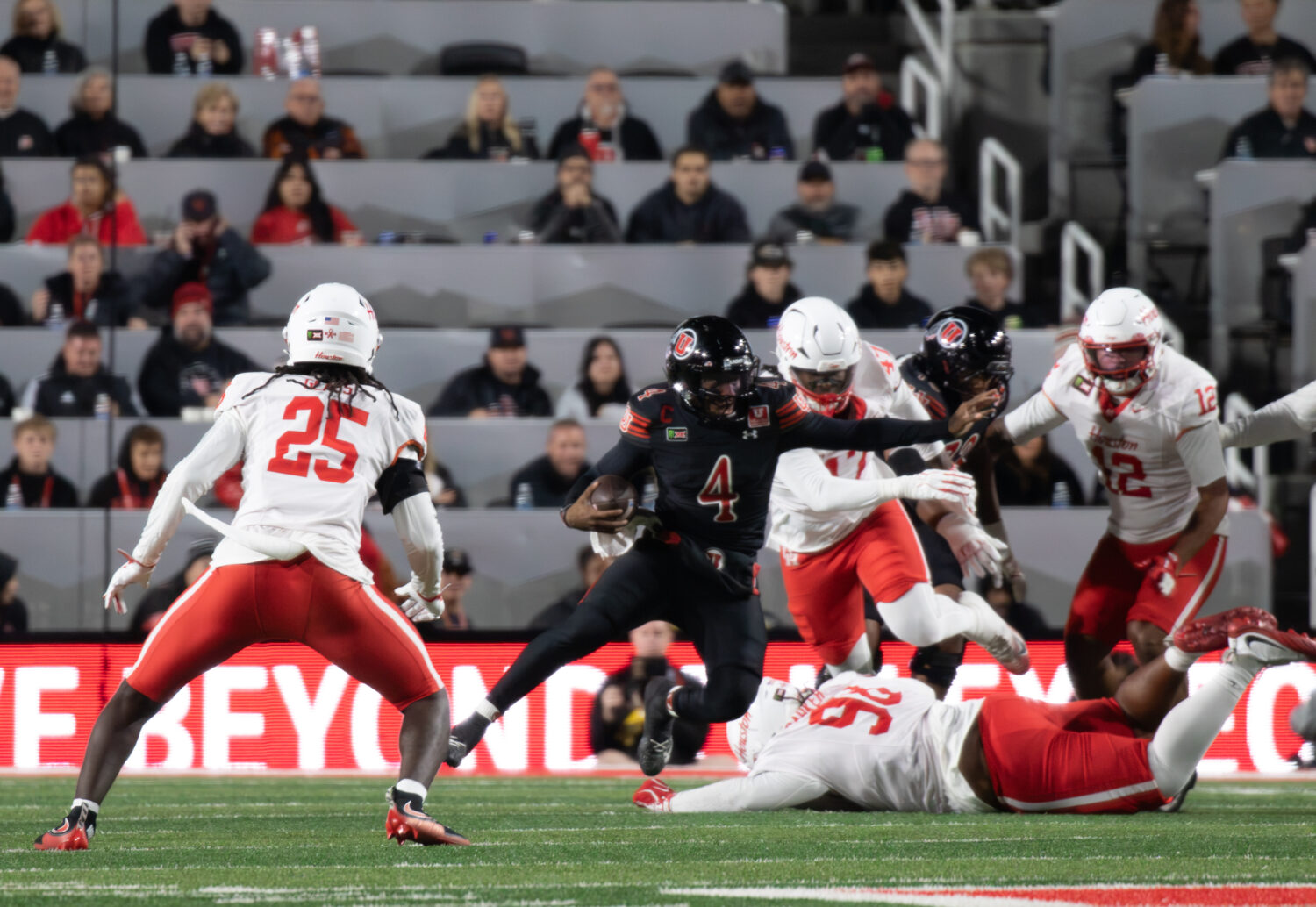
In 2025, Dampier proved he could play at a high level in the Big 12. He stabilized and brought confidence to a Utah offense that had spent the previous two seasons searching for it. He created with his legs, protected the football, pushed the ball down the field and helped lead Utah to double-digit wins.
That has been one of the central themes of Utah’s offseason. With Dampier throwing to a revamped receiver room, chemistry has become a key part of his development.
So, Dampier took matters into his own hands.
A week of training in Arizona for Dampier, receivers
About two weeks ago, Dampier rented an Airbnb and paid for flights for a group of Utah receivers to train with him in Arizona. Braden Pegan, Larry Simmons, Kyri Shoels and Ricky Johnson made the trip, giving Utah’s quarterback and several key pass-catchers a focused week of work during the early portion of the summer development window.
Dampier worked with his longtime quarterback trainer, Mike Giovando, while also bringing in James Everette Jr., known as The Route God, to train the receivers. The trip was about refining technique, timing, chemistry and ownership.
For Giovando, the biggest takeaway was not simply that Dampier got extra throws in.
“There’s the obvious football things, but to me it was entirely about him taking ownership of his development in a very mature manner,” Giovando said. “The whole ‘this is on me’ type of attitude, where I’m going to put in the work with my guys and we’re gonna build trust in one another, that’s the big-picture takeaway I took.”
That kind of ownership matters for Dampier and Utah. This offseason is about refinement — becoming cleaner with his reads, more consistent with his timing and more comfortable accessing every level of the passing game. And May, June and July are enitrely player-led months.
“Throwing and all of that, that could’ve been done in Utah,” Giovando said. “But it shows a little something extra, and it means a little something more, by bringing everyone down to spend a week together and spending as much time together as they did, it was all about building trust.”


Taking ownership, showing leadership
Every route gave him a chance to better understand how those receivers separate. Every throw helped build timing. Every rep gave the group an opportunity to sharpen details that can become important once the season begins.
Pegan gives Utah an experienced target with size and physicality. Simmons has already shown he can be an explosive piece in the passing game. Shoels brings vertical ability and playmaking upside. Johnson was one of the receivers who continued to show up during spring, quietly making plays and earning attention from Dampier and the staff.
The Utes need more consistency and connection between Dampier and his receivers if the offense is going to take another step. Utah wants to attack the perimeter, hit intermediate windows and push the ball vertically, but those throws require more than arm talent. They require timing, trust and a shared understanding of how concepts are supposed to unfold.
According to Giovando, the week reflected that kind of commitment from the entire group.
“I watched the group of guys, they all worked hard, they were working toward the same goal,” Giovando said. “You could really feel the collective effort toward the same goal in those sessions. They didn’t dodge workouts or drills. They worked hard in their sessions together, then spent extra time afterward on their own. They were really committed to getting as much work done as possible.”
It is also the kind of leadership Utah needs from Dampier. The trip does not guarantee anything this fall. It does not mean the offense is a finished product. It does not erase the normal ups and downs that come with learning a new system or building timing with a developing receiver room.
“They spent so much time together, throwing, working out at the gym, going to dinner, all of that” Giovando said. “Again, it was all about building that trust in each other, and that time together on and off the field, I think really did a lot for them. One of the receivers told me, ‘I’ll do anything and everything to make sure Dev succeeds this season’ and that’s the kind of mentality this sort of thing creates.”
But it is a meaningful sign. Dampier is not waiting for fall camp to continue the process. He is investing in it himself. That investment actually began before the receivers arrived.
“With Dev, we worked a lot on his footwork, like getting to balance quicker, eliminating some of the unnecessary steps, and just his other fundamentals,” Giovando said. “He was down working three weeks, right after spring ball, before bringing everyone down and working out together for a week.”
The focus is not on changing who he is as a player. His athleticism, playmaking ability and confidence are part of what made him effective last season. The goal is to sharpen the pieces around those traits — the footwork, timing, balance, decision-making and consistency.
The Bottom Line
Devon Dampier’s Arizona trip does not guarantee Utah’s offense will take the next step, but it does say something important about the quarterback leading it.
This was not a coach-driven workout or a routine offseason throwing session. Dampier paid for the trip, brought key receivers with him, worked with his longtime trainer and created an environment centered on chemistry, trust and shared accountability. That matters because Utah does not just need Dampier to be productive in 2026. It needs him to be the tone-setter for an offense trying to become more complete.
Leadership at quarterback is often measured in how a player responds when nobody is forcing the work. In this case, Dampier took ownership of his development and brought others into that process with him. For Utah, that is a meaningful sign.
If the Utes are going to push toward the top of the Big 12 in Morgan Scalley’s first season, they need more than talent from their quarterback. They need direction, urgency and buy-in. Dampier’s offseason approach suggests he understands that responsibility.