ESPN’s QB tiers ranking place Devon Dampier in prove-it category as Big 12 race takes shape
May 27, 2026, 11:14 AM | Updated: 12:47 pm

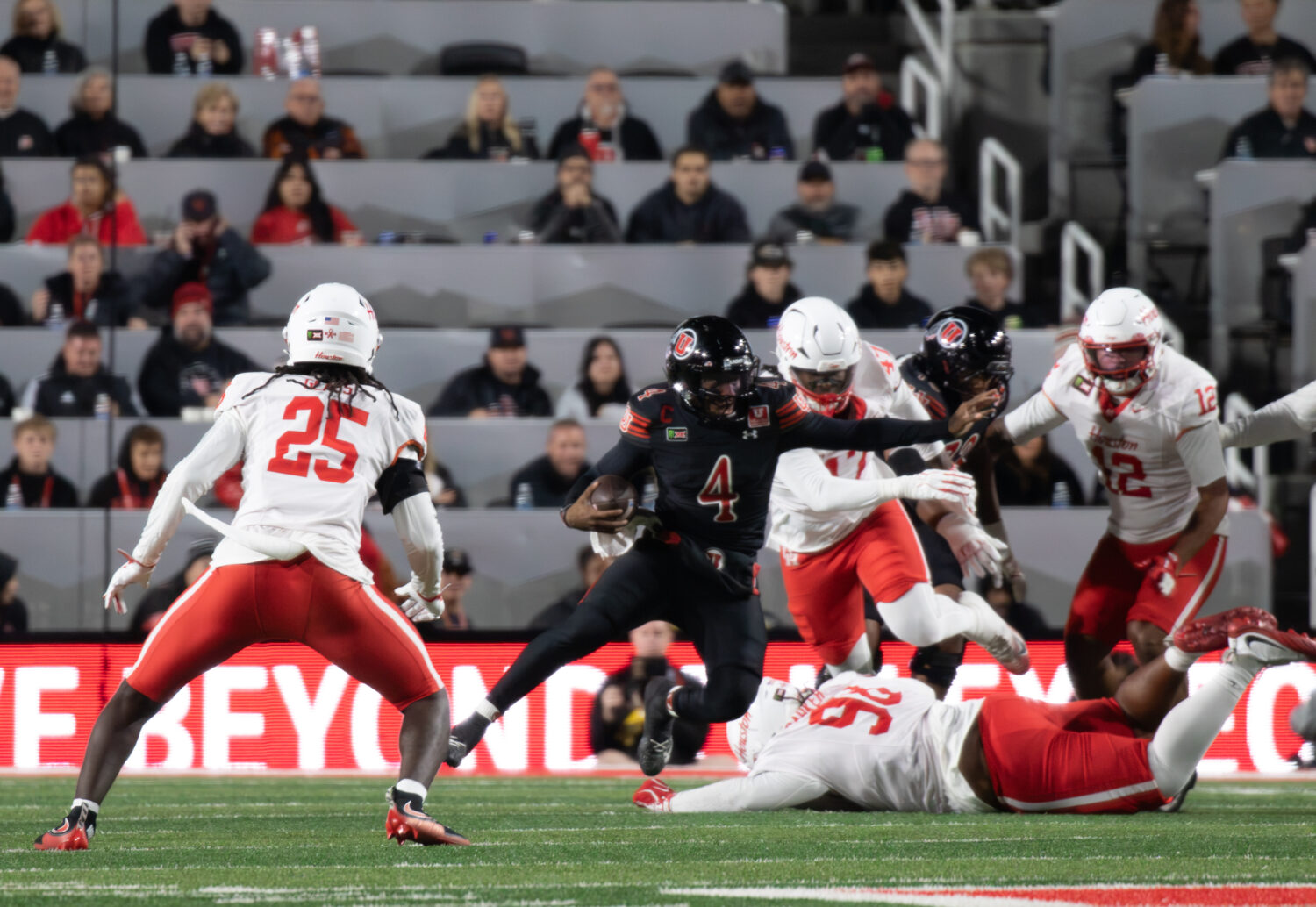
SALT LAKE CITY — ESPN’s latest ranking of all 138 FBS quarterback situations puts Utah quarterback Devon Dampier in a spot that feels both respectful and revealing.
Dampier is not being treated as a question mark. He is not being buried in the middle of the sport. But he also is not being placed in the national elite tier just yet.
Instead, ESPN placed Utah’s quarterback situation in Tier 3: “The Sean Clifford Zone,” alongside Georgia’s Gunner Stockton, Indiana’s Josh Hoover, Oklahoma’s John Mateer, Penn State’s Rocco Becht and Texas A&M’s Marcel Reed.
The label is not meant as a dismissal. It is more specific than that. ESPN’s framing is essentially this: these are quarterbacks good enough to win a lot of games, stabilize a contender and put their teams in position — but the remaining question is whether they can be the difference against the best teams on the schedule.
Whether it was yards, touchdowns, or wins Devon Dampier proved he can produce in the Big 12 last season.
But now, it's about taking full offensive control and mastering his responsibilities. And if he makes that leap, Utah isn’t just good…https://t.co/cUkPveirlm
— Steve Bartle (@BartleKSLsports) April 16, 2026
For Utah, that is a fair place to begin the 2026 conversation.
Dampier already proved he could translate from New Mexico to the Big 12. He gave Utah the dynamic quarterback presence it had been searching for, and his production last season placed him in rare company. ESPN noted that only three quarterbacks finished last season with at least 34 touchdowns, 3,300 yards and six or fewer turnovers: Heisman Trophy winner Fernando Mendoza, Cincinnati’s Brendan Sorsby and Dampier.
That is the upside. The next step is the separator.
The respect is obvious
The first takeaway from ESPN’s tiering is that Dampier has clearly changed the perception of Utah’s quarterback room.
A year ago, the conversation around Utah was about projection. His 13:13 TD-INT ratio was the hot topic all summer. Dampier was an obvious dual-threat talent but the turnovers and jump in competition left many skeptical. Utah needed to find out whether his athleticism, toughness and playmaking would hold up against Big 12 defenses.
That answer came quickly, immediately even, as Dampier shined in the opening game of the season against UCLA. He gave Utah a legitimate offensive identity. He created with his legs, protected the ball well enough, and made the offense more difficult to defend because he forced defenses to account for quarterback run game, movement throws and extended-play production.
That matters because Utah’s 2026 ceiling is tied directly to whether Dampier can be more than a productive quarterback. He needs to be a championship-level quarterback.
ESPN’s ranking reflects that tension. Dampier is viewed as one of the better quarterbacks in the country, but the national evaluation still wants to see more in the biggest spots.
The concern is also clear
ESPN’s critique centered on Dampier’s performance against the better teams Utah faced. The article noted that Dampier faced only three teams that finished better than 7-6 last season (Cincinnati finished exactly 7-6), and in those games he threw two touchdowns, three interceptions and averaged 5.6 yards per dropback (he did run for 211 yards and three touchdowns).
That is the number Utah has to change.
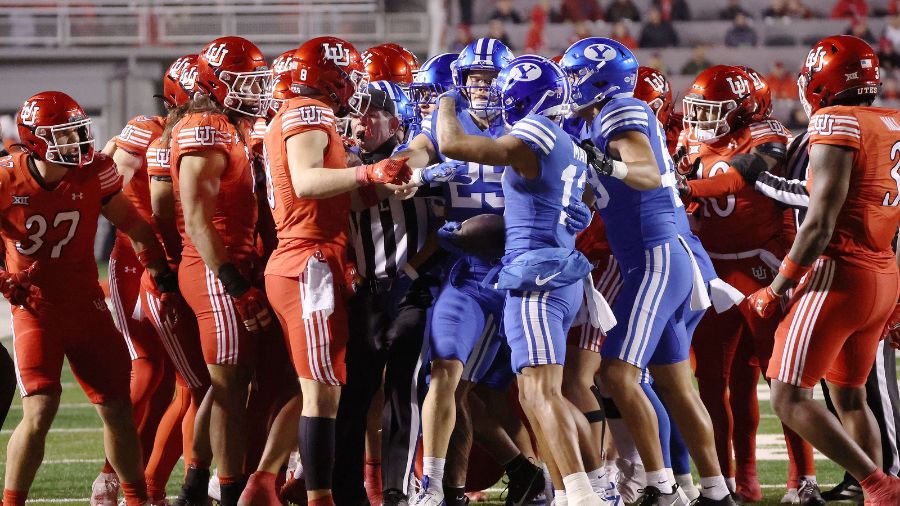
Now, in those games, there’s context to consider. Dampier wasn’t fully healthy, missing two practices ahead of the Texas Tech matchup. He suffered an ankle injury in the BYU game. And there was a downpour of rain against Arizona State.
Another factor to consider was the talent around Dampier last season. Utah’s leading receiver was Ryan Davis, who provided remarkably reliable. Dallen Bentley also emerged as a steady pass catcher.
But Utah lacked dynamic ability in the receiver room, which hindered the potential of the passing attack as explosives were hard to create.
Dampier has already shown he can raise Utah’s floor. Utah has improved the talent and depth in the skill positions. The question now is whether he can raise the ceiling. That is what Utah will need from him to meet their Big 12 title ambitions.
How the Big 12 stacks up
The ranking also gives a useful snapshot of how ESPN views the Big 12 quarterback landscape.
Utah sits in a strong position because Dampier is one of the league’s most proven returning difference-makers. But the conference is not short on quarterback intrigue.
Arizona’s Noah Fifita and Houston’s Conner Weigman landed in Tier 4: “Better than you thought,” a group ESPN described as quarterbacks whose numbers deserve more attention than their reputations have received.
BYU’s Bear Bachmeier was placed in Tier 5: “The Christian Hackenberg Paradox,” which points to the volatility of a young quarterback who flashed major upside as a true freshman but still has development questions attached. ESPN specifically noted that Bachmeier joined a rare group of Power Four/Power Five quarterbacks over the past 20 years to produce 3,000 passing yards, 500 rushing yards, 25 touchdowns and 10 or fewer turnovers in a season.
Oklahoma State’s Drew Mestemaker was included in Tier 6: “Welcome to the big leagues,” a category built around quarterbacks making a larger jump into Power Four competition or taking on a much more difficult situation.
The broader point is simple: the Big 12 has quarterback depth, but not a clean, obvious hierarchy.
That benefits Utah in one sense because Dampier is already established. It also raises the pressure because the teams with the best quarterback play in this league are the teams most likely to separate over nine conference games.
What it means for Utah
For Utah, ESPN’s ranking should be viewed less as a slight and more as a challenge.
Dampier is good enough for Utah to contend. That is no small thing. In a league where margins are thin and roster volatility is constant, having a proven, dynamic quarterback gives the Utes one of the most important advantages in the conference.
But the tier also captures the next phase of his development.
Utah does not need Dampier to become a different player. It needs him to become a more complete version of the player he already is. The explosive running ability, toughness and creativity are already there. The next step is consistency against the best defenses and the best quarterback rooms on the schedule.
Utah’s new offensive weapon, Braden Pegan, has been instrumental in getting everyone else up to speed in the new offense according to Devon Dampier. @kslsports pic.twitter.com/KfPvn9cRzf
— Steve Bartle (@BartleKSLsports) March 20, 2026
That growth should also be helped by an improved receiver room. Utah has made a clear effort to give Dampier more answers on the perimeter, and a deeper, more reliable group of pass-catchers should make the offense less dependent on improvisation and quarterback-created plays.
That matters because quarterback development is rarely isolated. If Dampier has more separation outside, more trustworthy targets on possession downs and more explosive options after the catch, the path to becoming a more efficient passer becomes much more realistic.
That is where Big 12 title races are decided
The Bottom Line
ESPN’s tier ranking places Devon Dampier in the right conversation. He is not being treated as a sleeper anymore. He is being evaluated like a quarterback expected to lead a contender.
For Utah, the equation is pretty straightforward: if Dampier stays in the “very good” category, the Utes should be in the Big 12 race.
If he pushes beyond that tier and becomes one of the league’s true game-swinging quarterbacks against top competition, Utah’s ceiling changes.
That is the difference between being in the mix and being one of the teams everyone else is chasing.