Kyle Whittingham wanted to remain at Utah, according to newly revealed documents
Mar 20, 2026, 10:05 AM | Updated: Mar 21, 2026, 9:33 am

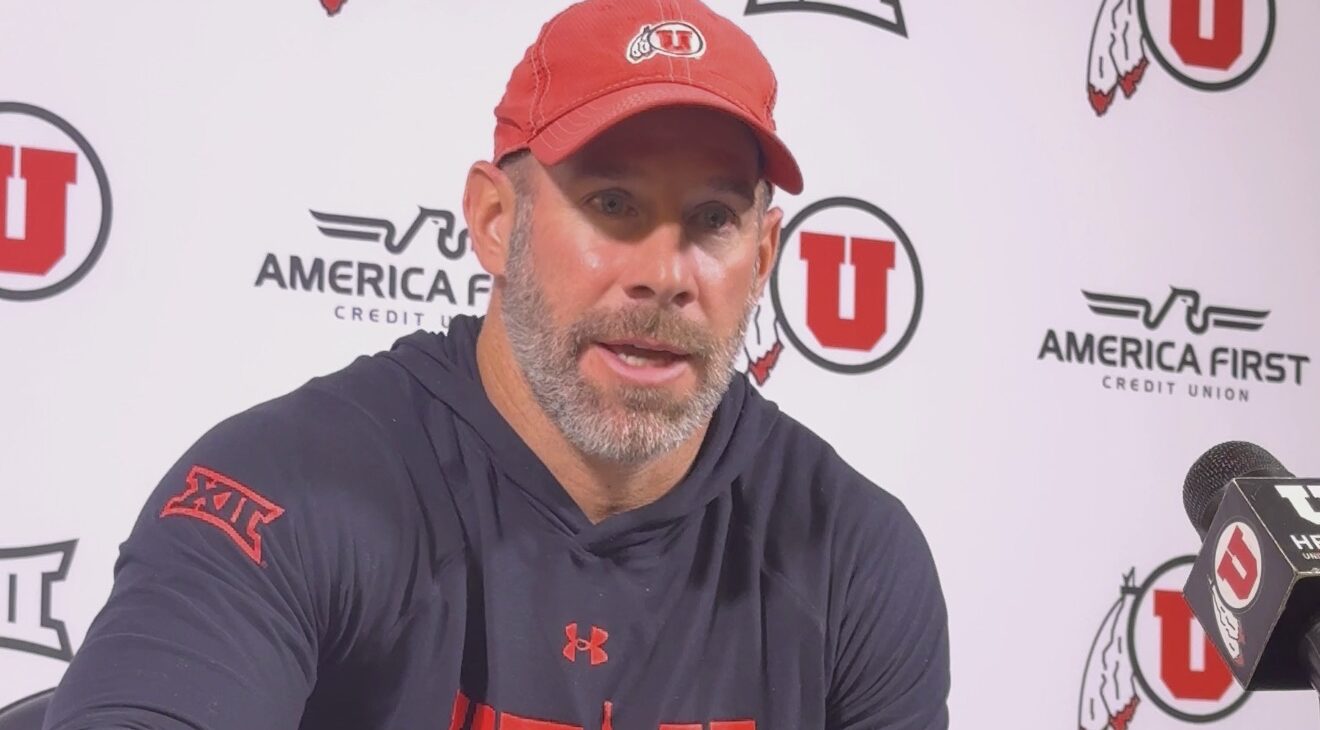
Utah Utes head coach Kyle Whittingham walks on the field after an NCAA football game against the Colorado Buffaloes at Rice-Eccles Stadium in Salt Lake City on Saturday, Oct. 25, 2025. (Photo courtesy of Tess Crowley, Deseret News)
(Photo courtesy of Tess Crowley, Deseret News)

SALT LAKE CITY— December was supposed to be the bow on Kyle Whittingham’s career at Utah. It took an unforeseen twist, when he stepped down and then accepted the job at Michigan.
Following the whirlwind were nothing but questions about what transpired —two weeks that flipped a 21-year legacy into a cross-country reset, and turned a carefully planned succession into a stress test for the entire program.
On Friday, Utah released contract and amendment details that shed some light on what happened.
View this post on Instagram
Contract Tension Behind the Scenes
While the public framing of Whittingham’s exit centered on timing and opportunity, internal correspondence and contract discussions reveal a more complicated backdrop—one driven by expectations, resources, and control.
According to the email exchanges and contract details, Whittingham made it clear he was not ready to walk away. Instead, he expressed a desire to continue coaching at Utah, but under terms that reflected both his longevity and the evolving demands of the job.
On Dec. 3rd, Whittingham’s agent provided new contract requests that included:
- Salary – $9 million / $9.6 million
- NIL Resources – $20 million
- Increased assistant coach salary pool – $2 million
On Dec. 6th, Utah’s counter offer suggested the program had a different view:
- Contract terms – Agreement would end the day after the final game of the 2026 season
- Salary – $8 million
- As of February 1st, 2026 – Morgan Scalley would have final decision making power over roster recruiting and personnel staffing
Outside of that framework, Whittingham had the option to transition into a previously defined retirement role outlined in an earlier amendment to his contract—one that included $3.45 million in compensation paid over two years.
But the two sides never reached full alignment. Instead, they pivoted.
On Dec. 12—the same day Whittingham publicly announced he was stepping down—Utah and Whittingham executed a fourth amendment to his contract, reframing the situation as a formal transition. That amendment established a $13.5 million “transition bonus,” paid out in three installments over three years, with the first payment—$8 million—scheduled for January 2026.
The total buyout amount: $13.5 million
- First installment – $8 million to be paid January 8, 2026
- Second – $4 million paid January 8, 2027
- Third – $1.5 million paid January 8, 2028
But even that agreement didn’t hold cleanly.
Utah issued the first installment later than scheduled, January 23, and in doing so, athletic director Mark Harlan included a pointed message—expressing that the university was “disappointed” Whittingham had accepted the Michigan head coaching position and began recruiting coaches and staff to follow him.
“As you know, the University was disappointed by your actions last month. The University felt that your involvement with recruiting our football coaches and staff to Michigan was contrary to the terms of your employment agreement which requires you to assist with a smooth and successful transition of the football program to the new head coach and his coaching staff.” – Mark Harlan
What was designed to be a structured, collaborative transition ultimately became something more complicated—a negotiated exit that, in the end, didn’t follow the script either side originally envisioned.
Kyle Whittingham’s pivot to Michigan
Everything accelerated in the days before Christmas. Michigan, reeling from the firing of head coach Sherrone Moore amid scandal, needed stability—fast. And Whittingham, long removed from the coaching carousel, suddenly became the focus of their search.
By December 26, it was done. Michigan agreed to a five-year deal with Whittingham, averaging over $8 million annually, to become its next head coach.
Whittingham informed his team he would not coach the Las Vegas Bowl, the game that had been framed as his farewell. Instead, he immediately pivoted to Michigan—traveling to join the program as it prepared for the Citrus Bowl.
Who Followed Whittingham to Michigan
Coaches
-
Jason Beck — Offensive Coordinator
-
Jim Harding — Offensive Line Coach
-
Micah Simon — Wide Receivers Coach
-
Freddie Whittingham — Tight Ends Coach
-
Koy Detmer Jr. — Quarterbacks Coach
-
Lewis Powell — Defensive Line Coach / Run Game Coordinator
-
Jay Hill – Defensive Coordinator
- Jenaro Gilford – Defensive Backs Coach
Players / Recruits
-
Salesi Moa (WR, 2026 signee)
-
JJ Buchanan (TE)
-
John Henry Daley (DE)
-
Smith Snowden (DB)
- Jonah Leaea (DL)
The Bottom Line
For all the talk about timing, succession, and evolution, the simplest truth is this: Kyle Whittingham wanted to keep coaching the Utes, but Utah was ready to officially begin transitioning to a new era.
Whittingham proved it immediately—accepting a five-year deal at Michigan within weeks of stepping down. And behind the scenes, reports and documents reinforce the same idea that he wasn’t easing out, he was still engaged in what came next.
But Utah had the coach in waiting, and was ready for that transition to begin. They tried to find a middle ground that placated both Whittingham’s demands and their desire to transition to Scalley. However, that was not the route the two parties chose.
In the end, Utah sided with the coach that would open the window to the next 20 years, rather the one closing in the next two.
He’s reinvigorated the vibes within and around the program. Most importantly, he’s hit the ground running and seems much better equipped to handle all of the demands— recruiting, development, NIL, etc— on head coaches in today’s game.
As difficult as it may be to see a legend leave, Utah’s future looks bright with Scalley at the helm.