Morgan Scalley’s alumni plan aims to make Utah football family last beyond the final snap
Aug 20, 2026, 7:30 AM | Updated: 11:35 am

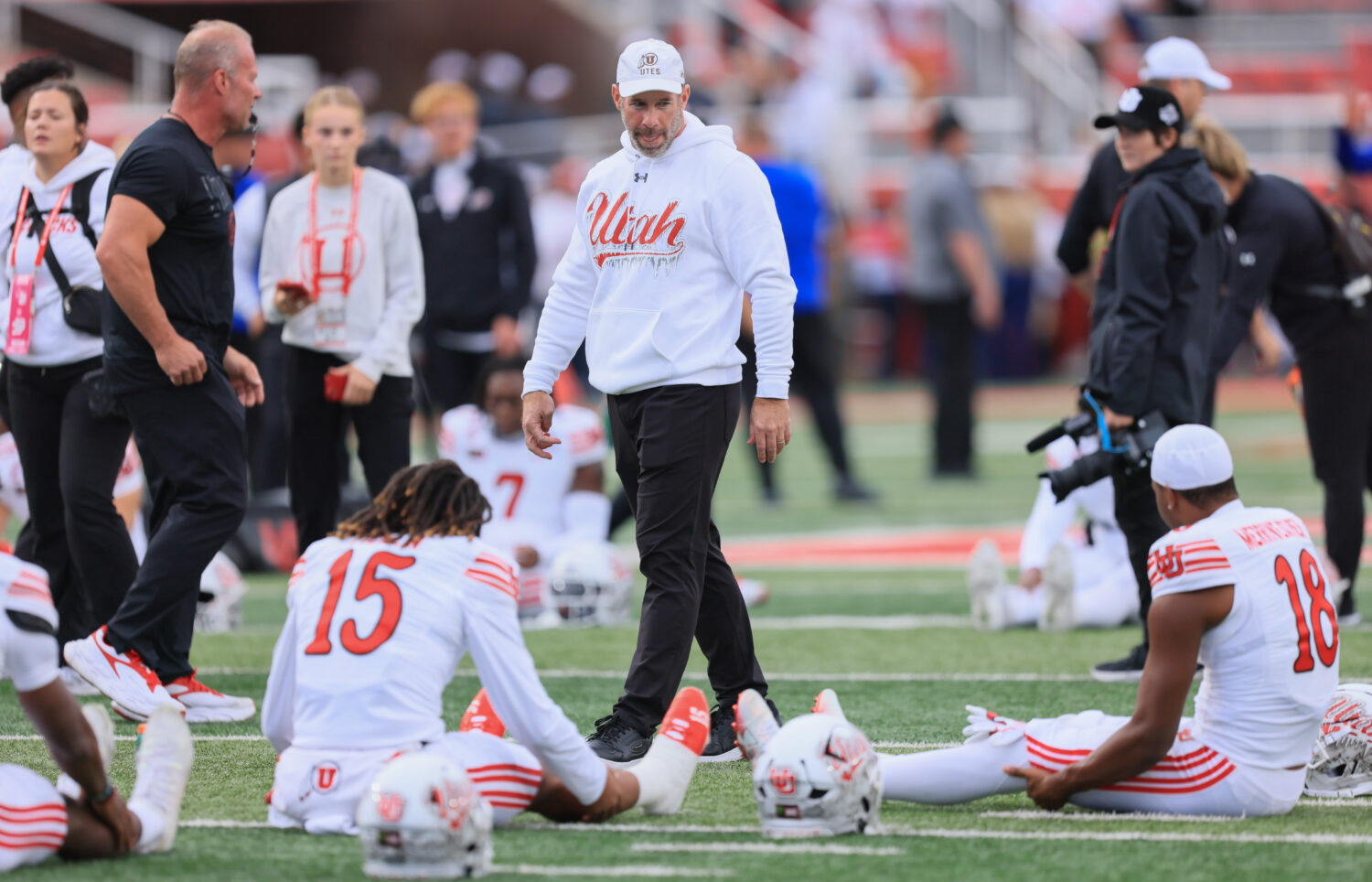
SALT LAKE CITY — Morgan Scalley wants former players to occupy a larger and more active role within Utah football. One of his early moves as head coach was hiring former Ute Bo Nagahi as director of alumni relations.
The position reflects Scalley’s increased emphasis on keeping alumni connected, welcomed and involved long after their playing careers end.
Utah has spent decades building its identity around family. Scalley and Nagahi now want that relationship to extend beyond the locker room through greater access, stronger connections and practical support after football.
“Family was a huge proponent of what we believed and what we lived,” Nagahi told the Utah Blockcast. “That is going to hold true even after playing football.”
That is the real test. Family is easy to promote while players share a locker room. Scalley and Nagahi want former Utes to continue experiencing it long after they return their jerseys.
Nearing the halfway point 📈#GoUtes | #RSNB pic.twitter.com/NvvcE67dR2
— Utah Football (@Utah_Football) August 17, 2026
Turning family into a responsibility
The creation of Nagahi’s position provides an interesting reflection on Utah’s previous approach. Kyle Whittingham’s program built one of the strongest cultures in college football.
Its stability, development and toughness transformed Utah over the years. The relationships formed within that program were real.
Still, alumni engagement largely depended upon those individual relationships rather than a consistent system designed to reach every former player.
Sustaining those relationships after football was not organized as a primary responsibility—a surprising omission that stands out for a program built around “family”
Connection requires more than good intentions. Someone must maintain contact, create opportunities and ensure access does not depend upon knowing the right coach.
That is now Nagahi’s job.
“My main objective with this program is connection, engagement and access,” he said.
Nagahi wants Utah’s alumni operation to become a dependable network providing relationships, professional opportunities and practical support.
“It’s actually been like a dream come true to be back with the program again,” Nagahi said. “It was important for him to establish an alumni program for Utah football, and having the perspective of an alum myself, I felt the same way.”
Scalley and Nagahi are attempting to make family an active responsibility rather than merely a program slogan.
The relationship should continue after football
Nagahi understands how abruptly the structure of college football can disappear.
Players spend years organizing their lives around the next practice, game and season. Then eligibility ends, the schedule disappears and many are left without a clear next step.
“I left the university with a degree in my hand, and I didn’t know what to do after that,” Nagahi said. “In speaking to a lot of my teammates and other former players, I realized that I wasn’t the only one who felt that way.”
That experience shaped his vision for Utah’s alumni program.
Nagahi wants it to provide career connections, mentorship, degree-completion assistance and mental-health or substance-abuse support—practical resources rather than only invitations to social events.
“You give everything that you have as a student-athlete,” he said. “For that program to give you a head start or kick-start into a career or life after football is incredibly important.”
The program is still being developed. Nagahi has begun a “research tour” involving former Utes from several generations, listening to needs that range from career assistance to mentorship and reconnection.
That work reflects Scalley’s broader vision of Utah football as more than its current roster. The operation also includes the people who helped build its identity.
View this post on Instagram
Access creates connection
Some of the changes are already visible. Former players have become a more regular presence at practices and program events. They have brought their families and returned to spaces that can begin to feel distant once a playing career ends.
Utah has also introduced an alumni credential intended to make that access more consistent.
Those steps may appear ceremonial compared with the larger goals involving careers, education and personal support. But the program must first establish that former players are welcome.
Former Utes cannot mentor current players or build professional relationships across generations without opportunities to connect.
Football provides immediate common ground. The uniforms, facilities and conferences have changed, but many of the experiences remain familiar.
“It doesn’t matter when you played,” Nagahi said. “All that matters is that you played Utah football.”
Those shared experiences allow former players to help current Utes navigate the physical grind, depth-chart uncertainty and eventual transition out of football.
Utah has always possessed those potential mentors. Nagahi’s job is to intentionally connect them with players who can benefit.
“It’s my job to understand: What are your plans? What are your passions?” he said. “Is it a Plan A? Is it a Plan B? Let me help you make those connections.”
Morgan Scalley provides the bridge
Scalley gives the alumni initiative credibility because he belongs to nearly every chapter of Utah’s modern football story.
He played for the Utes, built lifelong relationships within the program and spent most of his professional career helping shape its identity. Former teammates know him as one of their own. Younger alumni remember him as their coach. Older players recognize how much of his life he has invested in Utah.
“He’s our head coach, but he also was a very good player at one of the peak moments of Utah football,” Nagahi said. “Everybody knows him, whether they played before him or after him.”
That history helps explain why reconnecting former players has become a priority.
Scalley did not inherit Utah’s traditions secondhand. He lived them alongside many of the people the program is now inviting back. His approach preserves the toughness and consistency established under Kyle Whittingham while creating a more intentional place for the generations that helped build it.
Utah already had the family. Scalley and Nagahi are trying to keep it together.
The early enthusiasm must still become dependable programming. Practices and reunions can reopen the door, but lasting credibility will come from mentorship, career opportunities and personal support former players can consistently access.
“I would say consistency,” Nagahi said. “Something where alums from all different ages and eras know that there’s a place here.”
Scalley is uniquely positioned to create that place because his connection to Utah crosses eras and roles. He has been a player, teammate, assistant and coordinator. Now he is the head coach responsible for carrying the program forward without disconnecting it from the people who brought it here.
Nagahi needed only four words to explain why Scalley can serve as that bridge.
“He is Utah football.”
The Bottom Line
Scalley has described culture as what people believe, how they behave and the experience that follows. Utah’s alumni initiative will test whether that culture extends beyond the current locker room.
The family created during the Whittingham and McBride eras was real. What it lacked was a consistent structure for keeping former players connected.
Scalley and Nagahi are now building one through greater access, stronger relationships and practical support after football.
The work remains in its early stages, but the objective is clear: Utah does not want former players merely to remember that they were once part of the family. It wants them to know they still are.