Unloading the notebook: Offensive-line combinations remain open as camp enters its final stretch
Aug 17, 2026, 2:32 PM | Updated: Aug 18, 2026, 10:00 am
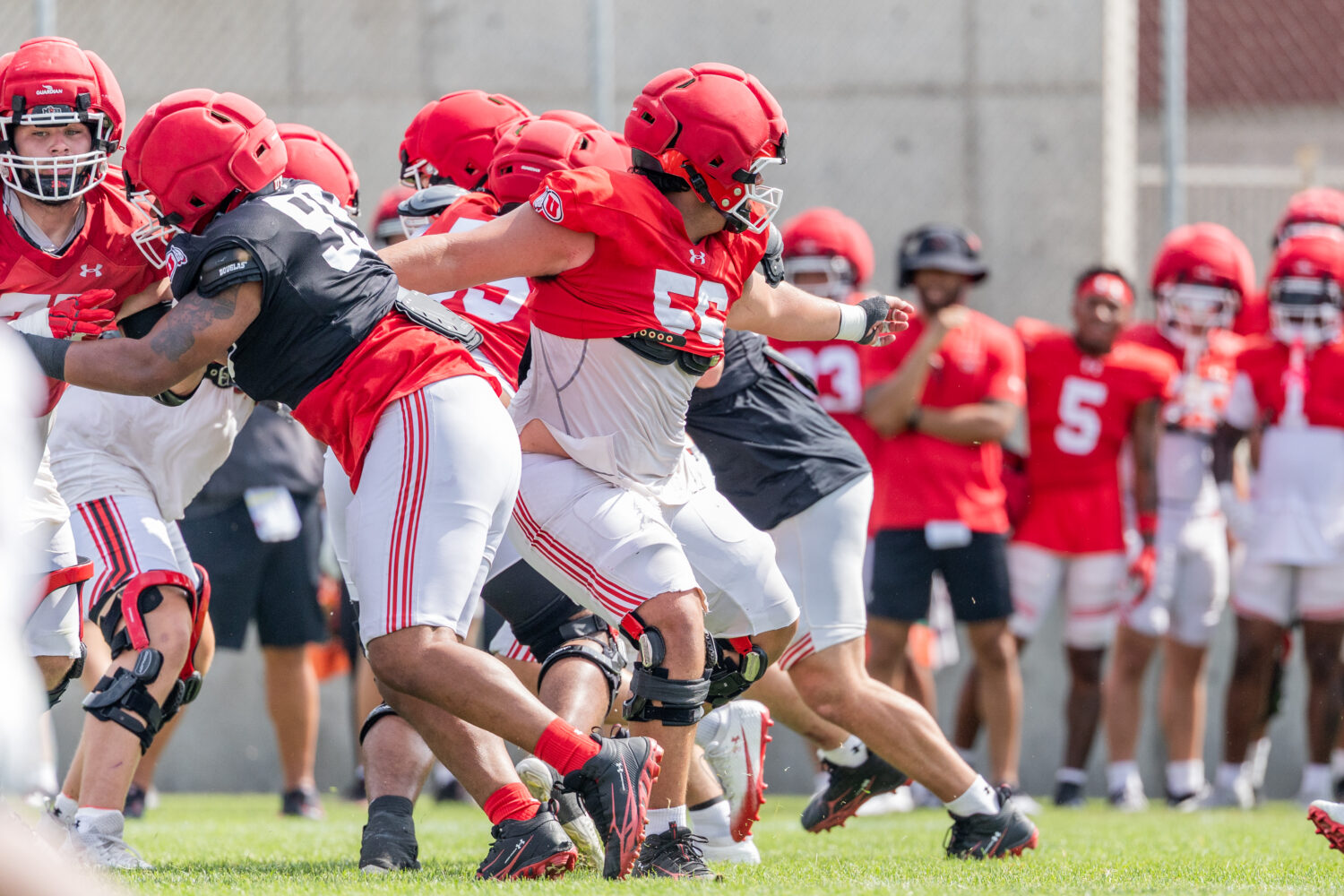
Utah football offensive & defensive lines. Photo courtesy by Utah Athletics.

SALT LAKE CITY — Fall camp begins with fresh legs, unlimited optimism and approximately 47 players positioned for breakout seasons.
Then everyone wakes up two weeks later super sore, the installation meetings keep multiplying and the same teammate lines up across from you for what feels like the 900th consecutive rep.
Welcome to the dog days.
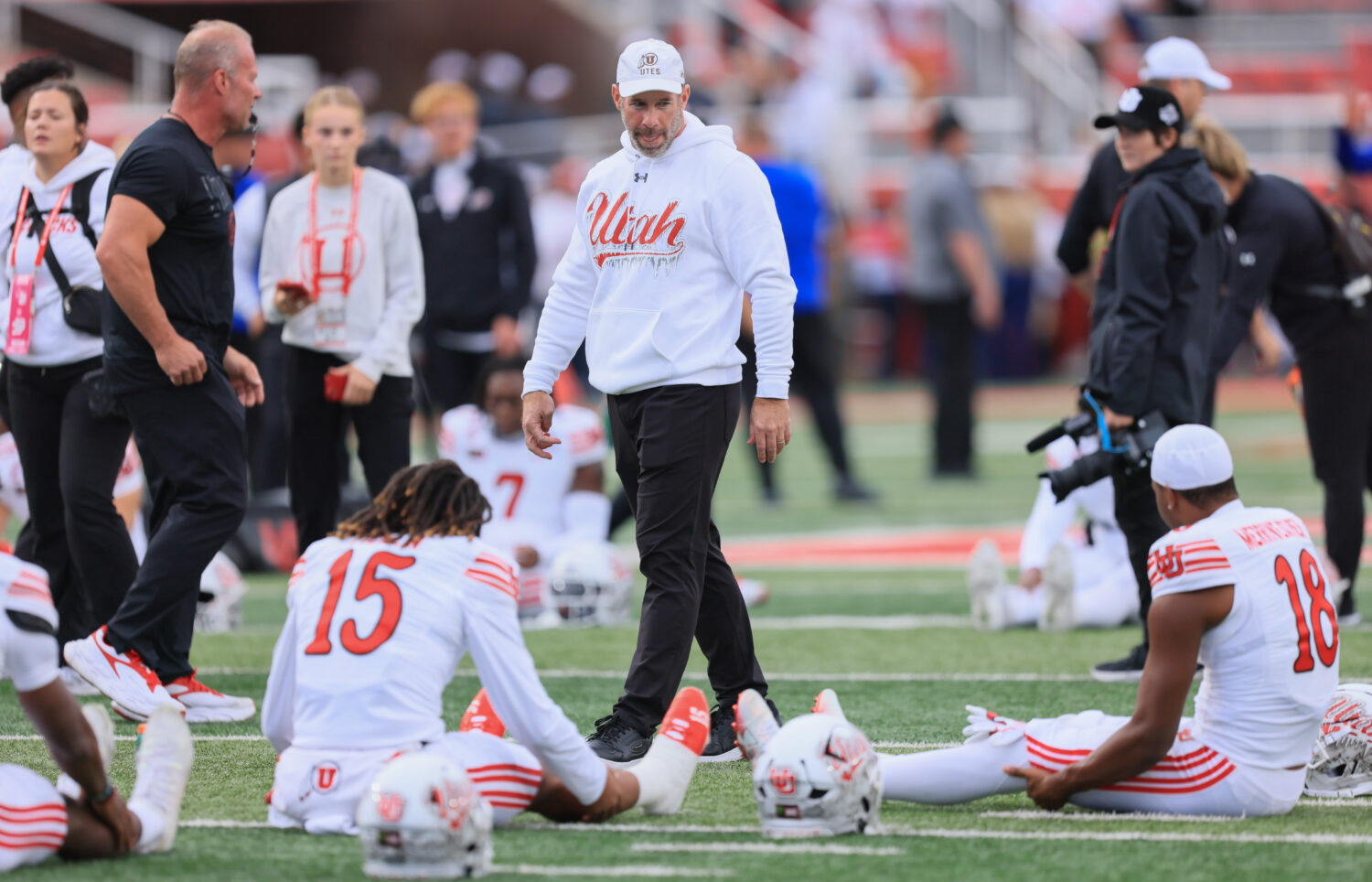
“You’re getting into kind of the dog days of fall camp,” Utah coach Morgan Scalley said Monday. “It’s easy to have energy on Day 1, easy to be excited on Day 1. It’s having that same energy throughout.”
Utah’s first major scrimmage Saturday offered a useful look at how the Utes are handling that stage of camp.
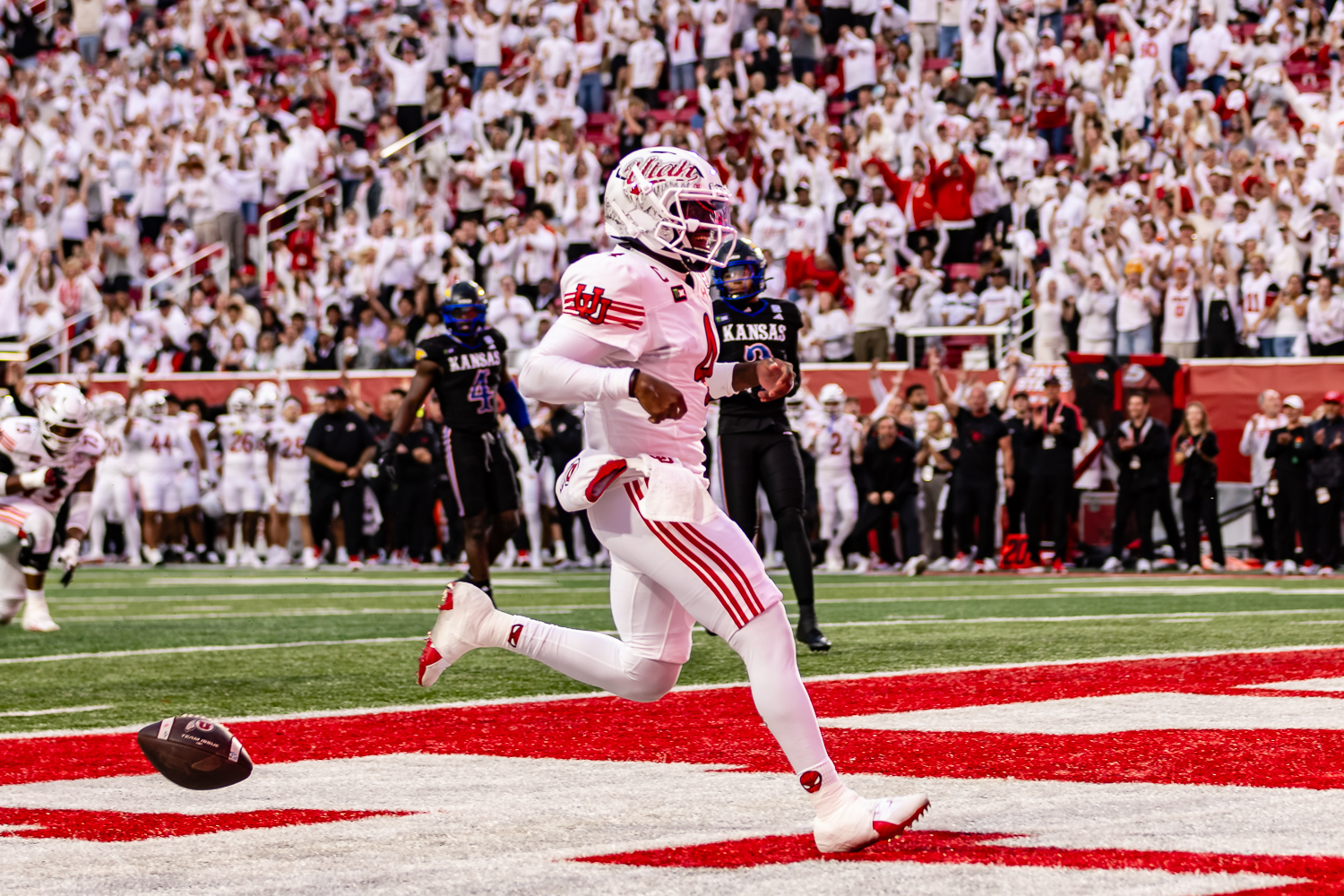
The offense and defense traded successful stretches. Individuals made noticeable plays. The kicking game continued to perform well—perhaps a little too well for the offense’s liking. Utah reached the red zone often enough but settled for too many field goals instead of touchdowns.
The broad questions surrounding the Utes are also becoming more specific. The offensive line appears physically capable, but the starting five remains unsettled. The defensive line looks deeper, but the defensive-tackle rotation is still being sorted out.
The opening excitement has served its purpose. Now comes the less glamorous part: identifying which players can maintain their energy, absorb corrections and continue improving once fall camp begins to feel exactly like fall camp.
Here are the notes and takeaways from Monday’s availability with Morgan Scalley, Devon Dampier, Solatoa Moea’i and Hunter Andrews.
Offensive line is physical enough, but still not settled
Utah has not narrowed its offensive-line competition to two or three preferred combinations.
Scalley said minor injuries have continued to move players around, and no starting spot has been finalized.
“We’ll have our dudes by game one,” Scalley said.
The encouraging part: Scalley does not believe the group is dealing with one obvious deficiency.
“I think we’ve gotten to the point where we’re physical enough,” Scalley said. “The pre-snap penalties are being cut down. Just continued progress. There’s not one glaring thing where I’m sitting there saying, ‘We’re deficient here.’ It’s just maybe a little bit cleaner in the things that we’re doing, from protection to taking on slanters.”
The offensive line’s primary question has shifted.
Utah entered camp needing to determine whether it had enough physically capable linemen to replace all five starters. The current challenge is identifying the right five and giving them enough work together to improve their communication.
Dampier has noticed progress in both areas.
“Chemistry and toughness is what I’ve seen,” Dampier said. “We had a full starting group last year, so for all of them to get in here, they were a little nervous. I feel like they weren’t fully themselves starting off spring ball.”
According to Dampier, the summer helped the group develop confidence and begin embracing the responsibility of becoming Utah’s new starting unit.
The players look more comfortable. They are communicating better. Now Utah has to settle on a lineup and determine whether that progress holds up against an opponent.
Alex Harrison is taking ownership at center
Dampier singled out Alex Harrison when asked which offensive lineman has stood out.
“Big Al, he manages a lot being the center,” Dampier said. “It takes a lot to find a way to make all five of those guys work together. That’s a huge role for a center to have, and he’s doing a great job of it.”
That is especially important for an entirely rebuilt group.
Utah did not only lose five starters. It lost most of the line’s shared experience. The new group must recognize pressure, communicate through defensive movement and understand how each assignment changes after the snap.
Harrison appears to be taking responsibility for organizing those five pieces.
Moea’i also identified Harrison, Zereoue Williams and Keith Olson as leaders within the room. As Utah’s most experienced returning offensive lineman, Moea’i has tried to help younger players with their sets, footwork and other details between repetitions.
View this post on Instagram
Kelvin Obot continues to push for a role
Scalley offered a simple assessment of freshman Kelvin Obot.
“He’s looking really good,” Scalley said. “But he understands the stuff he needs to work on.”
Moea’i arrived at Utah in the same class as Spencer Fano and sees some similarities in the way Obot has entered the program with significant expectations.
“I see a lot of resemblance,” Moea’i said. “He’s stepping in. He’s learning a lot. His body’s really maturing since when he came in. Working with Coach Saunders, he got real big. He’s really stepping up for us, for sure.”
Important distinction: Moea’i was not declaring Obot the next Fano. But… the similarities are there.
The larger takeaway is that Obot has progressed quickly enough to make himself part of the immediate offensive-line conversation. He is no longer being discussed strictly as a future option.
Red-zone offense produced a mixed result
Scalley was pleased with several parts of Saturday’s scrimmage. The red-zone work was not one of them.
“Red-zone work, kind of a mixed bag,” Scalley said. “We need to be more efficient. Not enough touchdowns in the red zone. Too many field goals.”
The condensed field will test several of Utah’s unresolved offensive questions.
Can the rebuilt line create movement when the defense does not have to protect as much space? Does Kevin McGiven already know which players he trusts when the Utes absolutely need a play? Can Utah’s collection of offensive options settle into a clear hierarchy?
The offense appears to have more ways to move the ball. Saturday suggested it is still determining which answers work best near the goal line.
The kicking game remains a positive
The good news about settling for field goals: Utah appears capable of making them.
Scalley described the kicking game as “really good” and praised the work of Dillon Curtis and Tanner Cragun.
He also referred to Orion Phillips as an established option at punter.
The competition between Curtis and Cragun remains worth monitoring, but Utah’s specialists have been one of the most consistent positive developments throughout camp.
Mateaki Helu stood out in the scrimmage
Scalley said Helu “showed up in a big way” Saturday.
That adds another name to an already deep running back discussion.
Wayshawn Parker remains the proven centerpiece. Daniel Bray has flashed as a receiver and movable offensive piece. Steve Chavez-Soto provides another physical option. Even true freshman LaMarcus Bell has gotten some love in camp. Helu’s performance suggests Utah may have another back capable of earning a role.
The question is not whether Utah can find enough running backs to use. It is whether each one provides a different solution—and whether the staff can take advantage of the depth without unnecessarily reducing Parker’s involvement.
For Helu, the first job is simpler: keep making it difficult for the staff to leave him out.
Lance Holtzclaw is making plays off the edge
Holtzclaw also earned specific praise from Scalley after making several plays off the edge during the scrimmage.
Utah’s need at defensive end is clear.
The secondary appears deep and versatile, but that advantage becomes considerably more valuable if the Utes can generate pressure without constantly sending an extra defender.
One strong scrimmage does not establish a dependable four-man pass rush. It does make Holtzclaw one of the more important players to monitor as camp continues.
Defensive-tackle rotation remains open
Utah’s defense has produced encouraging camp reports, but Scalley acknowledged the interior rotation is not settled.
“We’re solidifying the D-tackle spot,” Scalley said. “Same thing on offense. You get these bumps and bruises, guys having to be out of practice or two, so still that’s up for grabs as well.”
Scalley also noted that Karson Kaufusi is returning to the mix.
Kaufusi has the physical profile to become Utah’s interior anchor. The larger question is how much dependable depth develops around him.
The defensive line looks bigger and appears to have more rotational options than it did during spring. That is encouraging. It does not prove the Utes have corrected the run-defense problems that appeared late last season.
That answer will not come from a practice report. Utah has to show it can hold its ground against an opponent committed to running the ball for four quarters.
Colton Swan is giving Dampier every possible look
Dampier said defensive coordinator Colton Swan has used camp to challenge him with pressure and different pre-snap presentations.
“Swan’s trying to make sure I see everything,” Dampier said. “They’re pressuring, they’re showing different types of looks and just everything that makes me a better player. It makes me more aware of any situation. I know what’s best for the offense, so what type of checks I need to get into.”
This is one of the more meaningful developments to emerge from camp.
Dampier’s athletic ability already gives him a chance to rescue a play after protection breaks down. Utah’s offense becomes more dangerous if he can identify the problem early enough to prevent the breakdown.
The media cannot evaluate the accuracy of every protection check during limited viewing periods. What can be established is that Utah has given Dampier more responsibility—and Swan is making him earn it.
Offense and defense continue trading successful days
Scalley and Dampier both described a healthy back-and-forth between Utah’s offense and defense.
Dampier said the offense scored early during Saturday’s scrimmage. The defense responded by shutting it out on the next possession. The offense then answered again.
“We have a full team where not one side is dominating every day,” Dampier said. “We have a team that knows how to come back after a bad day.”
That is more useful than one side winning every practice. It suggests the players are absorbing corrections, applying them and responding rather than allowing one bad period to become an entire bad day.
Scalley wants that competition to remain intense without drifting into behavior that would hurt Utah during a game.
“You have to be competitive without being combative,” Scalley said. “It’s the stuff that’s going to get you penalized, the extra shoves and stuff like that.”
The goal: sharpen each other, skip the 15-yard penalties and arrive at the opener healthy.
Wide receiver depth is receiving strong reviews
Scalley declined to reveal Utah’s pecking order at receiver or cornerback.
He did offer one helpful evaluation: “We got good ones.”
Dampier was more expansive.
“The ones, the twos, and then we got even threes starting to step up and making a fight to get on the field,” Dampier said. “Whatever receiver group’s in there with me, I believe they’re all going to make plays.”
The depth sounds real. The distribution remains unresolved.
Braden Pegan is the clearest projection because of his production and familiarity with McGiven. The remaining camp competition will determine who else earns Dampier’s trust—and who receives the ball when the game becomes tight.
Hunter Andrews feels healthy again
Andrews said he feels better physically after missing significant time last season.
“I was pretty upset at first about it, but it feels pretty good to be back,” Andrews said. “I feel better than I did before, so I’m ready to get back out there.”
He described McGiven’s offense as easy to learn and designed to get the ball to playmakers throughout the formation.
That should give Andrews an opportunity to establish a role, especially if Utah uses its tight ends and hybrid personnel to create matchup problems.
The opportunity is there. Andrews still has to show he can remain healthy and become a dependable part of the rotation.
Scalley’s culture is reaching the entire roster
Moea’i offered an interesting perspective on Utah’s transition from Scalley the defensive coordinator to Scalley the head coach.
“We never got to see that culture side on the offense,” Moea’i said. “They had that whole RSNB thing, and him being able to bring that to the whole team and learning it is really cool.”
Moea’i has also seen Scalley’s personal side. With storms affecting his home of Hawaii, Scalley texted him Sunday night to check on his family.
“You get the coach and the human,” Moea’i said.
That matches the larger effort Scalley has made to put more into former players with the program.
“They bled and sweat, and they love this program,” Scalley said. “They want to know that there’s a legacy there. Our current players didn’t build this building. Our current players are building their own legacy.”
Scalley wants the current roster to understand what previous generations built while giving those former players a place within the program’s present.
That will not settle an offensive-line competition or improve red-zone efficiency. It does help explain why the entire operation feels more connected during his first fall camp as head coach.
The Bottom Line
Utah’s biggest camp questions have not disappeared. They have become easier to define.
The offensive line appears physically ready but needs a settled lineup and cleaner collective execution. The defensive line has more bodies but still needs to establish its interior rotation. The offense has more playmakers but must turn more red-zone possessions into touchdowns.
Meanwhile, Helu, Holtzclaw and Obot are pushing their way into larger conversations. Dampier is receiving a daily education from Swan’s defense. Harrison is taking ownership of the line’s communication, and Andrews is trying to reestablish himself in an offense designed to spread opportunities around.
Those are the notes after two weeks of camp.
Utah looks deeper and more physically prepared. Now it has to turn the encouraging parts into a lineup—and the lineup into dependable football.