Utah Football 2026 Pre-Spring Defensive Depth Chart Projection
Feb 11, 2026, 3:52 PM | Updated: Feb 12, 2026, 11:18 am

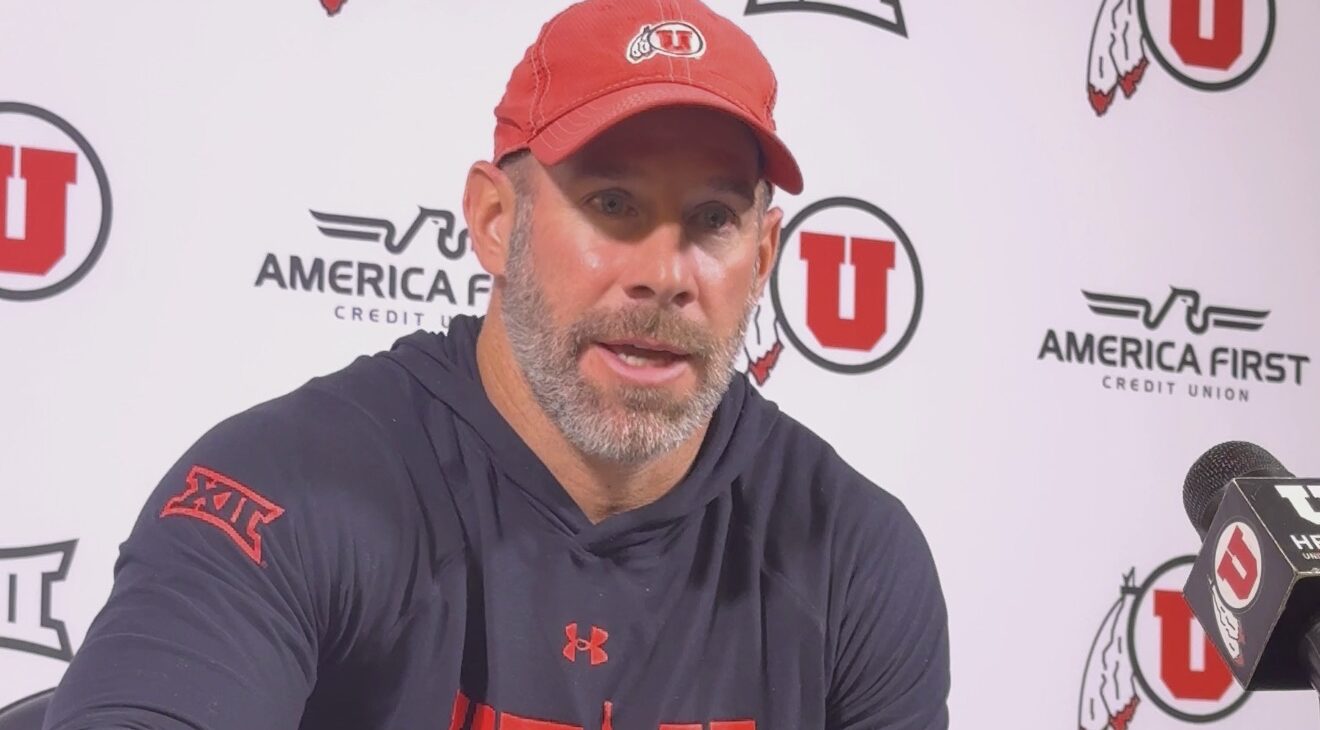
SALT LAKE CITY— With Morgan Scalley fully installed as head coach, a revamped defensive staff beginning to take shape, and spring practice on the horizon, the 2026 slate feels like a fresh starting point for this program.
This offseason has been one of the most consequential in recent Utah football history — a period defined by transition. On the defensive side of the ball, the Utes have lost significant experience — including star pass rusher John Henry Daley and starting cornerback Smith Snowden — yet there is reason for optimism because a core of impact players remains and new talent has been added to address attrition.
As spring ball approaches, those pieces in place are the first solid blocks in what could become a very different defensive identity. This isn’t an offseason of uncertainty — it’s an offseason of rebuilding with purpose, and early returns suggest Utah’s defense has enough experience and incoming talent to build momentum rather than scramble for answers.
Next stop: 𝐓𝐡𝐞 𝐍𝐅𝐋 𝐂𝐨𝐦𝐛𝐢𝐧𝐞‼️
🔴 @FanoSpencer
🔴 @CalebLomu51
🔴 Lander Barton
🔴 @LoganFano
🔴 @dallenbentley #GoUtes | #ProUtes pic.twitter.com/axuahPQkJf— Utah Football (@Utah_Football) February 11, 2026
That doesn’t mean every question has an obvious answer — far from it. But if the Utes can find continuity at the top of the defense while integrating new voices on the sidelines and new faces on the roster, spring practice could be the moment this unit starts turning transformation into traction.
Defensive Ends
Left Defensive End
- Lance Holtzclaw
- Paul Fitzgerald
Right Defensive End
- Kash Dillon
- Ethan Day
Depth: Nicholas Igwe, Preston Pitts, PJ Takitaki, Fameitau Siale
Similar to last season, Utah’s edge group enters spring with a need for development and identifying who’s up next. After departures from the group, Utah will need new faces to emerge yet again.
Lance Holtzclaw steps in as the likely left end starter, after some promising flashes as a pass-rusher qualities this season. Opposite him on the right, Kash Dillon returns with production and physicality that can disrupt tackles in both run and pass scenarios. Those two each played roughly 350 snaps this season, a chunk of which came in the final three games of the season.
Going into the portal, Ethan Day was a big priority. At 6-foot-4, 250 pounds, he adds good size and production to the end group. Day actually actually had very similar numbers and success rates to Logan Fano, and if Utah can get that level play, that will help solidify the top of the position group.
Behind those three, a group that will need to prove itself — Paul Fitzgerald, Nicholas Igwe, Preston Pitts, PJ Takitaki, and Fameitau Siale. There’s potential but development will be needed this offseason.
Spring storylines:
-
Can Holtzclaw take a step forward as an edge rusher that consistently wins?
-
Will this group become more balance defending run & pass?
-
How quickly does the depth group acclimate and prove itself?
Defensive Tackles
Defensive Tackle
- Pupu Sepulona
- Jireh Moe
Nose Tackle
- Karson Kaufusi
- Lucas Samsula
Depth: Jamal Wallace, Dilan Battle, Semi Taulanga, Sione Motuapuaka, Fameitau Siale
Utah’s interior defensive front struggled down the stretch and addressing those issues was clearly a point of emphasis in the portal. After three left the program (Aliki Vimahi, Jonah Leaea, Dallas Vakalahi), Utah brought in three (Lucas Samsula, Jireh Moe, Jamal Wallace) who have very similar qualities to those that departed, while also hanging onto the five freshmen brought in last year’s recruiting class.
At defensive tackle, Pupu Sepulona and Jireh Moe are two athletic types that will be key to disrupting from the interior of the line. Alongside, Karson Kaufusi and Lucas Samsula, Utah seems to have a solid four that will also require progress from the two returning freshmen Sepulona and Kaufusi as they enter year two in the program.
The depth group — featuring Jamal Wallace, Dilan Battle, Semi Taulanga, Sione Motuapuaka, and Fameitau Siale — gives Utah a pretty deep group of bodies. Wallace in particular is interesting addition, as he played minimally at Tennessee but had a breakout sophomore year at the JUCO level in 2023 that featured 39 tackles, 10.5 for loss, 3.5 sacks, suggesting there is potential there.
Spring practice will be critical for this group— particularly the five returning freshmen to showcase their progress. Utah’s three portal additions are significant but the ceiling very well could be determined by how improved that freshmen group is.
Spring storylines:
-
Can Kaufusi and Sepulona become the leaders of the group?
-
Who flashes the power and quickness necessary to collapse the pocket from the interior?
-
How quickly can the rotational depth group earn expanded reps in specialty packages?
Linebackers
Rover
- Johnathan Hall
- Cyrus Polu
MAC
- Trey Reynolds
- Tayson Reid
Depth: Elijah Elliss, Kanai Lopes, Mateaki Helu, Lagary Mitchell, Davis Andrews
Utah’s linebacker room enters spring with a blend of playmaking experience and emerging depth that can contribute. Up top at Rover, Johnathan Hall remains a disruptive presence — capable in coverage, adept in blitz packages, and trusted in space against shifty backs and tight ends. Him rounding out his game in year three at the position is paramount to Utah’s defensive potential next season.
Cyrus Polu enters year two with the program and seems ready to provide legitimate depth at linebacker this season. He plays with physicality and instincts, giving the Utes flexibility in sub-packages and rotation looks.
.@Utah_Football fans – your culture is about to get a lot more RELENTLESS and NASTY@RSNBUtes pic.twitter.com/6rNfbqsOZj
— David Pollack (@davidpollack47) February 11, 2026
In the MAC spot, Trey Reynolds profiles as a downhill thumper with sideline-to-sideline range, while Tayson Reid offers similar physicality and pursuit speed that coaches love in run-fit situations.
Beyond the two projected two-deep spots, the depth chart is filled with versatile talents — Elijah Elliss, Kanai Lopes, Mateaki Helu, Lagary Mitchell, and Davis Andrews — who can all earn meaningful reps on early downs or in specialized packages.
Spring practice will be vital for this group to refine their alignment communication, read-and-react skills against motion, and their ability to flow to the ball while maintaining assignment soundness.
Spring storylines:
-
Is Hall ready to put it all together as the leader and quarterback of the defense?
-
How quickly does Tayson Reid acclimate to this level of football?
-
Which depth players prove capable of elevating into rotational roles?
Defensive Backs
Left Cornerback
- Scooby Davis
- James Chenault
Right Cornerback
- Elijah Reed
- JC Hart
Nickel Back
- Rock Caldwell
- Nicholas Brown
Depth: Earl Parker, Brandon Holmes, Aisa Galea’i, Major Hinchen, Dylan Waters
Utah’s defensive backfield enters spring with a mix of experienced lockdown corners and a deep slate of ballhawks and physical cover men waiting in the wings. Scooby Davis returns as a seasoned perimeter defender with tough man-to-man credentials, while Elijah Reed gives the Utes length, instincts, and proven starting experience that should immediately bolster the boundary.
Behind them, James Chenault and JC Hart should push for rotational and even starting reps as spring goes on. Chenault played quite well at USF this past season, while Hart has tremendous qualities and spent this past season with Utah. At nickel, Rock Caldwell and Nicholas Brown give Utah options in sub-packages against spread formations.
The depth group — Earl Parker, Brandon Holmes, Aisa Galea’i, Major Hinchen, and Dylan Waters — offers athleticism and competitive instincts; spring reps will be critical for separating themselves in coverage and tackling in space. Of the three freshmen, Galea’i is an intriguing one to keep a close eye on.
Spring storylines:
-
Scooby seems to be CB1, how does the rest of the pecking order shake out?
-
Who becomes the primary nickel option and the backup?
-
How quickly does the depth group win reps in rotation?
Safeties
Free Safety
- Jackson Bennee
- Nate Tilmon
Strong Safety
- Rabbit Evans
- Nate Ritchie
Depth: Manny Fuller, Brock Fonoimoana, Marcus Wemberly, Luke Bryant, Davis Andrews
Utah’s safety room enters spring with proven playmakers at the top and a robust complement of depth behind them. Bennee returns as a free safety but with his versatility, he’s an interesting chess piece in the secondary. How much progress does he make with his ballhawking ability, communication, instincts, and tackling will be interesting.
As he enters his second season with the program, what sort of leap is Tilmon ready to make?
Rabbit Evans and Nate Ritchie are veterans running it back for one more year after injuries derailed their 2025 campaigns. Both bring physicality against the run and savvy coverage ability in the strong safety role, rounding out a backfield that can handle multiple personnel groupings.
The safety depth — Manny Fuller, Brock Fonoimoana, Marcus Wemberly, Luke Bryant, and Davis Andrews — gives Utah flexibility in rotations and situational packages. Spring practice reps will be crucial for development of this young, promising group.
Spring storylines:
-
How much improvement can Utah’s safety group make with tackling?
-
Which safety shows the best range and anticipation against intermediate routes?
-
How consistently can the safeties rally support against the run?
The Bottom Line
This offseason has been defined by transformation — a new head coach, a revamped staff, and a defensive roster reshaped by portal movement and departures. But underneath all the change, Utah’s defense enters spring with a foundation that isn’t built on hope, but on experience and thoughtful additions.
The Utes have pillars to build with at all position groups, it’s going to be about elevating levels of play for those players. Portal additions along the defensive line and in the secondary provide fresh competition. Spring practices will be about defining roles, clarifying responsibilities, and building cohesion.
If the Utes can establish culture and habits early, especially in the back seven and up front, this defense has the pieces to be ahead of schedule rather than behind it when September rolls around.