Unloading the notebook: Day one for Utah football fall camp
Aug 3, 2026, 1:39 PM | Updated: 8:22 pm

Morgan Scalley is interviewed following University of Utah football practice in Salt Lake City on Thursday, Aug. 10, 2017. (Ravell Call, Deseret News)
(Ravell Call, Deseret News)

SALT LAKE CITY — Utah football opened its first fall camp under Morgan Scalley on Monday, bringing the Utes another step closer to the beginning of the 2026 season.
The first practice lasted only 12 periods. The Utes were not in pads, limiting any meaningful conclusions about position battles or the reconstructed lines of scrimmage.
The interviews afterward offered more substance.
Here are the notes and takeaways that stood out from Scalley, Devon Dampier, Wayshawn Parker, Alex Harrison and Braden Pegan following Day 1.
Scalley saw progress, but not enough urgency
Scalley was encouraged by Utah’s energy, improved conditioning and the changes in players’ body composition following the summer program.
He also made it clear that the first practice did not meet his behavioral standard.
Utah did not pursue the ball consistently enough. Players did not always leave the field with urgency. For Scalley, those details reveal whether the program’s culture is actually being practiced or merely discussed.
“Probably not good enough today in terms of hustle—being relentless to the ball, relentless jogging off the field,” Scalley said.
That answer provided another look at Scalley’s transition from defensive coordinator to head coach.
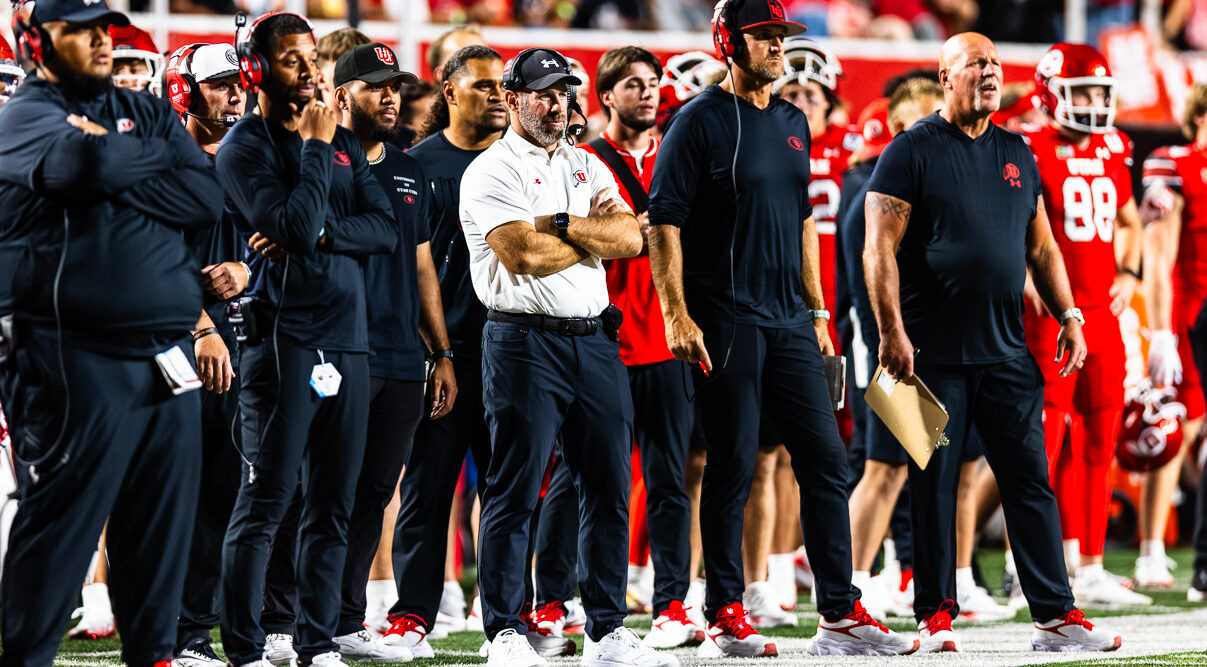
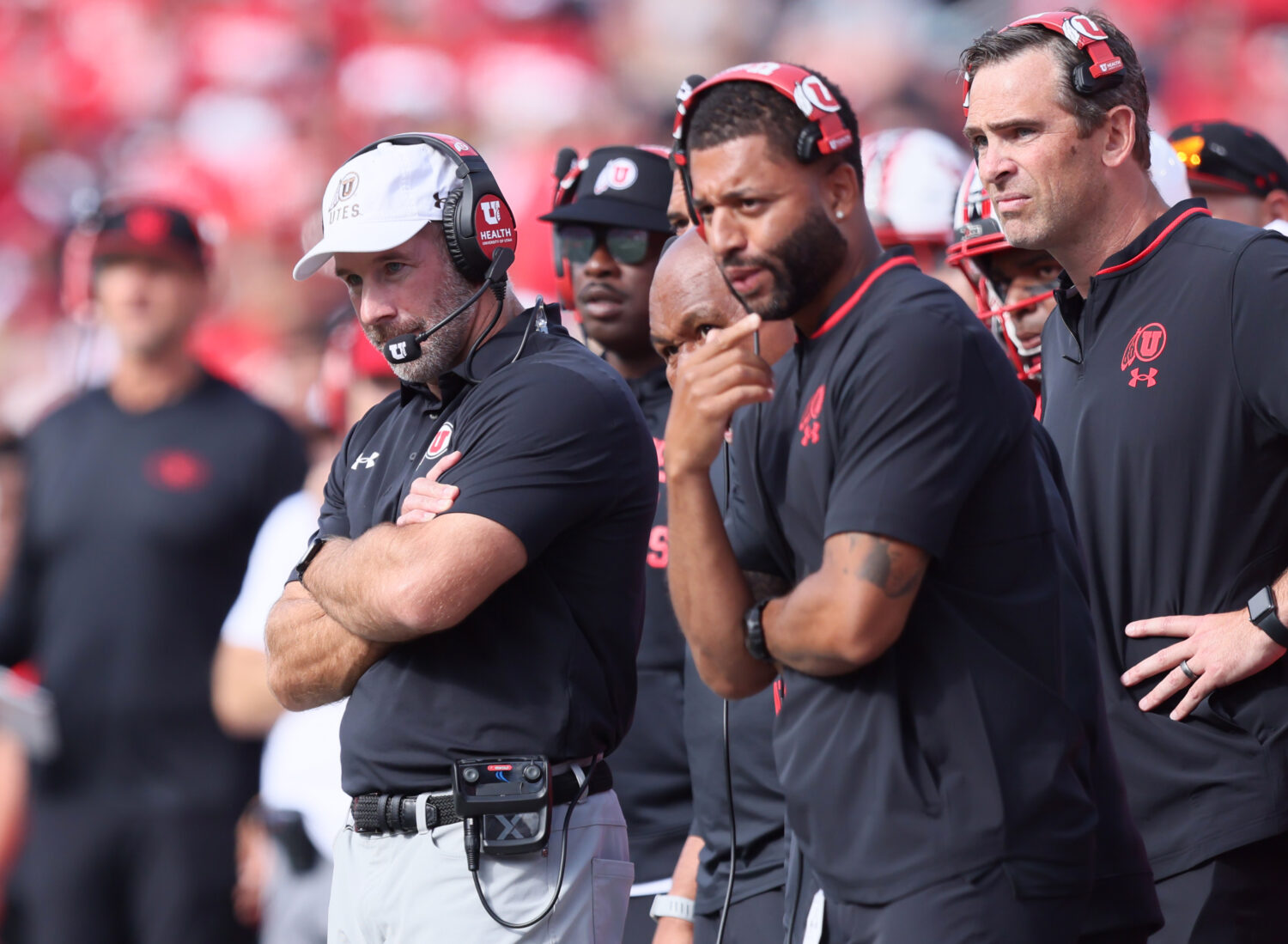
He is no longer consumed with coaching one position or monitoring one side of the ball. Kevin McGiven and Colton Swan are responsible for the offensive and defensive schemes. Scalley’s focus has expanded to how the entire team practices, responds and competes.
He will be watching behaviors as much as execution.
The player-led summer appears to have mattered
The most consistent theme from the five interviews was the ownership Utah’s players demonstrated while coaches had limited involvement during the summer.
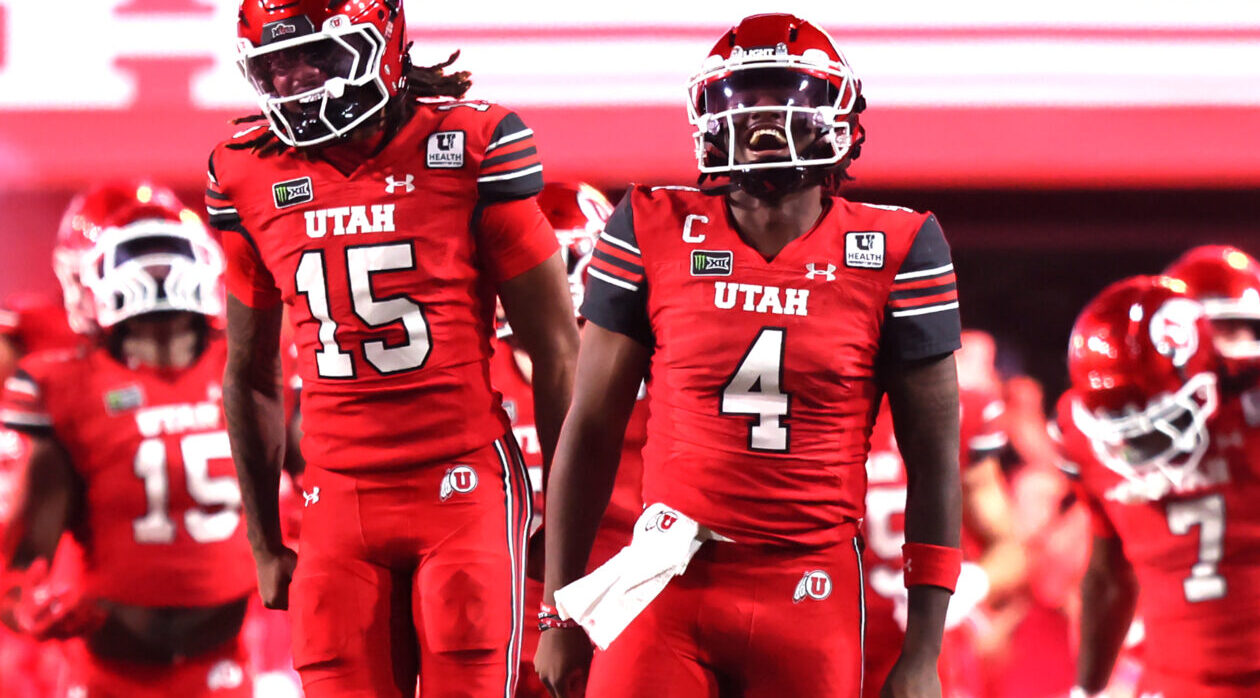
Scalley said the offense operated more quickly and cleanly than it had during portions of spring practice. Dampier organized work with the receivers. Alex Harrison said the quarterback called plays, corrected mistakes and restarted drives when the execution was not acceptable.
Dampier also held teammates accountable for getting into the film room.
Harrison described July as the month that can make or break a team. Coaches are away, leaving the players to decide whether to continue working or treat the month as a break.
By Harrison’s account, Dampier made sure Utah continued working.
That may be the most meaningful part of Dampier’s offseason development. His return stabilized Utah’s quarterback situation. His summer leadership helped move the offense from stabilization toward ownership.
Back like we never left#GoUtes | #RSNB pic.twitter.com/QvWJsR3CDp
— Utah Football (@Utah_Football) August 3, 2026
Dampier worked to understand an altered receiver room
Utah brought in several new receivers, each with his own playing style and interpretation of routes.
Dampier identified developing those individual connections as one of his most important summer responsibilities.
On difficult conditioning days, the receivers performed stationary tracking drills. On lighter days, they ran routes and simulated coverages, with other receivers acting as defensive backs to provide a more realistic picture.
The goal was not simply accumulating repetitions. It was learning where each receiver expects the ball and how each one responds to different defensive looks.
Pegan said that work was already noticeable during the opening practice.
The receiver described Dampier as funny, well-spoken and clear about what he expects. That clarity has made it easier for Pegan and the other receivers to get on the same page with their quarterback.
McGiven is giving Dampier control
Dampier indicated that McGiven has given him considerable freedom to adjust the offense before the snap.
If the defense presents a favorable opportunity to run, Utah will run. If it invites the Utes to throw, Dampier has the freedom to move into a better passing concept.
That is how McGiven defines offensive balance. It is less about producing an even split between rushing and passing attempts and more about making sure the defense cannot dictate where the football goes.
“He gives me the ability to get into a different play, get into things that we run very well,” Dampier said.
Dampier’s ability to handle that control will be an important camp development.
His athletic ability already creates problems after the snap. Becoming more efficient at identifying and eliminating options before the snap could make Utah’s offense considerably more difficult to defend.
The offense should still look familiar
McGiven will add his own wrinkles, but Utah is not completely rebuilding its offensive identity.
Scalley expects the system to look relatively similar to what Utah ran last season. The Utes will continue using shifts, motions, formations into the boundary and the quarterback run game.
That continuity was one reason Dampier and Byrd Ficklin were comfortable remaining at Utah following the coaching transition.
The difference may come in how McGiven distributes the football.
Scalley described McGiven as a coordinator who identifies the roster’s best playmakers and then designs ways to feature them. The scheme is shaped around the players instead of requiring every player to fit inside a rigid system.
That should provide McGiven flexibility with Dampier, Ficklin, Parker and a deep collection of receivers.
Dampier and Ficklin continue to push each other
Utah retained two quarterbacks capable of playing meaningful snaps despite the transfer portal offering Ficklin an obvious path to pursue a starting position elsewhere.
Scalley credited their ability to coexist to their unselfishness.
Dampier’s description of the relationship showed that it remains highly competitive.
When Dampier completes a successful period, Ficklin attempts to answer. If Ficklin responds with a touchdown, Dampier feels pressure to produce one of his own.
The most notable portion of Dampier’s answer was his willingness to acknowledge Ficklin’s future.
“Eventually, when he takes over, he’s going to be that guy,” Dampier said.
Ficklin is preparing to lead Utah in the future while pushing Dampier to maintain control of the offense now. Utah can also explore packages involving both quarterbacks if the staff believes their different abilities can create an advantage.
The offensive line believes the summer changed it
Utah’s offensive line will remain difficult to evaluate until the pads come on.
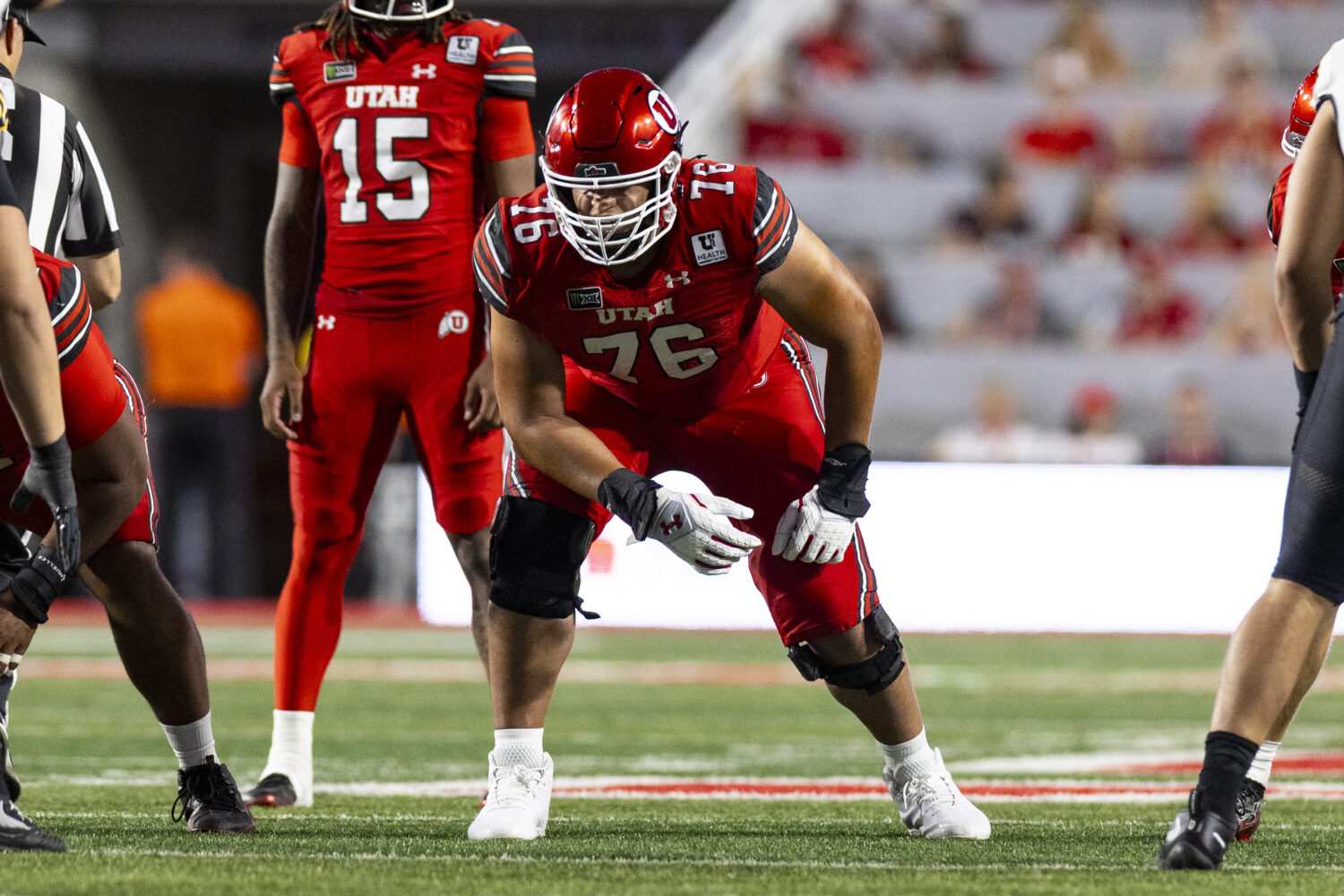
Scalley nevertheless noticed the group operating more crisply, reaching the line of scrimmage faster and displaying evidence of the work completed during the summer.
Harrison said the new strength and conditioning program produced one of the most physically demanding summers of his college career. He estimated that some players added approximately 20 pounds of lean mass over two months.
Dampier offered a similar assessment, saying several linemen lost fat while adding muscle.
The exact body-composition figures came from the players. Their importance will ultimately be determined by whether those physical changes help the line create movement and withstand pressure.
The shared experience may be equally valuable.
“We learned to struggle together,” Harrison said. “We learned how to do hard things together.”
Utah must replace all five offensive-line starters. Its potential replacements are not completely inexperienced, but they have not operated together as a starting unit over an entire season.
A difficult summer gave them an opportunity to begin building that connection before the physical work of camp.
Harrison welcomes the doubts
Harrison referenced a preseason ranking that placed Utah’s offensive line outside the country’s top 50.
He did not sound offended by the exclusion. He sounded energized by it.
“I love the fact that nobody believes in us,” Harrison said. “I love the fact that everyone doubts us. Bring it on.”
Harrison wants Utah to become the most physical offensive line in the country. Before that can happen, the Utes must identify their preferred five, establish communication and prove they can consistently function together.
Harrison believes his football intelligence has improved after spending last season learning from former Utah center Jaren Kump.
He studied how Kump examined fronts, identified pressure packages and prepared for opponents. That education should help Harrison as he attempts to become one of the new line’s central communicators.
Jordan Gross provides hands-on instruction
Harrison praised new offensive-line coach Jordan Gross for his ability to physically demonstrate the techniques he is teaching.
Gross spent more than a decade playing in the NFL, giving him experience that cannot be replicated through a playbook or meeting-room presentation.
Harrison joked that Gross still looks capable of playing professionally when he gets into a stance to demonstrate hand placement or footwork.
The teaching style should be useful for an offensive line with several players moving into larger roles. Utah needs more than five starters. It must develop eight or nine dependable linemen capable of handling different positions and combinations.
Parker raised his personal expectations
Parker entered last season targeting 1,000 rushing yards. His new goal is 1,200.
The number matters less than the standard behind it.
Parker said he dedicated the offseason to becoming leaner without sacrificing muscle. He frequently remained in the facility after teammates had completed their workouts.
Utah will need Parker to serve as one of the offense’s engines, especially while the offensive line develops. McGiven also intends to involve him more consistently in the passing game.
Parker did not establish a receiving goal. He said he simply wants to contribute in whatever way helps Utah score.
Parker sees himself in LaMarcus Bell
Parker offered one of the more interesting player comparisons of the day when discussing freshman running back LaMarcus Bell.
“He reminds me of me when I was a freshman,” Parker said.
Bell will make mental mistakes, but Parker has been impressed by his ability and willingness to ask questions. Parker has embraced helping the freshman because he remembers experiencing the same adjustment.
He also praised Daniel Bray’s development between spring and fall camp, particularly his improved understanding of the offense.
Parker is Utah’s established lead back. Camp will determine how Bray, Bell, Mateaki Helu and the rest of the room arrange themselves behind him.
Pegan expects Utah to attack downfield
Pegan followed McGiven from Utah State after the offensive coordinator provided him an opportunity when others questioned his ability.
His description of McGiven’s passing game was refreshingly direct.
“We like to throw the ball a lot,” Pegan said. “We like to throw the ball deep.”
Pegan said McGiven uses formations and creative concepts to manufacture opportunities for his receivers. That should make Pegan an important piece of Utah’s passing game because he already understands the system and has produced inside it.
He declined to identify one receiver who made the greatest offseason improvement, instead emphasizing the room’s overall depth and explosiveness.
Wide receiver may be one of Utah’s deepest positions. Fall camp must turn that depth into a defined rotation and dependable production.
The defensive line understands the pressure
Utah did not make a defensive player available following the opening practice, but Scalley provided one notable update on the defensive line.
The group is fully aware of the production Utah lost from last season’s interior rotation.
Scalley said the defensive linemen have carried a chip on their shoulders throughout the offseason. When he walked through the facility and found a position group watching extra film, it was frequently the defensive line.
Like the offensive line, the group cannot be properly judged until Utah practices in pads. The urgency is nevertheless encouraging for a position facing significant pressure to develop quickly.
Alex Harrison called the new strength program one of the most substantial changes he has experienced at Utah.
"It was the most difficult summer workout I've ever been through but I've never felt better physically."
He said some offensive linemen added approximately 20 pounds…
— Steve Bartle (@BartleKSLsports) August 3, 2026
Utah could still add one or two players
The recent federal court ruling involving athletes who began college during the 2022-23 academic year created an unexpected roster-building possibility shortly before fall camp.
Asked whether Utah would explore adding an eligible player under the ruling, Scalley did not dismiss the idea.
“We will explore anything that we feel gives us an advantage and can help us win football games,” he said.
Scalley initially joked that Utah’s available roster space was “for us to know and you to find out” before estimating that the Utes may have room for one or two additions.
Former Utah running back NaQuari Rogers is one name worth monitoring, although there has been no confirmation that Utah is pursuing him.
Rogers graduated this spring and announced Sunday that he hopes to return to college football. He rushed for 387 yards and a team-leading 11 touchdowns for Utah last season.
His familiarity with the program would make him a logical player to evaluate, but Utah already has a crowded running back room. The court ruling also remains subject to legal challenges, creating uncertainty about whether affected players will ultimately remain eligible throughout the season.
One day, very few conclusions
Utah’s first practice did not settle its offensive-line rotation, reveal its defensive starters or establish a final receiver hierarchy.
It did provide an early look at the themes that will shape camp.
Dampier has taken greater ownership. The offensive line believes its difficult summer produced meaningful changes. Parker expects more from himself. Pegan gives McGiven a proven receiver who understands his offense. Scalley is evaluating every practice behavior through the lens of a head coach.
The pads will provide the next layer of evidence.
For now, Utah’s player-led summer appears to have given the Utes a productive starting point.
The Bottom Line
The most important revelation from Utah’s first day of fall camp was not a depth-chart movement or schematic wrinkle. It was the degree to which the players appear to have taken ownership during the summer.
Dampier drove the offense’s work. The offensive line went through a physical transformation together. Parker increased his expectations. Pegan began establishing the quarterback-receiver connection Utah will need in the fall.
Scalley saw the progress. He also immediately demanded more.
That combination—greater player ownership met by an unrelenting standard from the head coach—is exactly what Utah needs as its first fall camp of the Scalley era begins.