No. 12 Utah Utes vs Kansas Jayhawks: Game preview, score prediction
Oct 9, 2026, 5:06 PM | Updated: 5:20 pm
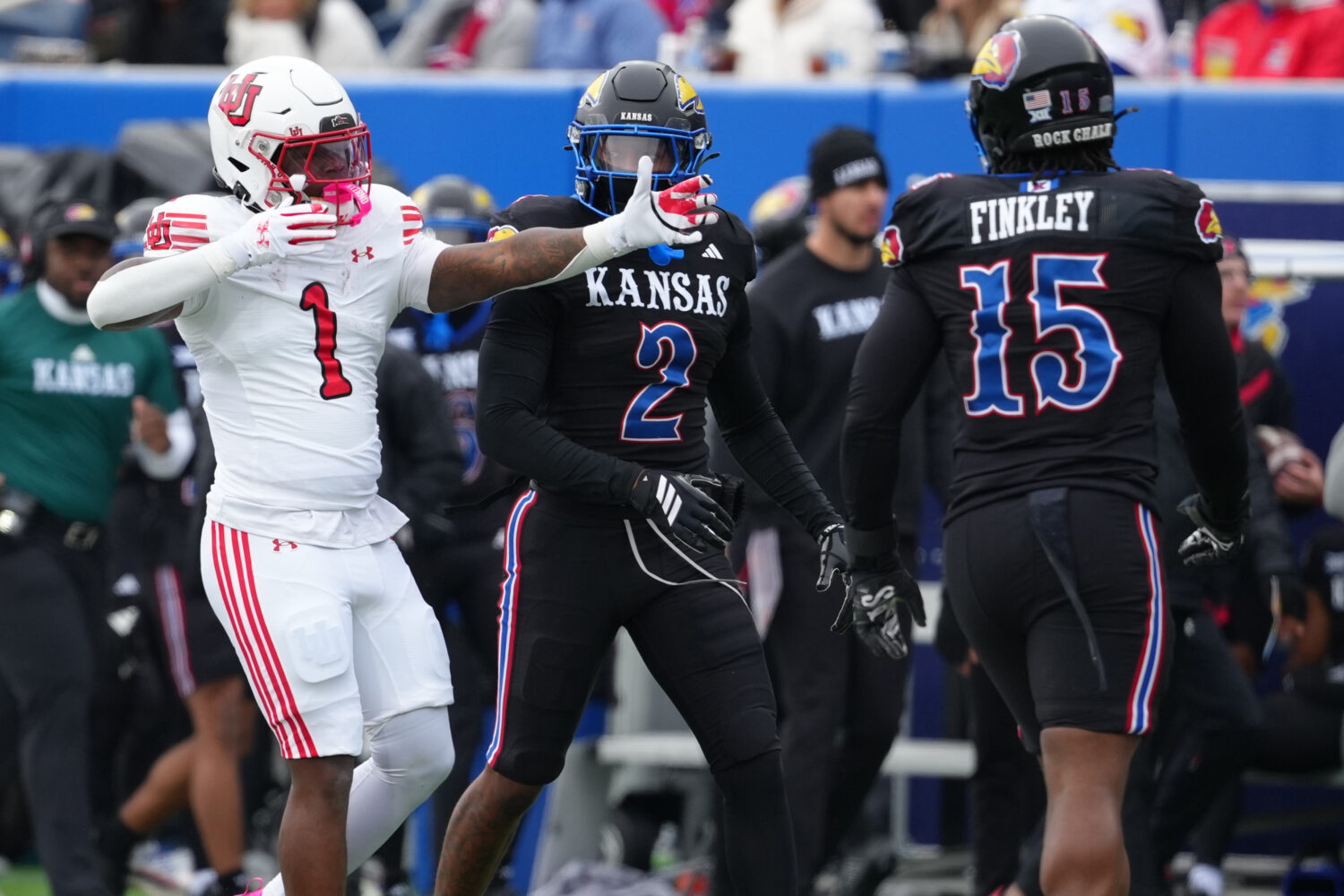
LAWRENCE, KANSAS - NOVEMBER 28: Running back Wayshawn Parker #1 of the Utah Utes celebrates a first down against the Kansas Jayhawks in the first half at David Booth Kansas Memorial Stadium on November 28, 2025 in Lawrence, Kansas. (Photo by Ed Zurga/Getty Images)
(Photo by Ed Zurga/Getty Images)

SALT LAKE CITY — Utah spent its first four games establishing reasons to believe. Coming out of the bye week and the Kansas Jayhawks up next, the Utes have an opportunity to set the tone for the next phase of the schedule.
Morgan Scalley’s No. 12 Utah (4-0, 1-0) hosts Lance Leipolds’ Kansas (2-2, 0-1) on Saturday at Rice-Eccles Stadium, with kickoff scheduled for 8:15 p.m. MT on ESPN.
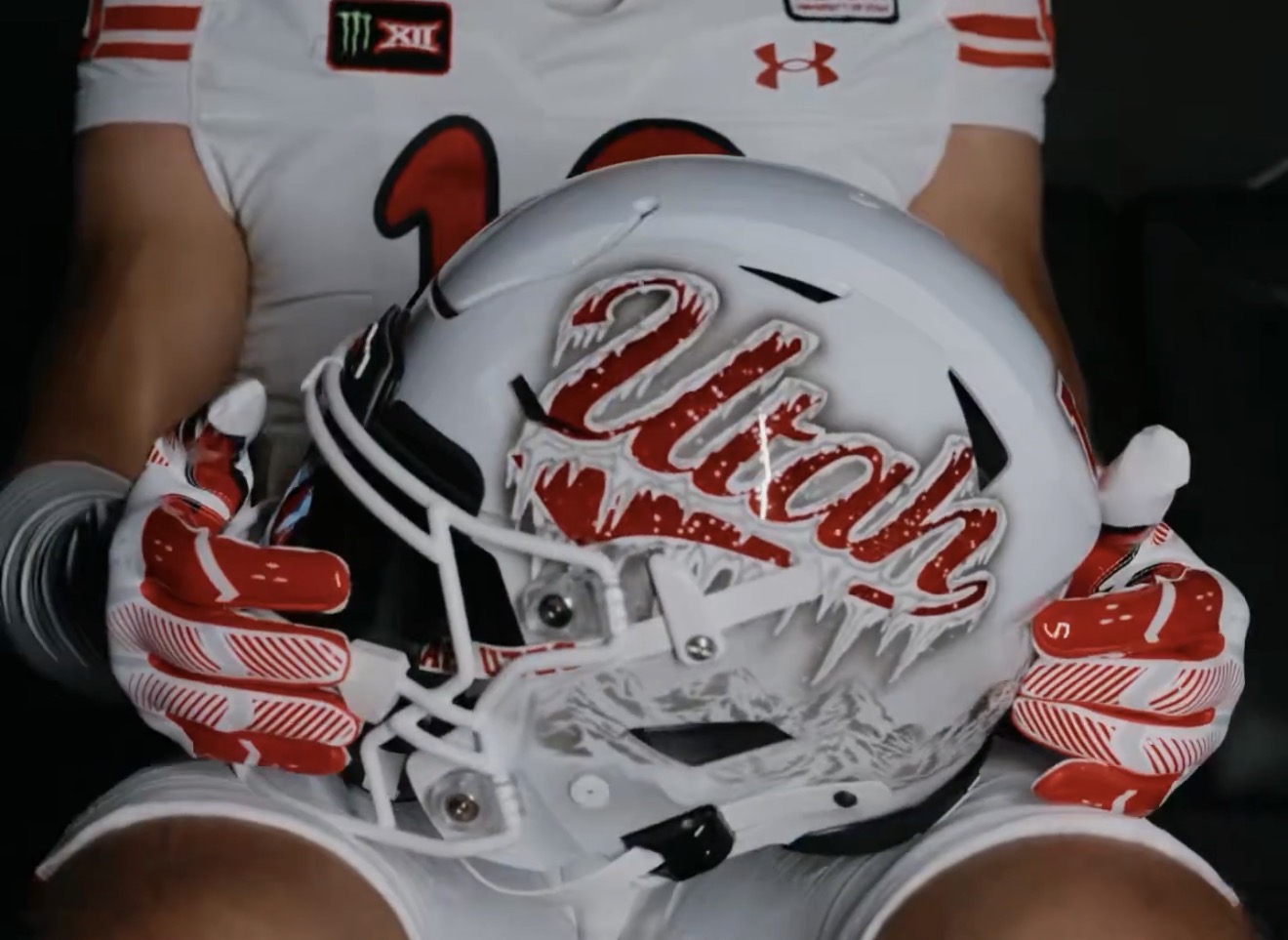
The Utes will debut their new hand-painted helmets for the first whiteout in program history, adding a distinctive look to a night when fans are asked to fill the stands in white.
Debuting the 𝒊𝒄𝒚 𝒘𝒉𝒊𝒕𝒆𝒔 for the first time this season, with the new lids 😮💨🧊
#GoUtes | #RSNB | @UofUHealth https://t.co/ubJG7X79WJ
— Utah Football (@Utah_Football) October 9, 2026
The matchup gives Utah a clear assignment on each side of the ball. The Jayhawks have enough athleticism and defensive disruption to complicate the evening. Utah has the more complete offensive menu and a defense equipped to make Kansas work for its opportunities.
Stopping Kansas starts on the ground
Coming into this one, Kansas averages 254.3 rushing yards per game, but its production has not been equally convincing every week. More specifically, the production looks considerably different depending on the competition.
Against LIU and Middle Tennessee, the Jayhawks averaged 378.5 rushing yards, piling up 277 against the Sharks and 480 against the Blue Raiders.
Against Power Four opponents Missouri and Arizona State, that average fell to 129.5 yards, with 80 against the Tigers and 179 against the Sun Devils.
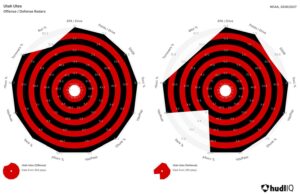
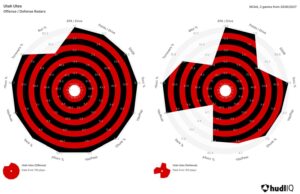
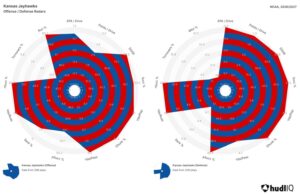
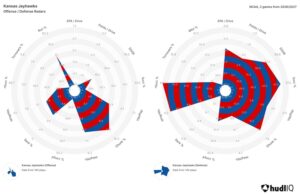
Utah & Kansas performance radars all season and just vs. P4 provided by Hudl IQ.
That is the more meaningful context for Utah than Kansas’ overall rushing average. The Jayhawks have overwhelmed lesser competition, but have not consistently controlled the ground game against stronger opponents.
Meanwhile, the Utes allows just 84 rushing yards per game and 2.9 yards per carry. That’s due primarily to a much improved defensive front that is playing more physically in the trenches.
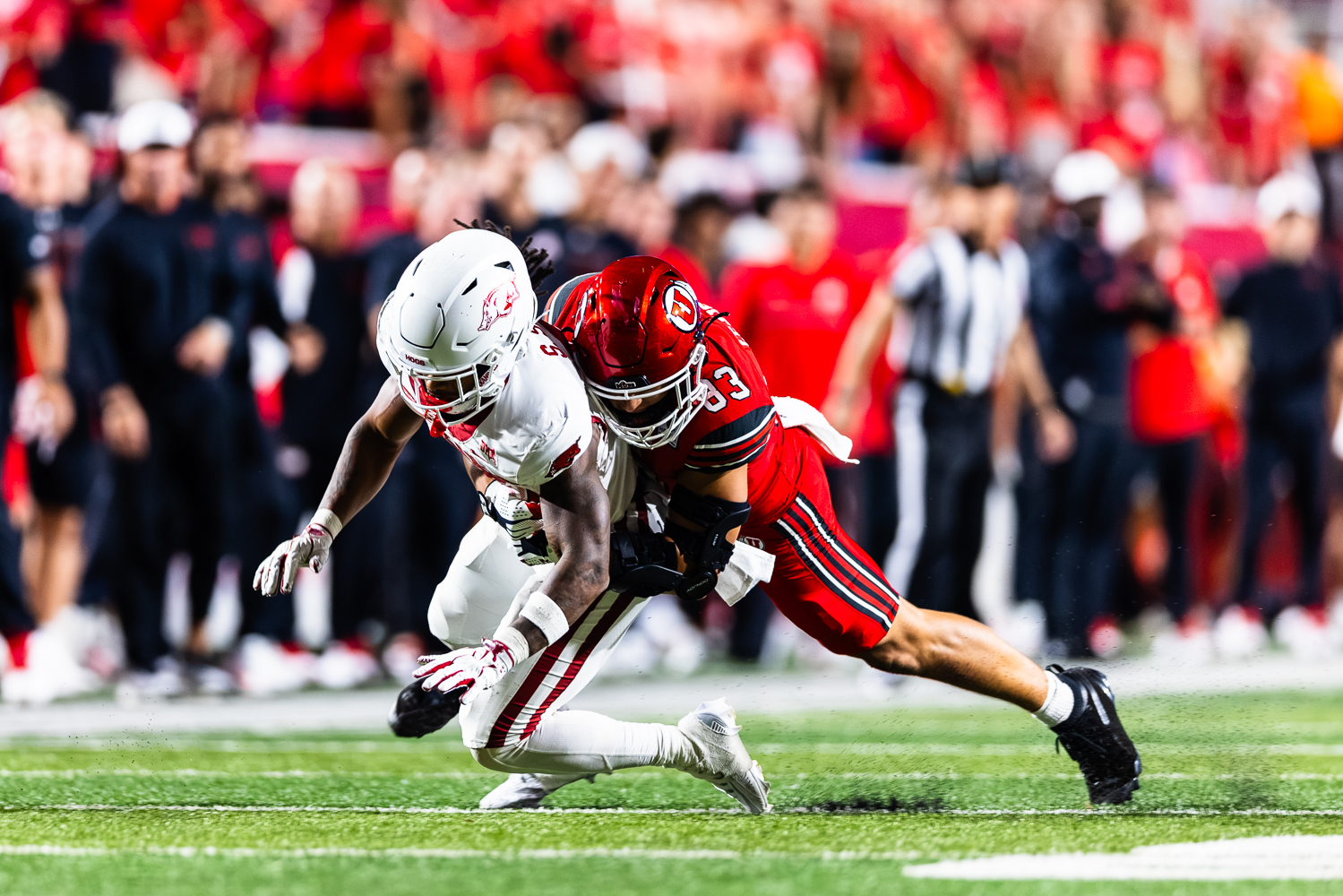
Where Kansas will test the Utes most is out in space, where one-on-one tackling will be crucial for defensive success. The Utes have been much better tacklers this season, but did have a season high of 18 missed tackles against Iowa State, the the other three were eight against Arkansas and six against Idaho and Utah State.
Quarterback Isaiah Marshall adds a layer to it, but nothing Utah isn’t equipped to handle. Marshall is likely the twitchiest quarterback Utah will encounter this season, his ability to escape pressure in the pocket is uncanny. However, he’s still only credited with nine scrambles for 61 yards. That’s still an element the defense has to be prepared for, as the Utes do see a higher rate of scrambles 15% than the average of 10% across the rest of college football.
Utah’s edge defenders cannot race past him and leave an exit. This is about collapsing the pocket, maintaining leverage and forcing him to deliver the ball with defenders around him.
Marshall completed 54.8% of his passes, with five touchdowns and three interceptions. Against Missouri, he finished 13-of-30 with two interceptions as Kansas managed only three third-down conversions in 15 attempts.
Utah should want to put that kind of burden on him: another read, another contested throw and another long field to navigate.
Devon Dampier can give Utah the balance it needs
Dampier has completed 70.3% of his passes for 896 yards, nine touchdowns and one interception, with a Big 12-leading 172.2 passing-efficiency rating. His accuracy gives Kevin McGiven a dependable way to establish rhythm and create better rushing opportunities.
Kansas played zone on 76.6% of snaps according to HudlIQ, allowing 7.7 yards per play against its most common call, Cover 3. Quick completions, play-action and well-spaced routes can put its linebackers in conflict. Utah’s consistently stretched the field vertically, which has opened up opportunities underneath for big plays.
Missouri demonstrated how to attack Kansas’ coverage, throwing for 292 yards and three touchdowns without allowing a sack. Utah averages 9.0 yards per pass attempt and has the quarterback play to attack those openings. Force Kansas to respect the entire the pass, and give Parker room to work.
The two QBs can open the running game
Utah averages nearly six yards per carry, and its quarterbacks help make that possible. Dampier has rushed for 135 yards and two touchdowns, while Ficklin adds another threat defenses must account for alongside Parker.
When both quarterbacks share the field, Utah can change the look and the ball carrier without substituting. A defender crashing toward Parker risks opening a lane elsewhere, giving Kansas’ aggressive front a reason to hesitate.
The blocking still has to hold up, particularly against Leroy Harris III, who has five pressures, five run stuffs and two forced fumbles in the three-game player sample. Handle those assignments, make Kansas honor the quarterback run and give Parker room to finish.
Handle the disguise and finish the possession
Kansas likes to make the protection sort things out with simulated pressures. On about one in five charted passing plays, it shows pressure, drops somebody out and brings the rush from somewhere else. Opponents have managed just 3.3 yards per play against those looks.
Dampier, Big Al and Parker need to get everybody accounted for, and Dampier can’t assume the easy throw is sitting there just because Kansas threatened a blitz. Find who’s coming, know who’s dropping and get the ball to the right guy.
Utah converts more than half its third downs; Kansas allows opponents to convert fewer than one in four. Keep Dampier protected, avoid digging a hole on the early downs and trust this offense to finish.
The Utes average nearly five points per scoring opportunity. Turn those chances into touchdowns and make Marshall spend the night trying to keep up.
Prediction: Utah 38, Kansas 17
Kansas’ defensive front should produce some uncomfortable snaps, and Marshall’s athleticism can create plays that didn’t seem available.
But Utah has the personnel to control the terms of this game. Its defense can limit the run without abandoning its coverage responsibilities, while Dampier’s accuracy and decision-making give the offense a very dependable way to create balance.
Utah could look to the passing game to establish rhythm, which would then open opportunities in the run game. The Utes should turn enough of its opportunities into touchdowns to create separation and moves to 5-0.